
Honey matcha works best when the honey reaches the whole cup instead of collecting at the bottom. For cafes, the main development choices are the honey’s flavor, its measured dose and the way staff mix it into the drink. A squeeze from a bottle can vary enough to change both sweetness and cost between orders.
Start with a weighed trial and the exact honey intended for purchasing. The formula suggestions below are unvalidated development starting points. They cover a made-to-order latte and explain which additional decisions are needed before using a diluted honey preparation or offering a hot version.
Honey · Specification · Trial · Mixing · Milk · Texture · Service · Hot · Cost · Approval
1. Which honey suits a honey matcha latte?
Choose the aroma in the finished drink
Taste candidate honeys at the intended dilution with tea and milk. A pronounced honey can become the main flavor, while a mild one may provide sweetness with a quieter aroma. Neither direction is automatically better; the menu should describe the version the cafe intends to serve.
Olivia Adriance’s iced honey latte combines matcha, honey and cashew milk. It provides a reference for the basic architecture. Your business can choose a different milk and tea, but those choices require a new tasting rather than an assumption of the same result.
| Honey direction | Question for the tasting team |
|---|---|
| Mild aroma | Is honey recognizable at the selected dose? |
| Strong floral aroma | Does it cover the tea? |
| Darker, stronger flavor | Does the finish suit the milk base? |
| Blended commercial honey | Is the lot consistent enough for the menu? |
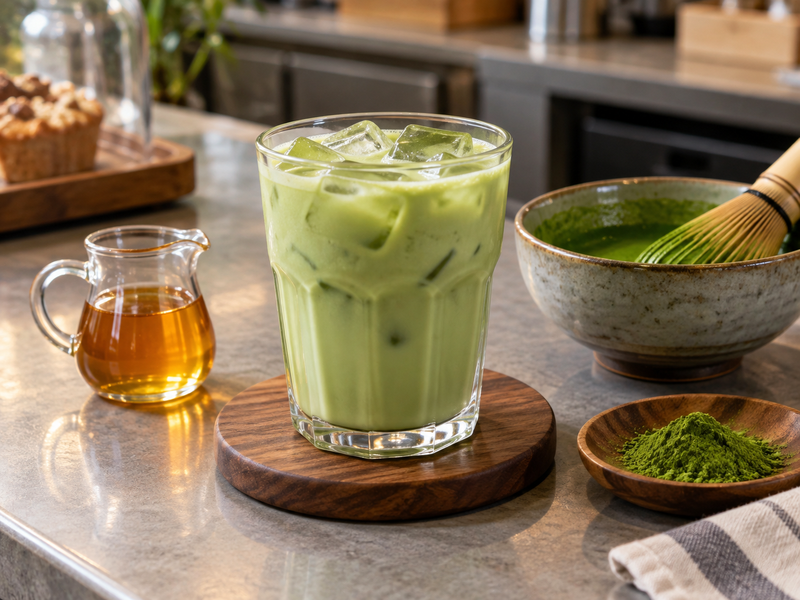
Keep a plain sweetened latte as a comparison if the team needs to judge whether honey adds a desirable flavor. The honey version should justify its identity through the actual drinking experience, not only through a visible drizzle in the photograph.
2. What should the honey purchase specification include?
Ask for the product that can be supplied repeatedly
Record the supplier, item code, declared origin or blend description, pack size and lot identity. If the menu names a floral source or geographical origin, obtain evidence supporting that exact description. Avoid building a menu around a sample that the supplier cannot provide consistently.
Ask for handling and storage directions, along with the quality documents appropriate to your market and customer requirements. Keep the ingredient declaration rather than assuming every honey-flavored preparation is pure honey. A honey syrup may contain other ingredients and needs a different recipe and product description.
Assess the pack in the service environment. A large pail may suit a central kitchen but create transfer work at a cafe. A squeeze bottle may be convenient but make dose accuracy difficult. Purchasing should consider how the ingredient will be measured and replenished, not only its delivered price.
During a receiving check, inspect the pack condition and compare aroma and texture with the approved reference using the supplier’s handling guidance. Record differences before changing the recipe. If a new lot needs a different dose to match the drink, discuss that variation with the supplier and document any approved adjustment.
3. How can you test a measured first cup?
Keep the first formula short
The following is a proposed one-cup trial for an iced honey latte. It has not been tested as a commercial recipe. Choose a suitable cup and keep the milk and honey products fixed while comparing the dose.
| Ingredient | Proposed starting amount | Development purpose |
|---|---|---|
| Pure matcha | 2 g | Tea reference |
| Water for tea and mixing | 40 g | Controlled dilution |
| Selected honey | 12 g | Initial sweetness level |
| Milk or selected plant drink | 150 g | Fixed base |
| Ice | 100 g | Recorded cube format |
Prepare the matcha smoothly and mix in the honey before the drink meets the ice, using a method that produces an even mixture with the selected honey. Add milk and ice, then stir and taste. Inspect the bottom of the glass for concentrated honey after the first few sips.
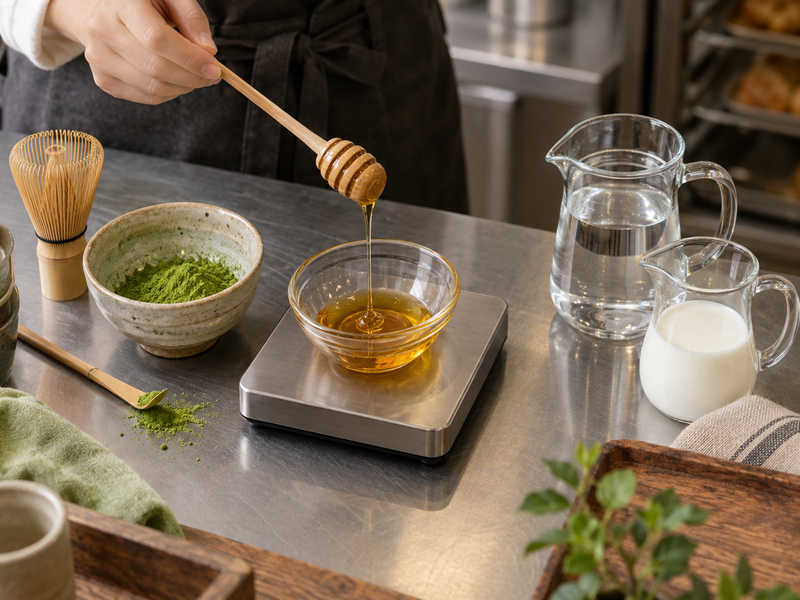
For the next comparison, try a lower and higher honey dose while holding the other ingredients constant. Record honey aroma separately from sweetness. If tasters prefer the higher level only because it is sweeter, consider whether the chosen honey has the right flavor strength for the intended drink.
4. How do you get honey distributed through the drink?
Check the bottom of the cup
Honey can be difficult to distribute when added directly to an iced drink. Trial the mixing order with the actual honey and water condition. A method that works with a fluid sample may behave differently when a commercial pack has a thicker texture.
Use the measured recipe water and avoid adding extra liquid without recording it. If the team prefers to mix honey with part of the water first, keep the total water unchanged. Then combine it with the prepared tea using a clear, repeatable sequence.
| Mixing check | What to observe |
|---|---|
| Before milk | Honey is evenly incorporated |
| After assembly | No thick amber pool at the base |
| First sip | Sweetness matches the target |
| Final sips | Sweetness has not sharply increased |
Sift the tea before preparation. Ippodo’s explanation of matcha clumps recommends sifting before whisking. Honey mixing should not become a way to hide dry tea pockets; inspect the tea and the sweetener distribution as two separate preparation checks.
Try the method with a second operator. If the instructions produce different results, add a visible endpoint to the card, such as an evenly colored mixture without thick residue at the bottom of the vessel.
5. Which milk and tea combination should you choose?
Compare the complete flavor system
Honey, milk and tea all contribute aroma and sweetness perception. Hold the honey dose fixed while comparing two milk products, then keep the preferred milk while comparing tea candidates. Changing both at once makes it difficult to understand why the panel preferred one cup.
A strongly flavored honey may suit a tea with a clear presence, while a mild honey may work with a more delicate balance. Treat those as possibilities to test, not rules that grade names can settle. Evaluate the actual powder at the planned dose.
| Comparison | Keep fixed | Record |
|---|---|---|
| Milk A versus milk B | Honey and tea | Body and competing aroma |
| Tea A versus tea B | Honey and milk | Tea recognition and finish |
| Honey A versus honey B | Milk and tea | Floral character and sweetness |
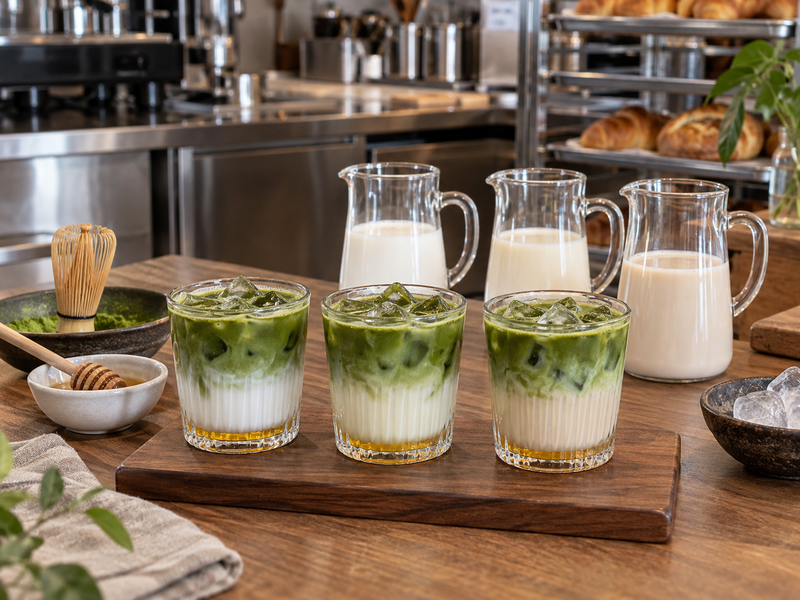
Matcha Village’s ingredient buyer guide can help organize sample identities and specifications. Request unsweetened matcha if the cafe wants full control over honey sweetness. A sweetened tea blend adds another sugar source and needs a separate formulation record.
6. What should staff do about crystallized honey?
Recognize the texture change and follow supplier guidance
Crystallization can occur naturally in honey. Honey producer Ames Farm explains the process as glucose forming crystals and notes that composition and storage conditions affect it. A change in texture therefore needs investigation without automatically treating it as proof of adulteration.
For the cafe, the immediate questions are whether the honey can be measured accurately and mixed evenly under the approved method. Follow the supplier’s handling directions. Do not improvise repeated heating or add water to the original pack simply to make it easier to squeeze.
If a diluted honey preparation is desired, develop it as a separate ingredient. Adding water changes the preparation and its handling needs. It requires a measured formula, appropriate storage assessment and a documented discard rule; the original honey’s shelf-life information cannot be carried over unchanged.
Record the condition of the working honey at the start of service. If pump delivery changes or crystals interfere with dosing, remove the affected equipment from use under the store’s procedure and resolve the ingredient condition. Increasing pump strokes by guesswork can turn a texture issue into an inconsistent sweetness problem.
7. How can the service station control each dose?
Verify the tool at its normal use condition
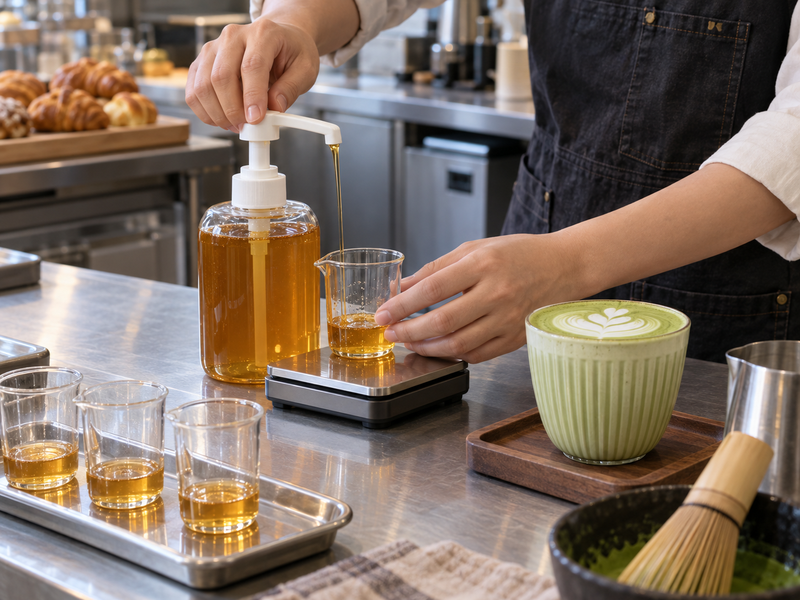
Weigh several complete pump strokes or squeeze portions into a container and calculate the average. Check variation between individual portions as well. A tool can deliver the correct average while some cups receive noticeably more honey than others.
Use the same working conditions in the test as during service. Bottle fullness, ingredient texture and the operator’s stroke can affect delivery. If a pump cannot handle the chosen honey consistently, select a more suitable dosing method rather than writing a recipe that assumes perfect performance.
| Station detail | Routine check |
|---|---|
| Dosing tool | Full repeatable portion |
| Working container | Correct ingredient and batch identity |
| Transfer vessel | Little unmeasured residue |
| Recipe card | Honey stated by weight |
| Replenishment | Clean method and clear lot record |
Place the honey measure where staff can use it without reaching over finished drinks. Include cleanup in the station design because sticky residue can make the area difficult to maintain. Train the refill procedure along with the cup build; service consistency often changes when one container empties and another begins.
8. What needs testing in a hot version?
Set a separate liquid balance
A hot latte has no melting ice to change its concentration. Use the intended mug and establish a separate milk quantity, then compare the honey dose at the actual service condition. A hot version made by removing ice from the cold recipe can be much smaller and stronger than expected.
Follow the business’s approved milk heating and hot-drink handling procedures. Mix the honey through the drink rather than relying on a drizzle to disperse by itself. Check the last part of the cup for a sweeter finish, just as in the iced trial.
| Detail | Hot-version decision |
|---|---|
| Mug size | Final liquid quantity |
| Milk preparation | Defined method and product |
| Honey dose | Flavor after heating and mixing |
| Tea water | Included in total drink weight |
| Foam | Consistent amount and appearance |
Avoid health claims based on a particular preparation temperature. This guide does not establish a therapeutic benefit from honey or matcha. Describe the drink’s ingredients and taste, and use reliable product information if a specific nutritional or caffeine statement is needed for the menu.
9. How do you compare honey cost per cup?
Use the accepted dose and actual transfer loss
Calculate honey cost from the grams in a saleable drink. Add the amount left in bottles, utensils or discarded working preparations if those losses occur routinely. A thick product with a low purchase price may create more waste and handling time than expected.
Measure the cost of tea at the approved dose as well. A honey-heavy drink can conceal differences between powders during a quick tasting, so compare candidates in the final formula before deciding that an expensive item is necessary or that a cheaper one is equivalent.
Track remakes during the menu trial, especially complaints about a sweet bottom layer or inconsistent honey strength. Confirm the dosing and mixing method before changing the ingredient specification. A preparation error can create unnecessary supplier changes and repeated development work.
Include packaging and staff time in the comparison between hot and iced versions. If a decorative honey drizzle adds little to the mixed flavor but slows service and makes lids sticky, test a version without it. Let the measured customer experience decide whether that finishing step belongs in the standard build.
10. What should the launch and supplier records contain?
Keep every approved ingredient identifiable
Record the honey, tea and milk item codes, dose weights, preparation order and cup size. Keep hot and iced versions under separate recipe identifiers. Attach the approved tasting notes so a future buyer can understand why the ingredients were selected.
Ask the matcha supplier for a commercial sample suitable for the stated milk-and-honey application, with its lot and required quality documents. Ask the honey supplier to confirm the offered item and any claim used on the menu. Purchasing should be able to connect an incoming pack to the trial that approved it.
Run a short service simulation using the normal staff, equipment and pack sizes. Check completed cup weights, first and last sip sweetness, preparation time and cleanup. Revise any instruction that staff interpret differently before the menu is printed or added to the ordering system.
Begin with a manageable ingredient order. At receiving, prepare a comparison cup from the new lots using the final card, record any change in aroma or mixing behavior and resolve it before those lots become the store’s daily service ingredients.
FAQ
Q1: Is a honey matcha latte vegan?
Honey is an animal-derived ingredient, so a honey recipe should not be presented as vegan. A plant milk choice does not change that. If the cafe wants a vegan variation, develop and name a version with an appropriate alternative sweetener.
Q2: Can honey replace sugar syrup at equal weight?
Treat it as a reformulation. Honey contributes its own aroma and has different composition and handling behavior from a defined sugar syrup. Compare weighed cups at the intended serving condition, then record the accepted honey dose and mixing method.
Q3: Why is the last sip much sweeter?
Honey may have remained concentrated near the bottom. Check the mixing order and inspect the cup after assembly. More stirring at the beginning, or a better controlled incorporation step before ice is added, may address the problem without changing the dose.
Q4: Does crystallization prove the honey is poor quality?
Crystallization can occur naturally. Review the ingredient condition and supplier guidance rather than judging authenticity from texture alone. For service, confirm that the honey can be dosed and mixed consistently under the approved procedure.
Q5: Can diluted honey be stored like the original honey?
Do not assume that. Adding water creates a different preparation with its own handling and shelf-life questions. Establish a measured recipe, suitable storage controls and a discard rule before introducing a diluted honey bottle to the cafe station.