
Cherry matcha brings red fruit flavour into a green tea drink, usually with milk, ice and a cherry preparation. The difficult part for a cafe is buying a fruit base that tastes recognizably of cherry without making the latte excessively sweet or visibly unstable. Decide whether the drink needs tart fruit, sweet fruit or a dessert style cherry note before choosing puree or syrup. The development quantities here are suggested small trials and require testing with your actual ingredients.
1. Which cherry matcha style fits the menu?
2. What should buyers ask a cherry supplier?
3. What quantities can a cafe test?
4. How can fruit acidity affect the latte?
5. Should the cherry base contain pieces?
6. Which matcha works with a strong cherry base?
7. How should a cherry drink be costed?
8. What handling controls are needed for cherry preparation?
9. How should the team diagnose a disappointing cup?
10. What should be approved before the menu goes live?
1. Which cherry matcha style fits the menu?
Choose the fruit character before the photograph
A layered drink can look attractive while tasting mostly of sweet milk. Write a short flavour brief describing the cherry character, tea finish and intended texture. For example, a tart cherry latte should retain a clear fruit impression after stirring. A dessert version may favour a rounder cooked fruit note. Neither direction requires a claim that the fruit provides a health benefit.
Matcha Y’all’s cherry latte uses a cherry syrup, milk and separately whisked tea. Its published ingredient list contains an unclear cherry quantity, so do not use that quantity as a production specification. Treat the page as a reference for the drink format and write a fresh weighed trial.
| Direction | Fruit choice to compare | Acceptance question |
|---|---|---|
| Tart cherry latte | Unsweetened tart puree | Does the milk remain pleasant? |
| Sweet cherry latte | Sweet cherry preparation | Can tasters identify cherry? |
| Dessert cherry latte | Cooked fruit syrup | Is sweetness balanced by tea? |
Give staff the same description used by the purchasing team. Otherwise, buyers may select a sharper puree while baristas expect a sweet syrup, and every cup will require improvised correction.
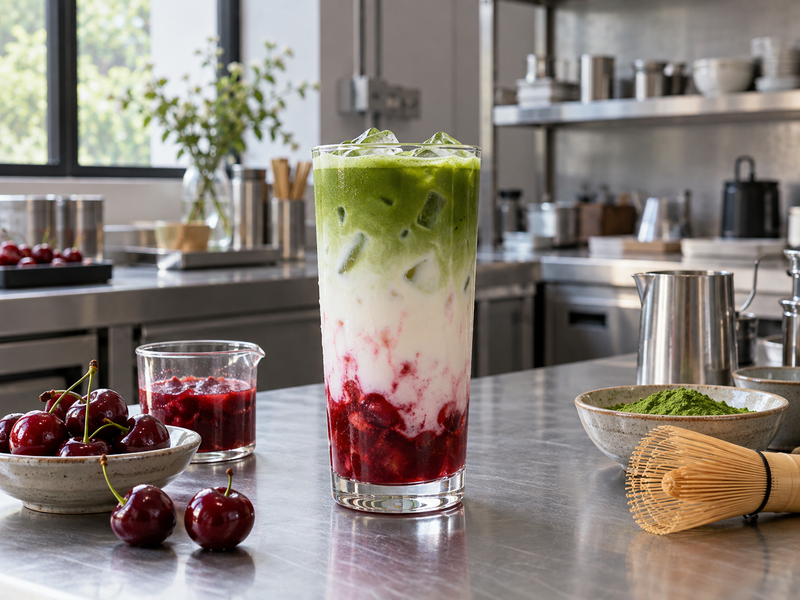
2. What should buyers ask a cherry supplier?
Identify fruit content and processing
Request the complete ingredient list and clarify whether the product is puree, juice concentrate, syrup or a compound beverage base. Ask about fruit species where relevant, added sugar, acidity specification, pulp size and processing. Two products both called cherry puree may have very different textures and sweetness. Obtain the supplier’s instructions for thawing and use after opening before planning the cafe workflow.
For frozen pitted fruit, ask about the supplier’s pit fragment controls. Pitted does not mean a cafe should ignore its own receiving and preparation checks. Whole fruit requires labour for inspection and removal of stems and stones, which should appear in the cost estimate. Keep fruit intended for garnish separate from the portion used to develop a smooth beverage base.
Request a small sample from a commercially representative batch. A hand prepared sample may taste excellent but tell you little about the product that will arrive in a large pail. Record colour, aroma and texture after the supplier’s specified preparation. Send the supplier photographs of any unexpected fragments, separation or discoloration together with the lot code. A precise observation makes replacement and investigation easier than a complaint that the fruit looks wrong.
3. What quantities can a cafe test?
Use unsweetened puree as a defined starting point
The table describes an untested iced latte trial using an unsweetened, commercially prepared, ready to use cherry puree. If your product is concentrated, sweetened or requires a cooking step, obtain preparation instructions and redesign the trial. Do not substitute it gram for gram merely because the front label says cherry.
| Ingredient | Proposed single cup mass | Trial purpose |
|---|---|---|
| Pure matcha | 2 g | Tea component |
| Water | 40 g | Tea dispersion |
| Unsweetened cherry puree | 30 g | Fruit component |
| Simple syrup, equal sugar and water by mass | 10 g | Adjustable sweetness |
| Milk or chosen plant drink | 160 g | Latte body |
| Ice | 90 g | Cooling |
Compare 20 g, 30 g and 40 g puree in separate cups, adjusting milk to keep total liquid mass similar. These are proposed screening levels. Use a consistent syrup recipe across the comparison and document it. The best fruit level may still need a later sweetness trial.
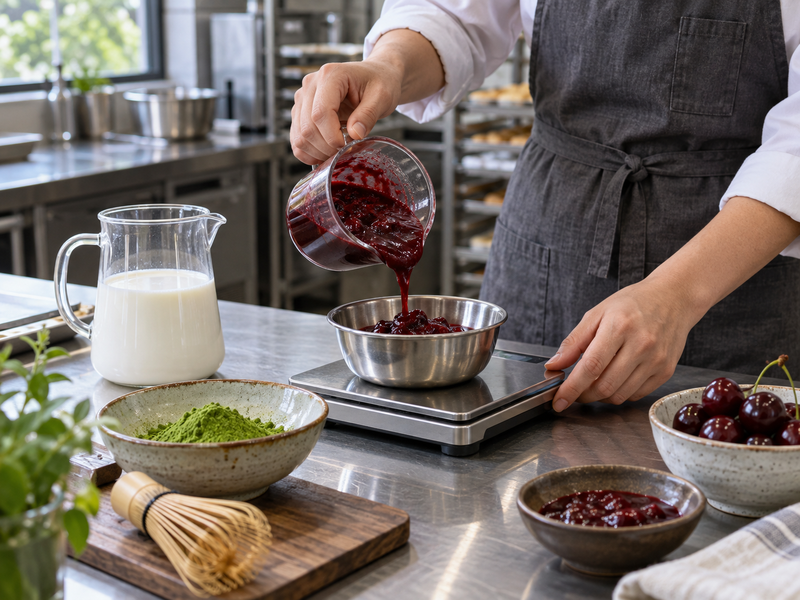
Spoon the puree into the cup, add the measured ice and milk, then pour the freshly dispersed tea. Assess the appearance briefly, stir thoroughly and taste. Weigh the total build and check that the chosen cup has space for the lid and normal mixing.
4. How can fruit acidity affect the latte?
Observe the drink after mixing
Acidic cherry ingredients can create compatibility problems with some dairy and plant drink formulations. A neat red layer at the base of the cup does not prove the mixed drink will remain smooth. Observe the cup after customers would normally stir it and during the intended drinking period. Record visible flecks, graininess and separated liquid separately from harmless fruit pulp.
If the drink looks unstable, compare the cherry preparation alone with the milk, leaving tea out of the trial. This can show whether the fruit and base combination needs attention before you spend time changing matcha. Compare a different milk formulation or a less acidic cherry preparation, keeping the ingredient change explicit. Additional sugar may improve taste but should not be assumed to solve physical instability.
Manufacturers developing a packaged product should measure the actual formulation and obtain technical support for its process. This cafe trial does not prescribe an acidity target or stabilizer system. For immediate cafe service, choose the combination that passes your visual and sensory checks under realistic conditions. A water based cherry tea is another menu option when the intended fruit character cannot be maintained in your selected milk.
5. Should the cherry base contain pieces?
Match pulp size to the cup and utensil
A smooth puree works differently from chopped cherries. Pieces can give a clear fruit identity but complicate pumping, portioning and drinking through a narrow straw. Decide whether customers should sip a uniform drink or eat fruit with a spoon. The answer affects the lid, utensil and serving instructions as much as the recipe.
| Fruit format | Service benefit | Work to check |
|---|---|---|
| Smooth puree | Easy portion comparison | Sediment and viscosity |
| Strained syrup | Clearer liquid texture | Fruit identity after dilution |
| Fine compote | Visible fruit | Spoon or wide opening |
| Whole garnish | Immediate cherry cue | Pit removal and handling |
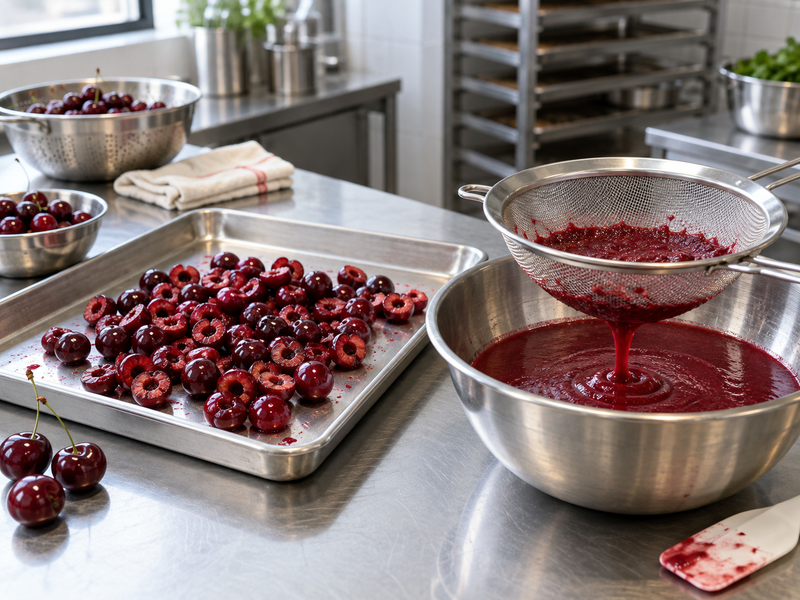
If you strain an in-house base, weigh it before and after straining. The retained solids are a cost, and different staff pressure on the sieve can alter the finished yield. Set a consistent method rather than asking staff to press until it looks right. Avoid adding a whole cherry garnish unless preparation and customer use are clear.
Clean strainers promptly under the site’s cleaning procedure; dried fruit residues make the next preparation harder to inspect. Store tools where they remain separate from raw food preparation. A fruit drink often reaches the customer without another processing step after assembly.
6. Which matcha works with a strong cherry base?
Check aroma and finish in the complete cup
Choose tea by its performance in the approved fruit and milk combination. A powder that tastes pleasant in water can disappear behind cherry syrup. Another may remain obvious but leave an unpleasant dry finish. Ask tasters to score fruit recognition, tea recognition and aftertaste separately so a strongly flavoured cup does not automatically receive the highest score.
Use the same matcha dose for the initial supplier comparison. After choosing a candidate, test a modest dose adjustment while keeping the fruit fixed. Specify pure tea if that is what the recipe requires; a latte premix contributes other ingredients and needs its own balance. Keep opened samples protected according to the supplier’s directions during the tasting session.
The Matcha Village ingredient buyer guide can help organize the sample request. Include the cherry product specification, intended milk and the desired selling price. Request documentation for origin, lot traceability and destination market requirements. Do not assume a marketing grade name guarantees a particular result with fruit. Approve the lot against the actual drink, then retain the written recipe so later deliveries can be compared fairly.
7. How should a cherry drink be costed?
Include fruit preparation losses
For whole fruit, calculate usable prepared mass after removing stems, stones and unsuitable pieces. For frozen fruit, follow the supplier’s handling directions and decide whether the thaw liquid enters your recipe. Excluding it in one batch and including it in another changes both flavour and yield. Use the same method when estimating demand for a seasonal menu.
| Purchasing form | Cost basis | Frequently missed item |
|---|---|---|
| Fresh cherries | Usable pitted mass | Sorting and pitting labour |
| Frozen pitted fruit | Prepared usable mass | Thaw handling and liquid |
| Ready puree | Dispensed mass | Residue left in pail |
| Beverage syrup | Approved dose | Extra sweetener already included |
| Garnish fruit | Count of acceptable pieces | Damaged or split fruit |
Suppose a hypothetical 1,000 g fruit purchase produces 850 g usable preparation. Divide its purchase cost by 850, then multiply by the portion dose. Those numbers illustrate the method; they do not predict your fruit yield.
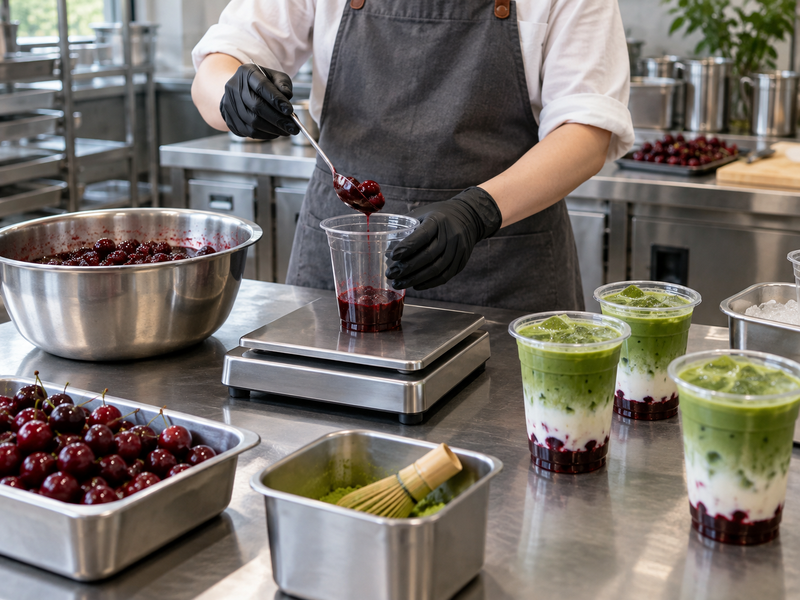
Track the number of cups actually served from each container during a pilot shift. A theoretical portion count can miss material left on spatulas, strainers and bottle walls. Use observed losses to refine ordering, and keep them separate from the approved recipe mass.
8. What handling controls are needed for cherry preparation?
Write separate instructions for each purchased format
Fresh cherries, frozen fruit and a ready to use syrup should not share a single storage instruction. Follow the relevant supplier directions and the site’s food safety plan. FDA produce guidance advises washing fresh produce under running water before preparation and keeping it separate from raw animal foods. Washing reduces contamination but does not sterilize fruit.
A frozen product may require cooking before consumption. Read its intended use instead of assuming frozen fruit is ready to eat. If the supplier specifies a treatment, that requirement belongs in the preparation card. Record lot codes on any decanted puree or syrup container so a recall can be traced through the cafe’s stock.
Use the FDA Food Code as a source of retail food safety context, then apply the requirements adopted where the cafe operates. The trial here gives no holding life for cooked cherry syrup, thawed puree or a finished latte. Assign those controls through the responsible food safety process before batching. A pleasant smell and a bright red colour cannot establish that a stored fruit preparation is safe.
9. How should the team diagnose a disappointing cup?
Separate flavour, texture and service defects
A cup can fail for more than one reason. Record each observation in plain language: cherry is hard to identify, tea feels gritty, milk has visible flecks, or the straw blocks. Avoid one broad score that hides the cause. Photograph texture defects before stirring again, because a second mixing step can temporarily hide separation that customers will encounter.
| Observation | Investigation | Controlled change |
|---|---|---|
| Generic red sweetness | Taste fruit in water | Compare cherry preparation |
| Sharp sour finish | Taste fruit with milk | Adjust fruit or base |
| Green lumps | Inspect tea dispersion | Change whisking method |
| Straw blockage | Inspect pulp size | Strain or change utensil |
| Uneven sweetness | Check assembly sequence | Mix syrup before finishing |
Ask staff to prepare the candidate during a simulated queue. If fruit remains on the scale or the bottle cannot dispense quickly, fix the station before announcing a large launch. A drink that works during a quiet development session may need a different portioning tool for real service.
Include one fully stirred cup in the tasting display. Layered photographs are useful for presentation approval, but the customer drinks the ingredients together. Approve that combined colour and flavour as part of the product specification.
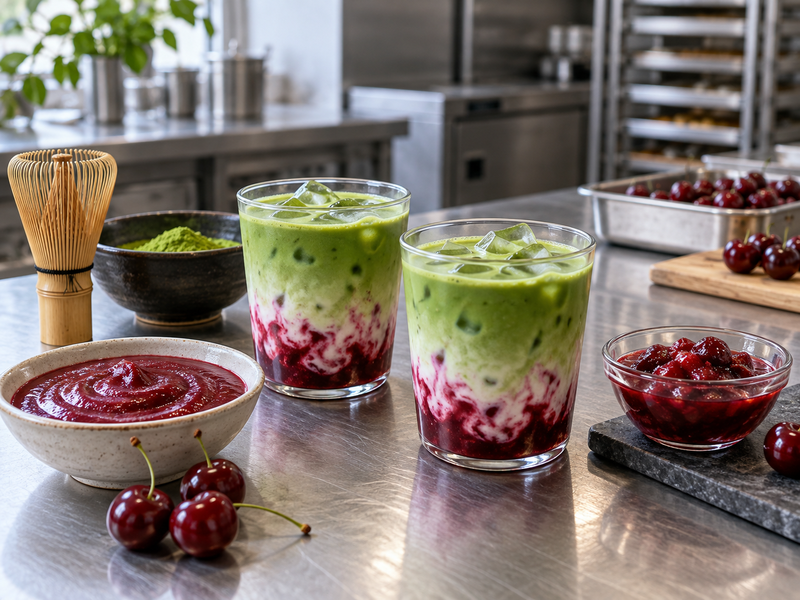
10. What should be approved before the menu goes live?
Connect purchasing with the barista card
The final file should name the exact cherry preparation, matcha, milk, syrup, cup and utensil. Include masses, assembly sequence and a photograph of the drink after normal stirring. Identify which ingredient changes require another trial. A substitute cherry syrup with added flavouring can alter both the taste and the accuracy of the menu description.
Check the incoming fruit package against the sample documentation. If the commercial pack has a different ingredient declaration or preparation instruction, hold the substitution for review. Match the supplier lot with your receiving record and confirm that staff can dispense the planned dose without repeated manual corrections.
For a chain rollout, have a second site make the drink using the written instructions. Collect observations about pitting, pulp, ice and milk compatibility before placing the larger order. Use those observations to revise the practical parts of the card. Schedule the initial order around realistic sales and pack usage, then request a representative cherry sample and a matcha sample for the next delivery comparison.
FAQ
Q1: Can a cafe use frozen cherries?
Yes, when their intended use and supplier handling directions fit the preparation. Check whether the fruit requires cooking. Measure the usable portion consistently after the approved preparation.
Q2: Can cherry syrup replace puree?
It can support a different trial, but it changes fruit solids and sweetness. Reduce or remove separate syrup only after reviewing the ingredient composition and tasting the result.
Q3: Does the latte need vanilla?
No. Test the cherry and tea combination without extra flavourings first. Vanilla may suit a dessert version, but it can make a mild cherry base harder to recognize.
Q4: Are cherry pieces suitable for a takeaway cup?
Only if the opening and utensil suit the pieces. Check the largest intended particle and the customer’s normal drinking method before selecting packaging.
Q5: Can the finished drink be made in advance?
This article proposes made to order trials. Advance preparation needs approved handling and holding controls plus a quality assessment of the complete drink over the planned service period.