
An iced matcha latte recipe needs more than a spoonful of green powder and a cup of milk. Ippodo’s iced latte starts with 3 grams of matcha, 100 milliliters of water and 100 milliliters of milk, then adds ice. That is a clear reference for a home serving. A café has to decide its cup size, ice load, milk, sweetness and service method, then check whether another barista can repeat the result. The following method treats Ippodo’s numbers as a starting point and builds a recipe around the drink guests will actually receive.
Contents
- 1. What must the recipe specify?
- 2. Which matcha powder fits the cup?
- 3. How do you prepare the tea base?
- 4. How should milk be selected?
- 5. What does ice do to the ratio?
- 6. How do you test sweetness?
- 7. Which build order should staff use?
- 8. How do you test an actual shift?
- 9. How do you calculate serving cost?
- 10. When should the recipe be revised?
1. What must the recipe specify?
Put the whole glass on one card
List powder weight, water amount and preparation temperature, milk type and volume, sweetener amount, ice quantity, cup size and pour order. A card that says “3 grams matcha, 100 milliliters water” has described only the tea base. If one staff member adds 100 milliliters of milk and another fills a 16-ounce cup to the rim, they have made different products. Decide the finished cup target before testing powder. Use a scale for matcha rather than a heaped scoop, which can vary between staff and lots.
Also specify what the customer should taste. A tea-forward cup may need less milk than a soft sweet latte. Keep the sensory description short: recognizable green tea, smooth texture and no harsh aftertaste. The card should include a photo under normal service lighting, but not rely on color alone. If the shop offers two cup sizes, make separate measured recipes. Doubling everything may overload the larger cup with ice or sweetness. A useful recipe tells the purchasing team how much powder to buy and tells a new barista what to do without a developer standing nearby.
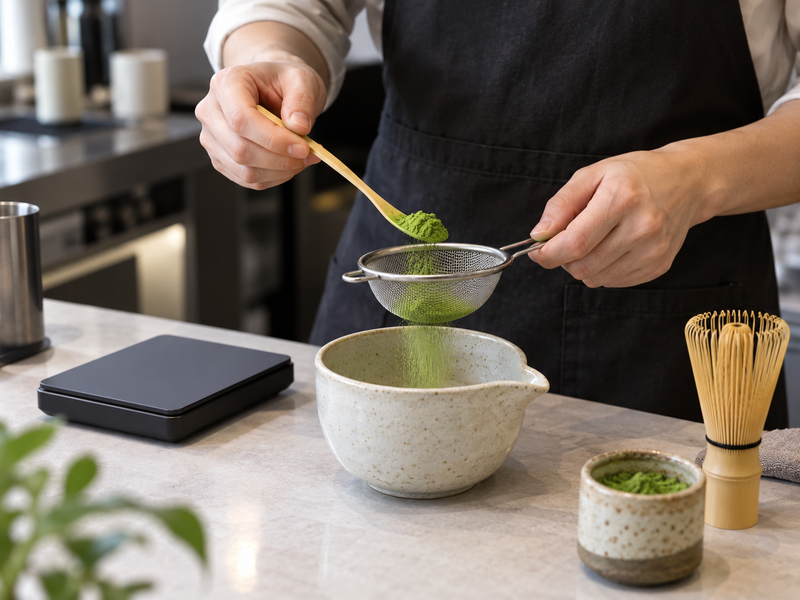
| Recipe field | Unit to record | Why it matters |
|---|---|---|
| Matcha | Grams | Flavor and cost |
| Water | Milliliters or grams | Tea-base strength |
| Milk | Product and milliliters | Body and allergens |
| Ice | Grams or fixed fill | Dilution |
| Sweetener | Grams or pump calibration | Consistency |
2. Which matcha powder fits the cup?
Taste commercial lots in milk
Ask suppliers for samples tied to products you can order and receive. Prepare each at the same powder dose, water amount and milk volume. Taste the finished latte blind if possible, then ask whether the tea remains clear after the ice starts to melt. An elegant plain-tea sample may disappear in milk. Another may be vivid and flavorful but require a dose that is too costly for the intended menu price. Compare the cost of the passing recipe, not only the quote per kilogram.
Check the lot identity, product specification and storage advice. If the supplier sends an unmarked sample with no link to a commercial bag, it cannot be approved for repeat service. Make one larger pilot batch or several individual cups with the leading powder to assess clumping and barista handling. Keep an approved reference sample where the supplier’s storage guidance allows. When a new lot arrives, retest the latte before it becomes the default at every location. The powder choice belongs in the same recipe record as the milk and ice; changing one of these without tasting can shift the cup noticeably.
3. How do you prepare the tea base?
Disperse powder before it meets cold milk
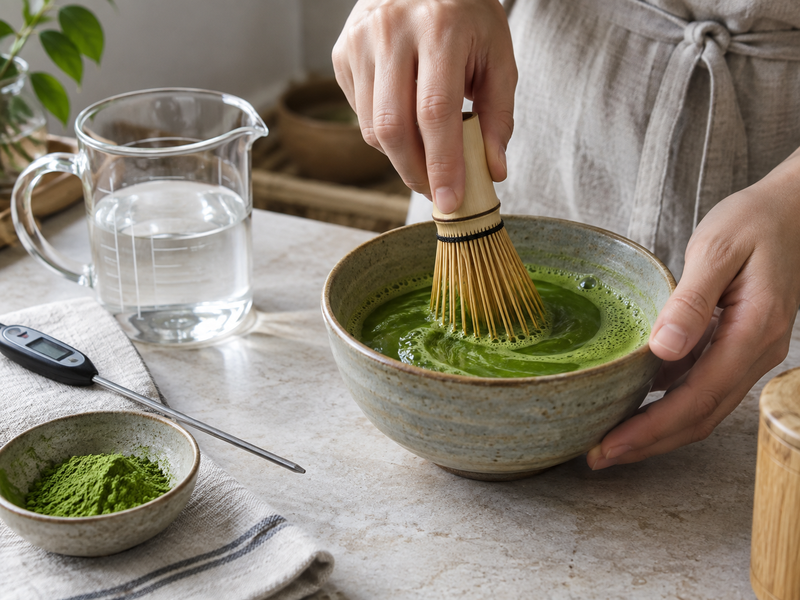
Ippodo sifts matcha, adds warm water and whisks before pouring it over milk and ice. A café can test that method alongside a shaker or electric frother, but the result must be judged by texture and service time. Use measured water. If a barista adds an unmeasured splash each time, the finished cup volume and tea strength will wander. Record the whisking tool and sequence that produced the approved cup.
Run a simple dispersion check: inspect the tea base for dry clumps, pour it into the cold milk, and look at the bottom after the guest would have taken several sips. A little visible suspension is normal for powdered tea; lumps that give a gritty mouthfeel are not. If warm water is used, record its temperature range as a preparation variable rather than repeating a claim that one exact temperature is right for every powder. Test the selected matcha at two realistic settings while keeping dose fixed. A clean, quick tea base is the foundation of the drink, especially when several baristas share the station.
| Method | Trial advantage | Check in finished cup |
|---|---|---|
| Sieve and whisk | Familiar control | Clumps and speed |
| Electric frother | Fast mixing | Foam and texture |
| Sealed shaker | Small tool footprint | Consistent dispersion |
| Prepped concentrate | Rush capacity | Approved hold plan |
4. How should milk be selected?
Approve each offered milk in the recipe
Milk affects sweetness, texture, color and how much tea remains perceptible. Test the café’s regular dairy milk first if it is the intended default, then test each plant milk offered as an alternative. Keep powder and water fixed so the milk comparison is meaningful. One product may make a smooth drink at 120 milliliters while another needs a different amount to avoid hiding the tea. Do not assume that a plant option is an equal-volume substitution in taste or cost.
Read the ingredient and allergen statements for every milk. The FDA’s food allergen information provides a U.S. reference, while the café’s local rules and actual products determine what it must tell customers. Keep a small matrix with the approved milk brands and any change triggers. A new “barista edition” product might foam or sweeten differently from the previous one. If a guest asks for less milk, the barista should have an approved way to make a stronger cup, rather than removing an arbitrary amount and leaving the ice and water unchanged.
| Milk option | What to taste | What to record |
|---|---|---|
| Dairy | Tea clarity and body | Fat level and brand |
| Oat | Sweetness and cereal note | Exact product |
| Soy | Flavor and texture | Exact product and allergens |
| Other plant milk | Tea balance | Tested serving volume |
5. What does ice do to the ratio?
Measure dilution over a normal wait
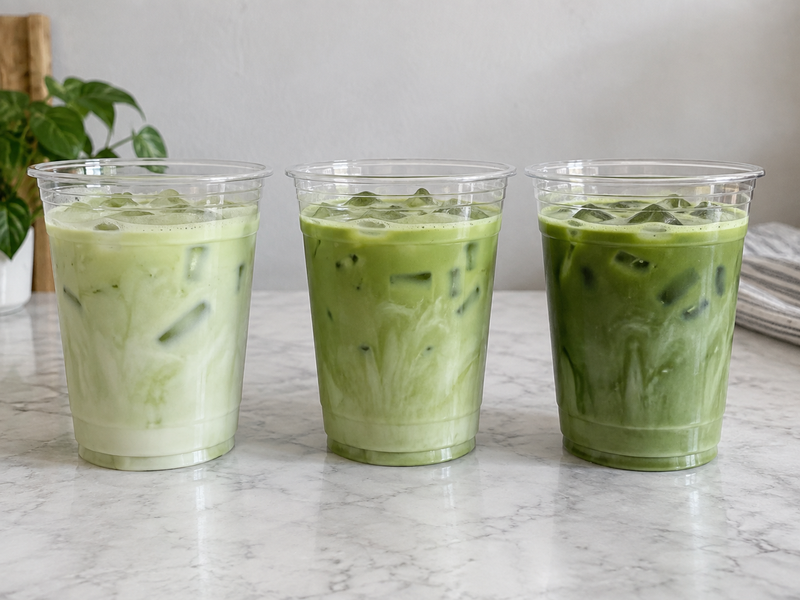
Ice is part of the recipe. Fill one cup using a specified ice mass or a fixed scoop that has been checked by weight, then add measured liquids. Taste the drink at handoff and again after a realistic pickup delay. A cup can begin with a strong tea layer and become pale as ice melts. If it fails at the later point, adjust powder dose, water, milk or ice one variable at a time. Do not judge only the first photogenic minute.
Cup shape matters. A tall narrow cup and a short wide cup can look equally full with very different liquid volumes. Decide the vessel before finalizing the ingredients. Test a lid and straw if those are part of service, because the guest may sip mostly from the bottom milk layer or stir immediately. The ratio should describe what remains drinkable after normal handling. For delivery, test the actual route interval rather than guessing from a counter sample. Ice quality and scoop hygiene also belong in the café’s existing food-safety plan, although they are not substitutes for a good formula.
6. How do you test sweetness?
Start with the milk and tea before adding syrup
Prepare the approved tea and milk base without sweetener and ask tasters what is missing. Some powders and milks produce a balanced cup as they are; others benefit from a measured syrup addition. Add sweetener in a small dose ladder, keeping everything else fixed. The aim is not to erase tea bitterness at any cost. If a high syrup dose is required to make the powder pleasant, consider another powder or a different milk before building the menu around sugar.
Use a liquid sweetener if that is what the café can dose consistently in a cold drink. Granulated sugar may be harder to disperse after assembly, so test the actual method. Record pump output by weight if pumps are used; “one pump” is meaningful only after calibration. Offer an unsweetened version if the base has been tasted and approved that way. Do not promise that a drink is sugar free merely because no syrup was added; the milk and other ingredients still have their own composition. Train staff to state what is in the cup, not to infer nutrition from a recipe nickname.
| Sweetness test | Hold fixed | Record |
|---|---|---|
| No added syrup | Tea, milk, ice | Baseline flavor |
| Low dose | Same base | Tea clarity |
| Higher dose | Same base | Whether sugar dominates |
7. Which build order should staff use?
Choose a sequence that survives handoff
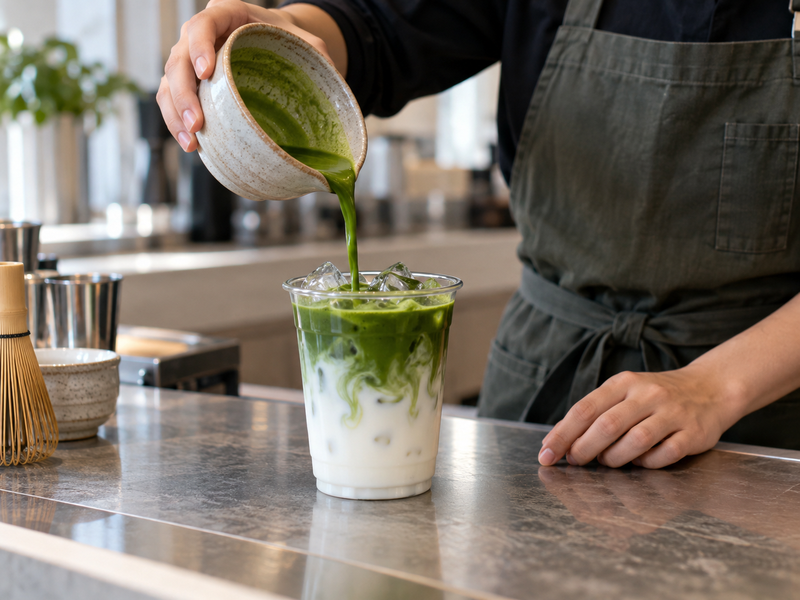
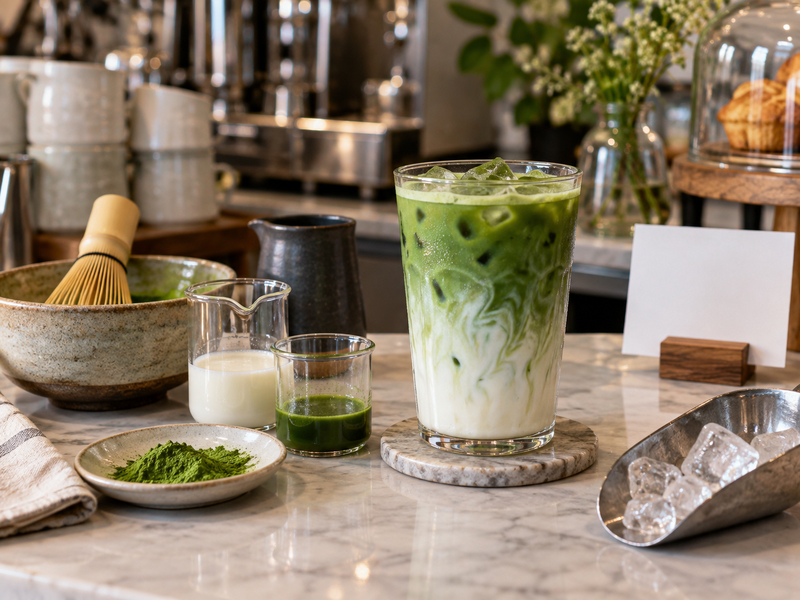
Pouring whisked tea over milk and ice produces an attractive green layer. That is the order in Ippodo’s reference. A café can use it if the layer remains acceptable through normal service and the cup tastes good when stirred. Test whether syrup goes into the tea base or milk; the choice can change which sip tastes sweetest. Keep the cup from being overfilled before the matcha arrives. A deliberate sequence also helps staff avoid discovering at the end that the lid will not fit.
Have a second barista build the drink from written steps while the developer watches silently. If that person has to guess when to add ice or how much tea base to pour, revise the card. Note where the whisk and scale live, and how tools are rinsed between orders. A fast pour may mix the colors more than a careful one; decide whether that matters to the menu. The drink should taste right even after colors merge. A strong recipe is not dependent on a barista making a perfect spiral for every guest.
8. How do you test an actual shift?
Make repeated cups during a small pilot
One controlled tasting shows direction; a short service pilot shows whether the recipe can be repeated. Ask at least two baristas to make several cups using the same card and powder lot. Compare fill level, tea strength, texture and preparation time. Weigh a few powder portions during the pilot to see whether staff are using the scale correctly. Watch where waste accumulates: excess whisked tea left in a bowl or milk poured above the line can change margin as well as flavor.
Keep a short feedback form for customers or staff. Ask what they tasted first, whether the tea was clear after stirring, and whether the cup stayed pleasant during the normal drinking period. Avoid leading questions such as “Did you love our premium matcha?” If a second location has a different water supply or ice machine, repeat the check there. The recipe may be the same on paper but different in practice. Update the card after the pilot, not through verbal instructions that disappear when a staff member changes shifts.
9. How do you calculate serving cost?
Use the approved cup and real waste
Multiply the approved powder grams by the delivered price per gram. Add milk, syrup, cup, lid and other ingredients. Include waste from trial cups, powder retained in a sifter or tea base left in a vessel if it is material at scale. A high-priced powder may still give a lower cup cost if it passes with fewer grams; a cheap powder that needs a much larger dose may not. Compare the finished recipes at equal sensory quality.
Cost milk variants separately. A plant milk surcharge should reflect the actual difference rather than an assumption. If the café makes two sizes, test and cost each. Do not calculate the large cup by adding milk alone if the result no longer tastes like matcha. The matcha ratio guide provides a broader trial framework; this recipe card should record the final numbers. Update the worksheet when powder lots or pack prices change. The buyer needs the same gram figure that the barista uses.
| Cost item | Basis | Recheck trigger |
|---|---|---|
| Matcha | Grams per approved cup | New lot or price |
| Milk | Milliliters served | New product |
| Syrup | Grams or calibrated pump | Pump change |
| Packaging | Cup and lid | Size change |
10. When should the recipe be revised?
Set clear triggers before a new lot arrives
Retest when matcha, milk, cup size, ice amount, water source or method changes. A new powder can look similar but taste different in the finished latte. A new oat milk may add sweetness; a new cup can invite staff to overfill. Compare the new version with the approved recipe under the same conditions, then record a dated change if it passes. Do not let individual shifts compensate with extra powder or syrup without updating the card and cost.
The finished iced matcha latte recipe should be easy to teach: measure, disperse, build, check fill and hand off. Keep the supplier lot, photo, sensory target and cost in the same record. If guests consistently ask for a stronger drink, test a separate tea-forward option rather than allowing every barista to improvise. A basic iced matcha latte deserves the same care as a seasonal specialty because it is often the cup by which customers judge the café’s matcha program.
Frequently asked questions
Q1. Is Ippodo’s ratio required for every café?
No. It is a useful starting point. Test the powder, milk, ice and cup size your business will use.
Q2. Why should powder be weighed?
Weight makes tasting comparisons, staff training and cost calculations repeatable.
Q3. Can matcha be mixed directly into cold milk?
It can be tested, but a separately dispersed tea base may reduce clumps. Approve the method by the finished cup.
Q4. Does a plant milk need its own recipe?
Yes. Taste it and record any changed milk or matcha amount, cost and allergen information.
Q5. How often should a café retest?
Retest when a key ingredient, lot, cup or preparation method changes, and when regular quality checks show a shift.