
Kagoshima matcha can give a tea brand a specific Japanese origin story, but a place name is only the beginning of a purchasing decision. Buyers still need to know where leaves were grown, where tencha was processed, where powder was milled, and which lot they will receive. They also need a cup that suits the product being sold. This guide outlines how importers, retail brands, and café groups can examine a Kagoshima offer without treating geography as a substitute for flavor or compliance. It separates verifiable provenance from sensory preference and gives teams a practical approval path.
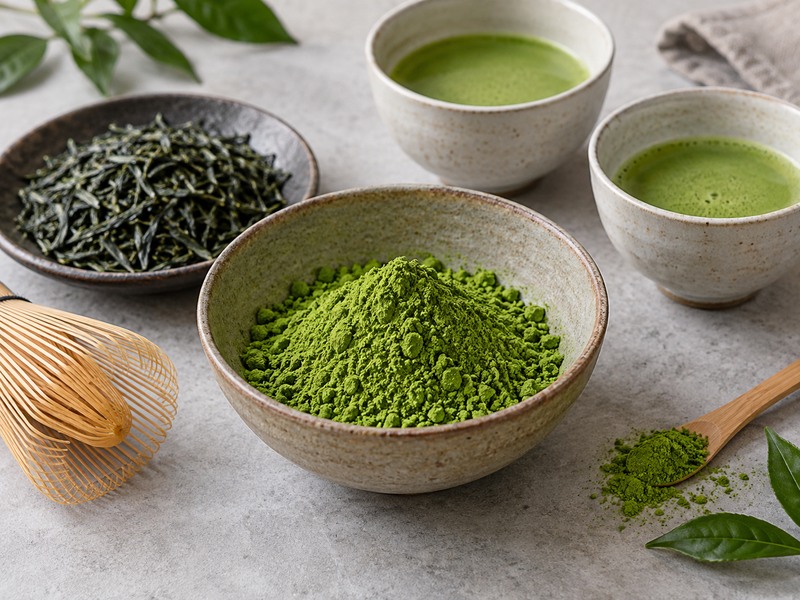
1. What is Kagoshima matcha?
Kagoshima is a Japanese prefecture with a substantial tea industry. Matcha is made by milling tencha, a processed tea leaf; it is not a generic name for every green tea from the region. The Japanese Ministry of Agriculture, Forestry and Fisheries describes Kagoshima’s tea production and its response to demand for tencha. That context supports a regional sourcing conversation, but it does not authenticate an individual supplier’s powder. A buyer should ask which steps happened in Kagoshima and how the offered lot can be traced through them.
Which origin terms should be separated?
Record tea-growing location, tencha-processing location, milling location, blending location, and final packing location. Follow the leaf. A product packed in Kagoshima may include tea grown elsewhere; one grown there may be milled or packed in another region. Neither fact is necessarily a defect, but the final marketing claim must match the documents. Ask whether the SKU is single-origin, a regional blend, or a wider Japanese blend. If the offer uses the word “Kagoshima” only as a style cue, it should not be represented as a geographic fact. A sample label and batch trace are more useful than a scenic photograph.
| Supply step | Question for seller | Evidence to retain |
|---|---|---|
| Growing | Where were leaves harvested? | Farm or intake record |
| Tencha processing | Where was leaf processed? | Processing lot |
| Milling | Where was powder ground? | Milling batch |
| Packing | Where was SKU filled? | Pack and export record |
2. Why has Kagoshima become relevant to matcha buyers?
A diversified Japanese tea region can offer more sourcing options, but each contract still depends on a specific producer and specification. The ministry’s regional overview notes tencha production as part of Kagoshima’s tea portfolio. Buyers should avoid turning that observation into a promise of unlimited capacity or a fixed price. Seasonal supply, blend composition, export availability, and pack size vary by seller. The commercial reason to investigate the region is choice: an importer can compare a Kagoshima lot with other documented origins against the same application and price basis.
How should a buyer assess commercial fit?
Ask for expected annual volume, minimum order, lead time, sample availability, and the process for approving a future harvest or blend. Test continuity, not just discovery. A tea brand launching a regional SKU needs a credible reorder path; a café chain needs enough powder to hold the recipe through the menu period. If supply is limited, decide whether a seasonal offering with honest date language makes more sense than a permanent menu item. An importer should model landed cost, not only ex-factory price. The destination market may require documents and transit time that change the economics of a small specialty lot.
3. Does regional origin predict flavor or color?
Origin can inform a buyer’s questions, but it cannot determine the taste of an unseen lot. Cultivar, growing, shading, harvest, tencha processing, blending, milling, packing, and storage all shape the finished powder. Two Kagoshima samples may differ more from each other than one differs from a sample from another prefecture. Evaluate the actual powder in a plain bowl and in the planned application. A café latte can favor a different profile from a retail tin meant for water preparation. Color should be viewed under fixed light and checked after the intended preparation or process.
How should a blind tasting be run?
Code samples and use the same powder weight, water, temperature, vessel, and preparation method. Hide the map. Origin labels can bias tasters before the first sip. Score aroma, sweetness, savory notes, bitterness, body, mouthfeel, and finish. Then test the same powders in the commercial recipe. A powder that wins in water may not justify its price in a sweetened drink. Keep written notes and a retained reference from the approved lot. If a future supply offer changes blend components, compare it against the original using the same method rather than relying on a buyer’s memory.
| Trial format | Primary question | Decision |
|---|---|---|
| Plain bowl | What does powder itself taste like? | Baseline quality |
| Iced latte | Does tea remain clear in milk? | Café use |
| Bakery item | Does flavor survive heat? | Ingredient use |
| Stored pack | Does profile hold as sold? | Shelf-life plan |
4. Which documents support a Kagoshima origin claim?
A credible origin file connects a lot code on the purchased powder to upstream growing and processing records. Ask for an origin declaration, traceability description, invoices or shipping documents as relevant, and a specification that names the offered product. Certification for organic or other claims has its own scope and validity period. Do not use a facility’s address as proof that every leaf in a blend came from that location. The level of evidence should match the exact words planned on packaging, a website, or a menu.
Who should review the claim before printing?
Procurement gathers records; quality checks lot linkage; legal or regulatory staff review destination-market wording; marketing writes only what the file supports. Make the sentence traceable. “Grown in Kagoshima” asserts something different from “milled in Kagoshima.” If the company cannot support the stronger phrase, use the narrower documented one. Store translations and artwork versions with the approved evidence. A private-label brand must also decide whether its supplier can maintain the same origin claim after harvest changes. The matcha tea origin page gives broader tea context, while the actual SKU’s records govern its provenance.
5. How should an importer specify the powder?
Write an application-driven specification in addition to the geographic requirement. Include ingredient identity, powder form, sensory profile, pack type, storage instructions, shelf life, testing requirements, and destination-market documents. Decide whether a specific harvest, cultivar, or milling process is required or merely preferred. Narrow requirements can increase cost and supply risk. Clarify whether a supplier may blend lots to maintain the approved cup profile and what notice the buyer receives before a change. A sample alone cannot define a supply agreement unless its accepted attributes are recorded.
What should the first quotation show?
Request the exact pack size, currency, incoterm, minimum order, sample lot, lead time, and validity period. Compare the same basis. One seller’s price may include a small retail pack, while another quotes a bulk liner. Include freight, duties, inspection, relabeling, and likely waste when estimating landed cost. If a product must be packed for private label, ask who owns artwork checks and how much remaining life will be delivered. A region-specific SKU may need additional buffer stock because a substitution could invalidate the front-of-pack claim. Put change notification into the purchase terms before the first order.
| Specification item | Must be fixed? | Reason |
|---|---|---|
| Origin claim | Yes, if printed | Label accuracy |
| Sensory range | Yes | Consistent product |
| Exact cultivar | Only if promised | Supply flexibility |
| Pack barrier | Yes | Transit and shelf life |
6. Can Kagoshima matcha work in lattes and food?
Yes, if the offered lot meets the intended sensory and process target. The geographic name does not reserve the powder for a plain bowl. Test a latte with the chosen milk, sweetener, matcha dose, and hold time. Test a baked application after cooling and storage if that is the business use. A powder bought for a delicate plain-drinking line may be unnecessarily costly in a strongly flavored dessert. Conversely, a foodservice powder that tastes pleasant in milk may feel too rough in water. Stock separate specifications when the commercial formats genuinely need them.
How can a product team avoid overbuying a story?
Separate consumer-facing value from ingredient performance. Price the finished item. If a regional claim justifies a premium retail tin, document that value proposition. If a chain’s customers only see a flavored latte, a less expensive qualified powder may meet the same cup target. Ask a panel to compare coded products before showing origin. Then review whether documented provenance changes the brand’s decision and whether the price can be sustained. A buyer should not claim the regional source if the actual powder was substituted during a shortage.
7. What quality checks belong at receiving?
Match the lot, origin declaration, pack labels, quantity, remaining life, and certificate to the purchase order. Inspect seals and cartons for damage. Quarantine exceptions under the site’s quality process. Prepare a reference cup from a representative received sample and compare it with the approved lot under consistent conditions. Color photographs can help, but aroma and mouthfeel need direct evaluation. A supplier certificate may include important analytical results; it should identify the tested lot and methods. Do not assume that a correct country-of-origin line proves all other product claims.
How should an out-of-range lot be handled?
Record the exact difference, affected lot and packs, preparation method, and the retained comparator. Hold before blending. Mixing a questionable lot into another batch can destroy traceability and make diagnosis harder. Ask the supplier for its production and retention records. If a regional claim is affected, involve labeling staff before any alternative is used. A sensory difference may be acceptable for one application and unacceptable for another, but that decision should be authorized and documented. Importers serving several buyers can assign lots by approved application only when the contracts and labels allow it.
| Receiving check | Evidence | Failure response |
|---|---|---|
| Lot identity | Pack and documents | Hold mismatch |
| Origin | Lot-linked declaration | Review claim |
| Pack integrity | Seal inspection | Quarantine damage |
| Sensory | Reference preparation | Investigate deviation |
8. How do storage and transit affect the origin proposition?
A region story loses value if the delivered powder smells stale. Pack barrier, shipment route, warehouse conditions, and opened-pack handling influence the customer experience. Ask the supplier for recommended unopened and opened storage. Validate how cases travel from mill or packer through export, customs, local storage, and sale. Small retail tins and bulk bags have different exposure patterns once opened. A café should choose pack size by use rate, while an importer should specify minimum remaining shelf life on arrival.
Which records help trace a complaint?
Keep shipping dates, temperature or handling evidence where applicable, receiving inspections, pack codes, opening dates, and customer batch numbers. Follow the package. A stale note found only in one opened café pouch suggests a different investigation from the same note across sealed packs. Compare affected material with a retained lot sample before making a supplier claim. If a new film or closure is proposed, run the relevant stability work; a packaging change can affect color and aroma even when the tea’s origin does not change.
9. How should Kagoshima matcha be compared with other origins?
Use the same evaluation rules for every candidate. Put blind sensory results, documents, cost, lead time, and supply risk in one scorecard. Origin can be a required criterion for a regional SKU; for a general café ingredient it may be one preference among several. Avoid simplistic statements that one prefecture always produces superior matcha. Quality varies by producer and lot. A buyer who sells Chinese and Japanese matcha can describe each honestly and match it to its intended use without pretending that they carry the same origin claim.
What does a useful sourcing scorecard contain?
Give separate columns for plain-cup quality, application fit, origin evidence, documentation, landed cost, supply continuity, and pack suitability. Keep the scores separate. A high sensory score should not erase missing provenance documents for an origin-labeled product. Likewise, a perfect origin file does not rescue a powder that fails the cup target. Note which requirements are non-negotiable and which can be traded off. The final decision should cite the actual offered lot and specification, not a seller’s broad regional description. Retain the rejected reasons for the next sourcing cycle.
| Criterion | Regional SKU | General ingredient |
|---|---|---|
| Origin proof | Mandatory | Accurate disclosure |
| Sensory fit | Mandatory | Mandatory |
| Landed cost | Margin target | Usage-cost target |
| Continuity | Reorder plan | Reorder plan |
10. When is a Kagoshima matcha offer ready for approval?
Approve the offer when the lot can be traced, the exact claim is supportable, the powder meets its use-case test, and the commercial terms permit repeat supply. Write a release plan for future lots and a change-control rule for harvest, blend, mill, or pack changes. If the tea is sold as a limited release, say so and set a realistic reorder expectation. If it is a permanent item, qualify an acceptable continuity plan that does not silently change the origin promised to customers.
What should the buyer ask next?
Send a brief naming the sales market, application, expected volume, desired pack, sensory target, and required provenance. Request a lot-linked sample and documentation before committing artwork or menu copy. Approve the evidence with the cup. Keep the tasting sheet, signed specification, label wording, and origin file together. A clear source story can make a product distinctive, but the business still needs a powder that arrives sound and makes the drink or food it has promised.
FAQs
Q1. Is every tea from Kagoshima matcha? No. Confirm that the offered powder is matcha made from tencha and review its product specification.
Q2. Does “packed in Kagoshima” mean the leaves grew there? No. Growing, processing, milling, and packing are separate facts that need separate evidence.
Q3. Is Kagoshima matcha suitable for a latte? It can be. Test the identified lot in the actual milk, dose, sweetness, and service conditions.
Q4. Must a buyer specify one cultivar? Only when a cultivar claim or sensory target requires it; narrower specifications may limit supply options.
Q5. What should support an origin claim? Keep lot-linked growing and processing records, supplier declarations, relevant shipping records, and approved label wording.