
Matcha chia pudding is easy to mix at home and surprisingly easy to get wrong at scale. Seeds settle before they hydrate, a generous spoonful of powder makes the cup harsh, and fruit placed too early releases liquid into the top layer. The matcha chia pudding recipe visible in current search results is a useful home reference: chia, matcha, milk, and sweetener are the core ingredients. A café or prepared-food team needs one more layer of work: weights, holding rules, portion checks, and a cup that still looks and tastes good when the customer opens it. This guide is for that kitchen test. It does not treat a green breakfast as a health claim.
1. What should a finished matcha chia pudding be like?
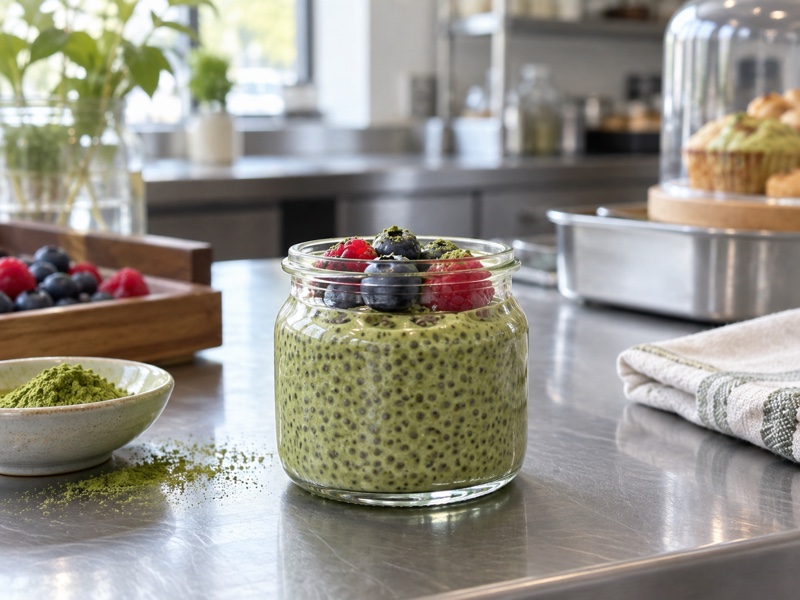
Start with the spoon, not the photograph. A good cup holds together when lifted but does not feel dry or cement-like. Seeds should be fully hydrated, with no hard center and no clear pool of milk at the bottom. Matcha should be identifiable behind the seed and milk flavors without a bitter finish. The topping should add contrast rather than rescue a bland base. Write those observations into a short product brief before changing the formula.
Decide where the cup will be sold. A breakfast item served immediately can carry crisp granola; a sealed takeaway cup held overnight usually cannot. A dessert version may tolerate more sweetener and richer milk than a morning menu item. A vegan label depends on every ingredient, including the topping and any sweetened milk. For a wholesale pack, the recipient’s cold chain, shelf-life study, and label review become part of product development. One name can cover several products, but one formula rarely serves every channel well.
| Product format | Texture target | Test at handoff |
|---|---|---|
| Café breakfast cup | Spoonable, light | After normal prep and queue time |
| Sealed takeaway pot | Stable layers | At opening after planned hold |
| Dessert cup | Richer, sweeter | With the actual topping |
2. Which chia and milk should the team test first?
Chia seed age and handling affect hydration. Buy the commercial grade the kitchen can actually reorder, check package condition, and make a small control batch before comparing flavors. Black and white seeds can both work; the choice changes appearance more than the fundamental process. If one lot swells slowly or leaves a hard center, record it instead of quietly extending the hold for every future lot. Sift out foreign material under the kitchen’s usual ingredient-control procedure.
Milk is a formulation ingredient, not a neutral liquid. Dairy can make the cup creamy and soft; oat, almond, soy, and coconut products vary widely in sweetness, fat, protein, and viscosity. A thin drink may need a different chia level than a thick barista product. Test the exact brand and version, including unsweetened or sweetened. Do not assume a plant milk makes the whole product dairy-free if the prep station, yogurt topping, or granola contains milk. The finished item and allergen information should be checked together.
For a first trial, hold chia and matcha fixed and compare two milks. Record total mix weight, mixing time, temperature, and texture at two points during hydration and at service. This is more informative than changing three ingredients in one bowl. The kitchen can then choose a milk on taste, texture, supply, and cost rather than on a claim printed on the carton.
3. How should matcha be mixed so the pudding has no green specks?
Dry matcha sprinkled into a bowl of thickening chia tends to form pockets. Make a smooth matcha slurry with a measured portion of the chosen milk before adding the remaining liquid and seeds. Sift the powder if the approved lot clumps. Check the sides and bottom of the vessel with a spatula: the green line left above the mix can represent a real loss of powder in a small batch. A vigorous blender can disperse tea, but it may also break seeds or change the expected texture. Choose the process that produces the intended cup.
The reference recipe suggests whisking matcha into milk before adding seeds and stirring again during the early set. That sequence is practical for a pilot; the commercial question is how to make it repeatable with the team’s actual mixer, vessel, and batch size. Set a time between first mix and second stir. If seeds settle into a dense bottom layer before staff return, a larger batch may need a different vessel or mixing schedule. Inspect a cup taken from the top and one from the bottom of the batch.
| Step | Record | Visible failure to catch |
|---|---|---|
| Tea slurry | Matcha grams and milk grams | Dry green flecks |
| First mix | Tool and mixing time | Uneven seed distribution |
| Early second stir | Minutes after first mix | Dense seed layer at base |
| Portioning | Weight per cup | Different textures across cups |
4. How much matcha belongs in one cup?
Set a dose range by taste and by the intended caffeine communication, not by the color of the powder. A light dose can disappear under coconut or sweet fruit; a large dose can make the cup bitter and expensive. Use grams per finished serving. A spoon measure changes with powder density and how tightly a cook packs it. Make three small samples with the same milk, chia, sweetener, and topping, then compare them blind after the full cold hold. Record the lowest dose that clearly tastes of tea.
Taste the base and the dressed cup. Berries, nuts, and granola can either support or hide the matcha. If a proposed topping needs so much syrup that the tea becomes background color, consider a simpler topping or a different menu description. The powder does not need to be the brightest available; it needs to taste acceptable after hydration and hold. Ask for a lot-linked sample and compare it with the retained approved powder in the actual pudding, not only in a whisked cup of water.
Any caffeine number presented to customers should come from the product and serving formulation with an appropriate basis. A generic online estimate for matcha may not describe the purchased lot or the final portion. If the brand does not need a numerical caffeine claim, accurate ingredient naming and sensible customer information may be clearer.
5. What creates a smooth set without a watery layer?
The chia-to-liquid ratio is a starting point, not a finished specification. Milk thickness, sweetener form, seed lot, and the time before portioning all change the set. The home recipe uses a relatively generous liquid ratio and a rest; a commercial kitchen should validate its own ratio through the intended holding time. Compare a spoonful from the top, center, and bottom of each trial cup. A thick surface and watery base suggest a mixing problem as much as a formula problem.
Build the trial by weight. Hydrate a small batch, stir at the set interval, portion identical cups, and chill them under the actual process. Photograph and score them at the planned sale time. If a cup is too stiff, add measured liquid in the next trial rather than splashing milk into finished stock. If it is loose, check seed quality and distribution before increasing chia. Too many seeds can make the texture pasty without solving uneven hydration.
| Observation | Likely question | Next controlled test |
|---|---|---|
| Clear liquid at base | Did seeds settle early? | Adjust second stir and fill timing |
| Hard seed centers | Was hydration complete? | Compare seed lot and hold |
| Very stiff cup | Is liquid too low? | Raise milk by a measured amount |
| Matcha streaks | Was tea dispersed first? | Change slurry method |
6. When should the topping go on?
Topping timing is part of texture control. Fresh fruit releases juice and may soften the top layer; frozen fruit can release even more as it thaws. Granola loses crunch in contact with moisture. Nuts may stay firm longer but introduce allergen and portion-control questions. Test the topping after the same hold as the saleable product. A beautiful five-minute sample tells little about a cup assembled before a morning rush.
For made-to-order service, keep dry toppings separate until handoff. For a sealed pot, consider a separate topping compartment or a topping that tolerates contact. Do not add a complicated component solely to improve a photograph. Weigh each topping and include its cost in the portion. A few extra grams in every cup can erase a narrow margin. The prep card should say which ingredients are added before chilling, at handoff, or by the customer.
Check color and flavor together. The topping should not imply ingredients the base does not contain. If berries appear on the menu image, provide the same fruit or clearly mark seasonal variation. A substitution from almond to another nut also changes the allergen information. Staff need an approved substitution list, not an improvised answer during service.
7. How should the kitchen hold and portion a batch?
Treat this as a refrigerated prepared food under the kitchen’s approved food-safety plan. Define who mixes, when the batch enters cold storage, the container, date marking, portioning method, and the point at which the team discards unsold product. Do not adopt a shelf life from a home recipe as a commercial rule. Ingredient suppliers, packaging, sanitation, and the real storage conditions matter. A wholesale product may need formal shelf-life and microbiological work beyond a café’s daily prep.
Weigh the first, middle, and last portions from a batch. A bottom-heavy seed distribution creates different product even if every cup has the same gross weight. If staff scoop from a tall tub, an approved stir before portioning may be needed. If portioning happens immediately after mixing, the seeds must stay distributed while each cup begins to hydrate. Cover the batch to limit contamination and avoid absorbing refrigerator odors.
| Batch record | Why it matters | Who checks it |
|---|---|---|
| Ingredient lots and weights | Traceability and repeatability | Prep lead |
| Mix and second-stir times | Even hydration | Prep cook |
| Cold holding record | Product safety plan | Shift lead |
| First, middle, last cup weights | Portion consistency | Quality check |
8. What should appear on a café or retail label?
Start with the actual formula, including milk, sweetener, toppings, and any flavoring. A green cup does not automatically qualify for an antioxidant, energy, or weight-management claim. The reference recipe contains broad wellness language; commercial copy needs a separate evidence and regulatory review. The product name should describe what a customer receives. If it contains both matcha and chia, show both plainly. If the drink base is almond milk or another allergen-containing ingredient, make that visible through the required menu or package information.
For packaged retail, the destination market determines the detailed ingredient, allergen, nutrition, date, and other labeling rules. The product team should calculate values from the final tested serving and confirm any laboratory or database inputs as required. A café can begin with an ingredient and allergen card even if it does not print a full retail label. Train staff to answer whether the cup is sweetened, contains milk or nuts, and is prepared with caffeinated tea.
Avoid calling the product sugar-free, vegan, high-protein, or long-life based on a single ingredient. The full formulation and handling process support or disprove such statements. If a supplier changes a milk or granola component, update the product file and customer information before service.
9. What does a saleable cup actually cost?
Cost one complete portion: matcha, chia, milk, sweetener, topping, cup, lid, label, labor, and expected waste. A low matcha price per kilogram may not help if the powder needs a high dose to show through the base. A cheap topping can become expensive when staff portion it by eye. Calculate landed ingredient cost and actual use weight. Then compare the first-week number of cups sold, remade, and discarded with the forecast.
The largest cost may not be tea. Cold storage space, small-batch prep, and unsold cups can dominate. Test a batch size that suits real demand. A new café item may need a small daily production run before it earns a larger one. For a wholesale pack, add packaging trials, transport, distributor requirements, and shelf-life validation. Use a price target, but do not let it force the product below the agreed taste and texture standard.
| Cost line | Measure per saleable cup | Common miss |
|---|---|---|
| Matcha | Approved grams × landed price | Trial dose differs from menu dose |
| Chia and milk | Actual filled weight | Mix left in the vessel |
| Topping | Weighed portion | Heavy-handed service |
| Packaging and waste | Cup, lid, label, unsold stock | Short shelf window |
10. How can a team approve the recipe for service?
Run a pilot with the staff, tools, and refrigerator the operation will use. Make one batch at the intended size, stir and portion it on schedule, then inspect cups across the planned sale window. Ask tasters to rate tea flavor, sweetness, seed hydration, spoon feel, topping condition, and appearance. A cup that tastes fine only at the end of a photo shoot has not passed. Check the first and last portion and keep a retained reference for the next trial.
Write one prep card with ingredient weights, slurry method, mix and second-stir times, cold holding rule, portion weight, topping timing, and discard rule. A manager should be able to reproduce the result without watching the original developer. Matcha Village’s bulk matcha options can be tested against that exact recipe brief, with a lot-linked sample and agreed documents. Choose the powder after the cup passes, rather than choosing a vivid powder and making the rest of the recipe hide it.
The next useful test is a three-dose matcha ladder in one milk and chia base. Hold every cup for the same time, then add the planned topping and taste blind. That single session will tell the team whether the product needs more tea, a quieter topping, or a different base.
FAQs
Can matcha chia pudding be made the night before? Yes, if the kitchen’s recipe and refrigerated holding process are validated for that service window. Check the finished texture and topping at handoff.
Does it have to be vegan? No. A vegan version needs every ingredient and the preparation controls to fit that description. Check milk, sweetener, granola, and cross-contact.
Why is there liquid at the bottom? Seeds may have settled before hydration, the milk may be too thin for the formula, or the ratio may need adjustment. Test one change at a time.
Should the team add more matcha for a brighter green? Taste first. More powder can make the cup bitter without solving a color problem caused by milk, topping, light, or storage.
How long can a commercial batch be held? Set that through the operation’s food-safety plan and product testing. A home recipe’s storage note is not a commercial shelf-life study.