
The phrase “is matcha grass” mixes an ingredient question with a flavor complaint. Matcha is powdered tea leaf from Camellia sinensis, not a grass species, yet some people describe its vegetal aroma as grassy. A buyer who treats every grassy note as a defect may reject a sound tea; one who dismisses every harsh cup may miss a supplier or process problem. Define sensory language, compare coded lots in the intended product, and keep preparation conditions fixed before changing the purchase specification.
For: matcha buyers, beverage developers, and quality teams. Decision: whether a tea lot meets the intended flavor profile and how to investigate a grassy complaint.
Contents: 1 · 2 · 3 · 4 · 5 · 6 · 7 · 8 · 9 · 10
1. Is matcha grass or a tea ingredient?
Name the plant before judging flavor
Matcha is made from tea leaves, generally processed into a fine powder for preparation or food use. Tea belongs to Camellia sinensis. Grass belongs to a different plant family; a grassy flavor description does not change the ingredient’s botanical identity. Separate name from sensation: a customer may say “grass” to describe fresh-cut green notes, a harsh vegetable note, or simply unfamiliar tea flavor. Those are different issues for product development.
A supplier file should state the ingredient identity, grade or intended application, lot code, origin, and any relevant processing or quality information. Do not rely on a poetic name such as “ceremonial” to define taste. Evaluate tea in the form customers will drink: plain water for a straight matcha, milk for a latte, or batter for a baked product. A powder that tastes vivid in water may be barely perceptible in a sweet shake. Conversely, a strong vegetal tea may be appropriate in a product designed around a pronounced green-tea note. The first buying question is what the ingredient is and what job it must perform.
2. What does grassy mean in a sensory brief?
Build a shared tasting vocabulary
“Grassy” can be a neutral description, a positive fresh note, or a complaint about excessive greenness. A tasting panel should not score the word alone. Ask whether the note resembles freshly cut greens, cooked spinach, hay, bitterness, astringency, or stale cardboard. Those impressions can suggest different causes and different acceptable ranges. Describe the finish: some teas begin fresh and end clean; others leave a lingering harsh or dry sensation that dominates the product.
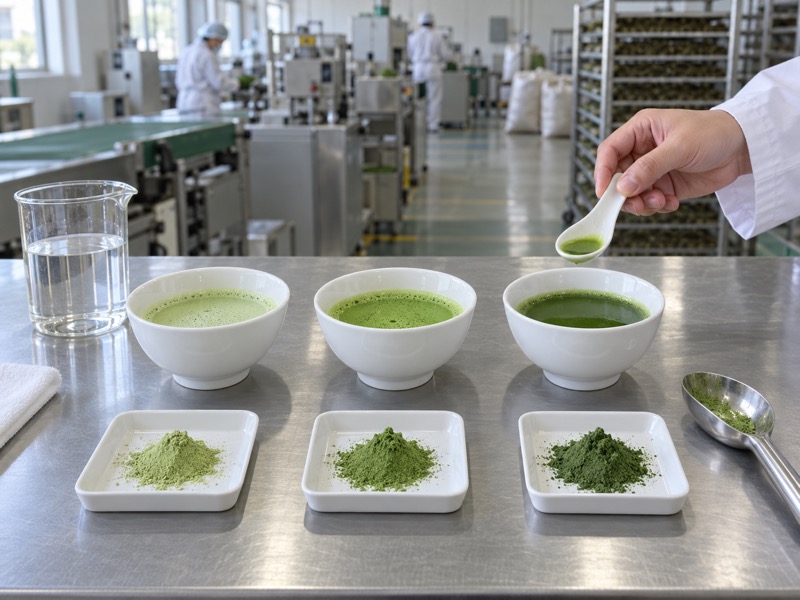
Use an agreed reference set. Prepare a known accepted lot and one or two contrasting samples under the same conditions. Let panelists taste coded cups and describe aroma, first sip, middle, aftertaste, and texture before seeing supplier names or prices. A simple intensity scale may help, but the scale anchors must be defined in plain language. “Vegetal note: 3” means little without a reference for 1 and 5. Record what customers of the actual product are meant to experience. A café serving traditional-style straight matcha may accept more tea-forward character than a sweet bottled latte brand. Flavor specifications must reflect that intended use, not one person’s preference.
| Descriptor | Ask the panel to identify | Buying interpretation |
|---|---|---|
| Fresh vegetal | Clean green aroma with balanced finish | May fit a tea-forward brief |
| Harsh grassy | Dominant raw-green note and rough finish | Investigate dose or lot |
| Stale or hay-like | Flat aroma and dull color | Review storage and age |
3. Which raw-material factors change flavor?
Compare lots, not just category names
Tea variety, growing conditions, harvest selection, and leaf handling can all influence sensory character. Those factors interact, so a buyer should not infer flavor from one marketing phrase or region name. Request traceable samples from candidate lots and compare them in a fixed preparation. Taste the second lot: a single attractive sample does not prove a supplier can deliver a consistent flavor range over time. Write the target as a finished-product profile with acceptable variation.
Ask suppliers what they can document about ingredient identity, source, lot formation, and change notification. If a particular color or aroma is central to the brand, agree on a retained reference sample and a method for comparing future lots. Do not make an unsupported claim that one harvest or grade will always be sweeter. Instead, test the actual tea at the dose required for the finished product. A matcha lot that seems mild at 1 g may taste more astringent at a higher commercial dose. Buyers should also note how much powder is needed for a recognizable tea profile. That dose connects raw material selection with sensory performance and cost per accepted serving.
4. How can processing affect the cup?
Check the chain from powder to opening
Tea processing and grinding shape particle behavior, aroma, and color. Storage after production matters too: a well-prepared powder can lose freshness when a pack is damaged or left open near heat and moisture. Trace the lot history: a grassy complaint that appears only after several weeks at one site may point to handling rather than a new tea source. Compare a retained incoming sample with the powder used at the station.
Request the supplier’s product specification, pack material, shelf-life basis, and storage guidance. At receipt, inspect seals and compare the lot with the approved reference under standard light and preparation conditions. Do not claim a particular grinding technology guarantees a specific taste without a documented comparison. Particle size can affect dispersion and perceived powderiness, which consumers may describe imprecisely as “bad grassy taste.” Test a water slurry for clumps and sediment separately from aroma. If the line uses a dry blend, confirm that matcha does not segregate during transport. The technical file should help quality distinguish a raw-material issue, a pack exposure, and a preparation failure.
| Stage | Evidence to collect | Possible signal |
|---|---|---|
| Supplier lot | Specification and retained sample | Lot flavor variation |
| Receiving | Seal and storage record | Transit exposure |
| Open pack | Opening date and station conditions | Dull or stale notes |
5. How do dose and water change perception?
Hold the ratio fixed during comparison
Matcha is consumed as suspended powder, so a heavier dose directly increases the tea solids in the cup. More powder can make fresh vegetal notes more obvious and may intensify bitterness or astringency. Temperature, water mineral profile, mixing, and serving delay also affect perception. Weigh the tea: a heaped scoop is too variable for deciding whether a lot is unacceptable. Use the same powder mass, water mass, vessel, and mixing cycle for every coded sample.
A hypothetical comparison might prepare 1 g and 2 g matcha per 100 g of finished water beverage. Those are screening points, not a universal recipe or safety specification. Record the denominator clearly; a latte with milk and ice needs its own finished-mass basis. If one sample tastes harsh, repeat it at the approved dose before trying a different temperature. Do not change tea, dose, and water simultaneously. Check whether clumps or sediment are being mistaken for flavor. A high-speed mixer can make a smoother-looking cup while adding foam that changes the first sip. The buyer should judge the method customers will actually receive, then keep that method in the specification.
| Trial factor | Hold fixed | Question answered |
|---|---|---|
| Tea dose | Lot, water, tool | Does harshness track concentration? |
| Water temperature | Lot, dose, vessel | Does serving method shift flavor? |
| Mixing | Lot, dose, liquid | Is texture driving the complaint? |
6. What happens in milk or sweetened products?
Test the complete matrix
Milk fat and protein, plant-base flavors, sugar, syrups, and ice can change how a tea note appears. Sweetness may soften a bitter edge, while an earthy base may make the same matcha seem more vegetal. An acidic fruit component may alter color and taste in a different direction. Taste where it sells: a powder accepted in water should still be tested in the finished latte, shake, dessert, or bakery item before purchase approval.
Hold tea dose and serving mass constant while comparing bases. Then adjust sweetness only after identifying which base meets the intended tea profile. If a product is sold with several milk options, test the precise brands and versions used in stores. A generic “oat milk” trial cannot stand in for another formulation with different sugar, fat, and stabilizers. Record appearance, aroma, first sip, finish, and sediment after the expected handoff. Do not solve a harsh matcha lot by adding enough syrup to obscure every tea note unless the product brief truly calls for a sweet flavored drink. A formulation that needs excessive masking may carry a higher cost and a weaker brand promise.
7. How should buyers run a sensory trial?
Make the comparison reproducible
Define a target product and a panel form before opening sample bags. Use coded samples in random order when practical, one preparation card, and the same service temperature. Include an accepted control and at least two candidate lots. Keep appearance honest: taste in identical cups and record visual scores separately, since a greener cup can bias flavor expectations. Ask panelists to score fresh vegetal intensity, bitterness, astringency, sweetness balance, texture, and fit to the brief.
Repeat the comparison on another day or with another operator if the decision will support a large purchase. Record tea mass, liquid mass, temperature, mix duration, serving delay, and lot IDs. A panel of only the product developer may miss training sensitivity or customer disagreement. Where possible, include colleagues who know the target menu but have not been told which sample costs more. Define what constitutes a pass: for example, no dominant stale note and no visible sediment at the specified wait. These are qualitative trial criteria, not invented benchmark data. Save the coded results and an approved reference sample so a future delivery can be checked with the same method.
| Trial item | Record | Decision use |
|---|---|---|
| Coded lot | Supplier, batch, storage | Traceability after reveal |
| Preparation | Dose, liquid, temperature, tool | Fair comparison |
| Sensory result | Intensity and defect notes | Acceptance against brief |
8. Which defects should quality investigate?
Separate normal green notes from faults
A fresh vegetal note can belong to the intended profile. A stale smell, dull appearance, severe astringency, clumping, or unexpected sediment deserves investigation against the approved reference. Locate the first change: did the fault arrive with the lot, appear after the pack was opened, or arise only in one recipe or site? The answer guides the next test.
For a lot-wide complaint, compare unopened retained material and request the supplier’s batch records or relevant tests. For one site, inspect storage temperature, humidity, light exposure, opening date, and tool hygiene. For one drink, check portioning and mixing. Hold suspect material under the quality system until a responsible person reviews it. Do not declare powder safe or unsafe by taste alone. If a tasting panel disagrees about whether “grassy” is a defect, return to the agreed descriptors and target customer. Keep records of failed cups and corrective actions rather than silently increasing sweetener or changing the preparation card. A repeated fault should trigger a structured supplier or process review, not an anecdotal label.
9. What should a supplier specification include?
Turn sensory preference into acceptance language
A useful matcha specification includes ingredient identity, grade or intended use, lot traceability, pack material, storage conditions, shelf-life evidence, relevant test documents, and the sensory method used at receipt. A color range or particle measure may help if the business has a validated method and a reason to control it. Name the reference cup: state the exact dose, liquid, temperature, mixing method, and observation time used for flavor acceptance. Otherwise “not grassy” is too subjective for purchasing or dispute resolution.
Keep a retained accepted sample under documented conditions and review new lots against it. Set a change-notice rule for source, processing, or packaging changes that could alter flavor or handling. If the product will be sold in multiple markets, regulatory and quality teams should verify claims and documents for each destination. A supplier’s marketing words do not establish certification or a health benefit. Include order size, lead time, replacement procedure, and how off-spec deliveries will be handled. The buying document should let someone unfamiliar with the original tasting panel make a fair, repeatable decision months later.
| Specification item | Define in writing | Why it matters |
|---|---|---|
| Identity and lot | Botanical source and code | Prevents substitution |
| Sensory method | Control recipe and reference | Makes “grassy” testable |
| Pack and storage | Barrier, seal, conditions | Protects approved flavor |
10. How can a team make a launch decision?
Approve the tea in the final application
Run a pilot with the chosen lot, real liquid base, target dose, equipment, and handoff or shelf-life conditions. Have more than one operator make the product and log flavor, color, sediment, preparation time, and rejected units. Judge the intended customer cup: a powder that performs well in a plain tea test may fail under the launch formula, and the reverse can also happen. The final decision should identify an approved lot, an acceptable sensory range, a preparation card, and a supplier change trigger.
If the lot tastes harsh, do one controlled comparison before rejecting it or adding sweetener. Compare against the accepted reference at identical dose and temperature; then test whether the fault follows the lot or the process. Any packaged product needs its own food safety and shelf-life work. A clear buying decision may be “accept for a sweet latte, reject for straight tea,” provided both applications were actually tested. Next, prepare coded cups from the current lot and two supplier alternatives using one fixed recipe, and have the panel describe “grassy” in specific sensory terms. For consumer context on the flavor word, see the linked reference; use the company’s own data for procurement and launch.
Reference: “Why Does Matcha Taste Like Grass Sometimes?” — Ujicha Matcha. Its consumer discussion supplies topic context; this buyer protocol is independently written.
FAQ
Q1: Is matcha grass?
No. Matcha is powdered tea leaf from Camellia sinensis; “grassy” describes a possible flavor note.
Q2: Why can matcha taste grassy?
Tea character, dose, preparation, storage, and the finished base can all change perceived vegetal intensity.
Q3: Does a grassy note mean poor quality?
Not by itself. Compare its intensity and finish with the product brief and an accepted reference lot.
Q4: Can milk hide grassy matcha flavor?
A base can soften or alter the note, but test the finished drink rather than relying on masking.
Q5: How should buyers write a flavor specification?
Define the preparation method, reference sample, sensory descriptors, and acceptable defect limits.