
A banana matcha latte can taste like ripe fruit and tea, or like sweet milk with a green top. Stellanspice’s home recipe blends banana with part of the milk and pours whisked matcha over it. A café can borrow the idea while solving different problems: fruit ripeness varies, blended banana changes texture during a shift, and cut fruit needs a clear handling procedure. The goal is a repeatable cup with recognizable banana and matcha, a short service path and ingredient information staff can explain.
Contents
- 1. What banana flavor should the drink have?
- 2. Which banana ingredient should you use?
- 3. How do you choose the matcha?
- 4. What is a workable first recipe?
- 5. How do you prevent a heavy texture?
- 6. Should the drink be layered or blended?
- 7. What fresh-fruit controls are needed?
- 8. How do you train service staff?
- 9. What does each cup cost?
- 10. When should the menu recipe change?
1. What banana flavor should the drink have?
Taste beyond the first sweet sip
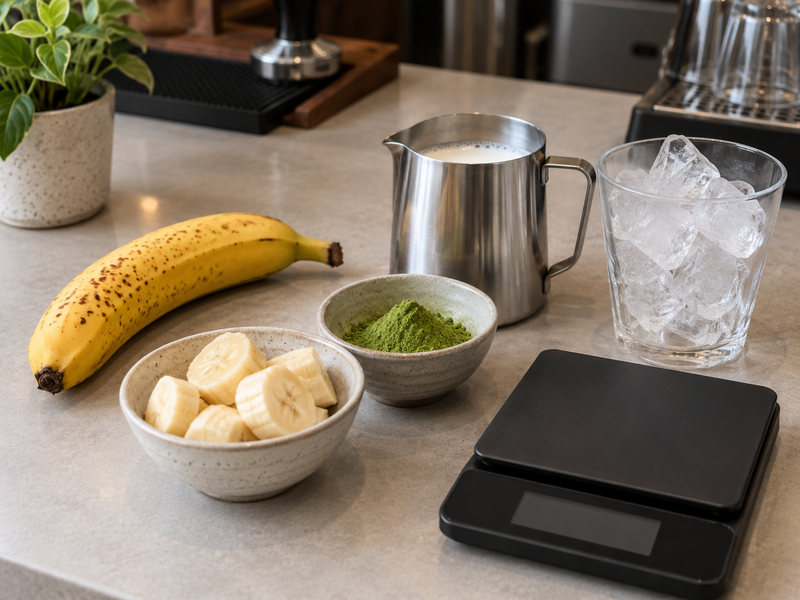
Decide whether ripe banana is the main flavor or a soft background note that gives body to the latte. This determines how much fruit to use and how assertive the matcha must be. Write a sensory target such as “banana appears first; tea remains clear after stirring.” Taste the fruit component separately before combining it with tea. A syrup can smell strongly of banana but deliver little real fruit character; a very ripe fresh banana can taste rich while turning the drink thick. The desired result is a menu choice, not a rule set by the color of the layers.
Ask tasters to describe the finished cup without being told the amounts. If they can name banana but not tea, reduce the fruit or sweetness before automatically raising the matcha dose. If the drink tastes grassy with a faint banana smell, test a riper fruit or a different ingredient. Record what happens in the last third of the glass. Banana solids may settle while matcha remains suspended, leaving a different finish from the first sip. A good banana matcha latte should still make sense after the guest stirs it and the ice begins to melt.
| Target cup | Banana role | Tea role | Reject if |
|---|---|---|---|
| Fruit forward | First sip | Clear finish | Tea vanishes |
| Balanced | Equal presence | Equal presence | Drink tastes muddy |
| Tea forward | Light body | Main flavor | Banana name feels false |
2. Which banana ingredient should you use?
Compare real fruit with prepared products
Fresh banana offers a familiar ingredient story, but ripeness, size and preparation vary. A puree can simplify portioning if its ingredient list and texture fit the recipe. A syrup may be easiest to pump but can add enough sweetness to limit the tea’s presence. Request a specification and allergen statement for prepared products and test the amount required to make banana recognizable. A yellow color or candy aroma does not prove that a product contains meaningful fruit.
For fresh fruit, define an acceptable ripeness range by appearance and taste, then weigh peeled portions rather than saying “half a banana.” The same visual fraction can differ sharply across fruit sizes. Use a small sample run to learn how much fruit the blender can handle without leaving lumps. Compare fresh fruit and a purchased puree in the same milk, cup and matcha base. Include storage, waste and labor in the decision. If a syrup version is chosen, describe it honestly on the menu; do not imply a fresh banana was blended for every cup when that is not the process.
| Ingredient form | Operational advantage | Check before approval |
|---|---|---|
| Fresh banana | Recognizable fruit | Ripeness and prep labor |
| Banana puree | Measured portions | Ingredient list and storage |
| Banana syrup | Fast dosing | Fruit content and sweetness |
| Frozen banana | Portion planning | Texture after blending |
3. How do you choose the matcha?
Test it inside the banana milk
Banana and milk can soften and sweeten a drink enough to hide a delicate tea. Prepare candidate matcha lots at the same gram dose and combine each with the approved banana component. Taste the stirred cup, not only the green surface. A powder may be excellent in plain water and too subtle here. Another may maintain a clear green tea finish at a smaller dose. Record the lot, dose and price per gram so the team can compare the finished cup cost.
Sift or disperse each sample by the same method. Clumps can become more noticeable in a thick banana base, and changing whisking between samples can create a false ranking. Ask the supplier for a commercial-lot sample and the documents needed by your market. The matcha green tea powder buying guide lists broader sourcing checks. For this drink, the decision is specific: does the powder still taste like tea after banana, milk and ice, without turning harsh at the dose needed? Keep a second candidate if seasonal supply is uncertain, but test it in the complete recipe.
4. What is a workable first recipe?
Use a small measured ladder
Choose one cup, milk type, ice load and fruit form. For an exploratory trial, hold the matcha at a chosen dose and compare perhaps 15, 25 and 35 grams of peeled banana in the same finished volume. These are trial examples, not a universal recipe. Taste each version for fruit clarity, tea presence and texture. Then fix the best fruit amount and test a narrow matcha dose range. Changing both together gives no clear answer about which ingredient improved the drink.
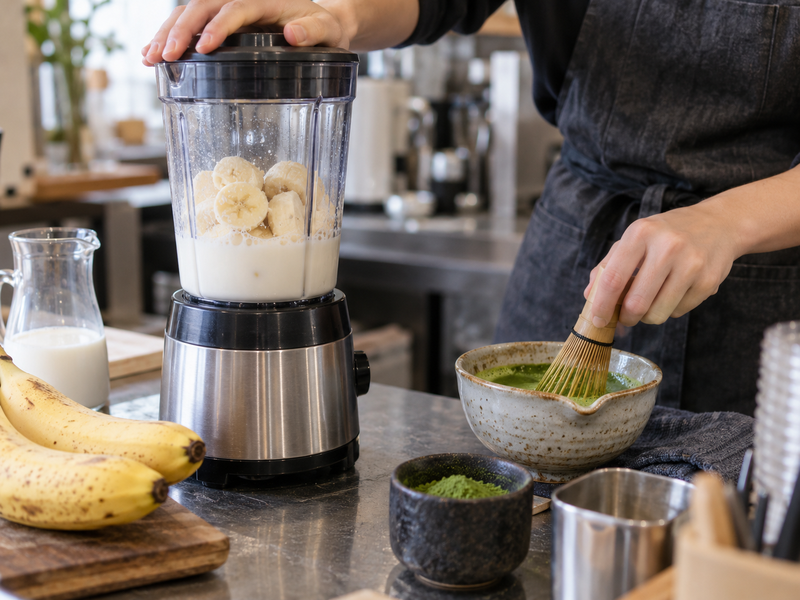
Stellanspice blends banana with part of the milk, then adds the remainder, a useful approach to test if a full-milk blend becomes too foamy. Try that method and a single blend with the café’s equipment. Measure the water used to whisk matcha so the cup volume stays stable. If adding sugar or vanilla, start low and record the amount. Ripe fruit already contributes sweetness; a heavily sweetened trial may make all matcha candidates taste similar. Taste at assembly and after a short wait. The approved card should specify the fruit weight, not a vague number of slices.
| Trial round | Hold constant | Change | Record |
|---|---|---|---|
| Fruit dose | Tea, milk, ice | Banana grams | Flavor and body |
| Tea dose | Fruit, milk, ice | Matcha grams | Tea finish |
| Sweetness | Approved bases | Syrup grams | Balance |
5. How do you prevent a heavy texture?
Treat banana as a solid ingredient
Banana adds body because it is fruit, not a clear syrup. Too much can make a latte resemble a smoothie and leave a paste at the bottom. Blend a measured portion with enough milk to move through the café’s equipment, then add the remaining milk if testing shows that gives a cleaner texture. Straining may remove lumps but also changes yield and labor. Test the drink through the actual straw or lid provided to guests. A texture that is pleasant from an open glass may be hard to drink through a narrow opening.
Use consistent fruit ripeness and temperature in comparisons. A soft ripe banana may blend differently from a firmer one; frozen pieces change the temperature and thickness of the finished cup. Do not call a brown layer a safety failure based on color alone, but do reject fruit that fails the operation’s receiving and quality standards. Record whether solids settle after the typical pickup delay. If they do, adjust fruit amount or blending method, or describe the drink as one to stir. The goal is a smooth latte with real fruit character, not a drink that clogs the service tool or changes halfway through.
| Texture fault | First check | Trial adjustment |
|---|---|---|
| Pulp at bottom | Blend time and fruit mass | Smaller weighed portion |
| Excess foam | Milk blended too long | Blend part of milk |
| Thin banana flavor | Fruit ripeness | Different fruit lot |
| Matcha clumps | Dispersion method | Sift and whisk separately |
6. Should the drink be layered or blended?
Approve the version guests will actually drink
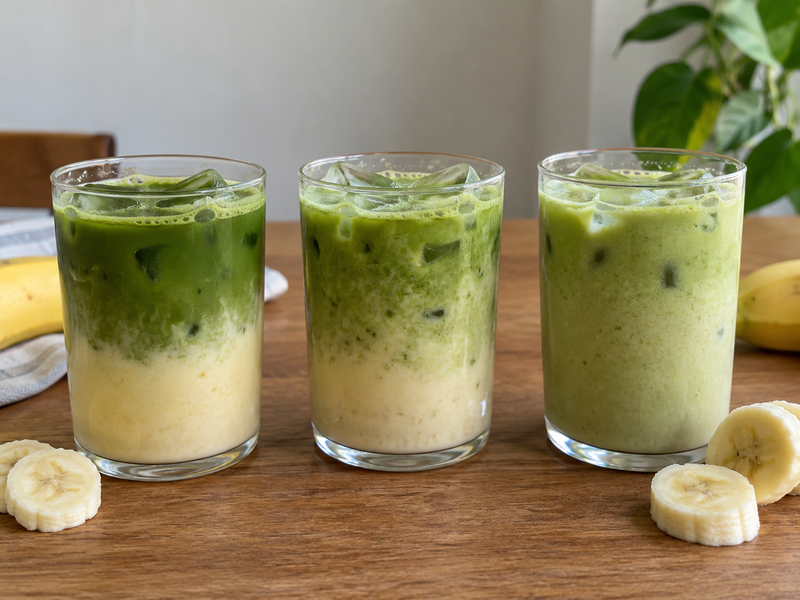
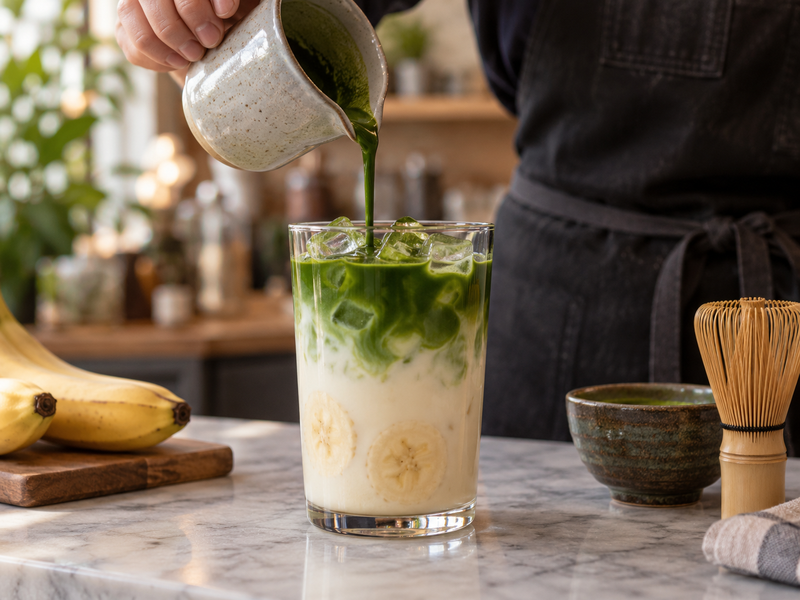
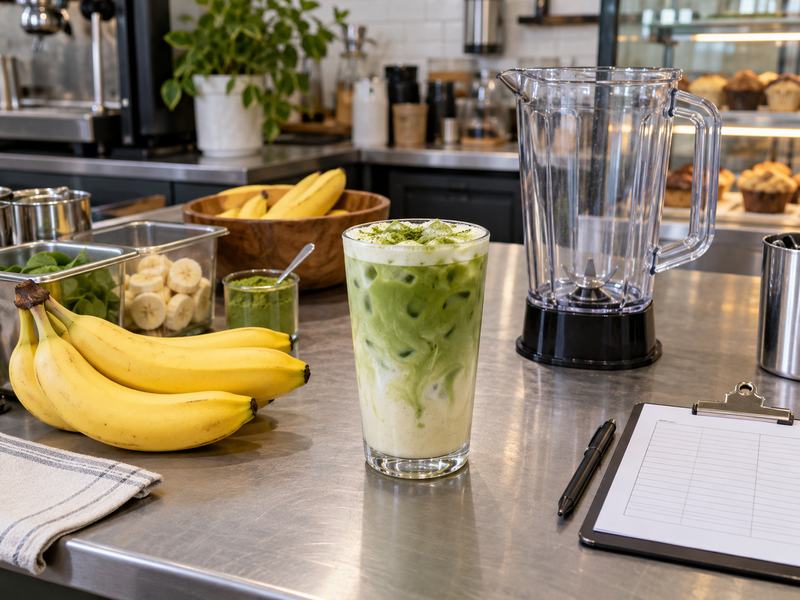
Pouring green matcha over pale banana milk creates an attractive contrast. The layer may disappear as the cup travels, and many guests will stir it immediately. Build one layered version and one fully blended or stirred version with the same ingredients. Taste both at handoff and after a short wait. If the layered drink delivers banana first and tea only at the bottom, decide whether that sequence is desirable. If the mixed version is muddled, adjusting pour order alone will not fix the flavor balance.
A layered build can be faster if banana milk is prepared to order and matcha is whisked in a separate vessel. A single-blender build may be simpler but can make cleaning the jar between orders a bottleneck. Test service time and visual consistency with more than one barista. Specify ice, cup size and pour sequence on the recipe card. Keep the approved photo as a guide, while allowing natural variation in the swirl. A layered cup should not rely on a garnish that drops fruit pieces into the straw or adds extra prep without improving the drink.
7. What fresh-fruit controls are needed?
Write the handling procedure before launch
Fresh fruit introduces receiving, washing, peeling, cutting and storage steps that a powder-only latte does not have. The FDA’s produce safety guidance advises washing produce under running water before cutting or peeling and keeping equipment and hands clean. A café should apply its local food-safety rules and documented plan to cut banana and blended mixtures. A home recipe’s five-minute preparation claim does not define how a commercial café may hold prepared banana milk.
Decide whether fruit is peeled per order or portioned in controlled batches. Label prepared portions and follow the operation’s cold-holding and discard rules. Keep raw fruit away from contaminants and clean the blender between uses according to the station procedure. If a batch browns or changes flavor before its approved service window, reduce batch size; do not mask the change with more matcha. Keep supplier lot or delivery information when it is needed for traceability. Staff should know what to do with fruit outside the ripeness range and where to record waste. A simple procedure is safer and more consistent than a tray of unlabeled slices by the blender.
8. How do you train service staff?
Make the card usable during a queue
The card should list peeled banana grams, milk amount and type, matcha powder grams, whisking water, ice, sweetener, cup size and exact build order. Include the blender setting or approximate action that produced the approved texture. Train a second barista who did not develop the drink and compare two cups side by side. If one is much thicker, check whether fruit was weighed and whether the same amount of milk entered the blender. Replace phrases such as “ripe banana” with a short visual and sensory receiving guide.
Place tools where the sequence flows: fruit portion, blender, matcha scale, whisk, cup and ice. Time several consecutive drinks and include blender cleaning. A recipe that makes one attractive cup in a quiet kitchen may be too slow for a counter with one blender. If batch prep is considered, have the food-safety lead approve its storage and hold rules first, then test sensory quality at the end of that window. Teach staff how to explain whether the drink contains fresh fruit and which milk variants are approved. A clear answer is part of the product.
9. What does each cup cost?
Include peel, overripeness and cleanup
Calculate fruit cost from usable peeled weight, not the shelf price divided by whole banana weight. Record how much purchased fruit becomes usable portions and how much is rejected or discarded. Add matcha at the approved dose, milk, sweetener, ice, cup and lid. Include blender cleaning time and any batch waste. A fresh-fruit version may taste better than syrup but cost more to operate; that can be reasonable if the menu price and customer response support it.
Compare the margin at the recipe that passed the tasting. If the lower-cost trial has too little banana to justify its name, it is not an equivalent option. If a new fruit lot is smaller or riper, the portion stays in grams and the cost worksheet reveals the change. Test large cup sizes separately rather than scaling banana blindly; extra pulp may turn the drink heavy. Re-cost a prepared puree if it reduces waste enough to offset a higher invoice price. The buying decision should reflect the full serving and the labor needed to make it.
| Cost line | Correct basis | Risk if ignored |
|---|---|---|
| Fresh banana | Usable peeled grams | Understated waste |
| Matcha | Approved powder dose | Weak cheap trial |
| Milk and sweetener | Served amounts | Variant gap |
| Labor | Blend and clean time | Slow service |
10. When should the menu recipe change?
Retest a changed ingredient or workflow
Approve the recipe when banana and tea are both recognizable, the texture stays pleasant through normal pickup, staff can make it from the card, and handling rules for fresh fruit are in place. Keep the approved fruit ripeness guide, matcha lot, milk specification and costing with the recipe. A changed matcha powder may need a new dose; a changed banana supplier may alter ripeness and sweetness. A new blender can alter texture even if the written quantities remain the same.
Set retest triggers rather than waiting for complaints. Compare a new ingredient with an approved cup under the same conditions. If the drink is promoted as made with fresh banana, remove that wording if a future product switches to syrup. Ask customers about the actual flavor and texture, not only whether the green-and-cream layers look appealing. The final recipe should be something the café can buy, prepare safely and repeat, with enough tea presence to make the name honest.
Frequently asked questions
Q1. Can a banana matcha latte use syrup instead of fruit?
Yes, but test its flavor and sweetness and describe the ingredient accurately on the menu.
Q2. How much banana should a café use?
Run a measured fruit-dose trial in the final cup. Choose the smallest portion that delivers recognizable banana without an overly heavy texture.
Q3. Should banana and matcha be blended together?
Either blended or layered can work. Taste both after stirring and after a normal pickup delay.
Q4. Can fresh banana milk be held for service?
Only under a procedure approved for the operation’s ingredients, local food rules and quality target.
Q5. What is the main reason to retest?
A change in fruit ripeness, matcha lot, milk or blending method can alter sweetness, texture and tea presence.