
Iced double berry matcha pairs cold matcha with two berry components. For a café, “double berry” should name real flavors and describe a drink staff can build at speed. Strawberry and raspberry make a useful development brief: one can provide body and the other a sharper top note. Fruit acidity, pulp, milk and ice complicate the cup. This guide sets out the questions a beverage team should settle before promising a layered seasonal drink.
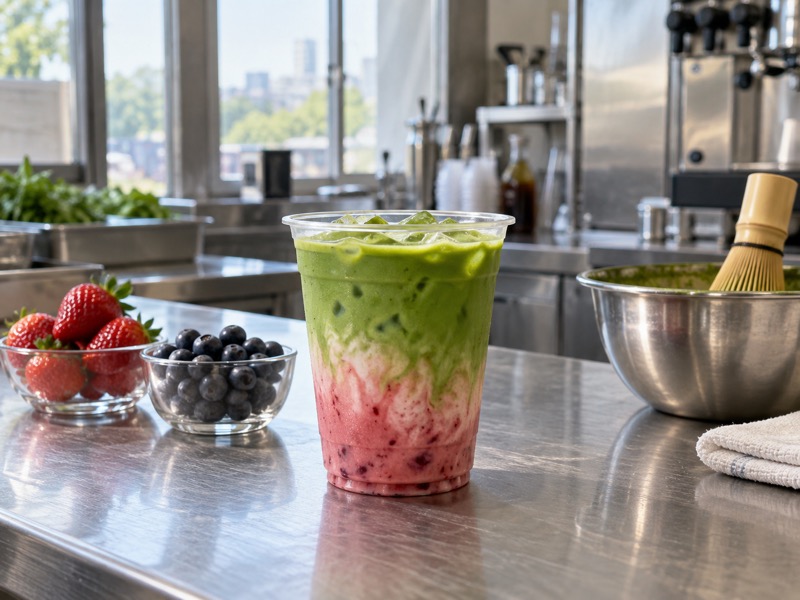
1. What should iced double berry matcha mean on the menu?
Name the two fruits
A double berry claim should tell a customer which berries are in the serving. This article uses strawberry and raspberry as a concrete example, with strawberry contributing a fruit layer and raspberry a distinct aromatic note. That is a design choice, not a mandatory formula. A mixed syrup labelled only “berry” may carry several flavors, but it gives buyers little control over the promised two-berry profile. Specify the actual ingredients and the form in which each enters the drink. A puree, syrup and flavored foam change sweetness, texture and color in different ways. If raspberry appears only as a faint fragrance under heavy vanilla, the menu promise is hard for a customer to verify.
Decide what the customer will taste
Write a sensory target before adjusting sugar: strawberry should be recognizable, raspberry should be distinguishable, and matcha should remain present after stirring. Taste the first sip through a lid as well as the mixed cup. An elaborate layered build can put one berry at the bottom and another at the top, so the first two sips may tell opposite stories. Decide whether that changing sequence is part of the offer. The cup size, ice charge and milk choice belong in the brief because they alter how much each fruit reaches the palate.
2. Which format fits the sales channel?
Choose a cup for the real journey
A clear, made-to-order cup can show fruit, matcha and an optional berry topping. The display may last only through handoff; walking, lidding and ice melt move the layers. Trial the drink with the proposed lid and straw, then carry it as a customer would. The straw may draw mostly strawberry puree from the bottom while a lid opening gives mostly raspberry foam from the top. Neither sample represents the entire cup. A blended version can offer more uniform flavor and faster service, though it changes the visual promise. Compare these formats on flavor and build time before committing to photography.
Separate café and packaged development
A prepared fruit component for short café service needs handling rules under the operator’s food-safety plan. A sealed ready-to-drink product faces other questions: acid balance, protein behavior, sediment, processing and shelf life for the complete formula. Do not transfer a café recipe into a bottle and assume the same result. If a delivery channel is planned, test the completed drink after the expected travel conditions; foam may collapse and fruit may collect around ice. Set a release standard for the channel actually being sold.
| Channel | Cup or pack choice | Observation to make |
|---|---|---|
| Counter service | Clear cup and selected straw | Top and bottom sips at handoff |
| Delivery | Closed cup with planned travel | Mixing, leakage and foam condition |
| Packaged drink | Validated pack and process | Stability under defined shelf life |
3. Which fruit formats should buyers compare?
Specify fruit before sampling tea
Fresh or frozen fruit can bring pulp, seasonal variation and preparation labor. A commercial puree may simplify portioning but still varies in fruit content, sweetness and acidity. A syrup can be easy for a barista to pump yet offer less fruit texture. Compare forms in the intended cup at a matched sweetness target, then score fruit identity, pourability and sediment. Read ingredient declarations; a “strawberry” topping may contain other fruit juices or flavoring. Specify whether raspberry comes from fruit puree, syrup or a prepared topping. The two berries need not share a format, but each choice should have a job.
Keep acid and dairy in view
Berry ingredients can be acidic. When a fruit layer meets milk, visible flecks or a sharp taste may appear depending on the ingredients and conditions. This is a formulation question, not a reason to declare every berry-milk cup unstable. Test the exact fruit and milk products together, including after the intended wait and agitation. If a plant beverage replaces dairy, repeat the test because its protein and stabilizer system differs. Taste matcha in that final mix; adding more tea to a sour base may deepen bitterness without making tea clearer.
4. What should the first formula sheet contain?
Weigh each component separately
Record matcha, dispersion liquid, strawberry component, raspberry component, milk or plant base, sweetener and ice in grams per finished serving. Include the fruit concentration or supplier product code and the intended finished yield. If a raspberry foam is used, list its base and deposited mass apart from raspberry flavoring. A vague instruction such as “add berry drizzle” leaves both cost and taste to the individual barista. Record the cup and straw because a wide straw can pull fruit pulp differently from a narrow one. The formula should say whether the guest is expected to stir.
Change one item per round
Start with a fixed strawberry and raspberry pairing, then compare matcha dose or tea lot. If the drink is too sweet, check syrup contributions before removing fruit; the two components may each carry sugar. If the middle tastes flat after ice melt, adjust dilution or base quantity rather than changing every fruit component at once. A trial log should note the exact order of assembly, a photograph at handoff and a taste after a defined service wait. Keep unsuccessful versions, since a later supplier change can recreate an old defect.
| Formula line | Detail to record | Why it affects the cup |
|---|---|---|
| Strawberry component | Product code and grams | Fruit body and bottom layer |
| Raspberry component | Product code and grams | Tartness and aroma |
| Matcha, base and ice | Grams and finished yield | Tea strength and dilution |
5. How should the barista assemble the drink?
Make tea and fruit separately
Disperse matcha using the approved method before it enters cold milk or water. Dry powder in a finished iced cup often leaves specks that a brief stir will not remove. Prepare the strawberry component at the chosen thickness so it can be portioned, then place it according to the visual brief. Pour the matcha base against ice in a documented way. If raspberry enters as foam, deposit it at the end with a measured utensil or dispenser. The goal is a reproducible cup, not a technique that only one development chef can perform.
Set a realistic station workflow
A fruit puree, matcha base and foam can occupy three containers on a crowded bar. Assign each one a labelled location, tool and approved handling method. Test the full sequence with orders arriving, not on a quiet bench. If raspberry foam slows service or disappears under a lid, consider a simpler raspberry component while keeping both berries identifiable. Check the order ticket: a milk substitution may require a different foam base, and a guest declining dairy should not receive a dairy topping by habit. Staff training should use the exact menu photo and an explicit build card.
6. Which failures are worth measuring?
Taste where the customer drinks
Use the actual straw or lid opening and check top, middle and bottom before stirring. Strawberry can settle below ice; raspberry topping may give the first sip all its sweetness; matcha may remain in the middle. After stirring, ask whether both berries still register or collapse into generic sweet fruit. Note pulp plugs in the straw, tea sediment and any visible milk reaction where fruit meets the base. Color alone is a poor acceptance test because lighting, cup wall and fruit pigment can change the photograph without improving flavor.
Diagnose acid, sweetness and texture separately
A sharp finish may come from raspberry acidity, from an added acid in a commercial puree or from the interaction with matcha. A heavy finish may come from too much puree or a rich topping. Run small controlled comparisons: retain the matcha and swap one fruit product, then retain fruit and change base. If a cup develops flecks, document the specific products and hold conditions before reformulating. Never infer a safety outcome from appearance alone. Record defects as observable events and route storage or safety decisions through the café’s qualified process.
| Defect | Check first | Useful comparison |
|---|---|---|
| One berry disappears | Individual fruit dose and format | Mixed-cup blind tasting |
| Sour or flecked milk layer | Fruit acidity and chosen base | Same fruit in alternate base |
| Pulp blocks straw | Puree particle size | Intended straw after carrying |
7. How should fruit and finished cups be handled?
Give prepared components their own rules
Fruit puree, dairy, plant beverages and a matcha dispersion do not automatically share an open-life. Use supplier instructions and the operator’s approved food-safety plan for each prepared item. Label containers with identity and preparation date under that plan. Keep serving tools separate where cross-contact matters. A small-batch house puree may create more variable trim and discard than a purchased product; that belongs in both the holding decision and cost model. A recipe blog’s refrigerator timing is not a commercial validation for your own ingredients.
Test the full service window
Inspect a fresh cup, a cup after pickup delay and one after the proposed delivery journey. Note foam height, fruit migration, temperature and flavor at each point. If a drink is meant to be mixed, say so in menu or handoff wording and test whether customers can mix it with the supplied straw. Any packaged version needs processing and shelf-life work tailored to its fruit, milk and matcha combination. Document the actual route; “cold” alone gives a production team no handling limit to apply.
8. What supplier and claim records are needed?
Connect menu language with invoices
Keep the matcha specification and identified lots alongside declarations for the strawberry and raspberry ingredients. A supplier change from puree to flavored syrup can alter the menu claim and nutrition information even if the color looks similar. Record the milk or plant base, foam ingredients and any allergen details. Make the front-of-house description match the approved recipe: if the drink contains strawberry puree and raspberry flavored foam, say that plainly. Do not borrow another brand’s name, wording or expected appearance as a substitute for your own product specification.
Keep a change-control trail
A new strawberry crop, raspberry syrup or matcha lot should prompt a focused comparison in the finished drink. Save the accepted sample record and the reason for any substitution. If a different fruit product is approved, update the purchasing code, prep card, menu and training at the same time. This prevents one store from using the old syrup while another uses a new one under the same description. In the reference link below, a home recipe uses strawberry and raspberry as separate layers; that example can inform the category, while your commercial formula needs its own testing.
| Record | Question it answers | Review trigger |
|---|---|---|
| Berry declarations | Which fruits and forms are sold? | Product or supplier change |
| Matcha lot file | Which tea made the approved cup? | New lot or grade |
| Menu and allergen copy | What will staff tell customers? | Base or topping change |
9. What belongs in the unit cost?
Cost the whole assembled cup
Include both berry components, matcha, milk, foam ingredients, sweetener and ice. Add cup, lid, straw and any garnish shown in the menu image. Measure fruit loss in prep containers, pulp left in dispensing tools and foam discarded after the service period. A fresh-fruit design may carry prep labor and trim; a syrup design may carry lower labor but a different flavor outcome. Use purchase pack sizes and realistic open-pack waste, since a seasonal item may not consume a large raspberry container before its approved discard point.
Price for the operating method
Time preparation with ordinary staff during a representative shift. A layered fruit drink can require more movements than a plain iced matcha. Record remakes caused by missed fruit, collapsed foam or poor layering. Compare a layered and stirred design on actual drink quality and labor, then price the approved version. If customers order an alternate milk, include any different foam or base cost in that variant. A high selling price will not rescue a menu item that blocks the bar and produces inconsistent cups; the pilot should show whether the design earns its station time.
10. What pilot would justify a launch?
Test the cup the customer receives
Use the chosen strawberries and raspberries, approved matcha, normal ice, cups and tools. Have several baristas build drinks from a printed card at service speed. Capture the first and last cups in a short run, including their component weights and build times. Taste blind where practical, once through the normal opening and once after stirring. Carry a lidded cup and check whether puree remains accessible, whether foam survives and whether fruit acidity changes the milk layer. Agree on pass conditions before the team sees a favorite-looking sample.
Release one recipe version
Approve only when the two berries are recognizable, matcha remains evident and the cup holds its intended texture through the defined service window. If it fails, change the cause you observed: fruit format, base, mix order or service design. File the accepted ingredient codes, recipe, photo and staff script together. After launch, log remakes, fruit discard and customer comments on sweetness or tartness. A buyer considering other tea profiles can consult the matcha flavors guide, then test any candidate in this exact berry cup.
| Pilot point | Evidence | Decision question |
|---|---|---|
| Handoff | Photo, weights and taste | Are both berries clear? |
| After travel | Pulp, foam and milk condition | Does the cup remain usable? |
| Rush preparation | Time and remake record | Can staff repeat the build? |
FAQ
Q1: Which berries suit iced double berry matcha? Strawberry and raspberry are one clear pair. Another pair can work if the menu names both and each remains identifiable in the finished cup.
Q2: Can berry acidity affect milk? It can affect taste or appearance with some fruit and base combinations. Test the exact ingredients and intended service wait.
Q3: Is puree better than syrup? Neither format wins automatically. Compare fruit character, pulp, portioning, sugar and open-pack waste in the proposed drink.
Q4: Should the customer stir a layered cup? Decide during testing. If stirring gives the intended flavor, provide a straw and a plain handoff instruction.
Q5: Can the café recipe become a bottled drink? A packaged version needs its own formulation, processing and shelf-life validation for the complete drink.
Reference: Iced Double Berry Matcha {Starbucks Copycat} Recipe. This consumer example is background on a strawberry-and-raspberry layered format.