
A blue matcha latte often gets its color from butterfly pea flower, not from matcha tea. The name can therefore mislead customers about the plant, flavor and caffeine in the cup. A café should identify the blue ingredient before building the recipe, then test it in the milk or plant base it will actually serve. The drink also needs a clear service method: acidity, sweetener, temperature and a short wait can change its color and texture.
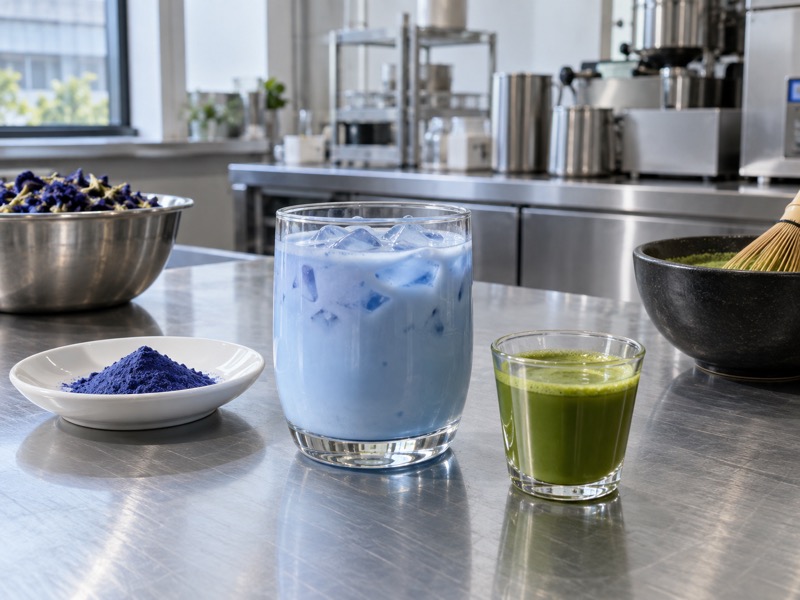
For: café operators and beverage developers. Decision: whether a blue botanical latte can be made consistently and described accurately on the menu.
1. What makes a blue matcha latte blue?
Verify the botanical ingredient
Many products sold as “blue matcha” are butterfly pea flower powder or extract. Butterfly pea is Clitoria ternatea, a flowering plant; it is not the tea plant Camellia sinensis. The home recipe used as a topic reference identifies butterfly pea powder as its blue ingredient. A commercial product may use a different color source, and some formulas add true green matcha as well. Read the ingredient declaration for the purchased SKU before deciding what the drink contains.
Ask the supplier for the botanical name, plant part, powder or extract form, carrier ingredients, lot identity and intended food use in the destination market. A blue product photograph is not evidence of identity. If the recipe contains both butterfly pea and matcha, list and measure them separately. If it contains no tea, do not let the menu imply that the customer is drinking powdered green tea. The product name may still be familiar search language, but the ingredient description should settle the question without requiring a customer to ask staff for clarification.
2. What should the customer receive?
Define flavor before styling the cup
Set the target cup by flavor, mouthfeel and appearance. Butterfly pea can contribute color without the flavor intensity of matcha, so a tea-forward promise would be wrong for a formula with no tea. Decide whether the drink should taste mainly of the milk base, a gentle botanical note, or added matcha. Taste it unsweetened first, then add syrup in measured steps. A heavily sweetened blue latte may photograph well while giving customers no recognizable botanical character.
Choose one service format for the first trial. A hot latte, iced layered drink and sealed chilled bottle face different color, foam and holding problems. Use the normal cup, ice, lid and straw when judging a café drink. A blue layer that looks clean without a lid may turn gray as the customer walks away. If the product is described as vegan or caffeine-free, review every ingredient and the site’s preparation route before using that wording. A plant-based milk on the recipe card alone does not settle toppings, sweeteners or cross-ingredients.
| Proposed drink | First test | Customer-facing detail |
|---|---|---|
| Hot latte | Color in heated base | Actual plant and milk source |
| Iced café cup | Layering after a wait | Whether tea is present |
| Packaged drink | Color and separation through route | Full finished-product claims |
3. Which powders or extracts should be compared?
Test identified lots in the same base
Compare suppliers using the exact milk or plant beverage intended for sale. Hold cup size, liquid mass, sweetener and mixing method constant while changing one blue ingredient. Weigh powder rather than using teaspoons; bulk density and particle size can differ. If the supplier offers an extract, record its carrier and concentration separately from a whole-flower powder. A deep blue dry sample may yield a pale or muddy cup after milk and ice are added.
Judge more than hue. Check aroma, taste, clumps, residue and how the color changes after a normal service wait. Make samples from at least two lots if the program will rely on year-round supply. Ask how the supplier specifies color and particle size and what variation to expect. If the formula includes true matcha, keep its dose fixed during the blue-ingredient comparison, then run a separate matcha-dose trial. Changing both together hides the cause of a gray or bitter drink. Keep a dated reference cup and the approved lot record for later deliveries.
| Candidate | Hold constant | Observe |
|---|---|---|
| Butterfly pea powder A | Milk, dose and mixing | Blue tone and residue |
| Powder or extract B | Finished cup target | Flavor and color difference |
| Optional true matcha | Blue ingredient dose | Tea flavor and mixed color |
4. How should the first formula be recorded?
Write the cup by weight
Record grams of blue ingredient, milk or plant base, water, sweetener, ice and any true matcha per finished serving. State the cup size and the order of addition. Syrup pumps and casual scoops can drift, so use a scale in development and calibrate service tools afterward. If staff prepare a blue concentrate in advance, record its batch mass, yield, mix date and how much goes into each cup. The concentrate is a separate prepared ingredient with its own handling plan.
Run a small trial matrix. Change the blue dose first to find an acceptable color and flavor, then change sweetness or milk base one factor at a time. If lemon or another acid appears in the recipe, test it separately because it can change butterfly pea color. Do not judge the recipe from the top of a freshly poured cup alone. Stir a normal serving and taste the first and last sips. A reproducible formula should work when another operator follows the written card without extra powder added to rescue the appearance.
| Formula field | Unit | Reason |
|---|---|---|
| Blue ingredient | g per cup | Color, taste and cost |
| Milk and water | g per cup | Dilution and texture |
| Sweetener and acid | g per cup | Flavor and color response |
5. What mixing sequence should staff use?
Disperse before building the cup
Trial a measured pre-dispersion step for powder before it enters the full milk base. Compare warm and cold wetting conditions within the supplier’s guidance and the finished drink’s food-safety plan. Mix until the powder is even, then add the chosen base and ice. Record tool, speed or whisking time and the visual endpoint. A café card should tell staff what a clump looks like and when to remake a cup. “Stir until blue” gives too little instruction for a busy shift.
For a layered drink, standardize the pour order and density of each layer. Test with the normal lid and the time between making and drinking. A foam or milk layer can obscure the blue base before the customer sees it. For a packaged drink, bench mixing does not establish how a production tank and filler will behave. Inspect first and last fills for pigment variation or sediment. If the formula needs a stabilizer, add it as an intentional ingredient with supplier records and a new sensory trial, not as an unrecorded fix at the counter.
6. Why can the blue color turn purple or gray?
Test acidity in the final drink
Butterfly pea color comes from anthocyanins whose appearance changes with acidity. Research on Clitoria ternatea flower extracts has measured strong pH-dependent color shifts. A squeeze of citrus, an acidic fruit syrup or a different milk base can therefore change a blue trial into purple or an unattractive mixed tone. The exact result depends on the purchased ingredient and the complete formula, so test the finished cup rather than predicting one universal shade from a pH chart.
Make paired samples with and without the acidic component at the proposed dose. Photograph them under the same lighting at service and after the expected wait, then taste both. A dramatic color shift may be a deliberate product feature if the menu explains it, but it cannot be treated as a batch defect one day and a selling point the next. Check whether the blue source is approved for the intended application and market with the qualified reviewer. A color study describes chemistry; it does not grant permission for a particular public claim or food use.
7. Which defects should end a trial?
Write pass rules for the whole cup
Likely defects are blue specks, powder at the bottom, gray foam, a flat flavor and color that changes unexpectedly during normal service. List acceptable ranges before the pilot. Check the first, middle and last cups made from a prepared blue base. A color failure can come from ingredient variation, acidity, milk composition or mixing order; repeat a fixed control before rejecting a supplier lot. A coarse mouthfeel can come from powder particle size even when the color is attractive.
Include ingredient and wording failures in the stop rule. If a pack marked “blue matcha” turns out to contain a color source that differs from the approved specification, do not substitute it silently. If the drink contains no tea but staff describe it as matcha tea, correct the card and menu before launch. If a caffeine statement is based only on the butterfly pea ingredient, review the full drink for other caffeine sources. These checks protect the customer from an inaccurate product description as well as a poor cup.
| Defect | First comparison | Next action |
|---|---|---|
| Gray or purple cup | Fixed base without acid | Check syrup and pH influence |
| Grit or sediment | Same lot, fixed mixing | Check wetting and particle size |
| Wrong ingredient story | Supplier file and menu | Correct wording or formula |
8. How should ingredients and finished cups be held?
Validate the actual route
Keep the dry botanical ingredient according to its supplier specification, with lot and opening date visible. Use dry scoops and close the pack promptly. A prepared concentrate and a milk-based finished cup need a handling plan for their complete formulas. The dry powder’s shelf life does not set the service life of a blue latte. Quality and food-safety staff should define preparation, chilled holding where needed, discard rules and cleaning steps for the chosen route.
Test appearance at more than one point in that route. An iced drink may dilute as ice melts; a hot drink may change during a short customer wait; a sealed bottle faces light, transport and separation. Record cup or pack, temperature, time, color, sediment and taste. Do not publish a shelf-life promise from one fresh photograph. If the formula changes milk, acid or stabilizer, retest the relevant color and safety behavior. Keep sensory acceptance distinct from microbiological safety; a bright blue product is not automatically safe to serve.
9. What is the real cost per blue latte?
Count accepted cups
Price the blue ingredient at the dose that passes the finished-cup test. Add milk, syrup, ice, cup, lid, labor and any foam or garnish. Include the concentrate that remains in a jug after service and cups remade for clumps or a muddy color. A cheaper powder may need a higher dose or longer mixing; a more expensive extract may be easier to use but have a carrier or label consequence. Compare accepted cups, not only ingredient quotes.
Pack size should fit sales pace. A large botanical pouch can look economical until opened stock loses the appearance expected by the menu. If the drink uses true matcha as well, cost it separately and show whether the extra tea flavor justifies the price. Include the work of reviewing ingredient identity and public wording when comparing suppliers. A smooth cup with accurate labeling is the product being sold; an inexpensive blue powder by itself is not the business result.
10. What pilot should approve a launch?
Release a repeatable drink and an honest name
Run a limited service trial with the approved ingredient lot, actual staff, drink card, cup and lid. Make cups at the pace the menu will require. Measure dose and accepted yield. Inspect color and sediment at handoff and after the likely customer wait. Taste the drink after it is stirred, because customers do not sip only the photographed layer. Repeat with a second operator and, when possible, a second ingredient lot. Keep a reference cup photograph under fixed lighting, but use taste and texture observations for release.
At the same time, verify the menu and label. They should identify butterfly pea or whichever blue source is used, state whether true matcha is present and avoid unsupported caffeine or health claims. If sensory tests pass but the ingredient file is incomplete, hold launch. If documents are complete but ordinary staff cannot make a stable cup, revise the method. Approve only when the formula, ingredient identity, service result and cost per accepted cup point to the same product.
Retain the exact cup build and one sealed sample of the approved blue ingredient. Check the next supplier lot against both before it goes to every site. A change in milk brand should trigger the same comparison, since the drink’s color is judged in that base. Put the final menu photograph beside a normal staff-made cup, not beside a studio sample prepared outside the written method.
| Pilot checkpoint | Evidence | Release question |
|---|---|---|
| Ingredient | Botanical and lot records | Is the name accurate? |
| Cup at handoff | Dose, flavor and color | Can staff repeat it? |
| Cup after wait | Sediment and color change | Does it survive normal use? |
The reference blue latte recipe uses butterfly pea powder. A study of butterfly pea color documents its response to acidity. For true green-tea selection, see the matcha flavors guide.
FAQ
Q1: Is a blue matcha latte made from matcha tea? Often the blue color comes from butterfly pea flower. Check the exact formula; some drinks may also contain true matcha.
Q2: Why does the drink change color with lemon? Butterfly pea anthocyanins respond to acidity. Test the actual syrup or citrus addition in the finished cup.
Q3: Is a butterfly pea latte caffeine-free? Do not make that claim from one ingredient alone. Review the complete recipe and evidence for the public wording.
Q4: Can the same formula be sold bottled? A packaged drink needs its own process, stability and safety validation. A café cup trial does not establish bottled shelf life.
Q5: What should a café approve first? Confirm the blue ingredient and menu description, then pilot the full drink for flavor, color, sediment and repeatable service.