
Does matcha have caffeine? Yes: tea naturally contains caffeine, and a matcha drink uses ground tea rather than a leaf infusion that is discarded. A café still cannot infer its own serving amount from a generic online figure. The practical answer begins with a weighed powder dose and product-specific supplier data. This guide shows operators how to calculate a working estimate, check claims, and give customers accurate menu information without making medical promises. Our matcha caffeine specification guide covers the purchasing record behind that estimate.
Contents
- 1. Why does matcha contain caffeine?
- 2. What number should a café request from its supplier?
- 3. How does powder dose become caffeine per serving?
- 4. Which recipe changes affect the calculation?
- 5. Can one test result represent every lot?
- 6. How should a menu describe caffeine?
- 7. What should staff say when customers ask?
- 8. How can a chain control serving variation?
- 9. What if the powder is a latte blend?
- 10. What belongs in the final caffeine file?
1. Why does matcha contain caffeine?
Start with the ingredient, not a benefit claim
Matcha is powdered tea from Camellia sinensis. Caffeine occurs naturally in tea, so an ordinary matcha drink contains some unless a specifically processed product has evidence for a different claim. A café should not describe an untested powder as caffeine free or say that its caffeine behaves in a medically unique way. FDA’s caffeine overview makes clear that caffeine amounts and individual responses vary. Menu information should focus on the product being sold.
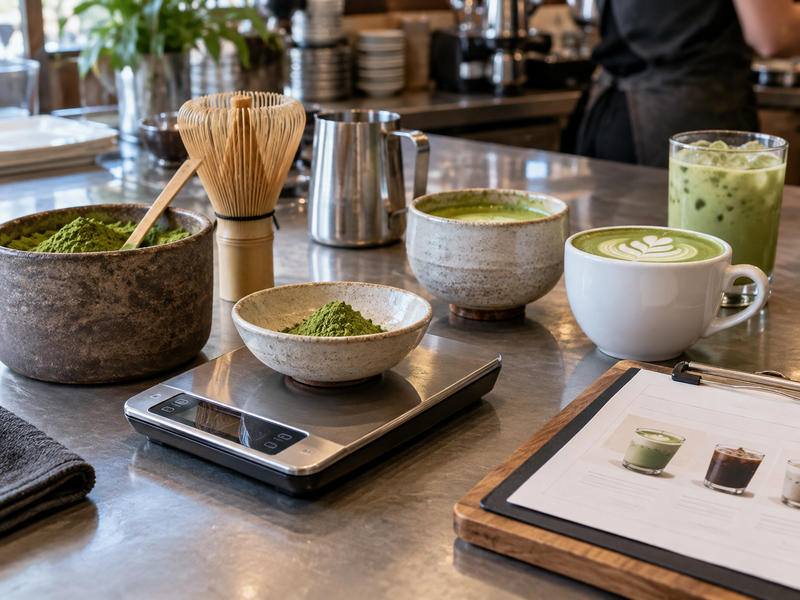
The relevant unit is the amount of powder in the cup, not just the volume of water or milk. A small latte can use more matcha than a large one if its recipe is stronger. If powder is sprinkled on top, that extra tea belongs in the serving calculation. Record each tea ingredient separately when a drink combines matcha with coffee or another caffeinated component. Customers asking “does matcha have caffeine?” deserve a direct yes, followed by an explanation of what the café knows about its own recipe.
2. What number should a café request from its supplier?
Ask for caffeine per gram of the offered SKU
Request a product-specific caffeine value with units, test method, date, and the sample or lot to which it applies. Milligrams per gram of dry powder gives a café a straightforward basis for recipe math. A marketing page may quote a cup value without naming its tea dose; that number cannot be transferred safely to a different powder or menu item. Ask whether the supplier reports an individual lot result, a typical product value, or an allowed range. These are different types of evidence.
Quality should check whether a certificate of analysis or specification identifies the same item code that purchasing ordered. If the seller offers a latte powder containing sugar or milk ingredients, the caffeine concentration per gram of blend may be lower than per gram of pure matcha because the blend contains other material. Do not take the pure powder’s value and multiply it by the full blend dose. The supplier can explain composition and provide an appropriate basis for the finished product. Keep the source document with the menu calculation.
| Data request | Useful answer | Weak answer |
|---|---|---|
| Caffeine basis | mg per g of named SKU | “A cup has about X mg” |
| Sample identity | Lot or study population | No product code |
| Method and date | Reported analysis | Undated graphic |
3. How does powder dose become caffeine per serving?
Write the equation where staff can audit it
Multiply grams of powder used per serving by milligrams of caffeine per gram of that powder. For a clearly hypothetical example, a supplier value of 20 mg/g and a recipe using 2 g gives 40 mg from the matcha powder. Those figures illustrate the arithmetic; they are not a claim about Matcha Village or any café product. If the supplier gives a range, calculate a corresponding serving range. Product and regulatory teams can then decide whether a number or broader wording belongs on the menu.
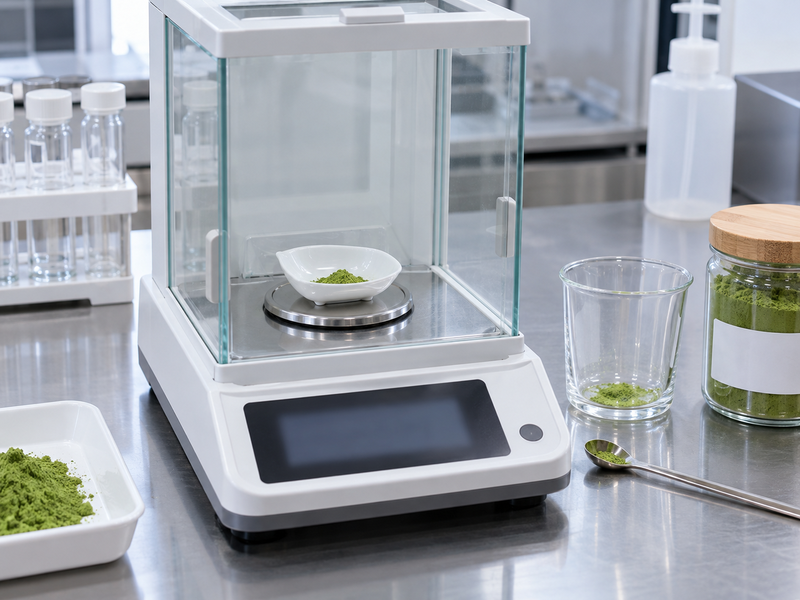
Weigh a real serving rather than trust a spoon description. A level scoop and a heaped scoop can differ, and powder bulk density may vary between products. Record the intended dose, observed dose across several staff members, and any topping amount. Use the result for the specific hot or iced recipe tested. A second drink size needs its own calculation if it uses another tea dose. Keep enough decimal precision for internal work but avoid presenting a falsely exact consumer number from variable inputs.
4. Which recipe changes affect the calculation?
Track tea grams, not cup size alone
Changing from dairy milk to oat milk does not by itself change caffeine from a fixed dose of pure matcha. Changing the matcha dose does. A new premix can change the calculation because its composition differs. A topping of dry matcha adds tea, while plain sweet cream does not. If the café adds espresso, black tea, or another caffeinated ingredient, calculate that separately from matcha rather than attributing the whole drink to one powder.
Product development should give each recipe a version number and an ingredient bill in grams. Purchasing should identify the powder code. Operations should verify what staff dispense in service. When a seasonal menu changes cup size, check whether the actual tea amount changes too. The change log helps customer-service staff avoid quoting an old figure after a reformulation. For blended products, use supplier data for the blend and a formulation review; guessing its matcha percentage from color will not support a reliable number.
| Change | Recalculate matcha caffeine? | Other review |
|---|---|---|
| More tea powder | Yes | Flavor and cost |
| Different milk only | Matcha contribution unchanged | Allergen and taste |
| New premix | Yes | Composition and label |
| Added espresso | Matcha unchanged | Total drink caffeine |
5. Can one test result represent every lot?
Decide what uncertainty the business can support
Tea is an agricultural ingredient, and caffeine results may vary across material and product lots. One measurement describes its tested sample, not every future shipment. Ask the supplier whether its specification defines a typical value or an acceptance range and how often it measures the property. If a menu makes a numeric claim, quality should decide whether the evidence and variation support that wording. A very narrow number can imply certainty the supply file does not provide.
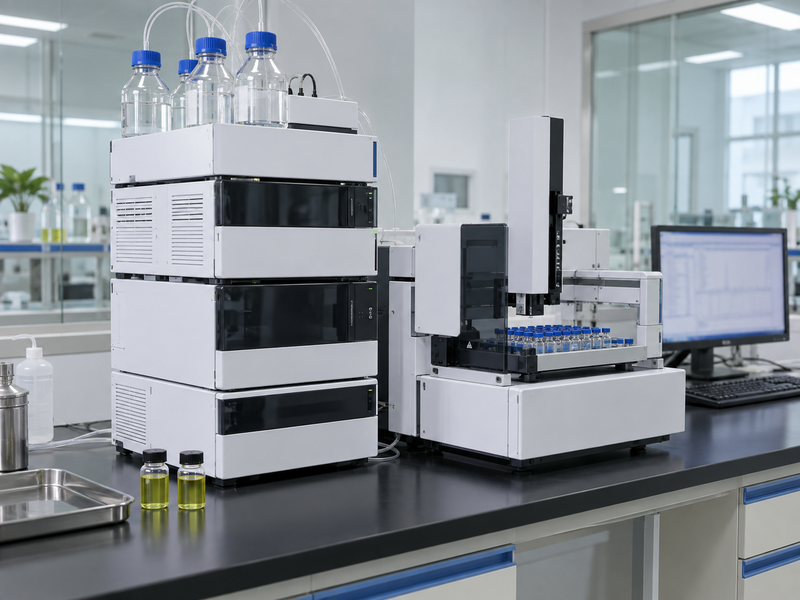
Keep the tested lot, method, and date with the result. When the supplier proposes a new grade or source, review the caffeine basis before continuing an existing claim. An academic assay can show that caffeine is measurable in matcha; it does not establish the value of your current commercial SKU. For example, a published analytical method study measured caffeine alongside other tea components in its own samples. Your menu still needs evidence connected to the powder and dose you use.
6. How should a menu describe caffeine?
Use language the evidence can carry
The simplest accurate customer answer is that matcha contains caffeine. If the business wants a per-serving amount, have a qualified reviewer check the supplier data, recipe dose, variation, and destination-market rules. State whether the figure covers matcha alone or the complete beverage. Do not imply a drink is a safe substitute for another caffeinated product for every person. FDA notes that sensitivity to caffeine varies; a café should leave individual medical decisions to customers and their clinicians.
Avoid wellness claims about “calm energy,” detoxification, treatment, or a guaranteed absence of jitters unless the claim has an appropriate evidence and regulatory review. Marketing may describe flavor and preparation without making physiological promises. A menu can also point customers to ingredient information and a staff contact for questions. Keep the approved wording in the recipe file so the printed board, ordering app, and staff script agree. If the powder or dose changes, reopen the wording before the next print run.
| Proposed statement | Evidence question | Safer operational action |
|---|---|---|
| “Contains caffeine” | Is matcha used? | Confirm recipe |
| Numeric mg claim | Product result and dose? | Document calculation |
| “Caffeine free” | Valid product evidence? | Do not infer |
7. What should staff say when customers ask?
Give a short, consistent answer
Train staff to say that the drink contains caffeine from matcha and to provide the approved serving information if the café has it. If a customer asks for a medical recommendation, staff should not improvise one. They can explain ingredients and direct the person to the product information available. Give staff a versioned card that names the powder, recipe, and date of the approved answer. A long script is less useful than a clear one that works during a rush.
Role-play a few normal questions: “Is it caffeine free?”, “Does the iced size have more than the hot one?”, and “Is there coffee in it?” The answer depends on the actual recipe. If a drink includes an espresso shot, staff need to distinguish that ingredient from matcha. Keep ingredient and allergen information nearby, since caffeine questions often lead to broader questions about a premix. Train managers to escalate an unexpected discrepancy between the menu and recipe instead of guessing at the counter.
8. How can a chain control serving variation?
Measure what happens at more than one store
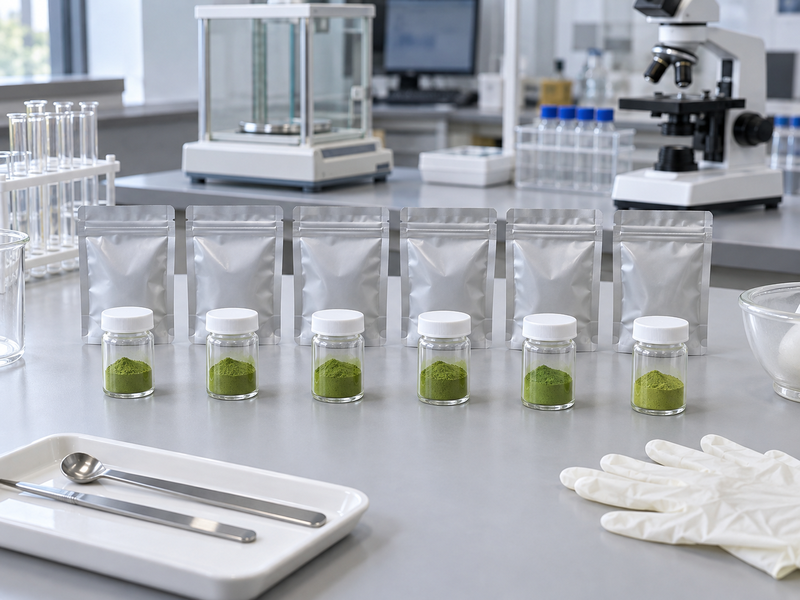
Give every location the same powder code, scale or validated portion tool, recipe card, and training method. Sample real preparations from several shifts. Weigh powder before staff know which drink will be checked, and compare the result with the target. If the dose drifts, examine tool design and workflow before blaming the employee. A portion can be correct in the training room and inconsistent during a queue.
Keep a simple log of recipe revisions and supplier lot changes. An operations audit might check whether the correct pack is in use, the scoop remains appropriate, and staff have read the current card. If a drink uses a sweetened premix, confirm staff do not substitute pure powder at the same gram dose. A chain should not promise identical caffeine milligrams in every cup; it should control the inputs that make its published description reasonable. This is a service-standard issue as well as a product-data issue.
| Store check | Method | Decision |
|---|---|---|
| Powder identity | Inspect code | Correct SKU |
| Portion | Weigh several drinks | Retrain or adjust tool |
| Recipe version | Compare current card | Replace obsolete copy |
9. What if the powder is a latte blend?
Read the blend before doing tea math
A latte blend may contain sugar, milk components, flavors, and matcha in a controlled formula. Its grams per serving are not all grams of tea. Ask for the composition and a caffeine result or defensible calculation for the blend as supplied. If the supplier changes its matcha input or formula, the old caffeine estimate may need review even when the scoop size remains the same. Keep pure matcha and blend codes separate in purchasing and training records.
Trial the blend at the menu dose. If a stronger flavor requires more powder, caffeine from the blend can change with the new portion. Product development should document that decision alongside sugar, allergen, and cost changes. Matcha Village’s supplied portfolio includes matcha and latte products, but no caffeine amount should be assigned to a particular offer without current product evidence. Ask the supplier for the exact item code and analysis basis before publishing an amount.
10. What belongs in the final caffeine file?
Make the number reproducible
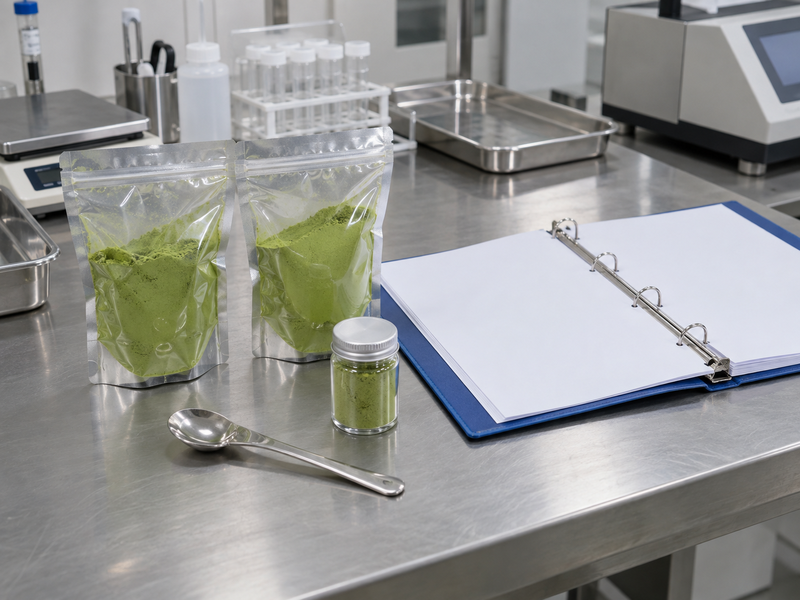
Store the supplier’s product code, analysis or specification, tea or blend dose, calculation, recipe version, and approved menu language together. Name the reviewer and the trigger for revision. The document should say whether the calculation concerns matcha alone or the entire beverage. Keep the source result and units visible so a future operator can check the arithmetic. A screenshot of a consumer article is not an adequate substitute for this file.
At each new product, dose, or supplier lot strategy, ask whether the estimate still applies. Train staff from the approved wording and check real portions in service. If the business cannot support a numeric figure, a truthful statement that matcha contains caffeine is still useful. The goal is a menu answer tied to what the café actually prepares, with enough evidence for quality and operations to update it responsibly.
| File component | Owner | Revision trigger |
|---|---|---|
| Product result | Quality | New SKU or basis |
| Serving dose | Operations | Recipe change |
| Menu wording | Regulatory and brand | Evidence or market change |
FAQ
Q1. Does pure matcha contain caffeine? Yes. Ask for product-specific data before quoting an amount for a drink.
Q2. Does adding milk remove caffeine? Milk changes the drink volume, not caffeine contributed by a fixed matcha dose.
Q3. Can a scoop replace a scale? Only if the operation has verified that tool gives the intended powder weight consistently.
Q4. Is a supplier’s average enough for a precise claim? Have a qualified reviewer assess the data, variation, and actual recipe before publishing one.
Q5. What if a customer asks whether matcha suits their health condition? Explain the ingredients and caffeine information you have; do not give individualized medical advice.
Begin with a weighed recipe and the supplier’s named product. Calculate the serving amount transparently, choose wording the evidence supports, and train staff to repeat it. That gives customers a useful answer while keeping medical judgments outside the café’s role.