
Matcha microbiological testing reports can describe different samples and analytical questions. Buyers need more than a general pass statement to understand the offered product. Matcha Village can discuss customer and market testing requests. Define the lot, obtain complete records and use qualified laboratory and quality review before deciding whether the evidence supports purchase.
Table of contents
- What purchasing decision should testing support?
- Which sample does the report describe?
- What organisms or groups are included?
- How do result types and units affect reading?
- What should you ask about methods and scope?
- Who agrees the sampling and submission plan?
- How should acceptance criteria be documented?
- What changes after blending or packing?
- How should unclear results be resolved?
- What should remain in the approval file?
1. What purchasing decision should testing support?
Name the product and intended use
Begin with the offered SKU, ingredient composition, destination and application. A dry plain matcha ingredient and a formulated beverage powder require clearly identified review questions. Ask your qualified quality or compliance team what evidence the transaction needs before requesting a general microbiological certificate. The intended use may also affect which questions the reviewer asks, so describe whether the powder will become a restaurant drink, a manufactured food or a retail product.
Matcha microbiological testing is one part of a purchasing review. A report cannot approve every aspect of product handling or processing. Matcha Village can discuss testing according to customer and market requirements, but the actual proposed scope and relevant evidence need agreement. Keep sensory approval, ingredient review and laboratory interpretation separate in the file.
A favorable tasting does not answer a microbiological question. If the supplier provides a broad company statement, ask for the records connecting it with the offered material. Assign the final decision to a named reviewer and make pending items visible to procurement. This guide supports that workflow without providing laboratory validation or food-process instructions.
2. Which sample does the report describe?
Connect the laboratory record with the offered lot
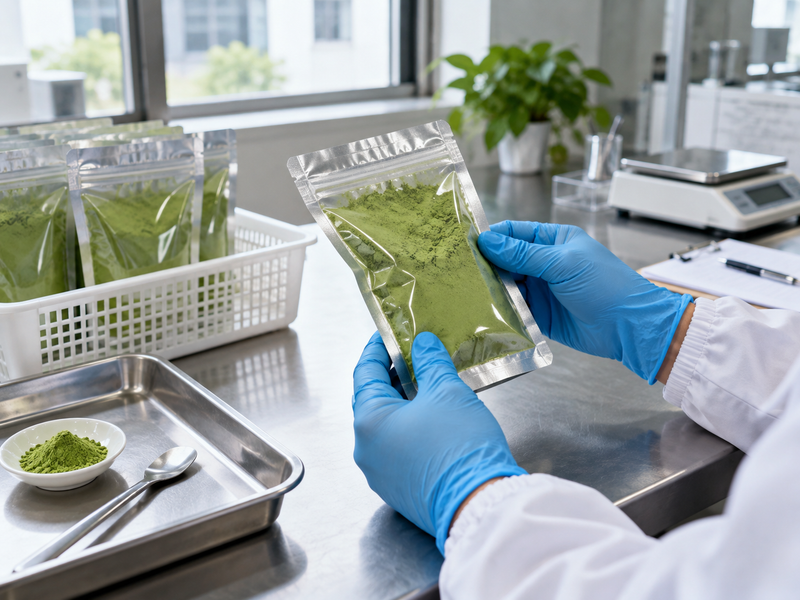
Read the material description, laboratory sample reference, supplier identifiers and relevant dates. Ask how they connect with the product being quoted. A report describing only tea powder may need another record linking it with the SKU and lot. Check whether the material submitted was plain matcha, a blend, a prepared drink or another product. Do not treat those identities as interchangeable. Record who submitted or collected the material and whether the lab independently sampled it or analyzed a supplied sample. The laboratory’s involvement does not establish its role in collection unless the record says so.
Ask what stage the submitted material represents. If blending or packing follows that stage, your quality reviewer should consider whether the report answers the offered-product question. Retain complete pages and annexes rather than a screenshot of the conclusion. Sample identity can appear outside the result table. Matcha microbiological testing records need this connection before procurement can use them for a lot decision. If it remains unclear, send a specific enquiry and keep approval pending through the operation’s established process.
| Identity detail | Question | Record to request |
|---|---|---|
| Sample reference | Which SKU and lot does it describe? | Identifier link |
| Material | Plain powder, blend or another product? | Specification |
| Collection | Who selected and submitted it? | Sampling information |
| Stage | Before or after relevant processing? | Product-stage explanation |
3. What organisms or groups are included?
Read the named scope rather than the report title
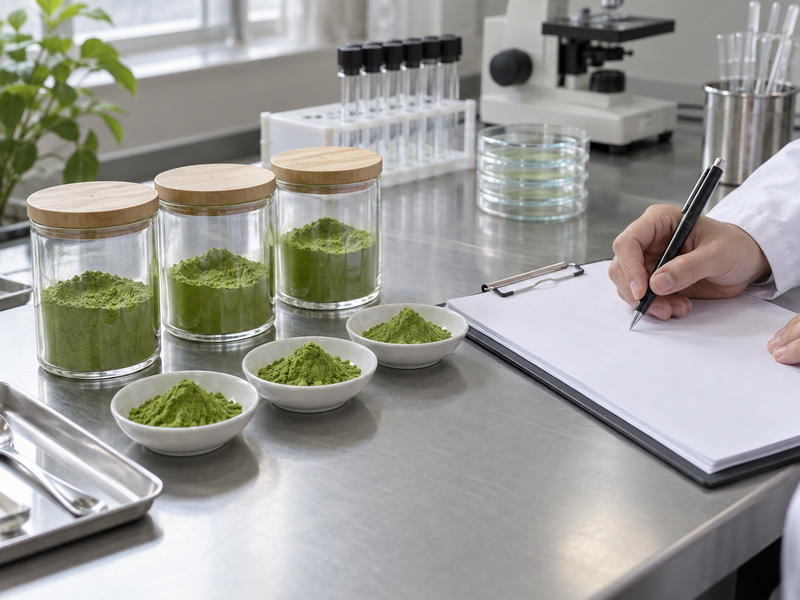
Request the complete list of reported organisms or groups and any scope qualifications. A microbiological analysis heading does not tell the buyer everything the laboratory tested. Your qualified reviewer should compare that list with the purchasing requirement. Some entries may concern counts while others report a presence or absence result under specified conditions. Keep those distinctions visible instead of reducing the entire page to a single pass label. Ask the laboratory to explain unfamiliar group names, abbreviations or scope notes. This guide does not recommend a universal panel for all matcha applications.
The actual product, destination and intended decision should guide the qualified discussion. The selected Café Couture article describes that seller’s certificate and testing categories. Its safety assurances and organic statements are not evidence for Matcha Village lots and are not adopted here. Obtain the proposed matcha microbiological testing scope for your own offer. A supplier’s general list can start the enquiry, but a complete relevant report is needed for your reviewer to interpret the tested material.
4. How do result types and units affect reading?
Preserve each row’s analytical context
Keep a result with its organism or group name, units, examined quantity where stated, method and qualifiers. A numerical count and an absence statement answer different analytical questions. Ask the qualified laboratory what each reported expression means for the sample. Avoid translating an absence result into a claim that the entire lot contains no microorganisms. Similarly, do not convert a qualified count into zero when copying a supplier summary.
Read footnotes and column headings before comparing records. Reports may present information in different formats, and displayed numbers alone may not provide a common comparison. If units or result conventions differ, ask the reviewer to interpret them rather than ranking products from a spreadsheet. Matcha microbiological testing summaries should preserve the complete meaning of the original row.
Keep the report available beside internal notes so transcription can be checked. This workflow does not determine clinical risk or personal consumption advice. The authorized reviewer should connect the reported evidence with the intended purchasing criterion and document what decision it supports. Procurement should retain any laboratory explanation that resolves an unclear abbreviation or result symbol.
| Result field | Preserve | Qualified question |
|---|---|---|
| Numerical result | Value, unit and qualifier | What does this count represent? |
| Absence statement | Reported conditions and examined quantity | What scope does it support? |
| Footnote | Relevant explanation | Does it qualify the result? |
| Internal summary | Link with original row | Has meaning changed during copying? |
5. What should you ask about methods and scope?
Seek a laboratory explanation for technical suitability
Record the method references and notes describing laboratory activities. Ask the qualified lab or reviewer whether the reported methods and scope address the submitted material and required analytical question. A laboratory logo or familiar company name does not settle every method issue. Where accreditation forms part of the requirement, obtain relevant scope information for review instead of assuming all reported work has the same coverage. Read any notes about qualified results, departures or outsourced activities. Keep those notes in the purchasing file. This article provides no incubation instructions, culture procedure or method-validation recipe.
Technical choices belong to qualified professionals working on the actual product. Procurement can ask specific questions and collect their answers. If the supplier submits a summary without method information, request the complete report. Matcha microbiological testing should be interpreted within its stated analytical conditions. A generic assurance that the laboratory tests foods gives less purchasing evidence than an explanation covering the relevant sample and scope. Record the reviewer’s conclusion and identify any requirement that remains unanswered before moving the lot toward release.

6. Who agrees the sampling and submission plan?
Define responsibilities through qualified review
Give the qualified laboratory or quality team the product identity, lot arrangement, packaging and intended approval question. Ask who defines sampling, who collects material and how it will be identified during submission. Your team should also agree relevant collection, handling and transport requirements with those professionals. This guide does not prescribe sample quantities, collection points or storage conditions. Those details need product-specific qualified decisions. Keep a tasting sample separate from a laboratory submission in your records. A small sales pouch may provide application feedback while leaving the quality team’s lot question unresolved.
Ask what documents accompany the submitted material and how the lab records receipt or any qualifications about its condition. Retain the relationship between the sample ID and supplier lot. Where your process provides for retained material, define its identity and custody through that process. The supplier selection guide helps organize named responsibilities in a purchasing enquiry. Avoid calling a sample representative based only on convenience. Have the qualified reviewer document the basis for using the evidence in the intended lot decision.
| Responsibility | Question to settle | Purchasing record |
|---|---|---|
| Plan | Who defines sampling for this decision? | Qualified plan reference |
| Collection | Who identifies and collects material? | Collection record |
| Submission | How do sample and lot connect? | Identifier trail |
| Receipt | What condition did the laboratory record? | Relevant report notes |
7. How should acceptance criteria be documented?
Identify the basis behind a pass statement
Ask the authorized quality or compliance reviewer to determine applicable criteria for the product, destination and use. Record the source, version and review decision through your organization’s process. This guide supplies no universal microbial acceptance limits or legal conclusions. A laboratory reporting condition and a purchasing acceptance criterion should remain separate fields.
If a report says pass, ask which criteria the author used. The conclusion may refer to a customer specification or another stated basis that needs comparison with your requirement. Keep unresolved differences visible. For matcha microbiological testing across several markets or applications, identify which decisions the reviewed evidence supports. Approval for one purchasing scope should not become a claim covering every use of the powder.
The supplier’s commercial team can provide documents, but the qualified reviewer should decide their relevance. If your business changes the formulation or intended application, ask whether the criteria and evidence need another review. Save the decision beside the report instead of retaining only an email saying approved. Receiving staff need the resulting lot status and identity, while technical records should remain available to the people answering later enquiries.
8. What changes after blending or packing?
Keep the tested stage connected with the supplied product
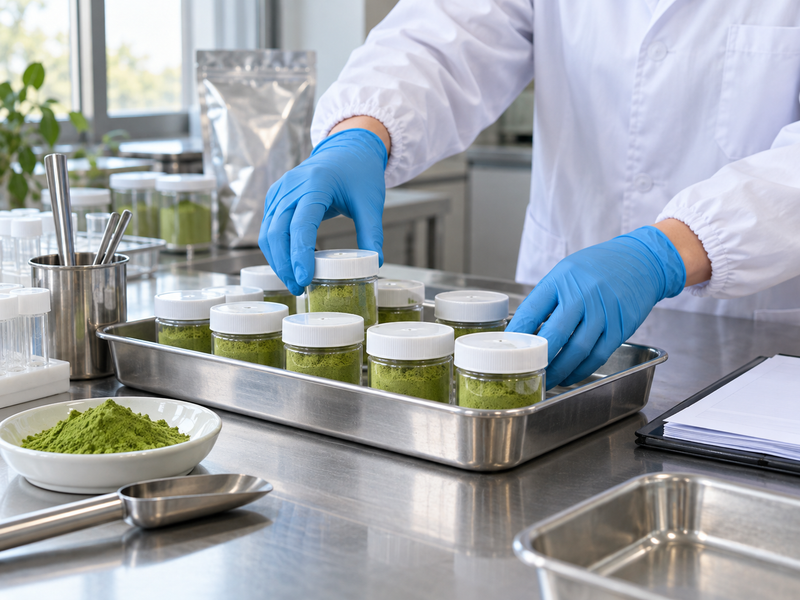
Ask which stage the report covers and describe any relevant activities between that stage and the final offered product. Plain matcha may become part of a blend, or a bulk ingredient may enter another packing operation. Your qualified quality team should determine what those changes mean for the purchasing evidence. Do not automatically reuse an ingredient report as the approval for a finished formulation. Identify the composition, responsible processor or packer and lot relationship. If your business plans private label, include these questions before artwork and packaging commitments.
Matcha Village supports OEM and application discussions, with specific products and documentation agreed through the project. The private label guide provides further context for coordinating ingredient and pack decisions. Matcha microbiological testing does not validate a restaurant’s preparation, a factory’s later process or shelf life merely because the ingredient has a report. Those subjects need the operation’s own qualified review. Keep supplier evidence within the scope it supports and record what additional decisions belong to the buyer or downstream producer before the product reaches customers.
| Product stage | Question | Qualified review |
|---|---|---|
| Plain ingredient | Which lot and material were tested? | Ingredient evidence |
| Blend | What composition and lot relationship applies? | Formulation evidence |
| Packed product | Which operation follows testing? | Offered-product relevance |
| Downstream use | What buyer process remains separate? | Operation-specific review |
9. How should unclear results be resolved?
Send a precise question and preserve product status
Identify the report reference, sample ID and row or note requiring clarification. Send complete records to the supplier and qualified reviewer rather than relying on a cropped image. Ask whether the question concerns material identity, scope, result expression or the acceptance basis. Those issues may require different responses. Your authorized quality team should decide whether another review, sampling plan or analysis is needed. Procurement should not create an informal retesting process to seek a favorable answer. Keep the affected product’s status visible while the decision remains open.
If the laboratory corrects or reissues a document, retain the version trail and explanation. If the supplier proposes a different lot, identify it as another offer with its own relevant evidence. Matcha microbiological testing records should not move between products without a documented relationship. After the qualified reviewer resolves the issue, record which lot the decision covers and communicate the approved status to receiving staff. Preserve any agreed purchasing action or supplier follow-up so the next order does not repeat the same unanswered question.
10. What should remain in the approval file?
Save the evidence and its limits together
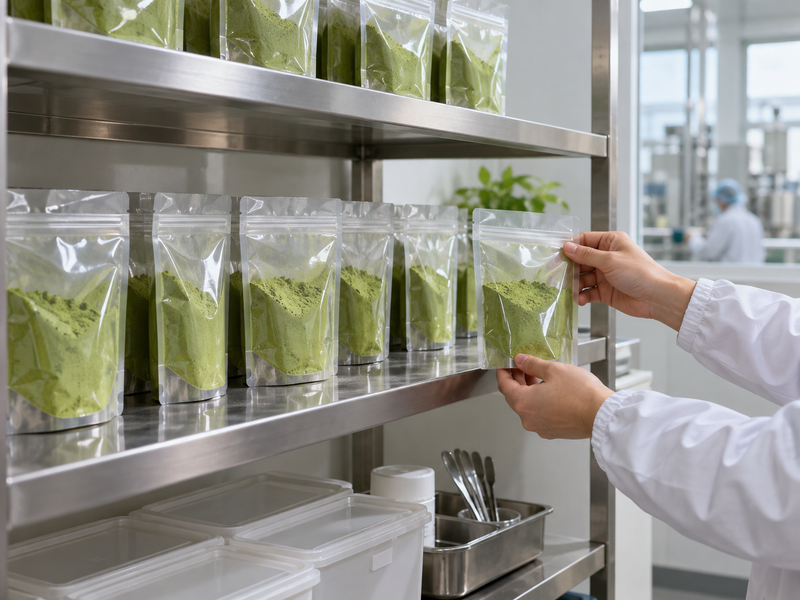
Retain the offered specification, lot and sample identifiers, relevant sampling records, complete report and authorized review. Record the acceptance basis, approval scope and unresolved items. Link the file with the purchase order and receiving record so the approved material can be recognized when it arrives. If your business supplies onward, preserve the relationship with downstream deliveries through its traceability process. Matcha Village can discuss matcha microbiological testing requests within its Chinese B2B manufacturing and supply support.
Ask for the proposed analysis and evidence relevant to the current offer. A previous report does not automatically approve another lot or formulation. Have the quality team decide what needs updating when product, packing, use or destination changes. Public statements should remain within the reviewed evidence; avoid claiming that a report guarantees absolute safety or the absence of every microorganism. Give customer-facing staff a named contact for technical enquiries. Before confirming a purchase, check that the responsible reviewers have recorded the decision and that receiving staff have the matching product identifiers.
| File item | What it supports | Link needed |
|---|---|---|
| Specification | Offered-product identity | Quotation and SKU |
| Sampling records | Submitted-material relationship | Lot and sample ID |
| Laboratory report | Defined analysis and qualifications | Complete reviewed version |
| Approval | Purchase and release decision | Receiving record |
FAQ
Q1: Does a microbiological report cover every organism?
Read the named scope and qualifications. A report title does not establish that every possible organism was tested.
Q2: Does an absence statement describe the whole shipment?
Ask the qualified reviewer what the sample, examined quantity and analytical conditions support. Preserve the report’s exact meaning.
Q3: Can an ingredient report approve a later blend?
Have the quality team review composition, processing stage and lot relationships. Avoid transferring conclusions automatically.
Q4: Who should define sampling details?
Use the qualified laboratory or quality team for the actual product and decision. This guide does not prescribe a collection or validation procedure.
Q5: Does testing establish a food process or shelf life?
Ingredient evidence has a defined scope. Downstream preparation, processing and shelf-life questions need separate qualified review.