
Hojicha recipes on consumer sites can spark a menu idea, but a chain needs yields, ingredient specifications, preparation times, and repeatable flavor. Roasted tea powder can move between drinks and food, yet each application places different demands on texture and aroma. This guide lays out ten development decisions and several pilot starting points for cafés and food brands. All quantities are trial assumptions for R&D, not claims that a finished recipe has passed sensory, safety, or shelf-life testing.
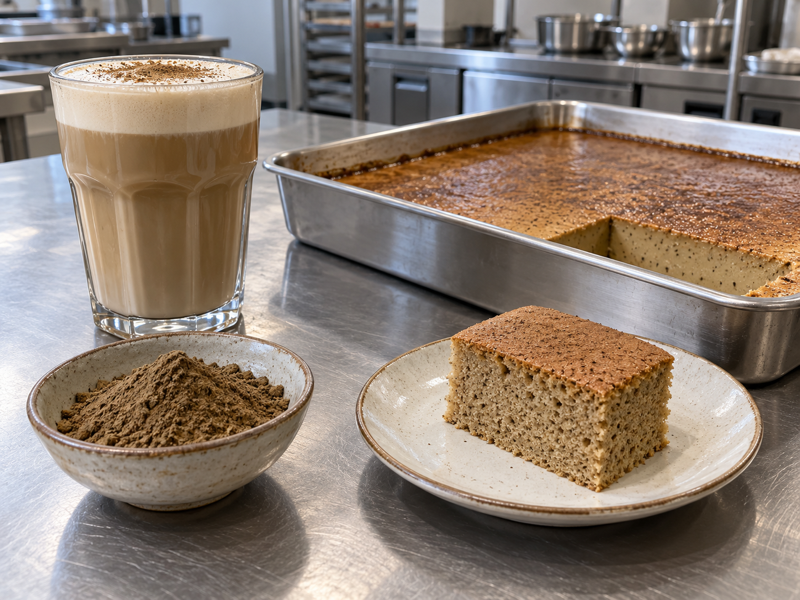
1. Which hojicha recipes deserve development first?
Pick a customer occasion and an operating constraint
A recipe list can grow without limit; a menu cannot. Decide who buys the product, at what daypart, and what your team can prepare during a rush. A hot latte may suit a café with steam wands, while a bottled tea requires a very different process and safety program. Choose one lead item. Write target cup size, flavor intensity, sweetness, ingredient cost, service time, and equipment on a one-page brief. Use a control drink already sold by the business to compare customer response and margin. Consumer recipe collections show the range of ideas, but they cannot provide your business’s ingredient cost or operating conditions. Limit the pilot to a few purposeful variants rather than launching ten weakly differentiated names. The lead item should demonstrate a clear roasted-tea taste in a format your staff can make consistently. Document what will be measured in the limited launch: paid orders, preparation time, remake rate, and whether customers recognize the tea flavor. A busy location may expose workflow problems that a tasting panel never sees.
| Candidate | Best test setting | Main risk |
|---|---|---|
| Hot latte | Steam-wand café | Tea disappears in milk |
| Iced latte | Cold beverage bar | Sediment and dilution |
| Tea concentrate | Multi-site chain | Hold stability |
| Bakery filling | Central kitchen | Aroma after process |
2. How should a base hojicha slurry be prepared?
Start with weighed powder and controlled water
Pure hojicha powder disperses more predictably when staff create a smooth slurry before adding a large volume of milk. For an initial bench trial, weigh 4 g of powder and 40 g of warm water for one drink, then adjust after tasting. This is a test point, not a universal ideal dose. Watch the cup bottom. Use the same whisk or frother each time and note clumps, mixing seconds, and residue after five minutes. If a powder requires excessive mixing, test another grind or hydration sequence before changing the menu. A formulated instant mix may need different directions because its sugar and carrier alter wetting. Document water temperature and the specific ingredient lot. For a chain, a recipe that works only with one skilled barista is not ready. Give ordinary staff the card, observe the result, and revise the procedure until the texture and taste repeat.
3. What is a workable hot hojicha latte trial?
Balance roasted tea with milk rather than syrup
Begin with the 4 g powder and 40 g water slurry, then add about 180 mL of the intended steamed milk as a controlled pilot cup. Taste unsweetened before adding syrup. If the roast is too faint, adjust tea dose or powder choice; added sweetness alone will not restore tea identity. Serve at the real temperature. A very hot cup can hide some flavors and exaggerate others after cooling. Rate aroma, body, aftertaste, and sediment at service and several minutes later. Compare dairy and one approved plant milk only if both will be sold. Their sweetness and foam behavior may differ. Measure actual milk volume delivered after steaming, including any pitcher loss. Once sensory direction is clear, add a measured sweetener dose and calculate ingredient cost. Keep the selected formula as a revisioned card with grams and milliliters, not “one scoop” and “a splash.”
| Pilot component | Starting quantity | Adjustment question |
|---|---|---|
| Pure hojicha powder | 4 g | Is tea distinct? |
| Warm water | 40 g | Does powder hydrate? |
| Milk | About 180 mL | Is body balanced? |
| Sweetener | Start at 0 | How much is needed? |
4. How does an iced hojicha recipe change?
Design for dilution and cold texture
An iced latte needs a stronger tea impression before ice melts because cold reduces aromatic perception and dilution can flatten the drink. Keep the powder slurry warm enough to hydrate, then add chilled milk and a measured amount of ice. Count the melt. Taste at handoff and again after a typical customer drinking interval. Record final beverage mass and the residual ice. A beverage that looks beautifully layered may require extra steps; determine whether the visual benefit pays for slower service. Cold foam and flavored syrups can give a seasonal variant, but each addition must be measured and costed. Check whether powder sticks to the cup wall or settles below ice. If it does, change mixing order or powder before telling staff to shake longer. A strong iced recipe should remain recognizable as roasted tea when served through a straw and after brief hold.
5. Can one concentrate support several drinks?
Batching can help only when yield and hold are controlled
A chain may prefer one roasted-tea base for lattes, sparkling tea, and desserts. Start by deciding whether the base is a brewed leaf concentrate, powder slurry, or formulated syrup; these have different handling and shelf-life needs. Measure every batch. Record tea or powder input, water, sugar, final yield, preparation time, and maximum approved hold. A base that separates requires a defined remixing method, not an informal shake. If it will be refrigerated, food safety and shelf-life decisions belong to qualified staff with suitable testing. Trial the concentrate in each proposed finished drink at a fixed dose; a base optimized for milk may be too dark or sweet for sparkling service. Label every container with batch and preparation time during pilots. A common base can simplify training, but only when it produces acceptable flavor across applications and does not create excessive waste.
| Batch-base field | Record |
|---|---|
| Tea input | Mass and lot |
| Liquid input | Water or other base volume |
| Output | Final usable yield |
| Hold | Approved time and condition |
6. Which baked recipe is a sensible pilot?
Use a familiar base with one tea variable
A sponge cake or cookie provides a straightforward screen because the bakery can keep its existing control formula and replace a small portion of dry ingredients with hojicha powder. Do not claim a fixed replacement percentage without testing; tea powders differ in fineness and moisture. Compare before and after baking. Smell the batter, bake at the normal process setting, then taste the cooled product. Record whether roasted notes survive, whether bitterness appears, and whether crumb color suits the concept. For a cookie, assess spread and snap; for sponge, assess rise and dryness. A filling or glaze can strengthen tea identity if baking removes aroma, but it increases cost and complexity. In central production, scale the trial carefully and weigh all ingredients. If the powder carries any added sugar or creamer, a dry-ingredient swap is no longer a simple tea substitution. Keep pure powder and premix trials separate.
7. What dessert recipes make tea flavor visible?
Cold dairy bases can carry roast without high heat
Panna cotta, pastry cream, and ice cream can display hojicha’s brown color and toasted aroma, provided the tea dose survives fat and sweetness. Start with a known base recipe and prepare three powder levels around a central trial dose rather than guessing one winner. Taste after setting. A mixture sampled warm can change after chilling or freezing. Check powder dispersion before the base thickens, since late additions may leave dark specks or clumps. For a custard, heat treatment and storage decisions must follow the business’s food-safety program. For ice cream, taste after hardening, not only from the churn. Test packaging too: a clear cup may show sediment or uneven color. A dessert portion should tell a customer what roasted tea adds beyond ordinary caramel or cocoa. If consumers cannot identify that difference, refine roast choice or placement before raising the dose indefinitely.
| Dessert | Tea check | Process check |
|---|---|---|
| Panna cotta | Roast after chilling | Even dispersion |
| Pastry cream | Tea versus vanilla | Heat and hold |
| Ice cream | Flavor after freezing | Texture stability |
| Glaze | Flavor at thin layer | Flow and set |
8. How should home-style recipes be scaled?
Convert every measure to a production unit
Household recipes use teaspoons, cups, and subjective instructions such as “whisk until smooth.” A factory or chain needs mass, temperature, time, yield, and acceptance criteria. Reweigh the recipe. Make a small batch on a scale, document each ingredient in grams, then repeat before enlarging it. Some processes change when batch depth, mixer speed, or heating surface grows, so a linear multiplication is only a starting calculation. Evaluate flavor and texture at pilot scale, including line loss and serving portion. Create a bill of materials tied to approved supplier SKUs and allergen records. A recipe collection may suggest combinations such as strawberry, coconut, or maple, but each adds a new ingredient to qualify. Limit a launch to variants the operation can train and source without error. A good scaled recipe is boringly repeatable behind the scenes.
9. How should each recipe be costed?
Calculate the sellable portion, not the mixing bowl
Use delivered ingredient prices and weighed quantities, then account for loss during straining, mixing, coating, or portioning. Add packaging and labor where they differ across candidates. Find the expensive step. The tea dose may be small, while a special topping or slow service process dominates cost. Price hot and iced versions separately if milk and cup costs differ. For desserts, use actual portions from the pilot batch rather than planned portions from a spreadsheet. Include failed units in a realistic production yield. Test a low and high ingredient-cost scenario if imported tea prices or freight could change. A value comparison should consider how distinctly hojicha tastes at the approved dose; a cheaper powder requiring twice as much tea may not save money. Put contribution margin beside sensory scores, not ahead of them.
| Cost input | Unit | Source |
|---|---|---|
| Tea dose | g/portion | Approved recipe |
| Delivered tea price | currency/kg | Purchase quote |
| Yield | sellable portions | Pilot run |
| Service labor | seconds/portion | Station trial |
Build the cost sheet from one approved batch and reconcile it after a live run. Record powder issued, mix left in containers, finished portions sold, and items rejected for appearance or weight. The difference tells purchasing whether a higher tea dose or a process loss drove the cost. Keep recipe costing separate from selling price: promotions, delivery fees, and tax can alter realized revenue without changing ingredient consumption. When comparing two powders, calculate cost using the dose that met the sensory brief for each sample. Update the sheet if a new oven, cup, topping, or holding method changes yield. Give finance the dated recipe revision and purchase quote so the margin decision can be traced later.
10. What makes a hojicha recipe ready for rollout?
Approve taste, quality, supply, and training together
Run the recipe in the real operating environment with ordinary staff. Check several servings for dose, taste, temperature, appearance, and timing. Quality should review ingredient documents and any required shelf-life or safety studies. Purchasing should confirm lot continuity, lead time, minimum orders, and an alternative if supply fails. Keep a reference serving. Photographs and an approved sensory sample help sites recognize drift. Give staff a short card with ingredients, exact quantities, sequence, and common faults. Train customer-facing staff to describe roasted tea plainly without unsupported health claims. Matcha Village can provide hojicha powder samples for drink and food trials; request the current SKU specification and test in your own formulas. A recipe is launch-ready when a second operator and a second ingredient lot can produce a comparable sellable item. For ingredient screening, use our best hojicha powder guide to structure the trial. That is a stronger standard than a beautiful development-kitchen photograph.
Use consumer hojicha recipes as idea sources, then rebuild the chosen item around measured ingredients and the actual production route. Send a supplier the target application, dose range, and market so sample selection can support a controlled trial.
FAQ
Q1: Can one powder work in every hojicha recipe?
Possibly, but drinks, bakery, and frozen products need separate sensory and process tests.
Q2: Are the sample quantities here final formulas?
No. They are explicit bench starting points that require trials and approval.
Q3: Should a café add syrup automatically?
Test the unsweetened tea-and-milk base before setting a measured sweetener dose.
Q4: Does a batch base save labor?
It can if yield, hold, mixing, and waste are controlled in the real station.
Q5: What must be documented for scale?
Ingredient SKUs, grams, process conditions, yield, quality checks, and training steps.
Sources: Japan MAFF, hojicha category; FDA Food Labeling Guide; FDA Food Allergies.