
Hojicha KitKat appears in search because Japanese roasted tea can move beyond the tea aisle. Nestlé Japan named a KitKat Mini Itohkyuemon Uji Hojicha product in a 2022 company release. That documented example is a useful prompt for confectionery teams, but it is not a ready-made recipe or evidence that any roasted-tea snack will sell. A supplier presentation should therefore show a physical prototype and a traceable ingredient file, not merely a photograph of another company’s regional product. This guide translates the idea into ingredient, sensory, manufacturing, and launch questions for brands developing their own unbranded hojicha-flavored wafer or chocolate product.
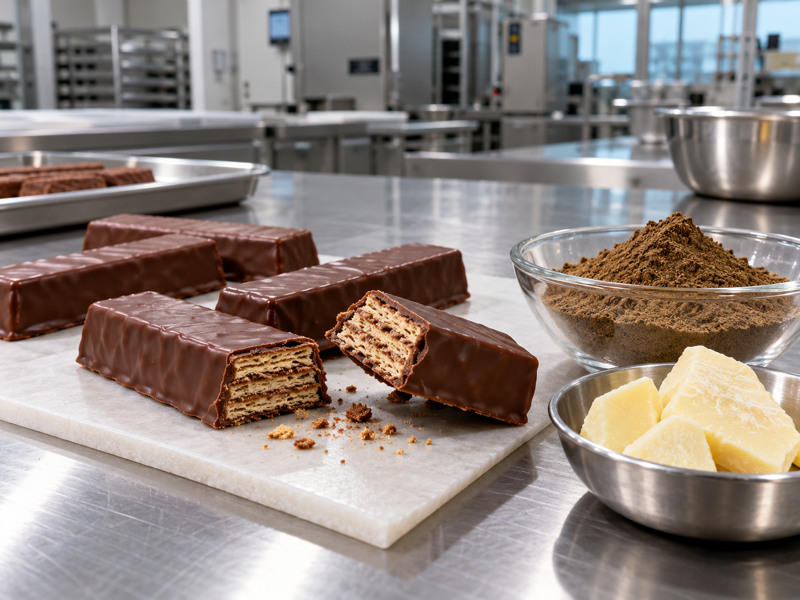
1. What is verified about the Hojicha KitKat example?
Use an official product reference, not a sales myth
Nestlé Japan’s 2022 release lists KitKat Mini Itohkyuemon Uji Hojicha among regional Japanese offerings. That establishes the existence of a branded hojicha product at that point in time. It does not establish current availability, sales volume, ingredient percentage, or consumer response. Keep the lesson narrow. Roasted tea can be used as a recognizable flavor cue in a familiar wafer format. The case also shows how a tea name can connect with a partner and a geographic story when those claims are supported. A new manufacturer should not copy packaging, trademark, or product story. Instead, define its own flavor proposition and verify any origin statement through sourcing records. Nestlé’s own release is the factual anchor for the branded example. Its production specifications and market outcomes remain outside the available evidence.
| Observed fact | Unproven inference |
|---|---|
| Nestlé listed a Uji Hojicha KitKat Mini | All hojicha wafers sell well |
| Roasted tea appeared in a wafer SKU | One powder works in every chocolate |
| Product used a named collaboration | Other brands may use its marks |
2. Why can roasted tea work in a wafer snack?
Toast notes can meet cocoa and baked grain
Hojicha brings roasted, cereal-like, and sometimes cocoa-adjacent notes. Wafer layers bring baked grain and crisp texture, while a chocolate or compound coating contributes fat and sweetness. The flavor pairing has a plausible sensory basis, but the blend can also become muddy if every component tastes roasted. Give each layer a job. Decide whether tea should lead in the coating, the cream filling, or both. A filling can carry aroma while an outer coating provides color and texture. Test a control wafer without tea, then add tea at several measured doses. Compare immediate flavor, aftertaste, and sweetness. A tea powder that tastes pleasant in water may read burnt beside cocoa. Conversely, a gentle roast may vanish under vanilla and sugar. Record actual grams of tea per unit so the team can compare taste with cost and label copy. A good prototype tastes like hojicha, not just generic caramel.
3. Which hojicha ingredient format should be trialed?
Pure powder, extract, and flavor have different roles
Pure hojicha powder can contribute authentic tea solids and visible brown color. An extract may deliver a more concentrated liquid or dry flavor but can change moisture and handling. A flavoring can reinforce a note but its labeling and sensory character differ from tea powder. Check the ingredient list. Ask suppliers whether a “hojicha powder” is pure milled tea or a blend with carriers and sweeteners. For a fat-rich coating, powder wettability and particle size matter; coarse material can create a sandy finish. In a cream filling, a little water introduced with an extract may disrupt texture, so process compatibility deserves a bench test. Do not assume an extract can replace a powder gram for gram. If the front panel says “made with hojicha,” verify the actual tea ingredient and review market-specific wording. A procurement dossier should include composition, sensory standard, origin, and lot documents before the pilot line consumes kilograms.
| Format | Potential use | Check |
|---|---|---|
| Pure tea powder | Coating or cream | Grit and color |
| Dry extract | Flavor concentration | Carrier and taste |
| Liquid extract | Filling system | Water activity effect |
| Flavor | Supporting aroma | Label description |
4. How should the chocolate or cream base be chosen?
Build around the tea rather than hiding it
White chocolate or a pale compound coating gives roasted tea color room to show, while milk chocolate can support cocoa-like notes. Dark chocolate may mask a delicate hojicha and raise bitterness. These are hypotheses for bench testing, not universal rules. Control the sugar. Prepare the same tea dose in several bases while keeping portion size and processing conditions constant. Evaluate whether the result reads as tea, coffee, caramel, or simply “brown sweet.” A product name should match what a consumer can taste. If the coating contains dairy, soy, or nuts through formulation or handling, food-allergen review must follow the actual product. Compare cream fillings after a few days as well as immediately after mixing; a flavor may migrate or fade. A multi-layer product makes sensory attribution harder, so taste each component alone and in the full bite. Choose the base that gives a clean, recognizable roasted-tea finish without a harsh edge.
5. What can go wrong on the production line?
Powder behavior affects flow and texture
Tea particles can agglomerate in a fat-based coating or create visible specks. Adding more powder can increase viscosity, change depositing behavior, and make a coating feel dry. Filling pumps and enrobers respond to particle distribution and temperature, so a kitchen bowl is only an early screen. Run a controlled pilot. Record tea dose, mixing order, temperature, viscosity or flow observation, coating pickup, and line loss. Compare wafer crispness after coating and cooling. A dry powder can still affect water activity indirectly through other formulation changes; measure the finished product under the food technologist’s program. Watch for color changes after tempering or storage. If a supplier proposes a new finer powder to solve grit, re-run flavor and process tests because roast intensity may also differ. The aim is a product that an ordinary shift can make repeatedly, not a single polished prototype.
| Pilot checkpoint | Record |
|---|---|
| Mixing | Order, time, clumps |
| Depositing | Flow and pickup |
| Cooling | Set and surface appearance |
| Wafer | Crispness after hold |
6. How should shelf life be evaluated?
Protect both wafer texture and tea aroma
A wafer snack can fail through loss of crispness, fat bloom, stale oil notes, aroma fade, or packaging defects. Hojicha adds another sensory profile to monitor, not a substitute for the normal stability program. Store the real pack. Run trials in the intended wrapper and carton across relevant distribution conditions. Taste at planned checkpoints and measure technical parameters chosen by the quality team. If a tea aroma is strong on production day but weak after several weeks, test a different dose, roast, layer placement, or barrier film. Do not promise shelf life from a powder supplier’s best-before date; finished confectionery has its own formula and package. Keep retained samples from each pilot lot. A flavor that works only under ideal storage may be unsuitable for export or warm retail channels. Packaging cost and barrier properties belong in the business case from the beginning.
7. Which names and claims need review?
Use your own identity and evidence
KitKat is a specific Nestlé brand. A new product brief may analyze it as an example, but a commercial product needs its own name and packaging. Geographic references such as “Uji” should be backed by ingredient sourcing and checked in the sales market. Proofread the front panel. “Hojicha flavored,” “made with hojicha,” and “Japanese hojicha” can imply different things about tea content and origin. Review the actual formula and documents before choosing one. The ingredient statement must include the true coating, filling, and wafer components, including required allergen declarations. Product images should resemble the sold unit; a dark brown photograph can mislead if the production bar is pale. Avoid suggesting health benefits merely because a snack contains tea. The job of the pack is to communicate flavor, composition, portion, and brand clearly. A regulatory reviewer should sign off before expensive wrapper printing begins.
| Copy element | Evidence needed |
|---|---|
| Roasted tea flavor | Actual sensory profile |
| Made with hojicha | Tea ingredient in formula |
| Japanese origin | Traceable sourcing |
| Allergen statement | Full ingredient and process review |
8. How can a brand test demand without copying a rival?
Choose a distinct consumer promise
Run a small concept test with original names and your own product image or physical sample. Ask consumers what flavor they expect from “hojicha” and whether the bite meets that expectation. Compare it with a familiar cocoa or caramel control, but do not tell participants which one should win. Watch repeat intent. A novelty flavor may earn one curious purchase yet struggle with repeat sales. Test price and pack size as well as taste. For a retailer, the proposition might be a roasted-tea afternoon snack; for a gifting channel, it might be a regional tea story supported by origin documents. A customer who has never heard of hojicha may need a short plain-language description on pack. Avoid long explanations that the shelf cannot carry. Keep the research design modest and record sample size and method; do not turn a few favorable comments into a market-wide claim.
9. How should the business case be calculated?
Include yield, packaging, and inventory risk
Model the ingredient dose per unit, landed tea price, coating and wafer costs, packaging, line yield, and retailer margin. A powder with stronger aroma may allow a smaller dose, but only a controlled trial can establish that. Price the whole run. A limited-edition pack can face high printing minimums and leftover wrappers after demand cools. A new coating formulation may slow the enrober or increase rejects. Include pilot waste and expected commercial yield separately rather than assuming laboratory material efficiency. Ask the supplier about order minimums and lead times for repeat lots. If a retailer wants a fast seasonal launch, the lowest unit ingredient price may be irrelevant if it arrives too late. Build a low, base, and high sales scenario, then decide the maximum finished-goods inventory the brand can carry. This makes the product experiment financially legible.
| Cost line | Basis |
|---|---|
| Tea powder | Tested grams per bar |
| Coating and wafer | Actual bill of materials |
| Line loss | Pilot yield |
| Wrapper inventory | Print minimum and forecast |
10. What does a sound pilot decision look like?
Sign off sensory, process, and claims together
Begin with coded tea powders and a control bar. Shortlist a roast in the full wafer formula, then produce a pilot on relevant equipment. Measure flow, texture, tea dose, shelf behavior, and consumer response. Review the file as one product. Quality checks ingredient documents and allergens; regulatory checks origin and flavor wording; purchasing checks landed cost and replenishment; marketing checks whether the story fits a short pack description. Retain an approved unit and powder sample from the pilot. Decide in advance what failure would stop the launch: gritty coating, weak tea identity, unstable crispness, missing origin proof, or poor gross margin. Matcha Village can offer hojicha powder for this kind of application work, with SKU-specific specifications requested before use. A documented go/no-go decision is more valuable than a vague belief that a famous branded example guarantees demand.
The Hojicha KitKat example proves that roasted tea has appeared in a branded wafer. Your own product still needs a distinct identity, a recognizable tea flavor, validated shelf life, and workable economics. Start with a small controlled pilot. For a wider application screen, use our hojicha desserts guide to compare formats and test variables.
FAQ
Q1: Is a Hojicha KitKat currently sold everywhere?
The cited Nestlé release documents a 2022 Japanese product; it does not establish current global availability.
Q2: Can another brand use the KitKat name?
A different manufacturer should develop its own name and packaging and obtain appropriate brand review.
Q3: Is pure hojicha powder enough for a strong wafer flavor?
It may be; test roast and dose in the finished coating and filling.
Q4: Should tea go in coating or cream?
Trial both placements and compare flavor, process behavior, and shelf stability.
Q5: What is the main launch gate?
A full pilot that passes sensory, manufacturing, documentation, labeling, and margin checks.
Sources: Nestlé Japan, 2022 KitKat regional product release; FDA Food Labeling Guide; FDA food allergies.