
The best hojicha powder for an iced latte may fail in ice cream or an instant sachet. Brand rankings can help buyers see the range of roast styles, but they rarely test the buyer’s milk, process, shelf life, and margin. This guide sets a comparison method for cafés, importers, and food manufacturers. It treats “best” as a decision against a written product target, supported by samples and documents, rather than a universal winner.
1. What does “best” mean for a professional buyer?
Write the application brief before opening samples
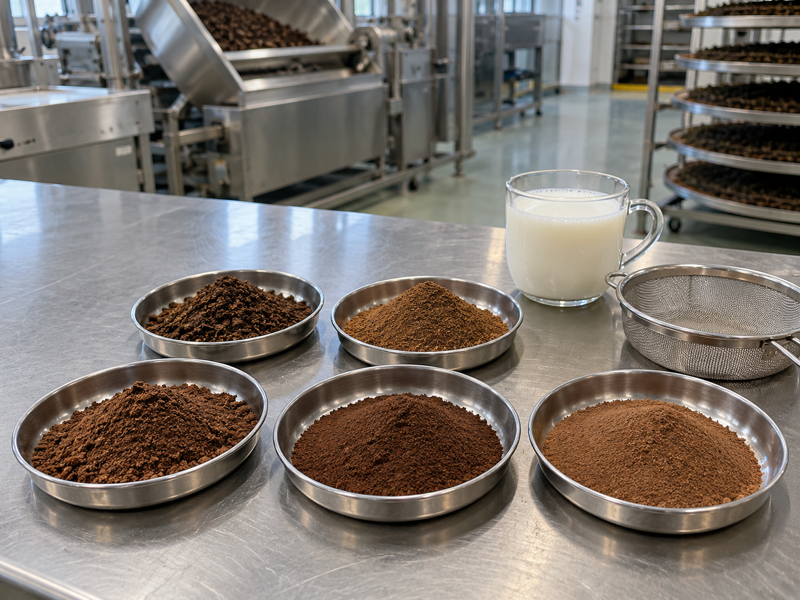
A coffee chain needs a powder that tastes clear in its chosen milk and disperses quickly at the bar. An ice-cream plant needs stability through pasteurization and freezing. A private-label sachet brand needs a blend that packs and reconstitutes reliably. The same powder may not win all three jobs. Set the target first. Specify the product, serving dose, expected flavor, color, texture, processing steps, pack size, destination market, and cost ceiling. Then identify disqualifiers: unacceptable grit, burnt finish, missing lot documents, or unstable lead time. A retail ranking can suggest candidate brands, but its tasting conditions may have little resemblance to yours. A retail tasting comparison can introduce the range of roast profiles, but a commercial team still needs a blinded trial in its own application. A clear brief makes “best” a repeatable procurement decision. Give every candidate a coded identifier and preserve its sample pack until the commercial lot arrives. If the selected supplier changes its roast or grind, compare the proposed replacement against that retained control in the actual finished formula before approving a purchase order.
| Application | Primary requirement | Trial medium |
|---|---|---|
| Café latte | Flavor after milk | Approved milk |
| RTD beverage | Cold hold and sediment | Finished formula |
| Ice cream | Flavor after freezing | Actual base |
| Dry mix | Reconstitution | Consumer preparation |
2. Is the sample pure hojicha or a formulated mix?
Composition changes every comparison
Pure roasted tea powder contains milled tea. A latte mix can include sweetener, dairy or plant creamer, and flavoring; an instant beverage powder may contain an extract on a carrier. Each can be useful, but prices per kilogram cannot be compared without composition. Ask for the ingredient statement. Record tea content where disclosed, serving dose, allergen information, and whether the formulation can be customized. A sweeter sample may win an informal taste test because it contains sugar, not because its roast is better. For a fair comparison, test pure powders at a controlled sweetness and milk ratio. Test mixes at their intended directions separately. If a supplier calls a powder “ceremonial,” ask what measurable attribute that word represents for roasted tea; it may be a marketing grade with no shared industry specification. A buyer’s own performance standard is more useful than an undefined badge.
3. Which roast profile fits the finished product?
Assess the finish after processing
Light, medium, and deep roast descriptors can differ across suppliers. A light powder may preserve a tea note but fade in dairy. A deep roast may punch through ice cream yet leave a charred edge in a plain drink. Neither outcome is guaranteed, so taste. Use coded cups. Prepare every candidate at the same dose in water, then in the actual formula. Rate aroma, roasted character, bitterness, aftertaste, and color without seeing the label. Retain a reference cup from the preferred sample and compare it with another production lot. Test warm and cold because temperature changes perception. If the formulation contains cocoa, vanilla, or caramel, ask whether hojicha adds a distinct note or merely duplicates those flavors. This affects the dose needed for a credible product name. A powder that is pleasant alone but invisible in the sold recipe is a poor commercial choice.
| Roast assessment | Plain cup | Finished product |
|---|---|---|
| Aroma | Fresh toasted note | Survives other ingredients |
| Bitterness | No harsh edge | Acceptable at full dose |
| Color | Repeatable brown | Fits pack image |
| Aftertaste | Clean finish | Works at serving temperature |
4. How fine does hojicha powder need to be?
Particle size is a process variable
Fine milling can help mouthfeel and suspension, but a numeric particle-size claim has value only when the measurement method and distribution are clear. Averages can hide coarse tails that customers notice as grit. Test the texture. Mix the intended dose with the chosen equipment and evaluate the first sip and the sediment left after a realistic hold. For a bakery, a little visible speck may be acceptable. For a smooth bottled latte, particles settling at the base may be unacceptable even if flavor is good. Ask the supplier about sieving, metal detection, and controls on rework or agglomerates. If the powder clumps during storage, pack moisture control may matter more than a finer grind. A product team should describe acceptable sensory and handling outcomes, then agree with a supplier on any particle measurement that predicts them. That makes the specification enforceable rather than decorative.
5. How should dispersion be tested?
Use the same water and mixing equipment as production
“Dissolves” is often used loosely for tea powder. Insoluble particles may disperse but not fully dissolve, which matters for sediment expectations. Make the service cup. For a café, test whisk, handheld frother, and shaker only if those tools are realistic at the bar. Measure mixing time and note dry lumps. For a beverage line, run the powder through the actual hydration order, shear, and heat treatment. Sample the top and bottom of a held batch to detect separation. A cold drink may need a warm slurry step before adding chilled milk; that adds labor and should appear in cost. Record which powders create foam, ring staining, or sediment after a defined interval. The preferred sample should produce the same result with ordinary operators, not only an R&D specialist. Repeat after opening a stored pack to learn whether handling changes performance.
| Check | Café protocol | Factory protocol |
|---|---|---|
| Hydration | Measured water and time | Defined addition order |
| Mixing | Approved whisk or frother | Actual shear conditions |
| Hold | Customer drinking interval | Tank and shelf trial |
| Residue | Glass bottom | Line and package |
6. What tests matter in a latte, dessert, or RTD drink?
Test the product journey, not one bench sample
Milk drinks expose roasted tea to fat, protein, sweetness, and dilution. Desserts may bake or freeze it. Ready-to-drink beverages may undergo heat processing and months of storage. Follow the whole route. A latte trial should cover hot and iced service if both appear on the menu. A cake trial should compare batter and baked portion, since aroma may shift in the oven. An ice-cream trial should taste immediately after freezing and after storage. An RTD trial should check sediment, color change, flavor, and package compatibility through its intended shelf-life program. Do not assume that passing one application licenses the others. Use the same powder lot initially, then test a second lot after the formula is stable. Where shelf life or safety is at stake, follow qualified food-science and regulatory processes rather than an informal taste check. The winning powder is the one that survives the entire product path.
7. Which documents make a supplier qualified?
Verify the lot behind the sensory result
Request a product specification, ingredient statement, origin information, shelf life, packaging details, and current lot certificate. Depending on market and customer requirements, ask for relevant microbiological, pesticide-residue, heavy-metal, allergen, and other testing records. Match the codes. The sample bag, certificate, and later commercial shipment should identify traceable lots. A factory certificate can support confidence in a system, but it does not replace verification of the particular SKU and batch. For organic or other controlled claims, verify that the certification covers the product, site, and destination market as used. Ask how the supplier handles complaints and notifies customers of changes in raw material, roast, milling, or packaging. A buyer should involve quality and regulatory colleagues before choosing a product based solely on flavor. Missing documentation can stop a launch even after a perfect tasting panel.
| Document | Question answered |
|---|---|
| Specification | What exactly is ordered? |
| Lot certificate | Does this batch meet agreed checks? |
| Origin record | Which geographic claim is supportable? |
| Allergen statement | What must the buyer disclose? |
8. How should buyers compare price?
Use the approved dose per sellable serving
A cheaper kilogram may need a larger dose to reach the same roasted flavor, while a premium powder might save preparation time through easier dispersion. Compute ingredient cost from delivered price and grams used, then add labor, waste, freight, duty, and packaging. Do the math twice. Model launch volume and mature volume because minimum orders and shipping terms change. For private label, include pack printing minimums and finished-goods inventory. For a chain, calculate how much a ten-second mixing difference costs across stores and peak periods; use the chain’s own labor assumptions, not an invented benchmark. Put quality failures into the scenario as well: remake rate, sediment complaints, and inconsistent batches can outweigh a small price advantage. Keep sensory approval as a gate before financial ranking. A low-cost powder that tastes wrong is not the best purchase at any margin.
9. Can the supplier repeat the selected quality?
Second-lot testing exposes hidden variation
One elegant sample tells little about capacity, seasonal sourcing, or process control. Ask for a second lot and repeat the same application test. Compare aroma, color, texture, dispersion, and dose need against the retained control. Ask about change notices. A supplier should state how it informs customers when base tea, roast, milling, or pack changes. Discuss lead times, minimum order, volume ramp, and backup production arrangements. If the buyer expects a nationwide rollout, a tiny sample workshop may have a different supply profile from a factory line; verify actual capability for the chosen SKU. Matcha Village describes large-scale tea processing and application support, but a buyer should still request current capacity, test records, and a commercial production sample for its hojicha product. The best powder is a repeatable product, not a single excellent pouch.
| Repeatability check | Acceptance evidence |
|---|---|
| Two production lots | Blind application match |
| Packaging | Moisture and aroma control |
| Supply | Written lead time and MOQ |
| Change control | Notification procedure |
10. How should the final decision be made?
Make a small scorecard with clear vetoes
Weight criteria according to the product brief: flavor in formula, process behavior, documentation, cost per serving, and supply continuity. Set any non-negotiable food-safety or legal requirements as pass/fail before scoring. Keep the panel blind. Let R&D and operators score coded samples before purchasing shares quotes. Then compare the shortlist with the cost model and supplier dossier. A simple decision record should state why the winner fits and where a backup candidate falls short. Retain approved samples, recipes, and commercial terms with revision dates. If a seasonal menu will end quickly, speed and order minimums may matter more than a long-term price curve. If the brand will sell packaged powder for years, repeatability and documentation deserve more weight. For a beverage trial, use our hojicha latte guide to define a consistent finished drink. State the specific SKU and application whenever calling a product “best.” That protects the recommendation when the next project uses a different milk or process.
The best hojicha powder is the one that passes your product trial and can be purchased repeatedly with clear documents. Send suppliers your target formula, equipment, market, and forecast, then compare coded samples at the approved serving dose.
FAQ
Q1: Is the darkest powder the best?
No. Color alone cannot prove favorable taste, dispersion, or consistency.
Q2: Can a latte mix replace pure hojicha powder?
Only if its composition, sweetness, allergen profile, and process match the product brief.
Q3: What is the fastest useful test?
Prepare coded samples in the intended final recipe at a fixed dose and record taste and residue.
Q4: Should a buyer request a second lot?
Yes. A second lot tests whether the preferred sample can be repeated.
Q5: Is a retail brand ranking enough for wholesale selection?
No. Commercial buying also needs process tests, documents, cost, and supply terms.
Sources: Japan MAFF, Uji Tea and hojicha definition; Japan Hojicha Association, tea categories; FDA Food Labeling Guide.