
Hojicha desserts can look promising in a one-off photo and disappoint after baking, freezing, or two days in a retail case. Roasted tea brings aroma, color, and fine solids; each behaves differently in cream, cake, chocolate, and frozen bases. This guide helps bakery and dessert teams choose a format, run controlled trials, and qualify an ingredient. Published recipe ideas show the range of possible formats. Commercial choices still need product-specific testing.
1. Which hojicha desserts should carry the tea flavor?
Choose where customers can actually taste the tea
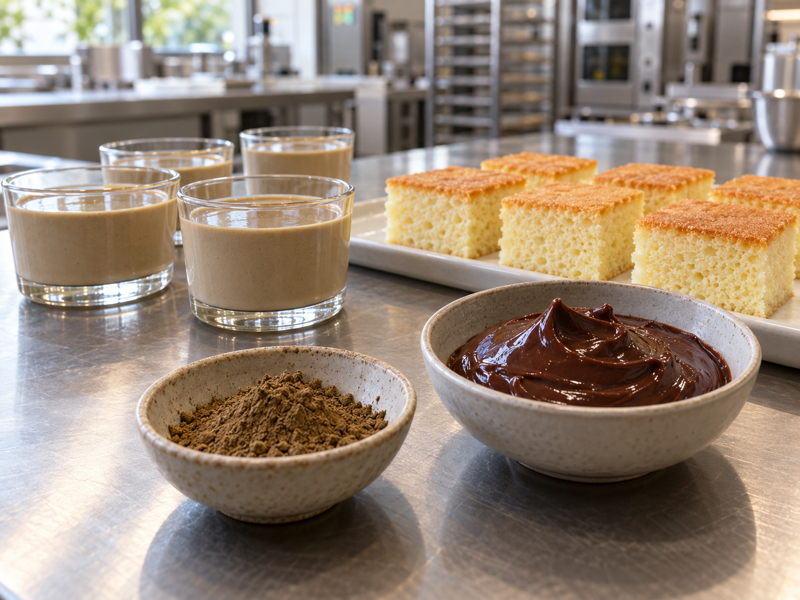
Hojicha can enter a dessert through cream, sponge, glaze, ganache, or frozen base. Each location faces different heat, fat, sweetness, and serving temperature. A powder that tastes distinct in a spooned custard may be lost in a large cake, while a glaze can deliver an immediate aroma in a thin layer. Build a flavor map. Write down what the customer tastes first, in the middle, and at the finish. Decide whether hojicha should lead or support another flavor. A product called “hojicha cake” should deliver an identifiable roasted-tea note; a decorative dusting alone may not meet that expectation. Start with one format already familiar to the kitchen so tea is the main variable. Compare the finished portion against a control without tea. Include production difficulty and waste in the choice. A visually striking multilayer dessert may consume too much assembly time for a chain, even if it wins a tasting at headquarters. Include a plain control and a familiar menu comparator in the first consumer test. Ask tasters to name the dominant flavor without prompting; this reveals whether the tea identity survives the complete dessert.
| Format | Likely tea placement | Primary test |
|---|---|---|
| Panna cotta | Whole cream base | Even dispersion |
| Sponge cake | Batter or filling | Aroma after baking |
| Chocolate piece | Ganache or coating | Grit and flavor |
| Ice cream | Frozen mix | Flavor after storage |
2. What hojicha ingredient should a pastry team buy?
Pure powder and mixes need different recipes
Pure roasted tea powder gives a team control over sweetness and dairy content. A premix can simplify a beverage but may add sugar or creamer that disrupts a pastry formula. Check the composition. Ask for ingredient statement, particle-size information where available, roast reference, origin, and lot documents. Test a powder in the actual fat-and-water system rather than choosing solely by a plain tea cup. A fine powder may distribute well in cream but create a dry note at a high dose. A coarser powder may show specks that look attractive in a cookie but feel gritty in a smooth custard. Request a second lot before locking packaging or menu copy. If a bakery markets Japanese origin, its procurement file needs traceable evidence; “hojicha” names a roasted tea style, not automatic proof of where tea grew. Keep the accepted powder SKU on the recipe card so purchasing cannot make an untested swap. Our powder selection guide gives a practical screening checklist.
3. How can hojicha work in cream-based desserts?
Hydrate before the base thickens
Panna cotta, mousse, and pastry cream are good screens because roasted tea can be tasted without a baking step. Yet cream fat and sugar can mute the tea, and dry powder added late may form clumps. Make a controlled slurry. Mix a weighed tea portion with a small measured amount of suitable liquid, then incorporate it at a repeatable process point. Compare several doses around a selected starting level rather than guessing a single “premium” recipe. Record the texture before and after chilling. For a layered cup, check whether tea particles settle into a dark band; the appearance may be attractive or defective depending on the intended design. Food-safety, pasteurization, cooling, and shelf-life steps must follow the kitchen’s validated program. A small tasting spoon from a warm saucepan is not the sold dessert. Taste the finished chilled portion after the planned hold period and in its actual container.
| Cream trial | Observation | Possible adjustment |
|---|---|---|
| Clumps | Dark spots | Earlier slurry step |
| Weak roast | Tea hidden by dairy | Roast or dose trial |
| Dry finish | Powdery mouthfeel | Different grind or lower dose |
| Settling | Bottom layer | Mixing and setting review |
4. What changes when hojicha is baked into cake?
Judge the baked slice, not the batter
Heat can change aroma and color, so a batter that smells strongly of tea may yield a faint cake. Use a known control sponge and introduce measured powder while keeping other variables fixed for the first bench run. Watch structure. Adding dry tea changes the balance of solids and can affect rise, tenderness, and perceived dryness. Record batter density or handling observations, baked height, crumb, color, and flavor after cooling. If tea flavor fades, a hojicha cream layer or syrup could carry more of the identity than raising powder indefinitely in the sponge. But every extra layer increases ingredient cost, labor, and shelf-life complexity. Test a slice after normal display or delivery, not only straight from the oven. For multi-site bakery supply, check whether cake portions retain a clear roast note after freezing and thawing if that is part of distribution. The final serving condition decides the formula.
5. Can hojicha pair with chocolate without disappearing?
Compare fat systems and cocoa strength
Hojicha’s toasted notes can sit beside chocolate, but a dark cocoa base may mask them. White chocolate or a lighter coating may reveal tea flavor and its warm brown color, though sweetness can become dominant. Run a small matrix. Hold the tea dose constant across two or three bases, then score tea recognition, bitterness, sweetness, and texture. Powder particle size matters in ganache and coating; coarse material can feel sandy. A liquid extract introduces different formulation constraints, including water in a fat-rich system. Ask a food technologist to evaluate process fit rather than assuming a kitchen emulsion will survive a line. For a chocolate-dipped cake, taste the complete bite and each layer separately. If consumers detect only “chocolate,” decide whether hojicha belongs in the product name or merely the ingredient story. Use product-specific ingredient and allergen information on the label.
| Base | Likely challenge | Measure |
|---|---|---|
| White chocolate | Excess sweetness | Tea recognition |
| Milk chocolate | Flavor overlap | Roast clarity |
| Dark chocolate | Bitterness and masking | Aftertaste |
| Ganache | Grit or split | Texture after hold |
6. What happens to hojicha in ice cream?
Cold serving changes perceived aroma
A frozen sample often tastes quieter than the same mix at room temperature. Fat, sugar, and stabilizers can further reshape how roasted notes appear. Taste after hardening. Add tea at controlled levels to a standard base, then evaluate the hardened product after realistic storage. Record color, grit, aroma, and whether any powder settles before freezing. If a ripple or inclusion carries the tea, test distribution across scoops and whether the component stays stable during storage. An attractive fresh churn is insufficient evidence for a retail tub. Ice-cream manufacture also involves heat and hygiene controls that should be managed under the plant’s established program. If the powder includes a carrier or sweetener, recalculate the base formula rather than simply adding it. For a foodservice scoop, time the serving and check how the flavor reads once the product softens in a bowl.
7. How should dessert stability be checked?
Use the actual pack and distribution path
A dessert can lose value through aroma fade, color shift, syneresis, stale texture, or a damaged garnish. These are format-specific failure modes. Follow the product journey. Store test portions in the intended cup, wrapper, or carton at the planned conditions. Evaluate at production, after transport simulation where relevant, and near the proposed end of life. Record technical measures chosen by quality staff alongside sensory observations. A tea powder’s shelf life cannot be copied onto a cream dessert or cake. For a retail product, the recipe, process, packaging, and microbiological controls determine the finished shelf-life evidence. Keep lot codes and retained samples tied to each trial. If a product loses its roasted-tea identity before the final sales day, either shorten life, change packaging, or reformulate. Do not solve stability solely by adding a stronger flavor without understanding the underlying failure.
| Format | Watch item | Sample time |
|---|---|---|
| Chilled cream | Separation and safety | Through approved life |
| Cake | Dryness and aroma | After distribution |
| Chocolate | Bloom and texture | Stored pack |
| Ice cream | Ice texture and flavor | After hardening and storage |
8. Which labeling details matter for hojicha desserts?
Claims must describe the finished recipe
Desserts often contain milk, egg, wheat, soy, or nuts, depending on formula and facility. The FDA explains that major food allergens in applicable US products require clear declaration. Destination markets have their own rules. Read the full bill of materials. The tea powder, chocolate, filling, garnish, and carrier ingredients all belong in the review. A product called “Japanese hojicha” needs evidence for the geographic implication. If the formula uses a small amount of tea plus flavoring, marketing and regulatory staff should choose precise wording. Avoid turning the presence of tea into a health promise; a dessert’s nutritional profile depends on the entire product. For private-label packs, artwork should show the actual portion and color. Keep a sign-off trail linking final formula, supplier documents, label copy, and approved imagery. It is far cheaper to settle these questions before printing thousands of wrappers.
9. How should a bakery price a hojicha dessert?
Measure finished yield and labor
Tea powder price is only one input. A cream cup may require cooling space and a lid; a layer cake may need extra assembly; a chocolate bar may lose material at coating. Cost the sellable unit. Use actual ingredient grams, pilot yield, packaging, line labor, and expected waste. Compare a simple hojicha panna cotta with an elaborate layered cup on contribution margin and service reliability, not only ingredient cost. Include retained shelf-life samples and routine quality checks in production planning. If the tea flavor requires a very high dose, evaluate another roast or placement before accepting the extra cost. For a distributor, account for cold-chain needs where applicable. At trial scale, record how many units operators actually produce per hour. The best commercial dessert may be the one whose roasted-tea identity survives delivery while using an existing line and pack.
| Cost element | Basis |
|---|---|
| Tea | Approved grams per unit |
| Other ingredients | Full bill of materials |
| Packaging | Actual cup or wrapper |
| Labor and yield | Pilot output and waste |
10. What makes a dessert ready for production?
Confirm taste across operators and lots
Approve a target sensory profile and one exact powder SKU. Have ordinary production staff make a pilot, then repeat with another tea lot. Compare flavor, texture, appearance, and yield against a retained reference. Close the document loop. Quality approves ingredient and process records, regulatory approves claims, purchasing confirms supply, and operations signs off the actual equipment procedure. If a chain uses a central kitchen, test transport and final store presentation. Train staff on portioning and storage rather than relying on a photograph. Matcha Village can discuss hojicha powder for bakery, dairy, and confectionery use, but each buyer should request current SKU documents and qualify its own finished dessert. Record a stop condition for grit, weak tea flavor, short shelf life, or unacceptable labor. A disciplined pilot protects the menu from a good idea that fails in production.
Hojicha desserts scale when roast flavor survives the complete recipe and distribution path. Choose one format, test the actual serving after hold, then approve ingredient, process, labeling, and cost together.
FAQ
Q1: Is hojicha powder the same as cocoa powder in baking?
No. Both are powders, but their flavor and effect on a formula must be tested separately.
Q2: Which dessert is simplest to screen?
A familiar cream or cake base with one controlled tea variable offers a clear comparison.
Q3: Why can tea flavor fade in ice cream?
Cold serving and the full formula change perception; assess the hardened product.
Q4: Does a powder supplier’s shelf life cover a finished dessert?
No. Finished-product shelf life needs its own process and packaging evidence.
Q5: Can one tea lot approve a national rollout?
A second-lot and production-scale trial give stronger evidence of repeatability.
Sources: Japan MAFF, hojicha description; FDA Food Allergies; FDA Food Labeling Guide.