
A hojicha latte combines roasted tea with milk or a milk alternative, usually using a tea concentrate or powder slurry. A home recipe can describe the idea; a café needs a version that tastes the same across shifts, cup sizes, and stores. This guide develops a service-ready drink from ingredient choice through training and supplier qualification. The familiar home format needs a separate procedure for commercial operation.
1. What makes a hojicha latte different from a coffee latte?
Roasted tea supplies the flavor base
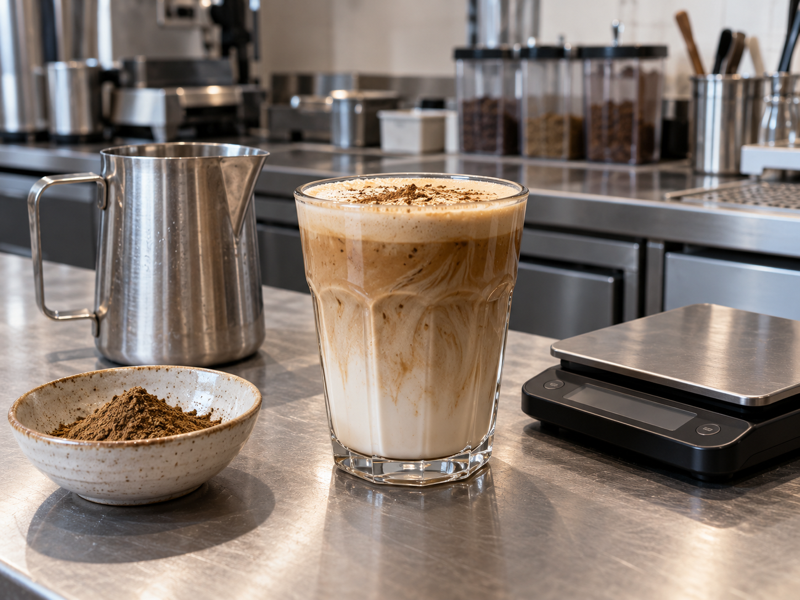
A coffee latte uses espresso and milk; a hojicha latte uses roasted tea and milk. The tea may be brewed into a strong liquor or dispersed as powder. Neither method makes the beverage coffee, although toasted notes can remind some customers of it. Name the drink clearly.
Menu copy should identify roasted green tea and the chosen milk without promising a coffee-like caffeine level. A brown cup may lead customers to assume coffee is present, so staff need a concise explanation. Decide whether the product aims for a strong tea profile, a mild milky drink, or a sweet dessert-like cup. That target governs powder dose, roast selection, and syrup. It also guides placement on the menu. A chain should not rely on an individual barista’s taste to define the category; a written sensory reference and recipe card turn the concept into a repeatable product.
| Drink | Flavor base | Preparation issue |
|---|---|---|
| Coffee latte | Espresso | Shot extraction |
| Hojicha latte | Roasted tea | Tea strength and dispersion |
| Matcha latte | Unroasted powdered tea | Green-tea balance |
2. Which hojicha powder should a café choose?
Buy for flavor in the actual milk
Ask for pure roasted tea powder and any ready-made latte mix as separate candidates. A premix can simplify service but may contain sweetener, creamer, or flavor that limits customization. Taste blind in milk.
A powder that smells rich in its bag may fade in a 12-ounce drink. Prepare coded samples at the same measured dose, using the approved milk and water. Rate roasted aroma, bitterness, texture, color, and sediment after several minutes. A second test should use the actual service tool: whisk, frother, or shaker. Request ingredient statements, origin records, pack size, shelf life, and lot documents before selecting. For a multi-store business, ask whether the supplier can provide a second production lot with comparable flavor and grind. Matcha Village offers hojicha powder among its tea ingredients, but the buyer should qualify the current SKU against its own recipe and market documentation needs.
3. How should the tea base be prepared?
Make a controlled slurry before adding milk
For a pure powder bench trial, 4 g of tea powder with 40 g of warm water gives a clear starting ratio for one serving. It is a test point, not a fixed standard for every powder. Whisk until no dry pockets remain, then add milk. Time the station.
Record seconds to disperse, tool used, residue on the whisk, and whether clumps appear in the finished glass. If the drink will be made from brewed leaves instead, specify leaf mass, water volume, temperature, time, and filtered yield. A concentrate may save bar time, but it needs a defined batch recipe, hold condition, and food-safety review. Use scales during development; later, a calibrated scoop or pump can be approved if it reproduces the target mass. Never assume that a scoop designed for matcha measures the same mass of a different roasted tea powder.
| Base method | Control | Watch item |
|---|---|---|
| Powder slurry | Powder and water grams | Clumps and sediment |
| Brewed concentrate | Leaf mass and yield | Extraction drift |
| Prepared premix | Mix and water mass | Hidden sweetness |
4. Which milk gives the intended cup?
Evaluate flavor, foam, and disclosure together
Dairy milk and plant drinks differ in sweetness, body, foam, and ingredients. A roasted tea that reads clean in dairy may taste cereal-heavy in oat drink or thin in an unsweetened almond drink. Use the approved carton.
Test exact brands and service temperatures rather than a generic milk category. Record milliliters poured before and after steaming, since foam and pitcher loss can vary. If an alternative contains soy, nuts, or another regulated allergen, train staff and reflect the actual product in labeling where required. A chain with multiple distributors should approve substitutions through R&D rather than allowing each store to buy an available carton. Taste the latte after a few minutes, when foam settles and tea particles may become noticeable. The selected milk should support the tea profile and remain workable in the station’s normal equipment.
5. What should the hot drink recipe specify?
Write an operator card in measured units
A pilot card might use 4 g pure powder, 40 g warm water, and about 180 mL steamed milk. Final quantities follow tasting, cup size, and the selected ingredient. Define the sequence.
Weigh powder, hydrate it, steam the measured milk, combine, and serve in the approved cup. State target serving temperature according to the business’s quality and safety program. Avoid ambiguous language such as “a generous spoonful” or “steam as usual.” Record the finished weight range and visual standard. If sweetness is optional, keep the standard unsweetened version distinct from a sweetened menu variant. Measure the tea cup after five minutes for settling and aftertaste. Pilot with several baristas during a real service period; a recipe that works only when the development chef has time to whisk for a minute is too slow for a café queue.
| Hot pilot input | Starting point | Finalize by test |
|---|---|---|
| Pure tea powder | 4 g | Flavor strength |
| Warm water | 40 g | Hydration |
| Milk | About 180 mL | Cup size and balance |
| Sweetener | None initially | Customer target |
6. How should an iced hojicha latte be built?
Cold service needs its own recipe
Do not pour a hot latte over ice and assume it matches a purpose-built iced drink. Ice changes liquid volume and perceived tea intensity, while cold powder disperses differently. Start with the tea base.
Hydrate powder in a small warm portion, add chilled milk, then pour over a measured mass of ice. Record the ratio and taste immediately and after a typical drinking interval. If a layered look is part of the brand, check whether the drink still tastes balanced after the customer stirs it. Test whether powder forms a ring on the glass or settles under the ice. A shaker may solve dispersion but add time and cleanup. A cold-foam topping changes flavor, calories, cost, and allergen disclosure; treat it as a separate version. Train staff on the order of operations and define which cup sizes are actually offered. If a delivery platform lists the drink, test it after a normal delivery interval in a sealed cup. Foam, layers, and powder suspension may change before arrival. The digital product photograph and description should reflect what a delivery customer receives, not only the appearance at the handoff counter.
7. How much sweetness should the menu include?
Set sweetness after choosing the tea and milk
Hojicha’s toasted notes can read naturally sweet to some tasters, yet a roast with a charred edge may tempt operators to add more syrup. Sugar can mask a poor powder without making the product better. Taste the unsweetened control.
Once the tea and milk are balanced, trial measured levels of one sweetener rather than several untracked pumps. Record grams of syrup and its ingredient label. A sweetened oat drink or premix can contribute sweetness before any added syrup. Offer a standard version and a clearly specified lower-sweetness option if the station can make both reliably. Be careful with “no added sugar” wording: the full product and destination rules determine whether it fits. Check customer preference through a small blind trial, then lock a recipe. Staff should never adjust syrup ad hoc to hide variation in tea lots.
| Sweetness trial | Purpose | Record |
|---|---|---|
| No syrup | Tea baseline | Roast clarity |
| Measured low dose | Balance | Grams and cost |
| Measured standard dose | Target preference | Tea still identifiable? |
8. How can a chain train consistent service?
Make errors visible and correctable
Give every store a one-page recipe card with exact ingredients, tools, sequence, cup size, and an approved finished-drink photograph. Teach staff what a correct tea slurry looks like and how to spot dry pockets or excessive sediment. Check with real orders.
Have two operators prepare several consecutive drinks and weigh key additions. Compare taste and service time. A powder scoop can drift when the powder compacts or humidity changes; use periodic scale checks. If a concentrate is batched, label its lot, time, and discard point under the company’s food-safety procedure. Keep customer-language guidance alongside the card: roasted tea, milk choice, and whether caffeine is present. Do not give staff a caffeine milligram figure unless the actual serving has been validated. A simple station audit after rollout can catch recipe drift before customer reviews do. Keep rejected cups as learning examples during training, with the specific fault named: undispersed tea, wrong milk, excessive syrup, or overfilled cup. That makes feedback practical rather than a vague request for more consistency.
Add a shift-handoff check to the card. The outgoing barista notes the current tea lot, milk SKU, syrup setting, and any approved concentrate with its preparation time. The incoming barista makes one cup at the listed dose, checks for dry powder on the cup wall and excess sediment at the base, and records any adjustment made to the station. If the drink fails the reference, hold that batch and investigate the measured ingredient or mixing step before service resumes. Keep this check with the store’s normal food-safety records. It gives a manager a way to separate operator drift from an ingredient change when complaints or remakes rise.
9. What does a hojicha latte cost per cup?
Calculate from the approved serving dose
Multiply delivered tea price per gram by grams used, then add milk, syrup, cup, lid, labor, and expected waste. For a batched base, include concentrate yield and discarded remainder. Price the process.
A cheaper powder may require a larger dose or longer mixing, while a highly aromatic powder may save tea grams but cost more per kilogram. Let the pilot establish both dose and time. Compare hot and iced drinks separately because ice, cup size, and toppings differ. Build a scenario for ingredient-price changes and large-scale volume. If a private-label brand sells instant latte sachets, add packaging and filling costs rather than borrowing café economics. Keep margin and sensory acceptance on the same page; an attractive margin on a drink customers will not reorder is not a useful result. The final menu price should reflect the brand’s own cost structure and target customer.
| Cost component | Measure |
|---|---|
| Tea | g per cup × delivered price/g |
| Milk | mL per cup × delivered price/mL |
| Syrup | Measured g |
| Packaging and waste | Per sellable cup |
10. What should a launch sign-off cover?
Approve a drink that survives ordinary service
R&D signs off taste and recipe, quality signs off ingredient records and holding procedures, purchasing signs off replenishment, and operations confirms that typical staff can make it. Repeat the trial.
Use a second tea lot and a second barista or store before broad rollout. Check hot and iced drinks, every offered milk, and every marketed cup size. Regulatory staff should review ingredient, allergen, calorie, and caffeine wording against the actual recipe and local rules. For input-by-input nutrition estimates, see our hojicha latte calories guide. Retain the approved ingredient and finished-cup references with revision dates. Set a trigger for reapproval after supplier, milk, dose, or equipment changes. If the launch begins in a few cafés, measure remake rates and customer feedback with a defined observation period. A hojicha latte succeeds commercially when its roasted-tea flavor remains clear and its preparation stays predictable on a busy day.
A service-ready hojicha latte starts with a measured tea base and ends with trained operators, verified supplier lots, and honest menu copy. Send Matcha Village your milk choice, cup size, market, and target roast profile when requesting powder samples for evaluation.
FAQ
Q1: Does a hojicha latte contain coffee?
Not by definition. It uses roasted tea as its flavor base unless a recipe adds coffee separately.
Q2: Can loose-leaf hojicha be used?
Yes. Brew a controlled concentrate and document filtered yield and hold.
Q3: Must the drink be sweetened?
No. Taste an unsweetened control before setting an optional measured sweetener dose.
Q4: Can one hot recipe be used over ice?
An iced version needs its own dilution, mixing, and serving test.
Q5: What is the strongest launch check?
Have ordinary staff reproduce the approved cup with a second ingredient lot under real service conditions.
Sources: Japan MAFF, hojicha description; FDA Food Allergies; FDA serving-size guidance.