
A gingerbread matcha latte is a seasonal café drink built from matcha, milk and a measured gingerbread flavour base. Its spice can easily drown out the tea, and a vague “holiday syrup” instruction leaves every shift making a different cup. Define one target flavour, test it hot and iced, then write the recipe around ingredients staff can measure. The method below is for a café that needs repeatable service, a clear menu claim and a sensible exit plan when the season ends.
A Gingerbread Matcha Latte recipe ranks among the first ten results for this search. Home recipes can suggest a flavour direction, but their spoon measures and one-cup preparation do not answer a café’s stock, speed and cost questions. Build the menu drink from a controlled trial in the glass you actually serve.
1. What should a gingerbread matcha latte menu description promise?
Decide whether tea or dessert leads the cup
Write the taste target. Some customers expect a sweet spiced drink with a green colour; others order it because they want to taste matcha. A café should choose which expectation it will meet. A useful menu line names matcha, milk and the gingerbread flavour base, then gives a plain cue such as “warm ginger and cinnamon” if those ingredients are present. Do not promise a baked-cookie taste unless the approved recipe actually delivers it. The title alone does not tell a customer whether the drink contains coffee, dairy or a flavoured syrup.
Set a season window and a cup size before developing the recipe. A large takeaway cup can dilute the tea and push staff to add extra syrup. Photograph a normal handoff drink, not a display cup with a mountain of spice that will not survive a lid. Decide whether the default is hot or iced; a café in a warm market may sell the iced version even during a holiday campaign. Bring menu, bar and purchasing staff into the same tasting. If they approve different drinks, the launch has not reached a stable recipe.
| Menu choice | Record | Check in tasting |
|---|---|---|
| Lead flavour | Tea-forward or dessert-style | Matcha remains recognizable |
| Format | Hot, iced or both | Each version approved |
| Milk | Default and alternatives | Texture and ingredients |
| Season | Start and end dates | Stock can be used |
2. What gives the drink a gingerbread flavour?
Separate spice, sweetness and body
Break down the flavour. Gingerbread usually suggests warm spice and sweetness, but a café can reach that impression through different products. Ginger, cinnamon and other spices can contribute aroma; a syrup or molasses-style note supplies sweetness and darker depth. A cream or sauce can add body. Each choice affects the matcha differently. Strong ground spice can leave sediment and a dry finish, while a heavy sauce can bury the tea. Do not add every element because a home recipe lists them. Start with the smallest ingredient set that gives the approved taste.
Use the supplier’s ingredient statement for any ready-made syrup. “Gingerbread” on a bottle is a flavour name, not a reliable list of ingredients. If the café prepares its own base, write a weighed formula and a controlled process rather than asking staff to shake spices into cups individually. Test the finished drink after stirring and after the normal takeaway interval. Fix the build before increasing sweetness.
3. Which flavour base works in a busy café?
Compare ready-made syrup with a house batch
Count the work behind the bottle. A commercial syrup can be easy to dose, but its sweetness and spice profile may be fixed. A house base gives the café more control, yet it requires preparation time, a documented formula, storage rules and daily checks. Test both paths at the same sweetness level. If the house base tastes better only when one experienced barista makes it, the bar may struggle during a rush. A measured, lower-complexity recipe can produce a better customer experience than a richer but inconsistent one.
Put a standard volume beside every candidate. Weigh several pump strokes from a commercial bottle; output can vary with syrup thickness and bottle level. For a house batch, record ingredient weights, finished yield and how many normal servings it makes. Include preparation and cleaning time in the cost comparison. Ask whether the base stays evenly mixed, since spice settling can make early cups weak and late cups harsh. A test container left under ordinary service conditions can reveal this before a full seasonal run begins.
| Base option | Strength | Control to add |
|---|---|---|
| Commercial syrup | Fast station dosing | Check pump yield and formula |
| House syrup | Adjustable spice profile | Weighed batch and storage log |
| Dry spice blend | Small inventory footprint | Dispersion and sediment test |
| Thick sauce | Rich visual finish | Portion and speed check |
4. How much matcha should sit under the spice?
Approve a dose in the finished cup
Weigh, then taste. A gingerbread base can make a gentle matcha seem absent. Sample two or three powders in the final milk and syrup recipe at measured doses. Taste a plain-water cup first to spot stale or rough notes, then taste the seasonal drink. Hold the base, milk and cup size fixed while changing the powder. A darker green appearance does not prove the tea will remain noticeable after stirring. Ask tasters whether the matcha comes through alongside spice, not merely at the first sip.
Record the accepted grams per cup and the product code. If a cheaper powder needs a larger dose, compare cost per accepted cup rather than price per kilogram. Confirm whether the purchased item is pure matcha or a sweetened latte mix; a premix changes the sugar trial. Keep a sealed reference sample for the first production lot. For a chain, test the same recipe with the milk and equipment used at several stores, not only a flagship bar. The site’s café matcha buying guide covers general powder selection; this trial approves a specific seasonal drink.
5. How should a barista build the hot version?
Make a smooth tea base before steamed milk
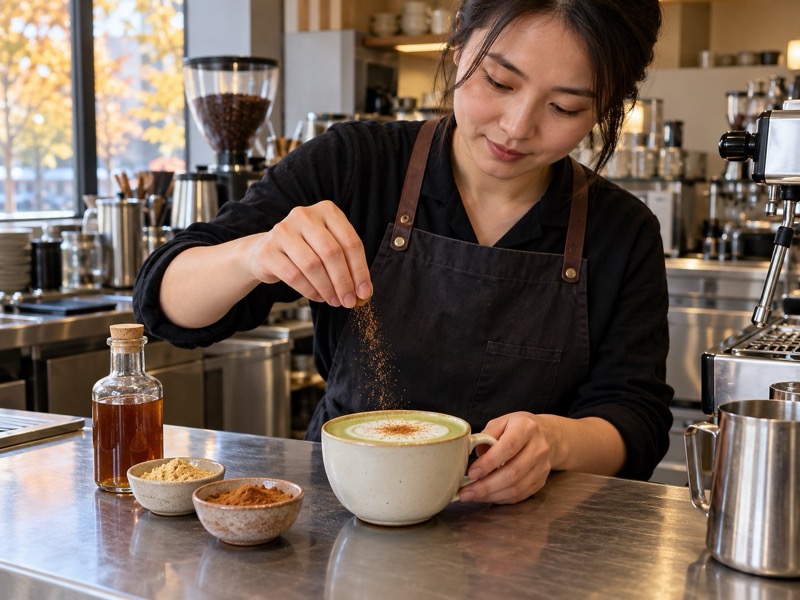
Keep powder out of the wand. Weigh matcha into a separate clean vessel, wet it with a measured portion of recipe water and mix until no dry ring remains. Add the rest of the water and check for a smooth pour. Put the measured gingerbread base into the serving cup, then add the matcha and steamed milk in the approved order. Test whether the syrup integrates or stays at the bottom. A light spice dusting may help aroma, but it should not turn the surface into a gritty layer or change the drink more than the recipe card allows.
Use the actual milk texture and temperature that staff can produce at normal pace. A thick foam cap can trap matcha at the top, leaving sweet milk below. Stir the trial cup before tasting, then taste again near the end. Time the preparation including whisk and steam-wand cleaning. If the café offers an alternative milk, repeat the trial; sweetness and foam can change. Staff should know whether the standard drink contains espresso. Unless the recipe explicitly adds it, a gingerbread matcha latte remains a matcha-and-milk drink rather than a coffee beverage.
| Hot build step | Recipe record | Failure signal |
|---|---|---|
| Tea base | Powder and water weights | Dry pockets |
| Flavour base | Measured volume | Sweet bottom |
| Milk | Volume and texture | Tea disappears |
| Finish | Small spice measure | Gritty surface |
6. How should an iced gingerbread matcha latte change?
Rebalance cold sweetness and pour order
Cold is a separate recipe. Ice displaces liquid and changes how the syrup, milk and matcha meet. A hot drink’s spice dose may taste muted when chilled, but simply adding more syrup can make the bottom of the glass too sweet. Start with a measured ice fill and milk volume. Add the base in a controlled position, then pour a smooth matcha concentrate. A clear glass can show a green layer for handoff; the stirred drink still needs even flavour. Test the first and last sips after the normal customer wait.
Dry spice can cling to ice or collect at the bottom. If the café wants a visible finish, compare a light surface dusting with a fully dissolved house base and choose the method that tastes clean. Measure the final liquid volume, not only ingredient additions. A larger takeaway cup can make the same matcha dose weak. Record an iced recipe card with its own water and milk figures, then train it separately from the hot version. Two drinks sharing a name do not have to share identical measures; they have to deliver a recognizable gingerbread-matcha balance.
7. How should a café prepare and store seasonal flavour stock?
Match the batch size to actual sales
Make less until demand is real. A house syrup or spice base needs a recipe version, production date, ingredient record and handling procedure that follow the café’s food-safety plan. Set batch size from expected sales and the approved dose, then compare it with the base’s allowable use period under its actual storage conditions. Do not invent a shelf life from another syrup’s label. Commercial products also have storage and open-pack instructions; keep those with the station card. If spice settles, define how staff check and mix the container before each shift.
Track how much base goes into drinks rather than trusting bottle level by eye. A small pilot during normal service gives better usage data than a tasting day. If the promotion runs for six weeks, schedule reorders so stock arrives before the menu window closes, but avoid a carton that will remain after the drink is removed. Keep ingredients for the final week separate from regular stock planning. A seasonal menu can be profitable only if its unsold syrup, special toppings and printing costs are counted alongside the cups sold.
| Stock field | Record | Reason |
|---|---|---|
| Batch or pack | Code and date | Traceable use |
| Storage | Supplier or house procedure | Consistent flavour |
| Servings | Yield at approved dose | Reorder timing |
| End date | Remaining stock plan | Seasonal waste |
8. What should staff know about ingredients and substitutions?
Answer from controlled product information
Check the exact pack. A gingerbread syrup, sauce or biscuit topping may have ingredients that are not obvious from the flavour name. Review the supplier’s current statement for the base, milk, matcha and any garnish. Follow local rules and the café’s food-safety process for customer information and allergen handling. Do not tell a guest that a drink is free of dairy, gluten or nuts because one component looks harmless. If a customer asks and the answer is not in the approved record, staff should check with the responsible person before serving.
Define substitutions in the POS and on the bar card. A different milk can alter foam and spice balance. Removing syrup may remove nearly all gingerbread flavour; staff should not promise a “sugar-free gingerbread” version unless the café has tested one. A new syrup formula requires an ingredient review and cup trial before service. Train the register team and bar together, since a substitution entered at the till must reach the person pouring the cup. Clear, specific answers protect customers and prevent a seasonal promotion from becoming a guessing exercise.
9. What does an accepted seasonal cup cost?
Include matcha dose, base yield and waste
Cost the drink actually served. Add the approved matcha grams, measured syrup or house base, milk, cup, lid and garnish. For a house syrup, divide ingredient and preparation costs by the number of usable servings. Include the portion lost to settling, spills or an expired batch. Record remakes during a service pilot; a complicated pour can erode margin even if its ingredient cost seems low. Compare the hot and iced versions separately because their milk volume, ice, cup and preparation time can differ.
Set a menu price that covers the finished cup at realistic sales, not a one-day tasting rush. Watch whether the seasonal drink replaces a standard matcha latte or brings an additional sale. If a special spice mix requires a large purchase, its unused balance belongs in the campaign cost. Use actual pump output and accepted powder dose in the worksheet. When costs change, update the recipe or price deliberately rather than allowing baristas to reduce powder by eye. A clear margin decision depends on repeatable measures.
| Cost line | Use | Watch for |
|---|---|---|
| Matcha | Accepted grams | Unweighed scoops |
| Gingerbread base | Measured serving yield | Settling or over-pour |
| Milk and pack | Actual finished cup | Overfill and lid cost |
| Loss | Remakes and unused stock | Season ending early |
10. How should managers review and end the seasonal launch?
Use sales and customer comments to change one thing at a time
Keep a short launch log. Track gingerbread matcha sales, hot versus iced mix, remakes and requests for less sweetness. Ask staff why customers return a cup: weak tea, too much spice, gritty texture or unexpected ingredients point to different fixes. Keep the recipe version beside the figures. If a new syrup arrives mid-season, retest it before assuming the old bar card still works. Photograph a normal cup during a rush and compare it with the menu image.
Plan the final week before it arrives. Stop ordering special stock when the remaining supply can cover expected sales with a sensible buffer. Tell staff the last service date and what to do if a base runs out early; an improvised spice mix should not quietly replace the approved drink. Review the campaign after removal: accepted cups, total base used, waste, preparation time and repeat orders. Carry those numbers into next season’s decision. A drink deserves a return because guests understood it and the bar could repeat it, not because the launch photo looked festive.
Frequently asked questions
Q1: Does a gingerbread matcha latte contain coffee?
Not unless the café’s recipe adds espresso. State the actual ingredients rather than relying on the latte name.
Q2: Can a café use a ready-made gingerbread syrup?
Yes. Check its ingredient statement, measure the pump output and test the final cup with the chosen matcha and milk.
Q3: Should dry spice go straight into the milk?
Only after a trial shows it disperses and tastes clean. A prepared base may reduce settling and uneven cups.
Q4: Is the same recipe suitable for hot and iced service?
No. Ice, temperature and milk texture change sweetness and concentration; approve both builds separately.
Q5: What should a café do with leftover seasonal syrup?
Follow its documented storage and use period. Include unused stock in the campaign cost and adjust next season’s order.