
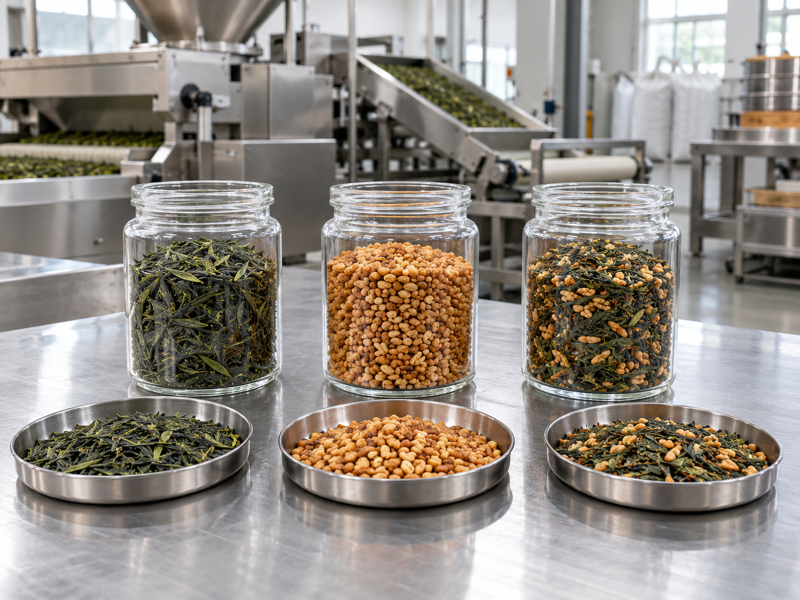
Genmaicha origin is often reduced to a neat story about an accidental handful of rice. That is a poor basis for a product page or a sourcing decision. The verifiable starting point is simpler: genmaicha is a Japanese tea category that combines tea leaves with roasted rice. Buyers then need to ask where the particular tea and rice were grown, where they were processed, and what a supplier can document. This guide separates the category's Japanese identity from unverified folk tales and from the legal origin of a commercial SKU. It helps importers and brands write accurate copy while building a useful supplier file.
Contents
- 1. What can public sources establish about genmaicha’s beginnings?
- 2. What can be verified about the traditional blend?
- 3. Which popular origin stories need caution?
- 4. Why does “origin” have more than one meaning for buyers?
- 5. How does the rice component influence the category?
- 6. Which tea leaves can be used and why does that matter?
- 7. How should brands write a historical product description?
- 8. How can importers verify a genmaicha origin claim?
- 9. What changes when genmaicha is made outside Japan?
- 10. What is a reliable conclusion for a sourcing decision?
1. What can public sources establish about genmaicha’s beginnings?
Japan's Ministry of Agriculture, Forestry and Fisheries documents genmaicha as a Japanese tea category made by blending roasted rice with tea such as bancha, sencha, or gyokuro. That source establishes a recognized preparation, but it does not identify a first maker, an invention date, or a single place where the blend began. Treat those as separate historical questions. A modern category description cannot, by itself, prove a story about the first cup.
For a product page, the evidence supports a short statement that the blend belongs to Japanese tea tradition. A claim about a named inventor or a precise era needs a reliable historical source that actually addresses that claim. Keep a record of each source and the sentence it supports. If the team only has a present-day description, write about the present-day tea and leave the origin anecdote out. Ingredient sourcing and manufacturing location are different questions; the later sections address how a buyer can document those for the particular product being sold.
| Statement | What it describes | Evidence needed |
|---|---|---|
| “Genmaicha” | Tea category | Formula fits category |
| “Japanese-style” | Product style | Accurate presentation |
| “Made in Japan” | Manufacturing origin | Supply-chain and legal proof |
| “Japanese-grown tea” | Raw material origin | Farm or supplier traceability |
2. What can be verified about the traditional blend?
The reliable category description is tea plus roasted rice. MAFF identifies several possible tea bases, which shows that one fixed leaf grade is not built into the term. The blend may look different across makers. Some show whole or puffed rice; others use a different rice form. Leaf size, roast, ratio, and brewing instruction change the cup. Those product differences should be tested and documented rather than treated as exceptions to a single historic recipe.
When reviewing a supplier, ask for the ingredient list, tea-base description, rice material description, and a representative lot sample. A tea bag, loose-leaf blend, powder, and ready-to-drink beverage can all relate to genmaicha but need different specifications. A powder may be milled whole blend or a formulated ingredient; the name alone does not tell you. If a menu says “traditional genmaicha,” consider what traditional means in the actual product: ingredient composition, serving method, or brand story. Use a clear description that customers can verify from the product rather than a vague claim of authenticity.
3. Which popular origin stories need caution?
Many articles repeat an accidental-spill tale in which rice falls into a tea bowl. Versions differ in characters, setting, and outcome, sometimes adding a dramatic samurai episode. Without reliable contemporary evidence, a brand should call these stories legends rather than established history. Repeating a dramatic version as fact makes a product page less trustworthy and can distract from the tea itself. The same caution applies to precise invention dates or claims that one social class alone created the blend unless a sound source supports them.
If storytelling matters to your brand, write “One popular legend says…” and avoid implying that the tale proves how the category began. A shorter and stronger product description may omit it entirely. Buyers rarely need a single inventor to decide whether the tea suits their shelf or menu. They need an accurate ingredient and taste description. Ask a writer to separate three things in the draft: documented category facts, plausible but unverified context, and folklore. Keep citations next to the claim they support. A reference page that repeats an older legend without primary evidence is not proof of an event.
| Claim type | Example | Recommended treatment |
|---|---|---|
| Documented category fact | Tea blended with roasted rice | State with source |
| Supplier fact | This SKU uses a named tea base | Verify specification |
| Folk tale | Rice was spilled by accident | Label as legend or omit |
| Exact invention date | A named year for first blend | Use only with strong evidence |
4. Why does “origin” have more than one meaning for buyers?
A buyer can mean the cultural origin of the category, the agricultural origin of its ingredients, the place where the blend was produced, or the country legally declared on a retail pack. Those are different questions. “Japanese tea” can describe a style associated with Japan while a commercial product uses tea or rice from another location. A country-of-origin label follows the rules of the destination market and the actual processing history. Ask a qualified trade or labeling specialist to decide the declaration when a complex supply chain is involved.
Create a sourcing map for each SKU. Record the tea supplier and agricultural origin where known, the rice supplier and origin, the location of roasting, the location of blending or milling, and the packing site. Retain lot-level records if the brand makes a specific origin claim. A traceability map also helps with quality changes: a new rice source can alter roast aroma even when a formula ratio stays the same. If a supplier cannot confirm a component origin, do not fill the gap with a broad “Japanese” claim based on the product name.
5. How does the rice component influence the category?
Roasted rice gives genmaicha a toasted cereal aroma that distinguishes it from plain green tea. The exact roast and grain form affect flavor, appearance, and manufacturing. A stronger roast can carry through milk or frozen dessert, while a lighter one may suit a plain hot cup. Neither is inherently more authentic. A buyer should decide against the intended finished product. Ask whether rice is roasted in-house or purchased as a prepared ingredient, and how the supplier checks roast consistency.
The rice can also segregate from tea during transport, especially in larger packs. A small sample from the top of a bag may not reflect the lot. Agree on representative sampling and blending controls. If the product is ground for food use, test texture and dispersion as well as flavor. If a company wants to say “brown rice” in the ingredient description, verify the actual rice material. The name genmaicha is not enough evidence for a specific grain-processing claim.
| Rice factor | Why a buyer cares | Check in pilot |
|---|---|---|
| Roast level | Changes aroma | Brew and recipe tasting |
| Grain form | Changes visual mix | Bag sampling |
| Source | Can change flavor and traceability | Supplier record |
| Milling | Changes texture | Finished food trial |
6. Which tea leaves can be used and why does that matter?
The MAFF description lists bancha, sencha, and gyokuro as possible bases. That does not mean they taste the same or cost the same. Tea grade and cut can change body, astringency, liquor color, and extraction. A retail customer looking for a subtle, clear cup might prefer a different base from a beverage developer who needs flavor after milk or chilling. Ask for the specific tea-base description of the SKU under review. A supplier's generic genmaicha brochure may cover several formulas.
Prepare candidate samples under one controlled brew method and then under the intended service method. If the tea-base origin or grade matters to brand positioning, add it to the written specification and change-notification requirement. An altered base can change both flavor and label copy. Keep a retained approved sample for incoming comparisons. For a powder, verify whether the tea was milled as part of a blend or added in another form. The word genmaicha tells the buyer the broad flavor family, while the specification tells operations how to keep that flavor consistent.
7. How should brands write a historical product description?
Write the confirmed facts first. “Genmaicha is a Japanese tea blend of tea leaves and roasted rice” is clear and supportable. Add tasting notes based on your own sample, such as “toasted cereal aroma with a green-tea finish.” If you mention a legend, mark it as a legend and keep it brief. Do not claim that a specific story established the practice. Avoid saying the product is made in Japan unless the supply-chain records support that wording and local labeling law permits it.
Have purchasing, QA, and marketing review the same copy. Marketing knows the intended customer; QA knows the formula; purchasing knows the supplier documents. A private-label pack might be printed for several countries, and an origin statement acceptable in one market may require different treatment elsewhere. Use country-specific review before print. The genmaicha versus hojicha comparison may help explain category differences, but the origin text on a product page should focus on the exact blend being sold. History can enrich a description without replacing ingredient facts.
| Copy element | Good evidence | Review owner |
|---|---|---|
| Category definition | Authoritative tea reference | Content and QA |
| Sensory note | Approved sample tasting | Product team |
| Ingredient origin | Supplier traceability | Purchasing and QA |
| Pack origin claim | Legal and supply-chain review | Regulatory team |
8. How can importers verify a genmaicha origin claim?
Ask for a current specification, ingredient statement, lot sample, tea and rice descriptions, packing details, storage guidance, and relevant test documents. If a seller claims a particular origin, request the records that connect the claim to the exact SKU and lot. Check whether the same product will be supplied for repeat orders. A sample made from a different tea base than the commercial shipment undermines both flavor and marketing copy. Agree on notification before sourcing or process changes.
For an importer, origin documentation may include invoices, supplier declarations, manufacturing records, and any certificates required by the destination. The precise set depends on the trade route and claim. Do not treat a marketing brochure as a substitute for customs or label evidence. Test the product in the intended format as well: a loose-leaf cup, tea bag, concentrate, or powder application. Traceability and taste are related. Knowing which leaf and rice entered a lot helps explain why a later shipment differs from the approved sample.
9. What changes when genmaicha is made outside Japan?
A product can be made in another country while drawing on a Japanese tea style. The business should describe that honestly. A mainland China factory may blend or mill tea and roasted rice for a global buyer, but it should not imply Japanese manufacturing or Japanese-grown ingredients without supporting records. Conversely, making a product outside Japan does not by itself make its tea-and-rice description inaccurate. Buyers should judge the actual formula, manufacturing controls, and required market wording.
For B2B product development, a non-Japanese manufacturing site may offer different pack formats, powder forms, and scale. Those commercial features need their own validation. Request samples, site and quality documents as applicable, lot traceability, and a written change process. Matcha Village includes genmaicha powder in its ingredient portfolio; a buyer should request the current SKU specification and assess it in the intended recipe. Keep cultural description separate from supplier claims. The product can be presented as genmaicha-style while clearly stating where this particular item is produced.
| Question | Cultural category | Commercial SKU |
|---|---|---|
| Where did the style develop? | Japanese tea tradition | Does not prove shipment origin |
| Where was tea grown? | Varies by supplier | Trace raw-material record |
| Where was blend made? | Varies by supplier | Verify factory record |
| What should label say? | Explain tea and rice | Follow actual formula and law |
10. What is a reliable conclusion for a sourcing decision?
Treat genmaicha as a Japanese tea tradition defined by the combination of tea and roasted rice, then investigate the exact product being offered. Do not build a sales claim on an unverified accidental-spill story. Ask suppliers for ingredient and origin records when a specific statement will appear on packaging. Confirm a production-representative sample, brew or application performance, packaging, lot codes, and change notification. Have local experts review legal origin and label wording for each destination market.
The result is a product story a buyer can defend. A short, sourced definition gives customers useful context; a current specification gives the business a basis for consistent orders. If a supplier proposes a genmaicha powder for a drink or dessert, run a pilot using the real formula instead of relying on a loose-tea description. The cultural name can invite interest, while the purchasing file should answer the operational questions that follow. Ask for evidence where an origin claim reaches beyond the basic category definition.
FAQ
Q1: Did one accidental rice spill invent genmaicha? That is a popular legend, not a history claim to present as fact without reliable evidence.
Q2: Is every genmaicha made in Japan? No. The name identifies a Japanese tea style. Verify the manufacturing and ingredient origins of each SKU.
Q3: Does the name prove brown rice is an ingredient? No. Check the actual supplier specification before stating a particular rice material on a label.
Q4: Which tea can form the base? MAFF describes bancha, sencha, or gyokuro among possible bases. Ask which material your supplier uses.
Q5: What evidence supports a country-of-origin claim? Use supply-chain records for the exact product and have a qualified reviewer apply the destination market's rules.