
A tea buyer may hear “kukicha” and “hojicha” presented as two completely separate categories. The comparison is useful, but it needs care: kukicha describes tea made from stems or stalks, while hojicha describes roasting. Some stem tea is roasted and can belong to both descriptions. Kukicha vs hojicha is therefore a question about material and process, followed by a tasting question. This guide helps café and retail buyers read a specification, prepare a fair comparison, and choose a product for a menu without claiming that one label guarantees caffeine, origin, or flavor.
Contents: terms · overlap · input · flavor · brewing · caffeine · milk · sourcing · label · choice
1. What do the two names describe?
Separate plant part from roasting
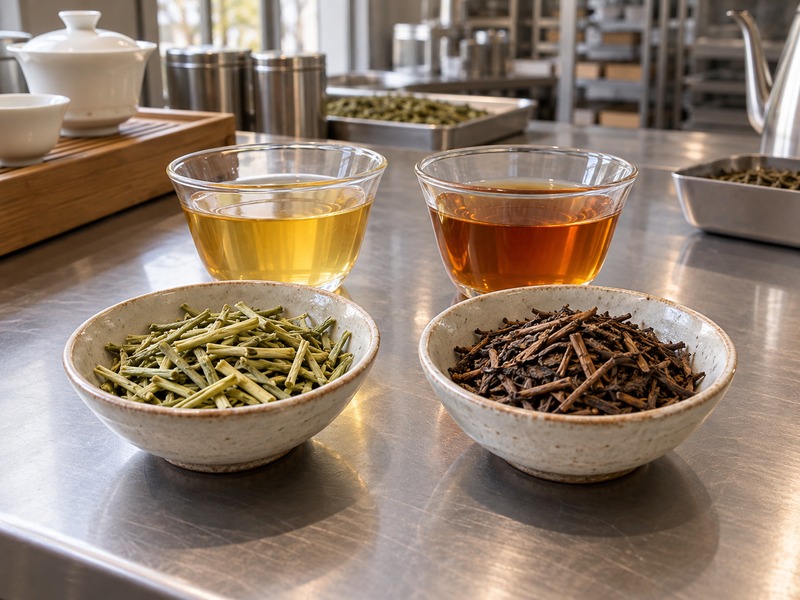
Kukicha is commonly used for a stem-rich Japanese tea. Hojicha is roasted tea. The Kyoto Prefectural Tea Industry Chamber describes kukicha as material containing many stems and leaf stalks and notes that a type of hojicha can be made by roasting kukicha. That is the clearest reason not to build a rigid either-or chart. The tea in a pack might be unroasted kukicha, leaf-based hojicha, or roasted stem tea with both characteristics.
Ask for the product in the bag. A supplier should specify the material, roast, form, and intended preparation. A retail customer may need a simple description such as “roasted stem tea”; a purchasing team needs more. Product names vary by producer, so do not assume a familiar term means the same leaf-to-stem proportion or roast across brands. If the product is powder, ask how it was milled and where the roast occurs in the process. The useful comparison begins with a specific item code, not a category slogan.
2. Where do kukicha and hojicha overlap?
Recognize roasted-stem versions
Some products begin as stem tea and are then roasted. They may be sold as kukicha hojicha, karigane hojicha, or another producer-specific name. The Kyoto tea-industry source gives roasted kukicha as one example. This overlap matters because buyers sometimes assume a roasted-stem product is mislabeled. It may be accurately described in two ways. The correct question is whether the pack and specification state the material and roast clearly enough for the buyer’s market.
Do not infer a universal taste. A roasted stem tea can differ from a leaf-based hojicha in body and aroma, but process choices and blend matter. Compare actual samples at the same brew strength rather than repeating a rule that all stem teas are sweet or all hojicha is smoky. If a café already serves a leaf-based roasted tea, a roasted-stem option could be a distinct menu item, but only if staff and customers can perceive the difference. Otherwise, adding another name may create more training work than value.
| Product description | Material | Roast status |
|---|---|---|
| Unroasted kukicha | Stem-rich tea | Not necessarily roasted |
| Leaf-based hojicha | Green-tea leaf material | Roasted |
| Roasted kukicha | Stem-rich tea | Roasted |
| Hojicha powder | Depends on specification | Roasted, then milled by route |
3. How does starting material affect the cup?
Look beyond the label
Leaves, stems, and stalks differ physically, and a roaster handles them differently. Ask whether the product is mostly stem, mostly leaf, or a defined blend. Compare dry appearance and brewed yield. Stem pieces can be larger and lighter than broken leaf, so a volume scoop may not deliver the same tea mass. For a fair trial, weigh each sample. A supplier can provide a recommended brew method, but the buyer should also test the method used in its own café or retail instructions.
Weigh before tasting. If one tea is measured by a heaped spoon and the other by a flat scoop, the result may reflect dose rather than category. Record leaf mass, water mass, temperature, steep time, filtered yield, and serving interval. Taste both plain before adding milk or sugar. Compare a second infusion if the business plans to offer one. The question is not which tea is “better” in the abstract; it is which product consistently meets the desired profile at a practical dose and cost.
4. What flavor differences should a buyer expect?
Use a sensory panel rather than fixed adjectives
An unroasted kukicha may present greener or lighter notes than a roasted hojicha, while roasting can bring warm toasted aromas. These are useful starting expectations, not guarantees. Leaf source, stem proportion, roast intensity, storage, and brew all change the result. Give a small panel coded cups and ask for plain words: vegetal, toasted, nutty, smoky, sweet, thin, bitter, or stale. Record the finish as well as the first aroma. A menu claim should be based on the purchased tea, not on category lore.
Taste it cool. A hot brew can feel aromatic and full; a beverage held for several minutes may lose some of that impression. If the intended service is iced, repeat the comparison over ice. A dark roast that wins a hot tasting can become sharp when concentrated for a cold drink. If customers expect a subtle tea, the unroasted option might be useful. If they expect a roasted latte, a properly chosen hojicha may carry better. Let the application decide.
| Sensory question | Plain brew | Milk drink |
|---|---|---|
| Aroma | Fresh or stale? | Still recognizable? |
| Body | Thin or full? | Balanced with milk? |
| Finish | Clean or harsh? | Lingering roast? |
| Color | Consistent? | Menu appearance? |
5. Should the teas be brewed the same way?
Start from each supplier's method, then normalize
The supplier’s preparation guidance gives each tea a fair first showing. After that, a buyer can compare them under a common service method if one brewing station must handle both. Record grams rather than spoonfuls and measure filtered beverage, not only water added. Stems and leaf fragments can absorb water differently, which changes yield. A café should decide whether separate recipes are operationally reasonable. If a second tea needs a special exception on every shift, its added menu value must justify the complexity.
Use the actual brewer. A small tasting pot, batch brewer, and filter basket can produce different cups. Have ordinary staff make both teas with the planned tools. Compare first and last servings from a batch, especially if the tea sits before service. If one product is a powder, it is not a direct leaf-brewing comparison; a powder contributes suspended solids. Put it in a separate application test. The recipe card should say precisely what form the staff are using.
6. Can the name predict caffeine?
Do not turn a category into a caffeine claim
Tea contains caffeine, and content can vary with material, process, dose, extraction, and serving size. A stem-rich tea may differ from a leaf-heavy tea, and roasting can affect measured values, but the name alone cannot support a numerical comparison for a particular product. If a menu or pack claims “low caffeine,” “decaf,” or a fixed amount, request product-specific evidence and have the claim reviewed for the market. A generic blog figure is not a substitute for the actual lot and recipe.
Check the serving. A large concentrated latte can deliver a different total amount from a small plain cup even when its tea appears gentler. For a buyer, the practical route is to obtain laboratory information where needed and calculate from the amount used per serving under the validated method. Do not market either tea as caffeine-free. If customers ask for an evening choice, describe flavor and preparation honestly without claiming that all products in a category share the same caffeine level.
| Statement | Evidence needed |
|---|---|
| “Contains tea” | Product identity |
| “Lower caffeine than X” | Comparable product and serving data |
| “Decaf” | Validated process and test |
| Exact mg per cup | Product-specific dose and analysis |
7. Which one works better with milk?
Test the finished cup, not a dry leaf aroma
Milk can soften bitterness and cover a delicate aroma. Prepare both candidates at a controlled tea dose and combine them with the café’s actual milk, sweetness, and ice. A roasted stem tea may be appealing in one base while a leaf-heavy hojicha may be clearer in another. A green kukicha may offer a different menu position rather than serving as a direct substitute for a roasted latte. Ask tasters whether they can identify the tea style after dilution and a normal carry to the table.
Keep recipes separate until proven. Swapping kukicha into an approved hojicha latte at the same spoon volume is not a fair test. Weigh tea, adjust extraction, and record the served result. If both teas pass, choose based on customer demand, cost per cup, and supply consistency. If one fails in milk but tastes excellent plain, consider a different service. A buyer can avoid forcing a good tea into the wrong format.
8. What should procurement ask a supplier?
Request material, roast, and lot detail
Ask for the product specification, ingredient statement, leaf or stem description, roast level, pack size, origin evidence for any claim, and current lot documents. If the supplier offers a roasted-stem tea, confirm how it appears on the quotation and carton. A price comparison needs the same delivery terms and an application dose. A cheaper kilogram can cost more per sellable cup if it requires more tea or produces greater waste.
Keep reference samples. Store approved samples under the supplier’s instructions and compare later shipments with a controlled brew. If a lot drifts, check both the tea and the store’s water or equipment before assigning blame. A supplier with useful process and traceability information is easier to work with than one that relies only on broad grade labels. Matcha Village can discuss hojicha powder and related tea ingredients, but the buyer should request an exact product proposal rather than assume every roasted-tea form is in stock.
| Procurement field | Why keep it |
|---|---|
| Material and roast | Defines product |
| Item and lot code | Supports receiving |
| Application recipe | Makes comparison repeatable |
| COA and scope | Supports market review |
| Pack and lead time | Supports service plan |
9. How should the menu describe the chosen tea?
Use words a guest can verify by taste
“Roasted green tea” can help explain hojicha. “Stem tea” can help explain kukicha when it is accurate for the product. A roasted-stem item may need both ideas in a short description. Avoid promising a health effect or universal caffeine property. Staff should be able to say whether the tea is served plain, with milk, or as a powder drink. If the supplier’s product name contains a geographic claim, verify the lot evidence before printing it on the menu.
Give staff one tasting. A two-minute script is less useful than a cup of each approved tea. Ask servers to describe what they actually notice and correct any claim that exceeds the evidence. If guests cannot tell why two teas are on the menu, the range may be too crowded. A clear description should help them choose without turning a simple tea order into a taxonomy lesson.
10. What is the final comparison test?
Run a small service pilot
Prepare both teas over several shifts using normal operators, water, equipment, and serving delays. Record brew mass, yield, sensory result, customer questions, waste, and cost per cup. Include the form actually offered: loose leaf, powder, or prepared base. A comparison made only in a quiet tasting room will miss differences in training and service. Keep the approved recipe for each product and the exact supplier item code.
Choose a role, not a winner. Kukicha may suit a lighter plain-tea position, hojicha a roasted beverage position, and roasted kukicha a third distinctive option if demand supports it. The business need not stock all three. Select the product whose flavor and supply file fit the menu, then test the next lot against the reference. A staff member should be able to make the same cup after the launch team leaves.
| Decision | Evidence |
|---|---|
| Sensory role | Blind cups |
| Service fit | Normal-shift test |
| Claim review | Product file |
| Economics | Cost per sellable cup |
Final recommendation
Compare the actual products. Kukicha names stem-rich tea; hojicha names roasting, and a product can be both. Approve a tea only after its specification and served cup match the role you want.
FAQ
Q1: Can kukicha be hojicha?
Yes. Roasted kukicha is one type of roasted-stem tea.
Q2: Is every hojicha made from stems?
No. Hojicha may use leaf material; request the supplier’s specification.
Q3: Is kukicha always caffeine-free?
No. Avoid that claim without product-specific evidence.
Q4: Can the same scoop measure both teas?
Weigh them instead. Stem and leaf pieces can differ in bulk density.
Q5: Which tea should a café buy?
Choose the item that passes the intended plain or milk service test and comes with traceable supply documents.