
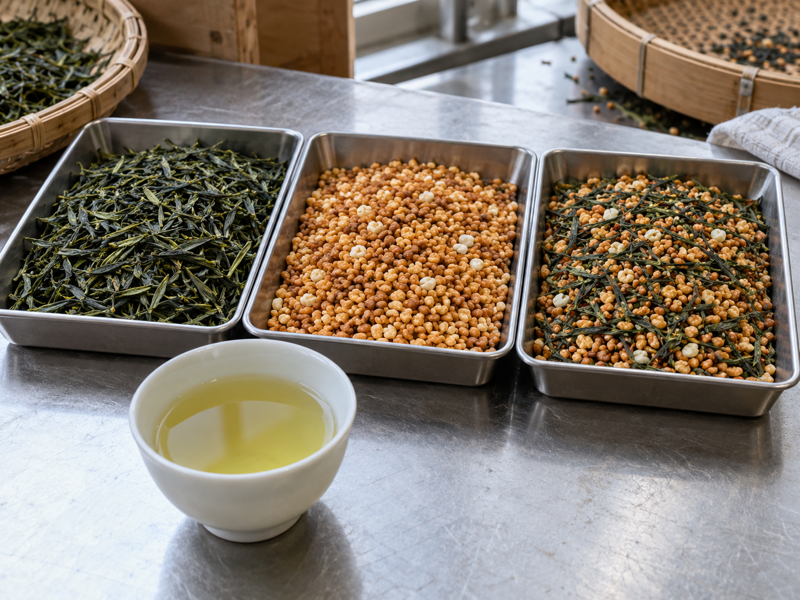
Genmaicha meaning is straightforward: the Japanese name points to a tea blended with roasted rice. That simple definition matters to importers, retail brands, and cafés because the product name sets expectations about ingredients, taste, and preparation. A shopper may picture a loose-leaf cup while a manufacturer is offering powder for a dessert. Both can relate to the same flavor family, but they are not the same product form. This guide explains the name, the components behind it, and the questions a commercial buyer should ask before a label, menu, or purchase order uses the term.
Contents
- 1. What does the word genmaicha mean?
- 2. Is genmaicha a tea or a rice drink?
- 3. Why is roasted rice part of the name?
- 4. Which tea leaves can appear in genmaicha?
- 5. How is genmaicha different from matcha and hojicha?
- 6. What does the name imply about flavor?
- 7. Does genmaicha mean caffeine-free or low caffeine?
- 8. How should the term appear on a retail pack or menu?
- 9. What should importers and private-label buyers verify?
- 10. How can teams explain genmaicha clearly to customers?
1. What does the word genmaicha mean?
Genmaicha is commonly written 玄米茶. “Cha” means tea, while “genmai” refers to brown rice in Japanese usage. The name is usually rendered in English as brown-rice tea, although the ingredient in a particular commercial blend should be checked rather than inferred from that translation. Japan's Ministry of Agriculture, Forestry and Fisheries describes genmaicha as roasted rice mixed with tea such as bancha, sencha, or gyokuro, and notes that the rice may be made by roasting cooked white rice. The category description and the literal word history are related but not identical ingredient declarations.
For consumer copy, “Japanese-style green tea with roasted rice” often tells an English-speaking shopper more than a literal translation alone. For a regulated ingredient list, use the actual materials from the supplier's specification and the destination-market rules. Do not write “contains brown rice” solely because the name includes genmai if the supplied rice material is different. A commercial name helps a buyer find a category; a specification identifies what the factory will ship. Keep those two functions separate and accurate.
| Term | Practical meaning | Buyer note |
|---|---|---|
| Genmai | Rice term in the name | Check actual rice ingredient |
| Cha | Tea | Confirm tea type and form |
| Genmaicha | Tea blended with roasted rice | Confirm exact SKU recipe |
| Powder | Ground or formulated product | Ask what was milled or added |
2. Is genmaicha a tea or a rice drink?
Genmaicha is a tea blend containing roasted rice. The tea base supplies the green-tea character and can contribute caffeine; the rice supplies toasted cereal aroma. A cup made by steeping the blend is different from a rice-only beverage. The balance varies. Some products emphasize tea; others present stronger roast. A package labeled genmaicha should make its actual ingredient composition clear, especially where customers may have dietary questions or expect a particular strength.
The distinction matters in foodservice. Staff can describe a genmaicha drink as a tea with roasted rice instead of promising that it has no caffeine because rice is present. A distributor can explain why a café may want a roast-forward blend for milk tea while a specialty retailer may prefer a tea-forward cup. A food manufacturer may use genmaicha powder for flavor in ice cream or bakery, but that application still needs an exact ingredient statement. Taste, labeling, and procurement all improve when the category name is backed by the product's real composition.
3. Why is roasted rice part of the name?
Rice is the component that distinguishes genmaicha from plain green tea. Roasting gives the blend its familiar cereal scent and can change how the tea's brisk or vegetal notes are perceived. The ratio and roast level are not fixed by the name. A light roast can be subtle; a darker roast can dominate. Some blends show puffed grains. Their appearance is a product detail, not a guarantee of better taste. A buyer should inspect and brew a representative sample rather than deciding from a photograph.
Rice also brings practical handling questions. Whole grains and fine particles may segregate during filling or shipping. A scoop taken from the top of a bulk bag may not represent the whole lot. Ask how the supplier blends, packs, and samples the product. If the product is milled into powder, assess the rice component's effect on mouthfeel and dispersion. A “brown rice tea” translation alone cannot answer these manufacturing questions. The useful commercial description names the sensory profile and the supplied form.
| Rice characteristic | Sensory or process effect | Trial check |
|---|---|---|
| Roast level | Changes toasted aroma | Compare brewed samples |
| Grain form | Changes appearance | Inspect mixed bag sample |
| Fine particles | May affect filtration | Check finished yield |
| Powdered rice | May affect texture | Test final application |
4. Which tea leaves can appear in genmaicha?
The MAFF category description includes bancha, sencha, and gyokuro as possible tea bases. A supplier may use another defined tea material or a blend of grades depending on the product. The tea base affects color, body, leaf aroma, astringency, and cost. The name genmaicha alone does not tell a buyer which base is used. If your retail positioning depends on a particular tea, specify it in the purchase standard and confirm the declaration with the supplier.
Brewing should be tested for the chosen base. One leaf cut may extract quickly and create fines, while another yields a slower, cleaner cup. A tea-forward blend might suit a plain hot serving but be muted in sweet milk. A more assertive base might hold its character in foodservice, yet taste harsh when prepared strong. Sample at the intended dose and temperature. For a large program, compare more than one lot. If the supplier changes the tea base, ask for advance notice and a new approval sample because the same product name can hide a sensory shift.
5. How is genmaicha different from matcha and hojicha?
Matcha is a finely milled tea powder, while conventional genmaicha is a tea-and-roasted-rice blend commonly sold loose or in bags. A genmaicha powder may also be offered, but its exact composition must be verified. Hojicha is roasted tea; its roast comes from processing tea leaves rather than adding roasted rice. These category distinctions help a menu writer or buyer choose language that matches the customer's cup. The genmaicha versus matcha comparison gives a useful starting point for product positioning.
Do not promise identical caffeine, color, or nutrition across these categories. Tea material, dose, and preparation change the finished product. A powdered genmaicha latte might contain added milk powder or sugar; a plain loose-leaf genmaicha does not. Read the SKU specification. For a buyer, the right question is not which name sounds more premium. Ask what form suits the recipe, what flavor customers expect, and what documentation supports the ingredient declaration. A correct name reduces confusion when products move from a sales deck into a production line.
| Product | Core form | Main buyer distinction |
|---|---|---|
| Genmaicha loose tea | Tea plus roasted rice | Brew and filter |
| Genmaicha powder | Defined powdered ingredient | Check composition and texture |
| Matcha | Milled tea powder | Different flavor and use |
| Hojicha | Roasted tea | Roast comes from tea leaves |
6. What does the name imply about flavor?
Most buyers can expect a green-tea base and a toasted-rice aroma. That is a category expectation, not a precise tasting note for every SKU. One blend can be nutty and light, another leafy and brisk. Some may smell like popcorn because of the roasted rice, but popcorn need not be an ingredient. Avoid turning an analogy into a misleading ingredient statement. Taste a production-representative sample and describe only what the panel can identify consistently.
For a product page, a short profile can say “roasted rice aroma with green-tea finish” when the cup supports that wording. For a B2B sample sheet, add the brew method and recommended applications. A flavor claim without preparation conditions is hard to reproduce. Test the product hot and at the intended service temperature. Milk, sugar, baking, or freezing can change the perceived balance. If the product is sold to food manufacturers, include application notes from actual trials rather than copying a loose-tea tasting note onto powder packaging.
7. Does genmaicha mean caffeine-free or low caffeine?
No. It contains tea leaves, so it can contain caffeine. Rice in the blend does not remove caffeine from the tea. The exact amount in a drink depends on material, ratio, dose, extraction, and serving size. MAFF publishes one figure for a specified genmaicha infusion method in its caffeine table. That result should not be reused as a universal label value for another blend, cold brew, powder, or ready-to-drink formula.
If a brand needs a quantitative statement, have the finished product or an appropriate validated calculation reviewed under the destination market's rules. A café can simply state that the drink contains green tea and therefore may contain caffeine. Staff should not make medical claims about suitability for pregnancy, medication use, sleep problems, or caffeine sensitivity. Provide product facts and refer individualized questions to healthcare professionals. Accurate language around the name prevents a common consumer misunderstanding without inflating a simple tea category into a health product.
| Claim idea | What to check | Safer action |
|---|---|---|
| “Caffeine-free” | Tea is present | Do not claim without proof |
| Caffeine number | Finished serving and method | Test or validate SKU |
| “Good for everyone” | Individual conditions vary | Provide facts, not medical advice |
| “Contains brown rice” | Actual supplier ingredient | Match declaration to recipe |
8. How should the term appear on a retail pack or menu?
Use genmaicha as the product name when the recipe fits, then add a plain explanation for readers unfamiliar with Japanese tea. “Green tea with roasted rice” is concise. A menu can also explain whether the drink is brewed, iced, milk-based, or made with a powder. A retail pack should provide brewing instructions tested on that blend. The legal ingredient declaration must reflect the exact formula and local rules, including any additions beyond tea and rice.
Keep language consistent across carton, website, distributor sheet, and café training. If the sales page calls a powder “pure tea” while the specification includes rice or other ingredients, buyers will have trouble with labeling and customer questions. Check translation carefully. The Japanese characters are useful cultural context, but decorative text should not replace a readable English description. For private label, approve artwork only after QA confirms the formula. Recheck the copy whenever ingredients, suppliers, or manufacturing sites change.
9. What should importers and private-label buyers verify?
Request a current specification, ingredient list, tea-base description, rice description, processing form, pack format, storage guidance, lot code method, and market-relevant documents. A supplier may offer several genmaicha grades with similar names, so tie each quote and sample to one SKU. Ask whether a loose-leaf sample represents the powder you plan to buy. It usually does not. The finished use determines whether particle size, extraction yield, filtration, or dispersion must be tested.
Check label and certification claims against the exact product and destination. A supplier may support organic or other certification programs, but the claim needs valid SKU and market evidence. For imported goods, confirm the delivery term, case configuration, and documentation needed by the importer. Use a written change-notification clause so a shift in tea base or rice ingredient triggers review. A clear buyer file means everyone can answer what “genmaicha” refers to in that purchase: a specific formula, sample, packaging, and quality standard.
| Buyer record | Why retain it | Recheck when |
|---|---|---|
| Approved sample | Defines flavor and appearance | New lot or change |
| Specification | Defines actual ingredients | Formula revision |
| Artwork proof | Controls consumer wording | Label revision |
| Lot documents | Supports traceability | Each shipment |
10. How can teams explain genmaicha clearly to customers?
Lead with the simple definition, then say how your product is prepared. A retail brand might write, “Genmaicha is green tea blended with roasted rice; this blend has a light toasted aroma.” A café can add that its latte uses a powdered ingredient or a brewed infusion. A manufacturer can state the exact ingredient form and intended application to trade buyers. These sentences answer the customer's real questions: what is in it, what does it taste like, and how will I use it?
Avoid claims the name cannot support. It does not promise a fixed rice ratio, a specific grade of tea, Japanese origin for every ingredient, or a caffeine-free cup. Matcha Village includes genmaicha powder in its portfolio, so a food buyer can request a current specification and sample for recipe work. Approve the wording after the formula and sample have been approved. A precise explanation makes the product easier to buy and easier to sell without asking customers to decode a Japanese name on their own.
FAQ
Q1: Does genmaicha literally mean brown-rice tea? That is a common English rendering. Check the actual rice ingredient in the supplied SKU before making a label declaration.
Q2: Is genmaicha the same as matcha? No. Conventional genmaicha blends tea and roasted rice; matcha is milled tea powder.
Q3: Is the rice always visibly puffed? No. Rice form varies by blend. The product specification should describe the actual material.
Q4: Does genmaicha contain caffeine? It can because it contains tea leaves. The amount depends on product and preparation.
Q5: What should a buyer request before using the name on a pack? Request the exact ingredient specification, approved sample, processing form, label review, and relevant lot documents.