
A dirty matcha latte brings espresso and matcha into the same glass. Dallmayr’s version pours espresso over an iced matcha and milk base to create a dark layer above green tea. The visual is easy to recognize; the flavor is harder to balance. A strong shot can bury the tea, while a large sweetened matcha base can make the coffee feel like an afterthought. For a café, the drink also occupies both espresso and tea stations. This guide turns the idea into a measured recipe that staff can make, explain and cost.
Contents
- 1. What should a dirty matcha taste like?
- 2. Which matcha works with espresso?
- 3. Which espresso profile should you use?
- 4. How do you set the first recipe trial?
- 5. Which pour order serves the flavor?
- 6. How should milk and sweetness be tested?
- 7. What should you say about caffeine?
- 8. How do you run two stations efficiently?
- 9. What does this drink cost to serve?
- 10. When is the recipe ready to sell?
1. What should a dirty matcha taste like?
Describe the first sip and the mixed cup
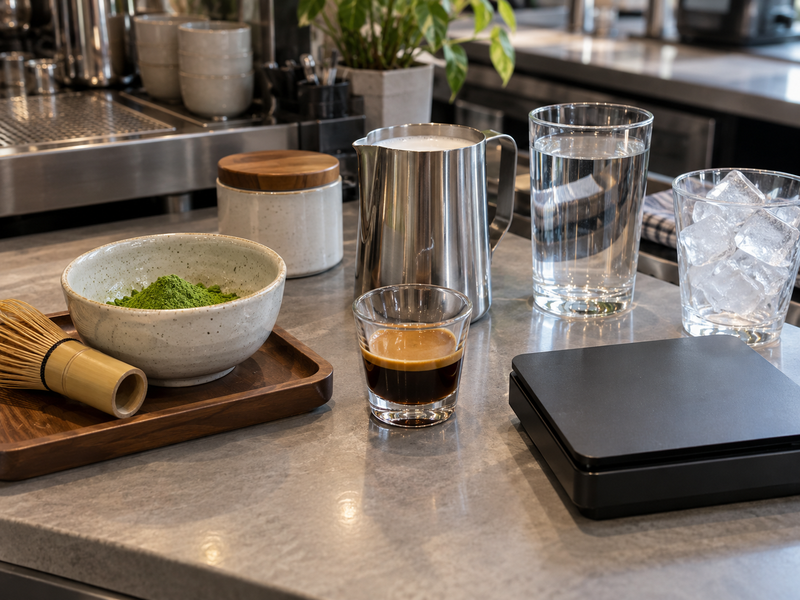
Decide whether tea or coffee leads. A café may want a matcha latte with a roast finish, or an espresso drink softened by a green tea note. Both can work, but the recipe and menu description should agree. Write a sensory target in ordinary words: “tea is clear before the espresso finish” or “espresso is dominant, with a green tea aftertaste.” Avoid “best of both worlds” because it does not tell a barista what to adjust when a trial fails.
Taste the drink as served, then stir it and taste again. Layering can make the first sip nearly all espresso while the bottom is mostly sweet matcha. If the two halves are unpleasant separately, a photograph of sharp color bands does not rescue the recipe. Ask tasters whether they would finish the cup and whether its name prepared them for the coffee note. A dirty matcha latte should offer a deliberate contrast, not a collision of two default recipes poured into one glass. The final cup has to make sense after the colors merge.
| Menu aim | First sip | Mixed drink | Main risk |
|---|---|---|---|
| Tea forward | Matcha clear | Coffee finish | Espresso overwhelms |
| Coffee forward | Roast clear | Green note | Matcha disappears |
| Balanced | Both identifiable | Coherent | Too much sweetness |
2. Which matcha works with espresso?
Test the powder under a shot, not only in water
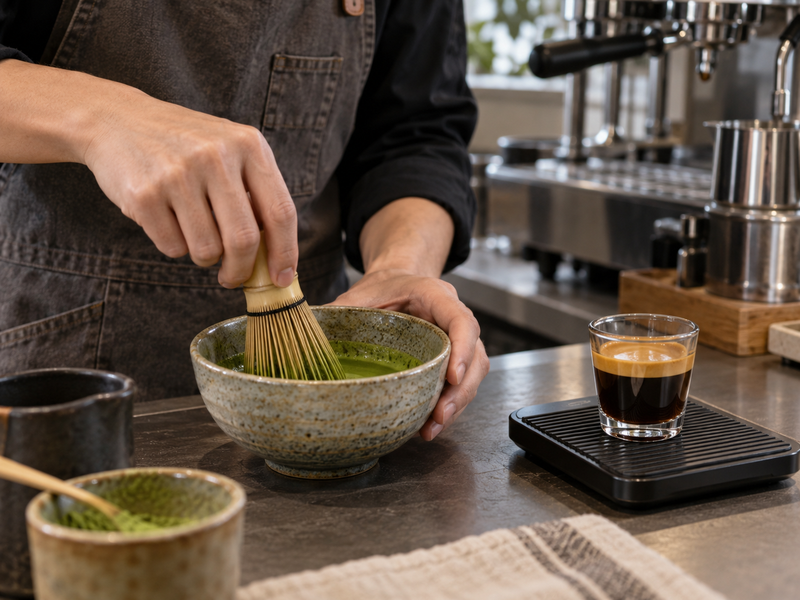
Prepare candidate matcha lots at the same measured dose in the planned milk base. Add the same espresso shot to each. The right powder is one whose tea character remains identifiable without requiring an expensive or harsh dose. A delicate plain-tea sample can vanish under a dark roast. Another powder may have enough body to hold the drink together. Record both the gram dose and the supplier lot so the purchasing team can reproduce the test.
Start with two or three powders if possible, but keep the experiment small and blind. Ask tasters to note the tea aroma, mid-palate, mouthfeel and finish after the coffee joins it. Look for clumps in the matcha base; espresso poured on top will not solve poor dispersion. When one powder needs a higher dose, calculate its cost per finished cup. An inexpensive bag can become the dearer choice once staff double the portion. Require a sample linked to the commercial product and check the documentation the business needs. The matcha must perform in this coffee recipe, even if it also has a separate role on the tea menu.
3. Which espresso profile should you use?
Use the café’s actual coffee program
Make the first trial with the espresso you already serve. Fix the coffee dose, beverage yield and timing according to the café’s normal shot specification. A shot pulled differently each time will make matcha comparisons meaningless. Taste espresso on its own, then in the finished drink. A coffee with strong bitter or smoky notes may dominate the tea, while another may leave room for both flavors. This is a sensory judgment about a specific shot, not a rule that one roast level is universally correct.
If the standard espresso fails, try a second house option only if the café can support it. Adding a special coffee solely for one drink affects stock and training. Test a single and double shot as different products, with separate cost and caffeine considerations. Dallmayr’s reference uses a double espresso, but a café need not copy it. The intended cup size and target flavor decide the amount. Keep the shot volume and the matcha base in the recipe card; “one shot” can mean different volumes on different machines or shifts. A distinct coffee layer should come from a sound extraction, not extra syrup hiding a poor one.
| Espresso choice | Trial question | Operational effect |
|---|---|---|
| House single | Is coffee still clear? | Fastest standardization |
| House double | Does tea survive? | Higher cost and caffeine |
| Alternate roast | Better flavor fit? | New stock and training |
4. How do you set the first recipe trial?
Fix cup size and vary one base at a time
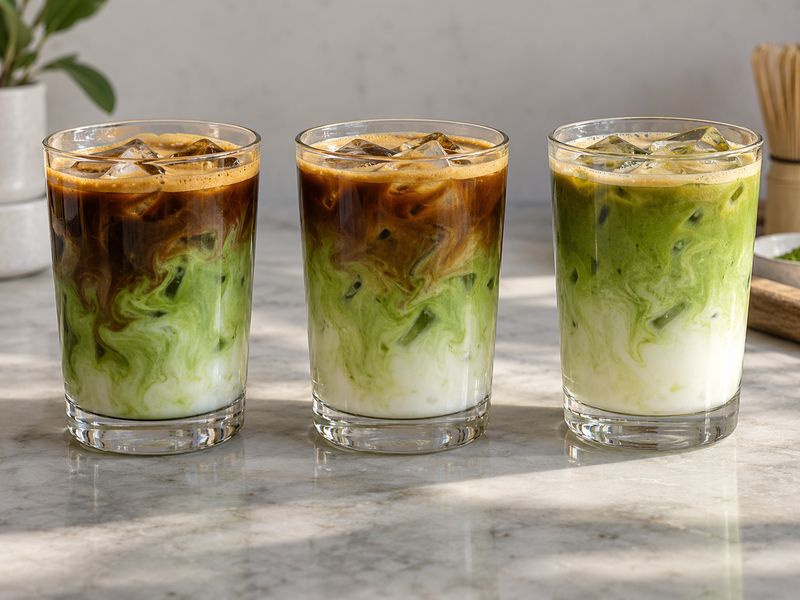
Choose the serving glass, ice load, milk volume and sweetener dose. Prepare three matcha concentrations with the same coffee shot, then taste the full drink. A possible first ladder is 2, 3 and 4 grams of powder in a fixed water amount. These are example test values, not a universal prescription. Once the team selects a promising tea dose, test the espresso amount while keeping the tea base fixed. Repeating both steps on a second day helps reveal whether an apparent winner was a preparation accident.
Our matcha ratio guide gives a method for documenting the tea base. For this mixed drink, add espresso yield and timing to that record so the result can be repeated.
Serve each sample at the same interval after pouring. Espresso temperature and ice melt can change the first sip quickly. Ask someone not involved in building the cups to record flavor impressions before seeing the formulas. Photograph the layers only after taste notes are written; visual preference can otherwise steer the group. If a trial needs heavy syrup to hide a harsh overlap, test another coffee or powder pair before raising sweetness. The goal is a recipe whose ingredients contribute recognizable flavors at a cost the menu can bear.
| Trial round | Hold constant | Change | Record |
|---|---|---|---|
| Matcha dose | Coffee, milk, ice | Powder grams | Tea presence |
| Espresso amount | Approved tea base | Shot yield | Roast balance |
| Sweetness | Both bases | Syrup amount | Finish |
| Service test | Approved recipe | Barista | Repeatability |
5. Which pour order serves the flavor?
Test both the handoff and the stirred drink
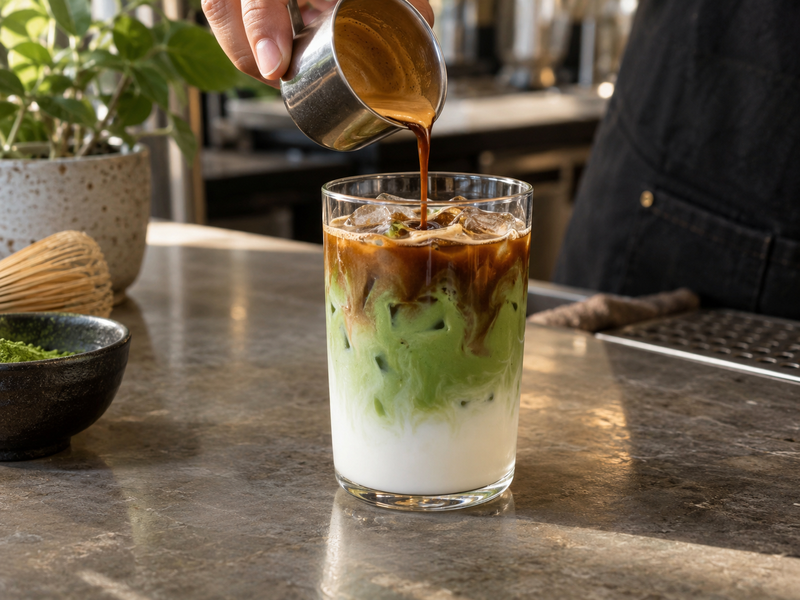
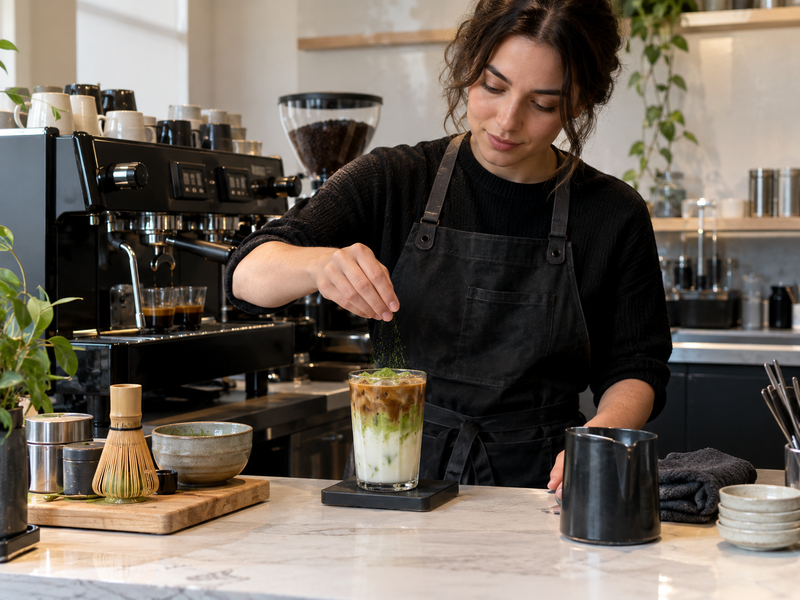
Dallmayr adds milk and ice, then matcha, and finishes with espresso. That creates the recognizable dark-on-green appearance. Pouring over the back of a spoon may sharpen the layers, but it adds a step. Make one cup with the careful pour and one with a quick normal pour. Compare appearance at handoff, appearance after a short wait, and taste when stirred. If the careful version is only marginally better, a busy café may prefer the simpler build.
Temperature affects the layers. A fresh hot espresso shot can melt ice at the top, while a cool matcha concentrate may sit differently from a warm one. Fix the preparation so each barista sees the same result. Do not overfill the glass before adding coffee; a dramatic pour that spills over the rim is not a workable menu item. If the drink travels, test the lid and pickup delay. Layers are a short-lived feature, so the underlying mixed cup has to taste complete. Put the approved build order on a card with a photo that shows the acceptable result, not an impossible studio-perfect stripe.
6. How should milk and sweetness be tested?
Keep the two bases visible in flavor
Milk softens espresso and matcha at the same time. Test the house dairy or plant milk at a fixed volume, then adjust only if the final cup is too strong or too thin. A switch from dairy to oat milk may change sweetness and texture without changing the powder or espresso. Approve each offered version rather than assuming it is a neutral substitution. Record the brand or product specification on the recipe card so a purchasing change triggers a retest.
Begin without syrup or with a small measured amount, depending on the menu brief. Both coffee and matcha can have bitter notes; sweetness can make them pleasant together, but a large dose can flatten their distinction. Taste a cup with no sweetener and one with the candidate dose. Let tasters describe whether sweetness improves balance or merely covers a fault. If a vanilla addition is part of the concept, list it in the menu and check whether it changes allergen information. A dirty matcha latte should still be recognizable when the guest stirs it, not just while the syrup is concentrated at the bottom.
| Variable | Keep fixed during test | What may change |
|---|---|---|
| Milk type | Tea and espresso dose | Sweetness, body |
| Milk volume | Milk type and bases | Flavor strength |
| Syrup | All other ingredients | Balance and cost |
7. What should you say about caffeine?
Count both tea and coffee as sources
Matcha and espresso both contribute caffeine. The exact amount in a finished drink depends on the powder, gram dose, coffee and shot specification. The FDA’s consumer guidance advises considering caffeine from all sources and notes that individual sensitivity varies. A café should not claim that a dirty matcha contains a precise amount without product-specific information or testing that supports the figure. Do not present the drink as a health boost or a safer way to consume caffeine.
Train staff to answer the straightforward question: this drink contains both matcha and espresso, so it is not a low-caffeine alternative to either base alone. If offering a single-shot and double-shot version, make the difference clear on the menu and in the recipe card. A decaf espresso version would still contain caffeine from matcha, so avoid calling it caffeine free. A customer with a personal restriction needs to decide with accurate ingredient information, not a vague promise. Keeping the statement factual also prevents a marketing phrase from outgrowing what the café has measured.
8. How do you run two stations efficiently?
Test the workflow with real staff
The drink draws on an espresso machine and a matcha prep station. Map the sequence: weigh and disperse matcha, prepare cup and milk, pull espresso, pour, lid and hand off. Decide which steps can occur while the shot runs and which must be done just before serving. A recipe that works in a quiet development session may queue badly when coffee orders and tea orders arrive together. Time several consecutive cups without cutting corners.
Give each component a defined tool and cleaning step. A whisk with dried matcha residue can produce clumps; a pitcher used for coffee may introduce unwanted flavor. Place the scale, powder and water within the barista’s normal reach. If one barista needs to cross the counter twice for every cup, reorganize the station or simplify the build. Test a substitute barista using the written card. If the second person makes a visibly different drink, clarify the measurements or order. The workflow should protect both flavor and queue speed, not force staff to choose one during service.
9. What does this drink cost to serve?
Include both premium bases
Calculate the delivered cost of matcha at the dose that passed tasting and the espresso dose used in the approved build. Add milk, syrup, ice, cup and lid. If the drink takes more time than a standard latte, estimate the added labor at busy service pace. The two main ingredients can each seem modest until combined in one cup; a double espresso plus a high matcha dose may require a price different from either single-base menu item.
Compare the margin with the café’s existing matcha latte and iced coffee. If the target price is too low, test a smaller cup or a different base combination before quietly reducing both flavors. Do not cost the 2-gram trial cup if the 3-gram version is the one customers would buy. Record the approved powder and shot specifications so a change in either supplier can be re-costed. The visual overlap of brown and green is a selling feature only if the drink remains distinctive enough to justify its place on the menu.
| Cost item | Measure | Common miss |
|---|---|---|
| Matcha | Grams in approved cup | Development dose differs |
| Espresso | Coffee and shot yield | Double shot assumed free |
| Milk and syrup | Served volume | Variant costs |
| Service labor | Added seconds | Two-station handling |
10. When is the recipe ready to sell?
Approve a repeatable cup, not one perfect pour
Launch when tasters can identify both tea and coffee in the finished drink, the mixed cup remains pleasant, and another barista can make it from the card at service pace. Keep the matcha lot, coffee specification, milk, ice, syrup, cup and pour order in one record. Train staff on how to describe the drink and its two caffeine sources without invented numbers. Take an approved photo for consistency, then let flavor and operations decide whether it stays on the menu.
Set retest triggers for a new matcha lot, new espresso blend, milk substitution or cup-size change. A different roast can make the same tea dose taste weak; a different powder can upset a coffee-forward balance. If the shop wants a seasonal limited drink, collect short customer feedback on flavor rather than asking only whether the layers look attractive. The dirty matcha latte is ready when its two bases are intentional partners and the recipe survives a normal shift.
Frequently asked questions
Q1. Does a dirty matcha latte contain coffee?
Yes. The usual format combines matcha with a shot of espresso and often milk and ice.
Q2. Can it be made with decaf espresso?
Yes, but matcha still contributes caffeine. Do not describe that version as caffeine free.
Q3. Should espresso be poured last?
Pouring it last creates the familiar dark top. Test that sequence against a simpler build and approve the stirred flavor too.
Q4. How much matcha belongs in the drink?
Use a measured dose trial with your espresso and milk. Choose the amount that leaves tea recognizable at an acceptable cost.
Q5. What should staff say to caffeine-sensitive guests?
State plainly that the drink contains both tea and coffee. Avoid a precise caffeine number unless your product information supports it.