
Dragon fruit matcha can look vivid before the first sip, but a cafe still needs to decide how the drink should taste after stirring. Fruit color, pulp texture, milk sweetness and tea strength can pull the result in different directions. Develop the complete cup with measured ingredients, then test the assembly during a normal service run. The aim is a drink that remains recognizably fruity and tea-forward when a customer actually drinks it, with preparation that staff can repeat.
Contents: Format · Fruit · Recipe · Tea · Texture · Milk · Assembly · Delay · Service · Launch
1. What kind of dragon fruit matcha will you serve?
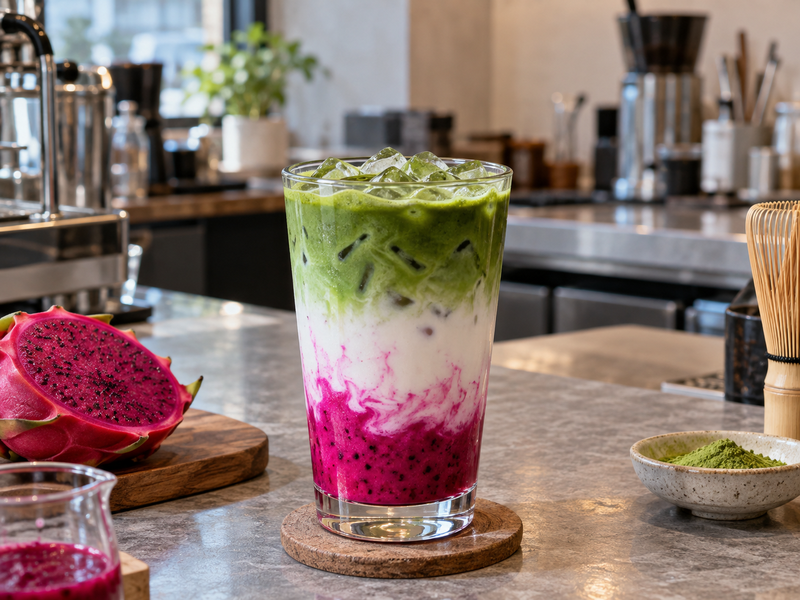
Choose whether the drink is a milk-based iced latte or a different tea-and-fruit format. This guide develops the latte version. Its ingredients need to work after mixing, even if a layered appearance is part of the presentation. A photograph of separate colors does not establish the flavor of the combined drink.
Describe the intended first sip
| Product feature | Decision to make | Trial observation |
|---|---|---|
| Fruit character | Smooth or pulpy | Texture through the chosen lid |
| Milk base | Named dairy or plant product | Sweetness and body |
| Tea level | Measured powder portion | Flavor after stirring |
| Appearance | Layered or mixed | Color at handover |
Simple Green Soul’s reference recipe combines dragon fruit, milk and matcha, with an optional fruit pulp layer. It provides an example of the drink format. A commercial version should set its own portion weights and preparation route.
Select the cup before finalizing quantities. Leave practical space for ice and mixing, and test the intended straw or sipping lid. A thick fruit layer at the bottom can make the first sip very different from the rest unless customers can stir it comfortably.
2. Which dragon fruit product should you buy?
Confirm the flesh color and the actual ingredient form. White-fleshed fruit will not create the same magenta base as a red-fleshed product. Fresh fruit, frozen cubes, unsweetened puree and a prepared beverage sauce also differ in labor, concentration and ingredient composition. A color photograph on a carton is not a sufficient purchasing specification.
Read the full product declaration
Ask whether the offered product contains only fruit or also water, sugar, acid and stabilizers. Pitaya Foods’ smoothie pack page lists organic red dragon fruit puree as its ingredient, illustrating one commercial form. That declaration applies to that product; it should not be assumed for another supplier’s puree or sauce.
For fresh fruit, record usable flesh yield after trimming. For frozen material, evaluate the product using the supplier’s preparation instructions and the cafe’s approved handling procedure. Do not compare frozen cubes straight from the pack with a fully prepared puree and attribute every texture difference to fruit quality.
Keep a sample photograph and tasting note from the approved lot. The drink’s appearance is sensitive to fruit color, but flavor still needs its own check. A strongly colored puree can make an impressive layer while contributing less recognizable fruit taste than the menu description suggests.
3. What is a useful first cup trial?
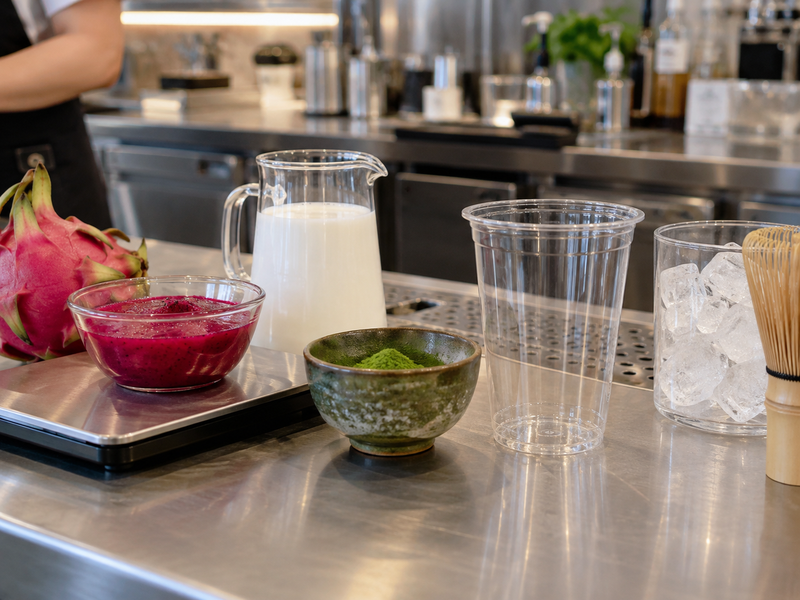
The following is a proposed development cup, not a tested menu recipe. It provides a weighed starting point so the team can adjust one ingredient at a time. Use a cup with enough headspace for the actual ice shape and stirring. Confirm the final fill level in that cup rather than converting the ingredient weights directly into a claimed volume.
Start with a documented combination
| Ingredient | Proposed starting amount | Record |
|---|---|---|
| Unsweetened red dragon fruit puree | 50 g | Supplier and lot |
| Selected milk | 150 g | Product code |
| Matcha | 2 g | Powder code |
| Water for tea | 40 g | Preparation method |
| Ice | 80 g | Cube style |
| Simple syrup, if needed | 0 or 5 g | Syrup concentration |
Make the unsweetened version first, then a separate version with the measured syrup addition. This preserves a clear comparison. If the fruit product already contains sugar, rewrite the trial around that product rather than quietly adding the same syrup anyway.
Taste after stirring and again after the expected service delay. Record whether the tea, fruit or milk dominates. Choose the next adjustment from that observation, keeping the other quantities steady so the team can learn from each cup.
4. How should the matcha portion be prepared?
Weigh the powder, sift if needed and disperse it in the measured water using a consistent method. A bamboo whisk, small electric tool or other approved cafe method may be practical, but each needs a defined vessel and quantity. A large preparation bowl can make a tiny portion awkward to mix evenly.
Compare tea in the full drink
Select water conditions appropriate to the chosen tea and process, and record them during development. Inspect the mixture for dry pockets before adding it to the cup. Matcha is a suspension, so uniform dispersion matters; avoid promising that the powder fully dissolves or will never settle.
Use the trial dose as a starting point, then compare nearby amounts with the same fruit and milk. Do not judge the tea solely from the concentrated preparation. Sweetness and dilution in the finished latte can change the impression substantially. A stronger powder portion may also change cost and the drink’s caffeine content, so avoid casual dose changes during service.
For supplier sampling, describe the actual latte base and portion. The Matcha Village ingredient buyer guide can support the discussion of pure tea versus sweetened blends. A sweetened matcha mix requires a different formula because it introduces other ingredients alongside the tea.
5. Should the fruit be blended, strained or left with pulp?
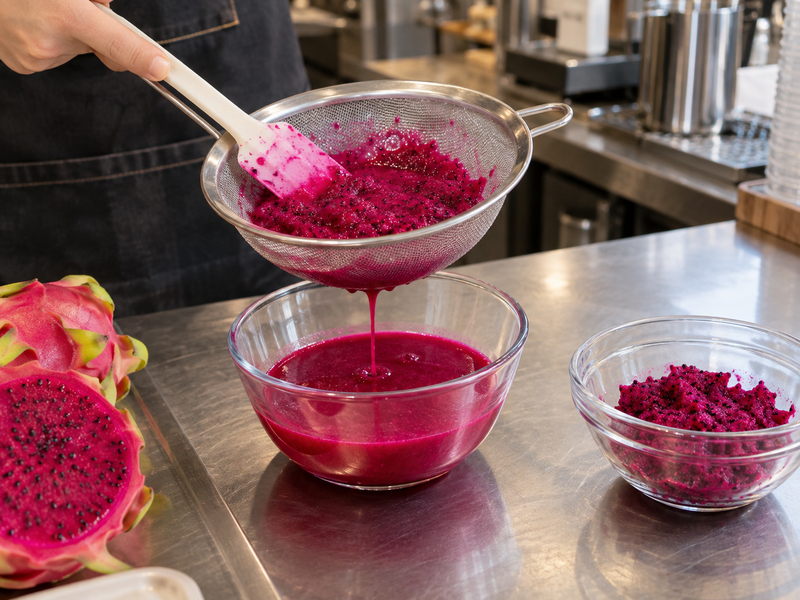
Texture determines how the drink passes through the chosen lid and how much fruit remains at the bottom. A pulpy version may suit a wide straw, while a smoother drink may work better with a sipping lid. Decide that experience before choosing a preparation step that removes material and adds labor.
Compare yield as well as smoothness
| Fruit treatment | What to assess | Operational consequence |
|---|---|---|
| Blended puree | Particle size and flow | Blender time and cleaning |
| Strained preparation | Smoothness and retained solids | Lower usable yield |
| Small fruit pieces | Size through the drinking opening | Portion and lid compatibility |
| Ready prepared puree | Consistency after handling | Supplier dependence |
If straining, weigh what enters and what remains usable. A recipe cost based on the purchased fruit weight may underestimate the cost of the finished portion. Keep the sieve and method consistent, since changing mesh size changes both texture and yield.
Simple Green Soul describes using strained juice and optional retained pulp in its version. For a cafe trial, compare those texture choices in separate cups with the same overall fruit preparation documented. Avoid adding large pieces merely to signal freshness if they make the drink difficult to stir or leave an unpleasant last sip.
6. How do milk and sweetener change the balance?
Milk is a flavor ingredient as well as a visual layer. Dairy milk and different plant drinks bring different sweetness, body and background notes. Use the exact product that will be ordered for service, including the intended unsweetened or sweetened version. A last-minute brand substitution can change a carefully selected fruit and tea balance.
Test sweetness after the fruit choice is fixed
Compare the starting cup without added syrup and with one measured addition. If more sweetness is needed, make a new cup with the revised amount rather than repeatedly topping up the same sample. Repeated additions make the final quantity difficult to reconstruct and often alter the ice dilution at the same time.
Record syrup concentration or product code. Five grams of one syrup need not provide the same sweetness as five grams of another. Fruit sauces may already contain sugar, and some plant drinks contribute noticeable sweetness. The menu description and ingredient information should reflect the actual formulation.
For customer milk alternatives, test each offered version before listing it as an automatic swap. The goal can be a comparable drink rather than identical weights, but any adjustment should be written on the service sheet. Staff should not have to invent a new balance whenever an alternative milk is requested.
7. How can the cup be assembled consistently?
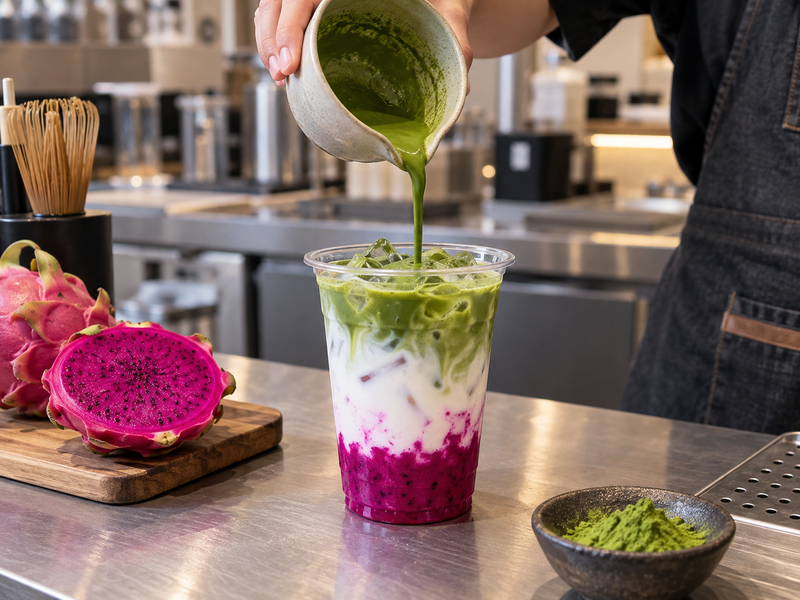
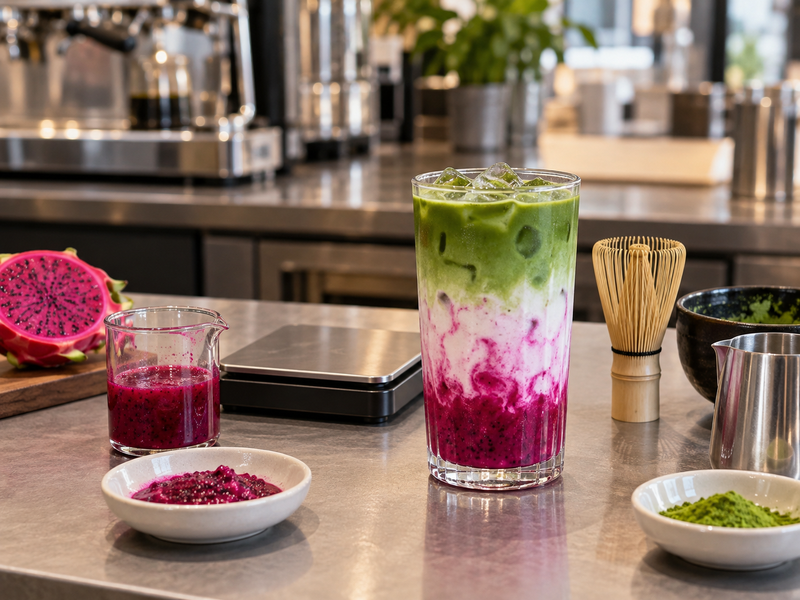
Layering depends on the ingredients, their condition and the pouring method. A thick fruit base, measured ice, milk and tea can create visible bands, but the result should be tested with the chosen products. Do not promise perfectly separate layers when normal movement and stirring will change them.
Give staff a clear assembly order
| Stage | Practical instruction | Check |
|---|---|---|
| Fruit | Weigh into the cup | Consistent base amount |
| Ice | Use the approved portion | Space and dilution |
| Milk | Add the measured quantity | Fill level |
| Tea | Pour using the selected method | Appearance at handover |
Test pouring slowly over the ice versus directly into the milk. Select the simpler method that gives an acceptable result under service conditions. A technique that requires several delicate movements may be difficult to repeat when multiple drinks are waiting.
Keep the cup rim clean, close the intended lid and confirm that the customer can mix the drink. If the menu photo shows layers, staff should understand that stirring creates the intended combined taste. A brief service instruction is more useful than letting customers assume the top and bottom are separate drinks with unrelated flavors.
8. What should be checked after stirring and waiting?
Assess the mixed color, suspended fruit, tea sediment and flavor after the normal handover interval. The combined drink may look less vivid than its separate layers. That is part of the product experience and should be considered when choosing the menu image and description. Avoid selecting a cup solely because it photographs well before mixing.
Include the last sip in the trial
Take a sample through the chosen straw or lid at the start, middle and end. Note whether dense fruit stays at the bottom or tea collects in a way that makes the last sip unpleasant. A more effective mixing instruction or a smoother fruit preparation may help, but confirm the change in another complete cup.
Ice style and quantity affect the drink as it waits. Keep both consistent during comparisons. Test the expected service delay as a quality observation while maintaining the cafe’s approved controls for milk and prepared fruit. A pleasant taste after waiting is not a substitute for food safety procedures.
If delivery is planned, include the actual closed cup and journey in testing. Look for leaks, changed fill appearance and fruit that becomes difficult to mix through the lid. A drink approved for immediate counter service has not automatically been approved for a longer delivery route.
9. How do you calculate cost and service capacity?
Cost the usable fruit preparation, tea, milk, syrup, cup, lid and ice handling together. Include trimming or straining losses measured during preparation. For a seasonal drink, labor may change substantially depending on whether staff peel fresh fruit, blend frozen cubes or portion a ready puree.
Time the full preparation task
| Cost or time item | Trial record | Decision supported |
|---|---|---|
| Usable fruit yield | Prepared weight from purchased weight | Ingredient cost |
| Tea per cup | Actual weighed dose | Powder ordering |
| Fruit preparation | Batch time and output | Prep schedule |
| Cup assembly | Normal staff run | Peak service capacity |
| Unsold prepared material | Logged waste | Batch size |
Keep preparation and cup assembly time separate. A drink may be quick to build only because considerable work was done earlier. That can still be a good menu choice, but the labor needs to appear somewhere in the operating plan.
Test a short run with the normal barista team and counter layout. Count how often staff cross the station for a blender, fruit container or scale. Adjust the layout and portioning method before assuming another employee is needed to support the new drink during a busy period.
10. What should be approved before the menu launch?
Approve the fruit product, tea, milk options, sweetener and complete serving arrangement. Keep the final quantities in grams and identify the cup, lid and ice style. Attach photographs of both the layered and stirred drink so staff understand what the customer will see throughout the experience.
Write substitutions as separate versions
If a second milk is offered, record its tested adjustment. If fruit supply changes, compare the new preparation for color, flavor, sweetness and usable yield. Do not rely on the name dragon fruit alone to guarantee an equivalent result. A sauce and an unsweetened puree may require very different quantities.
Avoid health claims based on the color or the presence of fruit and tea. Describe the drink’s actual ingredients and flavor. Any nutrition or caffeine information offered to customers should be based on the finished formulation and suitable evidence, not copied from a reference recipe using different amounts.
Before printing the menu, ask two baristas to make the final cup independently from the written sheet. Stir both, compare the flavor and fill level, and complete one normal handover sequence with the selected lid before approving the launch order.
Frequently asked questions
Q1: Will white dragon fruit create a pink latte?
It will not create the same magenta base as red-fleshed fruit. Specify the actual fruit or puree used, and do not rely on the peel color or product name alone.
Q2: Can frozen dragon fruit be used?
Yes, if prepared according to supplier guidance and the cafe’s handling procedure. Compare its texture, usable yield and sweetness in the finished drink before substitution.
Q3: Must the drink stay layered?
No. Layers can be part of the presentation, but the mixed drink should taste balanced. Test how easily a customer can stir it through the intended cup and lid.
Q4: Is added syrup always necessary?
No. Start without it when using unsweetened puree, then compare a measured addition. The fruit and milk products determine how much extra sweetness, if any, suits the drink.
Q5: Can the tea be replaced with a sweetened matcha blend?
That requires a new formulation. Confirm the blend’s ingredients and tea content, then reassess sweetness and dose rather than replacing pure matcha gram for gram.