
A ceremonial-grade matcha production process is often sold through color, harvest and stone-mill language. Buyers need a powder that performs in straight tea and records that support every label claim. Agree on sensory criteria, request a lot-linked sample and inspect each production claim separately. Zenkyu Matcha’s process article illustrates a producer’s approach; its grade descriptions should not become universal specifications for your purchase. Our matcha sensory evaluation guide gives a repeatable method for comparing samples.
Contents
- 1. What does ceremonial grade mean in this offer?
- 2. Which leaf and harvest claims need proof?
- 3. How should shading evidence be reviewed?
- 4. What makes tencha suitable for straight tea?
- 5. How should milling be tested?
- 6. Which sensory method gives a fair comparison?
- 7. What documents should match the finished lot?
- 8. How should packaging protect the powder?
- 9. Which claims belong on a retail pack?
- 10. When can a buyer approve the grade?
1. What does ceremonial grade mean in this offer?
Translate a market term into attributes
“Ceremonial grade” appears widely in marketing, but suppliers may apply it to different powders. Ask the seller for its own definition and whether it follows a written internal grade standard. For a product intended to be whisked with water, the relevant attributes may include aroma, bitterness, aftertaste, mouthfeel and appearance after preparation. A vivid dry powder does not automatically taste good.
Write acceptance criteria in buyer language. Describe the cup your customer expects and the preparation method you will use. Record the product code and compare it with one approved reference. If a supplier offers several ceremonial options, request a reasoned recommendation based on your price range and sensory target. Keep “ceremonial” as a product designation until your team has approved a specific lot and marketing wording. Matcha Village lists ceremonial, premium and other grades in company materials; buyers should still ask for current specifications and samples for the exact product offered.
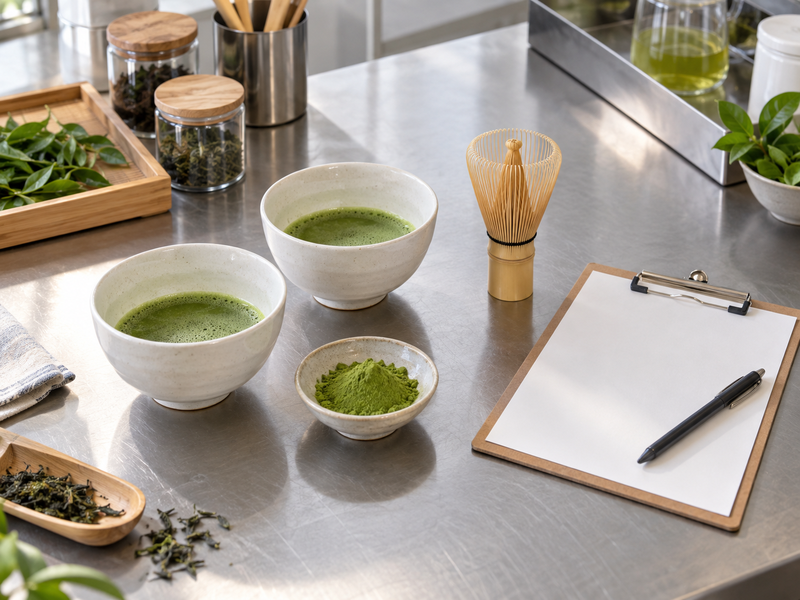
2. Which leaf and harvest claims need proof?
Tie cultivation language to the lot
Suppliers may describe tender leaves, a particular flush or hand picking. None of those descriptions proves that your commercial shipment uses the same material as a sales sample. Ask for harvest season, origin declaration and a traceable link from leaf intake to finished powder. If the product blends several leaf lots, request a description that accounts for the blend.
Pay for attributes you can verify. A first-harvest claim can matter to positioning, but it should appear in supplier records and survive a repeat order. Ask whether the claim applies to all components. Compare a higher-priced candidate with alternatives in a blind cup trial. A powder that meets your flavor target may be a better choice than one with a more elaborate field story. Conversely, if your retail packaging promises a specific harvest, the documentary gap can make an otherwise pleasant powder unusable for that SKU.
| Claim | Record to request | Decision |
|---|---|---|
| Harvest period | Leaf intake and lot trace | Pack wording |
| Region | Origin declaration | Label review |
| Leaf selection | Supplier criteria | Grade comparison |
3. How should shading evidence be reviewed?
Ask for the actual practice
Shading is associated with tencha cultivation, but no single number of shade days defines ceremonial suitability across gardens and seasons. Ask how the supplier records the practice for the crop behind your lot. Where multiple growers contribute, clarify whether one summary represents every component. A photograph can help explain the method, yet it cannot identify the material shipped to you.
Use the record to guide tasting. Shaded leaf can present a different flavor balance, but the finished powder still needs a straight-tea trial. Prepare coded samples at equal dose and water temperature. Note umami, astringency, aroma and color under consistent light. Avoid assuming that more shade always means a better cup for your customer. If the offered matcha also appears in milk drinks, evaluate that use separately. A regional or cultivation claim belongs in the purchasing file only if the supplier can keep it linked to future lots.
4. What makes tencha suitable for straight tea?
Inspect pre-milling selection
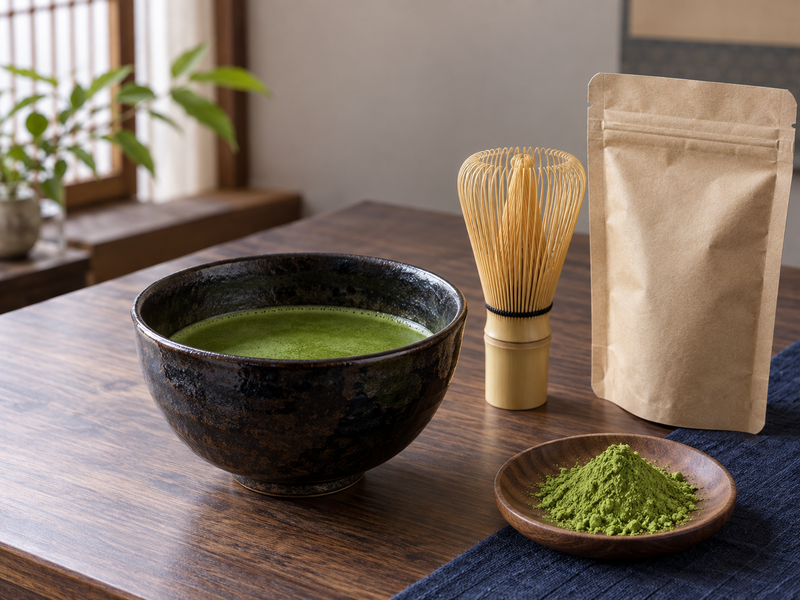
Matcha production uses tencha that is steamed, dried without rolling and sorted before grinding, as Yamamasa Koyamaen describes. Ask whether the supplier selects tencha for straight tea before or after a powder trial. A blend may be created for flavor consistency; record which leaf lots enter it and who approves the recipe. The quality decision should be visible before material reaches the mill.
Look for the cup in the leaf decision. Excess stems, old leaf and off aromas can affect a delicate preparation that has no milk or sugar to hide them. Request sorting criteria and a tencha release record. Ask how the producer handles a lot that passes basic safety controls but misses its sensory target. It may be diverted to another product, which is reasonable if the grade claim stays accurate. A ceremonial offer should explain what it excludes, not only what its brochure celebrates.
| Tencha check | Possible cup effect | Supplier evidence |
|---|---|---|
| Leaf selection | Bitterness and aroma | Grade criteria |
| Sorting | Texture and flavor | Inspection record |
| Blend control | Repeatability | Recipe and lot link |
5. How should milling be tested?
Judge powder, not mill romance
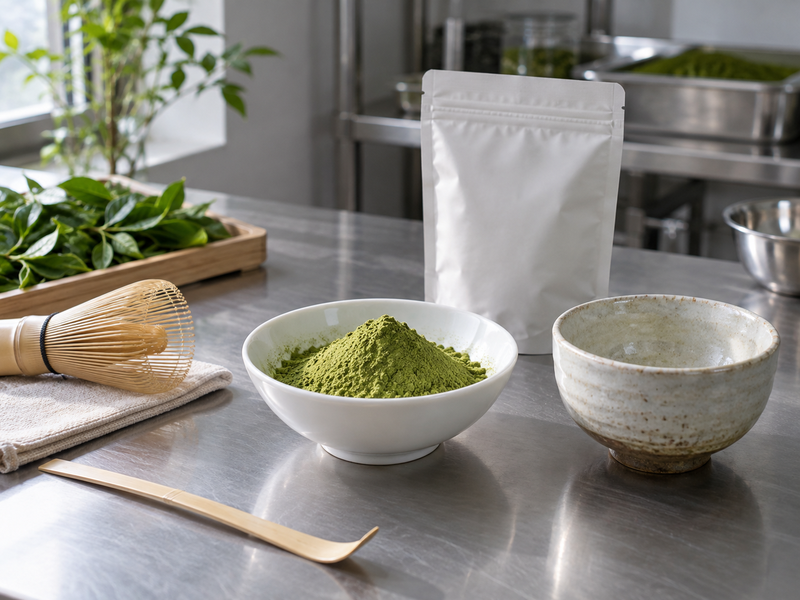
Stone grinding often appears in ceremonial descriptions, but the finished powder needs to justify the method. Ask what equipment milled the sample and what will mill commercial orders. Record powder age, pack date and lot identity. If the seller promises a fine particle size, request the method used to measure it or a preparation test that reflects your customer experience.
Whisk the candidate in your service conditions. Observe clumping, visible particles, mouthfeel and foam using the same bowl, water and technique for each sample. Foam alone is not a grade standard; water and handling can affect it. Keep a sealed reference for comparison with future lots. Ask how the mill prevents foreign material and lot mix-ups, especially where several grades run on one site. The buying decision should reflect repeatable cup quality from an identified milling run rather than a photograph of a stone wheel.
6. Which sensory method gives a fair comparison?
Blind the name and standardize the cup
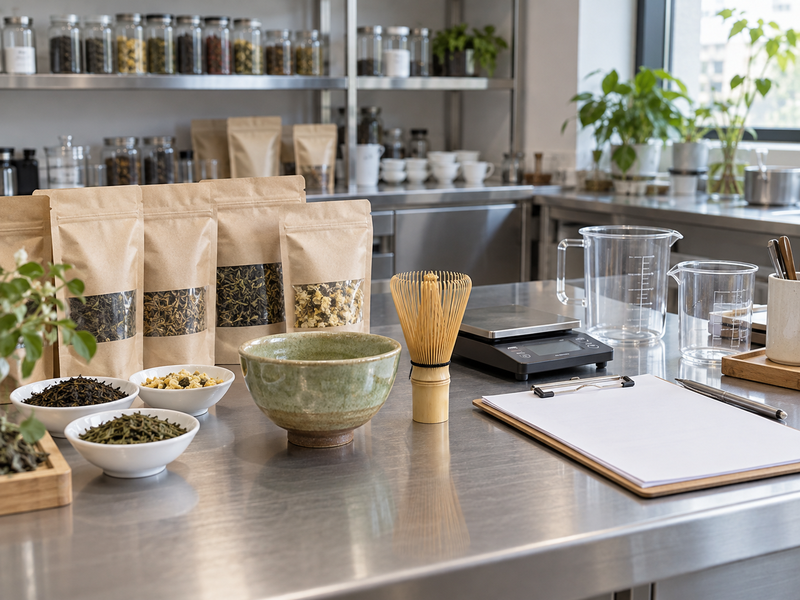
Use coded samples and one preparation protocol. Fix powder mass, water volume, temperature, whisking time and serving interval. Let tasters write individual notes before discussion. Ask them to describe specific sensations rather than assign an unexplained “premium” score. Include the matcha you currently sell as a reference and repeat any surprising result on another day.
Test more than the first sip. Record aroma before mixing, balance during drinking and any harsh finish. Compare color under one light source; smartphone photographs under different lighting can mislead. If a sample was opened earlier than another, note that condition. For retail buyers, ask whether a nonexpert can prepare a good cup with package instructions, not only whether a trained taster can. A fair method keeps supplier stories from steering the panel and creates a usable target for the next production lot.
| Trial control | Record | Why it matters |
|---|---|---|
| Dose and water | Measured quantities | Comparable strength |
| Preparation | Tool and timing | Comparable texture |
| Panel notes | Blind individual scores | Less brand bias |
7. What documents should match the finished lot?
Build a traceable quality packet
Ask for the finished product specification, ingredient declaration, lot-linked test report and process or origin declaration relevant to your claim. Quality staff should set destination-specific analytes and limits; a general catalogue cannot serve as a certificate of analysis. Verify report dates, methods, units and the identifier on the sample or commercial cartons.
Check each certificate’s scope. Organic or food-safety credentials should be current and cover the right company, site and product category. Do not treat a mill’s certificate as proof that every farm or packed SKU is certified. If a supplier says it can arrange tests, agree on which tests, who samples, when results arrive and whether release waits for them. Keep commercial shipment documents separate from product evidence. Ceremonial grade is a sensory and marketing decision; it does not remove ordinary safety and traceability review.
8. How should packaging protect the powder?
Review the whole opening cycle
Matcha can lose desirable sensory qualities after exposure to air, light, heat and moisture. Ask about the pack material, closure, fill size and handling instructions. A foodservice bag opened many times behaves differently from a small retail tin. Test the pack in your actual storage and service routine rather than accepting a shelf-life figure without its conditions.
Plan for users who open the pack. A café might decant powder into a daily service container; retail customers may store a tin in a warm kitchen. Request evidence supporting stated shelf life and ask how the supplier marks lot and best-before information. For bulk powder repacked by your business, agree where responsibility transfers and how your own packing process will be validated. Do not imply that one package guarantees freshness after opening. The pack should support the product’s intended use and preserve a traceable identity through distribution.
| Pack question | Buyer check | Application |
|---|---|---|
| Size | Opening frequency | Café or retail |
| Barrier | Light and moisture exposure | Warehousing |
| Code | Lot and date readability | Recall trace |
9. Which claims belong on a retail pack?
Match copy to records
Origin, harvest, cultivar, milling method, organic status and “ceremonial grade” can all appear on a pack. Each says something different. Have marketing draft exact phrases and ask quality or regulatory reviewers to identify the record supporting each one. Claims should describe the product being sold, including any change after the sample was approved.
Keep grade language modest and precise. Do not present ceremonial grade as a universally regulated safety level or a promise that every drinker will taste the same notes. If the product blends lots for consistency, avoid “single garden” wording. If a company mills tea outside its growing region, do not imply that all stages happened at the farm. Review destination rules with qualified local advisers before printing. A beautiful design can be revised; a warehouse of mislabeled packs is expensive. Keep approved copy with the product specification and change-control record.
10. When can a buyer approve the grade?
Define the approval boundary
Approval should name the seller, product code, intended use, reference lot, sensory method and required documents. A procurement manager can negotiate terms, but development and quality should close their own gates. Ask what will trigger a new trial: a different leaf origin, blend, processor, mill, pack format or sensory result outside agreed limits. Write the change notice process into the supply discussion.
Approve the repeat order path. Confirm how much of the sampled lot can ship and how a successor lot will be compared. Store a retained powder sample under suitable conditions and record who decides whether differences are acceptable. If a supplier cannot provide evidence for a premium claim, you may still buy the powder under a more accurate description. The aim is a cup customers recognize, a label you can defend and a replenishment plan that preserves both.
| Gate | Evidence | Owner |
|---|---|---|
| Sensory | Blind straight-tea trial | Product team |
| Quality | Lot and scope documents | Quality |
| Continuity | Change and successor plan | Procurement |
FAQ
Q1. Is ceremonial grade a fixed international specification? Ask each supplier for its written definition and evaluate the actual powder; the term alone is insufficient.
Q2. Must ceremonial matcha be hand picked? A hand-picking claim needs evidence, while finished sensory performance still needs testing.
Q3. Does stone milling guarantee a smooth cup? No. Test the specific lot with your preparation method.
Q4. Can a latte tasting approve a ceremonial SKU? Not by itself. Conduct a straight-tea trial if that is the intended sale.
Q5. What should be kept for repeat orders? Retain an approved sample, specification, lot records, sensory method and change notice rule.
Send suppliers the cup profile and claim wording you intend to sell. Request a lot-linked sample, current documents and a successor-lot plan. A ceremonial-grade matcha production process earns its place in your range when the cup and its records agree.