
A salted caramel matcha latte can be an easy café special to sell and a difficult one to repeat. The first cup tastes balanced; the next has a salty rim, a heavy sauce layer and hardly any tea. The fix starts before a barista pours anything. Choose one caramel product, one measured serving, one matcha dose and a clear place for the salt. Then test the drink in the cup and queue it will actually meet.
The top-ten result Salted Caramel Matcha Latte suggests a caramel drizzle in an iced home drink. That is a useful flavour cue, but a café also needs to control the sauce quantity, allergen information, prep time and cost. The ten checks below build a drink whose caramel supports matcha instead of turning the last sip into dessert sauce.
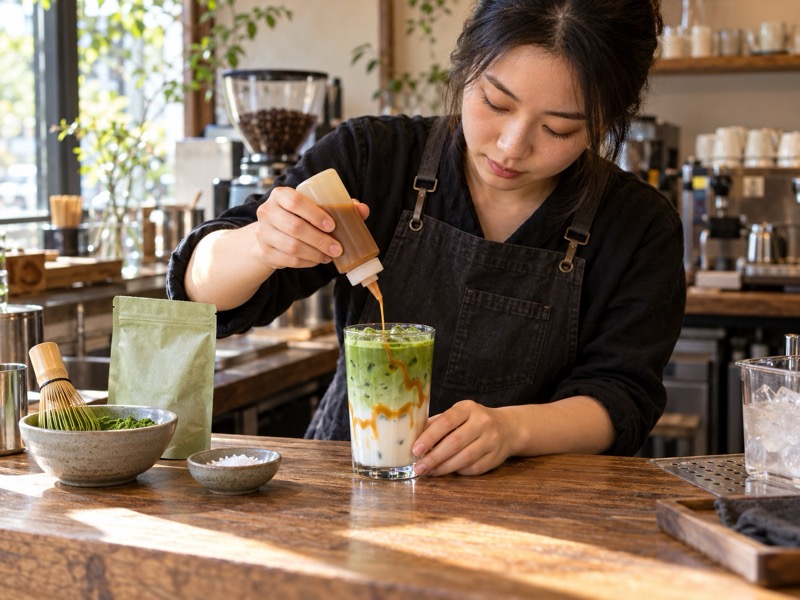
1. What should a salted caramel matcha latte taste like?
Agree on the tea-to-dessert balance
Write the target in plain language. A useful starting point is “matcha first, buttery caramel second, light salt at the finish.” Another café may want a sweeter dessert drink; that is fine if the menu says so. What fails is leaving the choice to each shift. Taste three versions with the same milk and tea: one below the proposed caramel dose, one at it and one above it. Ask staff which cup still tastes distinctly of matcha after stirring. A visible caramel stripe can look impressive while contributing too little flavour, and an unseen sauce at the bottom can deliver too much in the last sip.
Pick a cup size and decide whether the standard recipe is iced or hot. Ice dulls sweetness, so the two formats may need different amounts of caramel. A rich oat milk can make a modest sauce dose taste sweeter than it does in dairy milk. Test with the default milk first, then approve substitutions. Photograph the ordinary handoff cup under its lid. The menu image should not rely on a fragile tower of toppings that staff cannot reproduce.
| Tasting question | Pass signal | When to revise |
|---|---|---|
| Is matcha clear? | Tea is recognisable after stirring | Sauce masks it |
| Where is the salt? | Gentle finish | Salty first sip |
| How sweet is it? | Matches menu description | Guests ask for less |
| Does it travel? | Even flavour at handoff | Sauce pools at bottom |
2. Which caramel base works for café service?
Compare a sauce, a syrup and a house batch
A thick caramel sauce holds a stripe on the glass but may settle and slow the bar. A thin syrup mixes easily but may not give the visual cue customers expect. A house caramel can taste excellent, yet it adds preparation, storage and batch-control work. Buy or prepare small test quantities before committing to a menu photo. Weigh a normal squeeze or pump output several times; “one pump” is not a recipe until the pump is calibrated. If the product already contains salt, do not add loose salt by habit.
Read the current ingredient statement, storage directions and opened-pack life. Products sold under the same flavour name vary in dairy content, sweetener type and viscosity. Test the sauce after refrigeration or the bar’s normal storage conditions; a cold bottle that needs hard squeezing can make portion control worse. For a house batch, document a weighed formula and safe preparation method. Use a dated batch label and count the servings obtained, including residue left in the bottle. A cheaper house sauce may become expensive once preparation time and waste are included.
| Base | Strength | Control to test |
|---|---|---|
| Caramel sauce | Visible ribbon | Weight and pooling |
| Caramel syrup | Fast mixing | Sweetness per pump |
| House batch | Custom flavour | Recipe, storage and yield |
3. Where should the salt go?
Put it in a measured component
Choose a salted caramel product with a consistent flavour, or dissolve a weighed salt amount into a controlled house base. Do not ask baristas to add a “pinch” to each cup. Pinches vary with the person, the salt crystal and the speed of service; a few grains on the rim can overwhelm the first sip. If a finishing salt is essential to the drink’s look, define its exact amount and placement. Most cafés will get a more even result when the salt is already in the caramel.
Taste after the matcha and milk are combined. Salt can make caramel seem stronger and can sharpen a bitter tea if it is overdone. Keep the tasting cup at the actual service temperature. A cold drink and a hot drink may not register salt the same way. Note any guest comments about salt separately from comments about sweetness; adding more syrup to cover a salty finish only creates a larger, costlier problem. When a new caramel lot arrives, retaste before the next shift uses it.
4. Which matcha can hold its flavour beside caramel?
Make the purchase test in the finished cup
Use plain matcha, not a pre-sweetened powder unless the entire recipe is built around that mix. The caramel already brings sweetness. Test candidate powders at the same weighed dose, milk and sauce quantity. Look for a clean tea flavour that stays present after the drink is stirred. A very bitter powder may seem acceptable under a heavy sauce in one tasting, then become harsh when a guest asks for half caramel. The approved tea should also work in the café’s less sweet variation.
Ask the supplier for current specifications, lot identification and storage guidance. Check colour and aroma after the package has been open under normal bar conditions, not only on the first day. If the café changes lots, have staff taste the basic matcha latte and the caramel version. A sauce can hide a quality drop until the tea dose is reduced to control cost. Keep the dose fixed while comparing suppliers so procurement decisions are based on the tea, not on a changed recipe.
5. How should an iced salted caramel matcha latte be built?
Choose a repeatable order for sauce, ice and tea
Start with an approved 12-ounce cup as a trial format. Weigh 2 to 3 grams of matcha in separate test cups, not as an automatic final dose. Disperse each portion in a measured water amount until smooth. Apply the weighed caramel to the glass or blend it with the milk, depending on the result you want. Add a measured ice portion and milk, then the matcha concentrate. Stir and taste one cup as a customer would. A pretty layered cup can give a plain first sip and an overly sweet last sip if no one mixes it.
Test the same recipe after a realistic queue and delivery interval. Sauce that looks elegant on the inside wall may slide into a pool under ice. If that happens, use a thinner base or mix more of the sauce into the milk, leaving a small measured ribbon for presentation. Write the build as grams and millilitres on a bar card. If the café uses a pump, check its output before each new bottle type. Training should include the normal cup, lid and straw so the handoff drink matches the tasting.
| Build step | Measure | Failure to catch |
|---|---|---|
| Matcha | Approved grams and water | Dry clumps |
| Caramel | Weighed sauce or calibrated pump | Uncontrolled stripe |
| Milk and ice | Fixed cup fill | Weak tea |
| Handoff | Stirring direction if layered | Uneven sweetness |
6. How should a hot version change?
Treat it as a second recipe
Hot milk makes caramel aroma more obvious, while the missing ice changes dilution. Begin with the accepted iced tea dose as a comparison, then adjust only after tasting. A thick sauce may need to be mixed into warm milk or the tea base so it does not sit on the bottom. Do not put an unapproved sauce directly into a steam pitcher; it complicates cleaning and can change how milk textures. Follow the café’s milk steaming and food-safety procedures, then pour into the chosen hot cup.
Check sweetness after the first sip and again after five minutes under a lid. Warmth can make a heavy caramel drink seem cloying. A hot drink also needs a different visual standard: sauce on the side of a paper cup is invisible, and a thick drizzle on the foam can sink or smear on the lid. Use the simplest finish that delivers the flavour. Give the hot version its own POS recipe and cost sheet if it becomes a permanent option.
7. What should the finished drink look like?
Make the photo possible during a normal shift
Decide whether the customer should see a clear green matcha layer, a caramel ribbon or a fully mixed tan-green drink. Any of those can work, but the menu photograph and service cup must agree. A swirl on the inner glass can be made quickly if the bottle tip, stripe count and sauce weight are defined. A dramatic web of sauce around the rim takes longer and may coat the customer’s hands. Keep the garnish inside the cup and away from the drinking edge.
Compare drinks made by three staff members from the written card. Photograph each at handoff and after ten minutes. If the images differ strongly, the instructions need more detail. Matcha colour will change with the tea and milk, so approve a reasonable range rather than chasing a digitally bright green photo. Avoid claiming “salted caramel” from a decorative salt flake when the flavour is missing from the drink itself.
8. What must staff know about ingredients and substitutions?
Keep the current sauce label with the recipe
Caramel sauces can contain milk and other ingredients that the drink name does not reveal. Review the supplier’s current statement and follow the café’s local allergen and customer-information rules. Check the milk, matcha and any topping as well. If a guest asks for plant milk, that substitution does not automatically make the drink dairy-free when the caramel contains dairy. Staff need a reliable place to check before promising an allergy-safe cup. Cross-contact in shared pitchers or tools may also matter under the café’s normal process.
Define what happens when the approved caramel runs out. A different bottle with the same flavour name can have a different salt level, thickness and ingredient list. The manager should review the new pack and approve a short cup test before use. Do not let a register note such as “less sweet” become “half sauce plus extra salt”; write the allowed variation as a measured build. If the guest wants no added sugar, offer the separate unsweetened matcha recipe instead of trying to remove caramel while keeping this drink’s name.
| Change | Check before service | Update |
|---|---|---|
| New caramel bottle | Ingredients, salt and pump output | Bar card and POS |
| New milk | Taste and ingredient statement | Substitution note |
| Half sweetness | Measured lower sauce dose | Approved variation |
| New matcha lot | Side-by-side cup | Lot record |
9. What does one accepted cup cost?
Count sauce lost in the bottle and cup
Cost the exact powder dose, caramel weight, milk, ice, cup, lid and garnish. Include any sauce that remains in a squeeze bottle when staff change it, plus cups remade because the sauce pooled or the tea clumped. A house caramel needs ingredient and preparation costs divided by usable servings, not by a theoretical full batch. Watch whether staff add an unmeasured extra stripe to make the drink photograph well. That stripe can quietly erase the margin planned on paper.
Compare hot and iced versions separately. Their milk amounts, packaging, labour and sauce behaviour can differ. Price against a realistic sales forecast if the drink is seasonal; unused sauce at the end of a short promotion is part of its cost. A limited special may justify a higher price, but the guest still needs to understand what is in the cup. Track whether it brings an extra sale or merely replaces a standard matcha latte.
| Cost line | Use actual | Watch for |
|---|---|---|
| Matcha | Weighed grams | Overfilled scoop |
| Caramel | Usable grams per bottle | Residue and extra stripes |
| Milk and pack | Finished cup | Overfill |
| Loss | Remakes and leftover stock | Season end |
10. How should a café test the launch?
Use a short pilot and listen for specific complaints
Give each shift the same ingredients and bar card for a few service days. Record sales, remakes, ticket time and requests for less caramel. Ask whether guests taste the tea, find the drink too sweet, notice a salty first sip or encounter sauce at the bottom. Those comments point to different fixes. Change one variable at a time: a smaller sauce portion, a better mixing step or a different matcha lot. Photograph a random cup from a busy period and compare it with the approved image.
If the drink sells well, lock the version number, supplier product and pump or bottle specification. Train new staff with an actual cup, not only a photo. If it sells poorly, determine whether the problem was flavour, price, menu wording or service speed before dropping it. Stop ordering special caramel early enough to use remaining stock responsibly. A repeatable seasonal drink leaves the café with a measured recipe and a reliable forecast for the next campaign.
Frequently asked questions
Q1: Does a salted caramel matcha latte contain coffee?
Not unless the café adds espresso. State the actual build on the menu and ticket.
Q2: Can a café use a salted caramel syrup instead of sauce?
Yes. Test the sweetness and salt level at a measured dose; the visual finish may change.
Q3: Should salt be sprinkled on every cup?
Usually a measured salted caramel base is easier to repeat. Loose salt needs a tested amount and placement.
Q4: Is the drink dairy-free with plant milk?
Only if every component, including the caramel, meets that description and the café’s cross-contact process supports the claim.
Q5: Can the same dose serve hot and iced cups?
Not without testing. Temperature, ice and milk volume change the balance, so approve separate builds.