
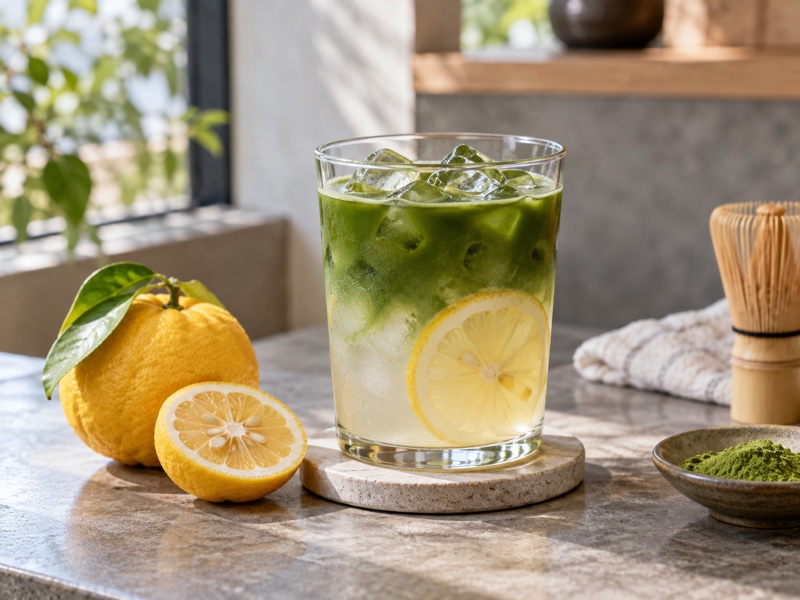
Yuzu matcha pairs powdered green tea with yuzu’s sharp citrus aroma, usually in an iced water-based drink or lemonade. The combination can taste vivid at the bar and turn harsh or visually dull after ice melts. Develop the tea and citrus as measured components, then test the finished drink at handoff and later in the customer’s cup. The YUZUCO yuzu matcha lemonade is a consumer example of the pairing. A café or beverage brand needs a separate formula brief, ingredient specification, acid and sweetness checks, and a realistic plan for fresh service or packaging.
1. What should a yuzu matcha drink taste like?
Decide whether this is a matcha drink brightened by citrus or a yuzu lemonade with a tea finish. Both are valid, but they require different doses and menu wording. A clear sensory target might call for yuzu aroma at the rim, a balanced sour-sweet middle, and recognizable tea after swallowing. Taste a plain matcha-water control, a yuzu base without tea, and the combined drink at matched serving size. That shows whether one component is carrying the product alone.
Test the drink as a guest receives it and after a normal wait. Citrus aroma can rise from the top while matcha particles settle. A straw may draw sweet yuzu syrup from the bottom before the guest ever tastes the tea layer. Taste unstirred, lightly stirred, and fully mixed samples. If each is radically different, the build or guest instruction needs work. A green-and-yellow photograph does not tell a buyer whether the final sip will be pleasant.
| Sensory moment | What to notice | Decision |
|---|---|---|
| Aroma at rim | Citrus versus tea | Menu description |
| First sip | Sourness and sweetness | Initial appeal |
| Mixed sip | Balance | Core formula |
| Final sip | Tea grit or syrup pool | Mixing and dose |
2. Which yuzu ingredient should a café buy?
Fresh fruit, juice, concentrate, puree, and syrup offer different aroma, acidity, sweetness, cost, and handling. Yuzu can be difficult to source consistently as fresh fruit in some markets. A purchased juice may be easier to standardize, but its concentration and processing still vary. A syrup couples citrus flavor with sugar, limiting how much a guest can reduce sweetness without losing yuzu character. Read the ingredient statement and specification for each candidate. “Yuzu flavored” and “yuzu juice” describe different inputs.
Prepare equal perceived-citrus versions from two or three sources in the same matcha base. Record grams of yuzu ingredient, sugar contribution, acidity measurement if used, aroma, and cost per serving. Check whether pulp or oil creates visible rings on the cup. If a supplier changes the concentrate, re-run the trial; a one-for-one volume swap may change sweetness and sourness. For a chain, a reproducible ingredient may be more valuable than the most fragrant fruit in a single development kitchen.
3. What matcha can hold its own against citrus?
Taste tea candidates in the actual yuzu mixture. Acid can make astringency more noticeable, and a very soft matcha can disappear once citrus and sugar are present. Compare pure powders at a fixed dose, then adjust finalists until tea is similarly perceptible. Assess the finished drink after ice dilution. Matcha Village offers pure matcha grades for beverages, but a category name is only a starting point. Request the relevant sample lot and quality documents before approving the ingredient.
Use a water-only tea control to identify powder defects. If it tastes stale or rough in water, yuzu syrup may conceal the problem for a moment but the aftertaste can return. Record color in the mixed drink rather than judging dry powder. Yuzu products may have their own tint or cloudiness, so a supplier’s vivid green photo in plain water does not predict the final cup. Keep one approved matcha lot as a control for future purchases.
| Comparison | Hold constant | Key finding |
|---|---|---|
| Tea A versus B | Yuzu and sweetness | Flavor through citrus |
| Matched tea flavor | Cup and ice | Cost per serving |
| Incoming lot | Approved full formula | Drift from standard |
4. How should sourness and sweetness be measured?
Build a small matrix with two yuzu levels and two sweetener levels while keeping tea, total liquid, and ice fixed. Record mass rather than relying on pump counts. A high-acid drink can taste exciting at the first sip but tiring over a full cup; an overly sweet drink can bury the tea. Ask tasters to finish a normal serving, not just sample a spoonful. Compare immediate and later tastes because ice melt changes both acid and sugar concentration.
Separate sensory sourness from pH
For development, pH and titratable acidity can help the team compare lots, but they answer different questions. pH alone does not describe perceived sourness or establish a safe packaged process. Use sensory work alongside instrument readings and keep the method consistent. If the café offers a “less sweet” option, test it as a separate product: simply halving yuzu syrup may also halve the fruit character. A separate juice and syrup system can give better control when that customer choice matters.
5. What mixing order keeps matcha smooth?
Matcha is suspended leaf powder, not a fully dissolving syrup. Whisk it into a measured small amount of water before it meets the acidic yuzu base. Compare this with direct shaking only if the latter is part of the proposed service method. Inspect the cup for green clumps and watch how quickly particles settle. A clear glass exaggerates every fleck. If a café uses a prepared tea concentrate, record remixing before each pour and check first and last drinks from the container.
Keep the order of layering or mixing on a recipe card. If the drink is sold as a layered cup, test the first sip through its intended lid and straw; the customer may experience only tea or only citrus. If a fully mixed drink tastes better, choose it even if the color is less dramatic. A barista should be able to make the drink during a rush with normal tools, not a special slow pour reserved for photography.
| Build | Visual benefit | Taste risk |
|---|---|---|
| Layered tea over citrus | Distinct colors | Uneven first and last sips |
| Fully mixed | Consistent flavor | Less visual contrast |
| Tea concentrate poured last | Fast assembly | Settling in prep vessel |
6. How does ice change the formula?
Weigh ice and total drink liquid. A cup packed with ice looks full yet contains less beverage; a light-ice request can produce a stronger or weaker drink depending on how staff replace the volume. Prepare standard, light, and high-ice versions using the same tea and yuzu masses. Taste at handoff and after a realistic wait. Note temperature, sourness, tea clarity, and whether the drink becomes watery. A well-balanced bench sample without ice may fail in a café cup.
Use one ice scoop or a target weight in the production specification. If different stores use different cube sizes, repeat the test in representative units. A large cube can melt differently from crushed ice and may preserve a visual layer longer. Do not solve dilution by simply adding more yuzu and tea; that may make the immediate drink too intense. Design for the expected consumption interval and communicate any variation when customers request a different ice level.
7. What happens to color and sediment during service?
Photograph the exact sale cup immediately, at handoff, and after the likely pickup delay under consistent light. Citrus base, matcha suspension, and ice can create an appealing gradient that later turns olive or gray-green. The color change may be a visual issue even when flavor remains good. Examine a fully mixed cup separately from the layered one. If staff are told to shake before serving, test whether that generates excessive foam or smears the lid.
Some settling is expected with powdered tea. The problem is a large deposit that makes the last sip gritty or leaves a clear upper layer. Compare powder grade, dose, and mixing method before adding stabilizers. A café drink consumed promptly has a different tolerance from a bottle intended to sit in a cooler. Decide which product you are making and set an acceptance window accordingly. Do not promise a perfectly clear beverage from ground leaf.
| Observation | Possible source | Next test |
|---|---|---|
| Green clumps | Poor initial slurry | Change premix step |
| Dull color | Ingredient mix or holding | Side-by-side color trial |
| Heavy sediment | Dose or particle behavior | Powder and dose comparison |
8. Should the drink be made fresh or bottled?
Made-to-order service allows mixing just before handoff and avoids a long stability target. A bottled ready-to-drink version introduces process validation, packaging, distribution temperature, sediment, label, and shelf-life work. Do not treat fresh citrus acidity as a guarantee that a bottle is shelf stable. A commercial packaged beverage needs a qualified process review using the exact formula, container, and intended market. The current café recipe can be a flavor brief, but it is not a manufacturing specification.
Manage fresh components
For a fresh café base, document preparation time, ingredient lots, covered storage, refrigeration, and discard rules. The FDA Food Code provides a model for US retail food handling; local rules and the final formulation govern your operation. Taste held yuzu base and matcha concentrate separately, because tea may settle while citrus aroma fades. If the prepped components fail before the end of a shift, reduce batch size rather than stretching the service window.
9. Which ingredient and label questions need answers?
Request exact ingredient statements for yuzu source, matcha, syrups, and any optional milk or fruit addition. A yuzu syrup may include another citrus, flavoring, color, or preservative. If the menu names a specific fruit, the purchased product and final formula should support that description. For packaged beverages, review nutrition, allergens, claims, and any applicable juice or beverage rules in the target market. A café should keep an ingredient reference available for staff and customers, especially when offering customizations.
Avoid wellness or “detox” claims. A tea-citrus drink can be sold on taste, aroma, and a measured recipe without implying a health effect. If caffeine is mentioned numerically, base the figure on reliable product-specific information. Keep a supplier document file with matcha lot, yuzu concentration, and changed-SKU approvals. That file helps a distributor or quality team trace a drink whose flavor shifts after a sourcing change.
| Supplier record | What to capture | Use |
|---|---|---|
| Matcha | Grade, lot, specification | Tea consistency |
| Yuzu | Format, concentration, ingredients | Flavor and label |
| Sweetener | SKU and dose | Nutrition and cost |
| Finished formula | Serving mass and process | Repeatable service |
10. What passes a café pilot?
The chosen formula should taste balanced at first and last sip, hold an acceptable color through pickup, mix without obvious clumps, and fit a rush-hour workflow. Have staff who did not develop it prepare several consecutive cups from the written build. Compare volumes, ice loads, and tea dose. Then cost the saleable drink, including fruit waste, powder waste, and any remakes. A bottle concept needs a separate manufacturing and stability gate before any shelf-life claim is made.
Request beverage matcha samples for a side-by-side yuzu test, then keep a retained approved lot. If a formula fails, change the citrus source, tea grade, mixing method, or sweetness one at a time. The finished cup should offer a clear yuzu aroma and a tea flavor that remains present after the ice begins to melt. That result is more convincing than a green layer that disappears before the customer reaches a table.
FAQ
Q1: Can bottled yuzu syrup replace fresh juice? It can, but sugar, acidity, and aroma change. Reformulate with the exact product.
Q2: Why does the drink look dull after mixing? Tea powder, citrus base, lighting, and holding all affect color. Compare controlled samples.
Q3: Is the fresh café recipe ready for bottling? No. A packaged version requires process, safety, stability, and label work.
Q4: How can a café offer less sugar without losing yuzu? Separate yuzu aroma or juice from sweetener, then test that variant.
Q5: Does all matcha settle in this drink? Ground tea can settle. Judge whether the chosen powder and method stay pleasant through the intended drinking time.