
Yerba mate vs matcha is a product-development choice, not a contest for a single “better” leaf. Both can anchor a caffeinated beverage, but they come from different plants and usually enter production in different forms. A buyer comparing price per kilogram can miss the cost of extraction, powder dispersion, filtration, and finished-drink claims. This guide compares the ingredients through the questions a café chain, ready-to-drink brand, or importer must answer before adding one to a range.
1. What plants and materials are being compared?
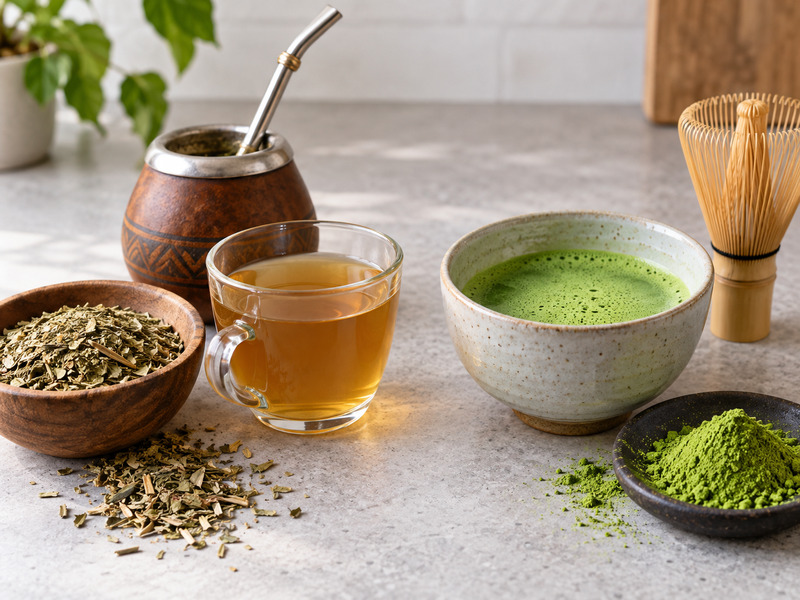
Yerba mate comes from Ilex paraguariensis, a South American holly. Oregon State University’s plant profile identifies the plant and its use for an infusion. Matcha is a powdered tea from Camellia sinensis material; the Japan Matcha Association describes traditional matcha as powdered tencha. These identities matter to ingredient naming and supplier documents. A product developer should not file the two under a generic “green caffeine powder” category and assume that one can replace the other without new tasting and process work.
Verify the quoted ingredient
Ask whether the mate offer is loose-cut leaf, a tea bag input, extract, or instant powder. Ask whether the matcha offer is pure powder or a blend. Those descriptions lead to different production methods and labels. Obtain botanical identity, ingredient declaration, origin, lot code, processing description, and any carrier ingredients in an extract. A sample photograph does not reveal the form that will ship in bulk. If the finished beverage claims a particular regional origin, keep documentation tied to the actual lot. For an importer, consistent naming across purchase order, shipping papers, and label copy is a basic control.
2. How do preparation methods change the drink?
Mate is commonly infused: water extracts flavor from leaf, and the leaf may then be removed. Matcha is dispersed as powder, leaving tea particles in the beverage. That difference has practical consequences. Infusion brings extraction time and filtration into the process; powder brings wetting, clump control, and possible sediment. An instant mate product may behave differently from leaf infusion, so evaluate the offered format rather than an abstract ingredient name.
Choose equipment from the finished format
A café can brew mate in a batch and pour it over ice, or whisk matcha per order. An RTD plant may use extraction and filtration for mate while needing a stability solution for suspended matcha. Record water quality, temperature, time, leaf or powder dose, and process yield. Compare the actual cup or bottle after its planned holding period. The choice affects cleaning: spent leaf, filters, and extraction tanks create one workload; powder dust and mixing equipment create another. A fair comparison includes those costs and losses, not only the supplier quote.
| Ingredient form | Main process step | Likely control point |
|---|---|---|
| Cut mate leaf | Infuse and separate | Extraction and filtration |
| Mate extract | Dilute or blend | Carrier and flavor strength |
| Pure matcha | Wet and disperse | Clumps and sediment |
3. What flavor differences matter in formulation?
Mate and matcha can both taste vegetal, yet their particular aroma, bitterness, body, and finish vary by origin and processing. A buyer should avoid reducing either to a single tasting adjective. Mate may suit a clear, brewed-style drink; matcha can create a fuller, opaque tea impression. Sweeteners, citrus, milk, and carbonation may change the ranking. The correct sensory comparison is a finished product at the target sweetness and serving temperature.
Use a coded application panel
Prepare each candidate in a method appropriate to its form. Then build parallel drinks to the same customer brief: one unsweetened reference, one target flavored beverage, and one version after the intended hold. Score aroma, bitterness, body, color, and aftertaste. Do not force identical ingredient grams if extraction yield differs; adjust to the same declared sensory target and report the resulting dose. Keep a control sample in each tasting session. If panelists prefer matcha in milk but mate in citrus, a two-product range may make more sense than declaring one ingredient a universal winner.
4. How should caffeine be discussed accurately?
Both ingredients can contribute caffeine. The amount in a finished serving depends on the particular lot, dose, extraction or dispersion, and any additional sources such as coffee. A broad internet number cannot support a precise claim on a package. Some mate extracts may be standardized; others are not. A matcha serving uses a weighed mass of powder, but the caffeine level of that powder can vary. The brand should decide whether it needs a numerical claim at all.
Tie any number to the product
If marketing wants a caffeine amount, obtain credible product-specific data and use the actual serving formula. For mate infusion, account for extraction conditions. For matcha, account for the final powder dose and any blend carriers. Have regulatory staff review the wording for each destination market. Do not claim that one product produces a special kind of “energy” without suitable evidence. A simpler menu statement such as “contains caffeine” may serve customers more honestly while development data are being established. Train staff not to improvise a comparison with coffee or with a competitor’s can.
| Claim type | Evidence needed | Common mistake |
|---|---|---|
| Contains caffeine | Ingredient identity | Assuming all herbal drinks are caffeine-free |
| Milligrams per serving | Product and recipe data | Using generic web estimates |
| Comparative claim | Same basis for both drinks | Comparing powder with brewed tea by weight |
5. Which ingredient fits a clear ready-to-drink beverage?
A filtered mate infusion can be a useful candidate for a clear or lightly colored beverage. The formulation still needs tests for haze, flavor change, and shelf life in its final pack. Matcha naturally brings particles and a more opaque appearance; it may work in an RTD drink if the brand accepts or controls settling. A clear bottle can make any sediment visible. The brand should define whether visible tea particles are part of the product story or a defect.
Put the bottle through the route
Pilot the actual formula in the chosen container, then inspect after transport and the proposed storage period. Photograph color and any bottom deposit under standard lighting. Taste top and bottom portions separately. If a shaken matcha drink is acceptable, check whether consumers can easily redistribute it and whether the label states that action. For mate, assess filtration losses and whether the chosen process strips out too much of the intended flavor. The finished-pack test should lead decisions about formulation and packaging; a fresh bench glass cannot settle an RTD launch.
6. Which ingredient fits a café or foodservice menu?
A café can prepare mate as an infusion, concentrate, or supplied RTD base. Matcha can be whisked fresh or prepared through an approved premix. Staff steps, equipment, and waste differ. A high-volume chain should time each build during a rush and taste the drink after a normal pickup delay. The best format for a slow tea bar may be unsuitable for a drive-through line. The menu can offer both ingredients if each has a clear role.
Measure service rather than assuming it
Track preparation minutes, cleaning, batch discard, and accepted cups. Mate brewed in a large batch may be quick at handoff but lose quality if demand is low. Matcha mixed per order may provide a fresh visual experience but add a station bottleneck. A predispensed powder portion can reduce measurement variation; it does not eliminate the need to wet and mix well. Test the actual cup, ice, sweetener, and dairy alternative. If customers order a mate lemonade and a matcha latte for different reasons, the products need separate sensory standards rather than a forced head-to-head score.
| Service model | Potential strength | Operational risk |
|---|---|---|
| Batch mate infusion | Fast pour at peak | Unused batch on quiet day |
| Mate concentrate | Compact storage | Dilution error |
| Matcha made to order | Visible preparation | Clumps or slow build |
7. How should sourcing and origin claims be checked?
Mate supply is tied to its own growing and processing regions; matcha has a different tea supply chain. An origin claim should name what is known: cultivation, processing, or packing location. A brand should avoid borrowing one ingredient’s cultural story for the other. Request lot traceability, current specifications, relevant contaminant and microbiological testing, packaging details, and change notification. Market-specific importer duties need a qualified review rather than a generic certificate checklist.
Keep marketing claims attached to records
A supplier may describe a traditional preparation, but the offered bulk ingredient may be an extract, blend, or modern processed product. Check that copy about leaves, origin, and preparation matches the product actually sold. For matcha, bulk supply options should be assessed against the proposed beverage; a marketing grade does not prove dispersion in a bottle. For mate, ask whether stems or carriers are present when relevant to the specification. Store the approved label wording with the exact lot and supplier documents so procurement can review a proposed substitution before it reaches the pack.
8. What should a buyer compare beyond ingredient price?
The useful cost basis is an accepted drink at its target flavor. Mate leaf may leave spent material and filtration loss. Matcha may create mixing loss, sediment-related rejects, or a more labor-intensive cup. Extracts may cost more per kilogram and less per drink if they are concentrated. Include pack size, freight, minimum order, storage, and opened-life waste. A low-cost ingredient can be poor value if it needs heavy sweetening to cover an unwanted note.
Build an application-level cost sheet
Record input quantity, usable yield, batch rejects, labor, and packaging for each candidate. Compare at a common finished serving and price point. For an RTD project, include process trials and any additional stability work. For a café, include batch discard on slow days and service time during peaks. Show assumptions clearly so finance can update a quote without changing the sensory conclusion. A small pilot should test customer acceptance as well as cost. If the drink requires a long explanation at the counter, include that training burden in the launch plan.
| Cost line | Mate example | Matcha example |
|---|---|---|
| Ingredient yield | Brewed leaf and filtration | Powder retained in drink |
| Service loss | Discarded batch | Remade clumpy cup |
| Equipment work | Brewer and filter cleaning | Whisk or mixer cleaning |
9. Can a brand put mate and matcha in one range?
Yes, if the products have distinct roles and truthful names. A mate infusion might support a crisp fruit-led drink, while matcha could anchor a creamy latte or a visible tea-forward cup. A combined product is also possible, but it needs its own flavor, caffeine, and label evaluation. Do not rely on the audience to understand botanical differences from a green can or a leaf icon. Sales teams should be able to state what each beverage contains and how it is prepared.
Design the portfolio around use occasions
Start with a small set of customer questions: clear or creamy, sweet or plain, made to order or ready to drink, and what caffeine information must be available. Map each concept to an ingredient and a process. If two prototypes serve the same occasion and one has worse margin or service performance, there may be little reason to carry both. If they attract different buyers, the distinction can be valuable. Keep product names and ingredient statements aligned across shelf tags, ecommerce pages, and distributor sheets. A portfolio is easier to sell when each SKU solves a recognizable need.
10. What should the final selection process look like?
Write two application briefs rather than one “green energy” request. Obtain representative samples, confirm botanical and ingredient identity, run appropriate preparations, and taste finished products blind. Then review process feasibility, documents, packaging, shelf life, and cost per accepted unit. Do not let an origin story or a single caffeine number decide the entire comparison. The winning material must work in the chosen channel at the intended price and be available under terms the business can support.
Keep a reapproval path
Retain samples and records from the approved lot. Set triggers for a new mate harvest, changed extract carrier, new matcha lot, altered sweetener, equipment change, or revised claim. A change may call for a focused sensory check or a fuller stability and label review. Give purchasing a written acceptance limit and a person who can reject a substitution. Once the drink is sold, collect remake reasons, customer feedback, and returns. That evidence can show whether the issue lies in ingredient choice, process, or expectation set by the menu.
| Selection gate | Evidence | Decision owner |
|---|---|---|
| Identity | Botanical and composition file | Quality |
| Finished taste | Coded application trial | R&D and sales |
| Commercial fit | Yield and cost sheet | Purchasing and finance |
FAQ
Q1: Are yerba mate and matcha the same plant?
No. Yerba mate is Ilex paraguariensis; matcha comes from tea plant material associated with Camellia sinensis.
Q2: Is one always higher in caffeine?
No fixed comparison applies across products. Dose, lot, extraction, and recipe determine the finished serving.
Q3: Which is easier for a clear bottled drink?
A filtered mate infusion may be a simpler starting point, while matcha brings suspended powder that requires a deliberate stability plan.
Q4: Can a café serve both?
Yes. Give each drink a clear preparation method, flavor role, and accurate menu description.
Q5: What should an importer request before approval?
Ask for botanical identity, composition, lot traceability, relevant testing, origin support for claims, and a representative production sample.