
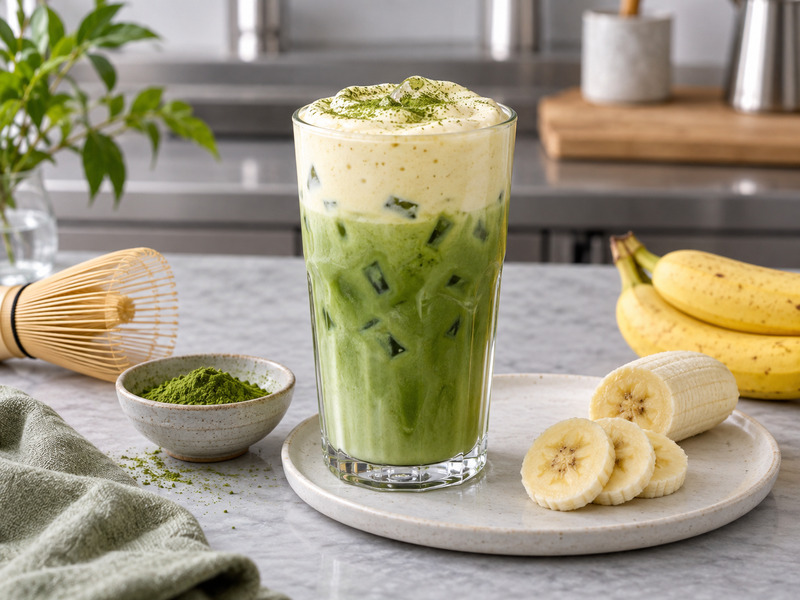
A banana cream matcha latte can sound simple while placing three flavors and several textures in one cup. Banana may come from fresh fruit, puree, syrup, or a formulated powder; the cream layer may be dairy or plant-based; matcha has to remain recognizable beneath both. A café chain needs the same taste at 9 a.m. and during an afternoon queue. This guide focuses on the decisions behind that repeatability: ingredient format, foam method, complete-cup tasting, cold handling, staff time, and margin.
1. What belongs in a banana cream matcha latte?
The menu name should describe the actual build. One concept puts banana in the milk and a plain cream layer on top. Another keeps the latte plain and puts banana in a whipped cold topping. A third uses banana in both. Those versions create different first sips, sweetness, and staff tasks. Decide whether a customer should taste banana immediately or discover it after stirring. Show the full ingredient build on the recipe card and in an accurate menu description; a yellow garnish does not tell a guest where the flavor sits.
Set a cup-level sensory promise
Write targets for tea strength, banana aroma, sweetness, body, foam thickness, and final-sip balance. Test the drink through its normal sequence: first sip through the topping, a sip after the layers meet, and the last sip. If only the topping tastes of banana, the cup can turn into a plain matcha latte halfway through. If banana is too strong, it can bury tea. Use the actual cup, lid, ice, and milk alternative. A few small trials with fixed components will show whether the concept needs more matcha, a less sweet banana input, or a different placement of the cream.
2. Which banana format suits a chain?
Fresh fruit gives recognizable flavor but varies with ripeness and creates prep, browning, waste, and cleaning work. Puree offers a controlled texture if it can be stored and dosed safely. Syrup can simplify service, though it may shift the drink toward sweetness rather than fruit body. Powder or flavor blend may support a dry-mix route but needs a full ingredient review. Compare the formats in the finished drink at the intended dose, not by smelling an opened container.
Match the format to throughput
Run a station trial with each candidate. Measure grams dispensed, preparation time, residue left in the pack, and how many servings the opened pack produces before its approved disposal point. Check the first and last doses for consistency. A fresh banana method may suit a small café with a blender and strong prep discipline; it can be awkward across hundreds of outlets. A syrup may work in a rush but make the latte too sweet unless the milk and matcha recipe are adjusted. Procurement should ask for a current ingredient declaration, lot identification, and information relevant to the destination market.
| Banana input | Operational advantage | Trial risk |
|---|---|---|
| Fresh fruit | Familiar fruit character | Ripeness and waste |
| Puree | Measured portion | Chilled handling and separation |
| Syrup or blend | Fast dosing | Sweetness and tea masking |
3. How should the cream layer be built?
The cream layer may be lightly whipped cream, a cold foam, or a plant-based topping. Each has a different fat, protein, and aeration profile. The objective is not simply maximum height. The layer should pour or spoon consistently, hold long enough for the channel, and taste balanced with banana and tea. A thick topping can create a dessert-like first sip while blocking access to the drink beneath. A thin foam may disappear before a delivery order arrives.
Define a measured topping standard
Specify topping mass per cup, base temperature, aeration tool, mixing time, and acceptable appearance at handoff. Photograph the target from the side and top. Test several operators and the approved base after opening and during normal in-store holding. If banana enters the cream, decide whether staff blend it during prep or add it to each order. That choice changes both uniformity and labor. Measure drainage into the latte after the expected wait. The drained flavor may improve the cup or make it too sweet; a topping should be judged as part of the whole drink.
4. Which matcha still tastes clear beside banana and cream?
Banana and cream can make a delicate powder seem quiet. A harsher powder may cut through at first and leave a bitter finish. Screen matcha at the exact dose, milk, banana input, and topping selected for the menu. Pure matcha options provide candidates; a lot-specific cup trial decides fit. If the chain uses a premix, matcha latte powder may be another route, but its sugar and other ingredients must enter the same comparison.
Separate strength from sweetness
Make a coded series that changes powder while holding the rest of the cup fixed. Then run a separate sweetness series with the chosen tea. This prevents a sweeter banana base from making a weak powder seem successful. Score tea aroma, banana balance, color after ice dilution, texture, and last-sip bitterness. Repeat the test with any major milk alternative. Do not assume a powder that works in dairy will give the same perception in oat or coconut base. The purchasing specification should describe performance in this drink and a permitted dose range, not only the supplier’s grade label.
| Tea decision | Finished-cup measure | Warning sign |
|---|---|---|
| Dose | Tea presence after stirring | Banana hides matcha |
| Texture | First and last sip | Clumps or coarse finish |
| Color | Handoff and later photo | Unappealing shift under cream |
5. What is the best assembly sequence?
Mixing order determines whether banana collects at the bottom, tea clumps in cold milk, or the foam collapses on contact. A practical sequence might make a concentrated matcha slurry, combine it with measured milk and banana, add weighed ice, then finish with a measured topping. The exact sequence must be tested with the outlet’s tools. A blender can smooth a drink but add air and speed ice melt; a shaker can be fast but may create foam that changes the planned layered look.
Time the complete build
Write the recipe in grams and milliliters, including water used to disperse matcha. Have a new barista make several orders in a row while a trainer records time, spills, and variation. Inspect the bottom of each cup for undissolved banana or powder. If a premade tea concentrate is used, define how long it can be held and how staff mix it before pouring. If the topping requires a separate frother, add cleaning time to the task count. A beautiful cup made by a developer in an empty kitchen does not establish a workable sequence for a busy café.
6. How will the drink change while a customer carries it?
Banana solids, matcha particles, ice dilution, and topping drainage all affect the drink after handoff. The first photograph can look excellent even when the last sip is heavy or the foam becomes a thin ring. Delivery adds movement and a longer wait. Set a realistic acceptance window for each channel. If the product is intended only for immediate counter service, say so internally before marketing it for delivery.
Test movement as well as time
Prepare identical cups. Leave one still and carry another through the planned route with its final lid. Check after set intervals for separation, color, topping height, and flavor distribution. Taste without stirring and then after a gentle stir. A customer instruction can help with expected settling, but cannot fix large clumps or a badly unbalanced recipe. Test the first and last pours from a banana container; inconsistency there may explain cup drift better than matcha quality. If the drink needs a different delivery build, create a separate measured recipe rather than asking staff to improvise.
| Holding point | What to check | Possible action |
|---|---|---|
| Immediate handoff | Layer and foam | Adjust pour or aeration |
| Pickup wait | Sweetness and drainage | Change topping dose |
| Delivery interval | Separation and final sip | Use alternate build or limit channel |
7. What safety and allergen controls apply?
Fresh fruit, puree, dairy cream, and plant-based alternatives have different handling needs. Food safety staff should set preparation, refrigeration, opened-pack, cleaning, and discard procedures for the actual ingredients and local rules. A fresh banana method may produce peel waste and blender residue; a puree route may require stricter pack handling. Do not assign a universal shelf life from a recipe video. Review the full drink rather than treating the topping as a harmless garnish.
Keep substitution language accurate
Milk, soy, tree nuts, and other allergens may appear in the base, cream, syrup, or premix. The FDA’s allergen guidance identifies major allergens for U.S. packaged-food contexts; foodservice and other markets need the relevant local review. A customer selecting oat milk may still receive milk in the topping unless staff know the formula. Build an ingredient matrix for each approved variation. Train employees on shared blenders and frothers. Recheck the matrix when a banana flavor supplier reformulates or a store changes its plant-based milk.
8. Which pack and menu description serve the drink?
A clear cup makes a cream layer visible and can also expose settling. A dome lid may protect topping height but add freight and storage volume. A flat lid may smear a generous foam. Test the final cup and lid with the actual serving weight. Menu photography should show the ordinary product after a normal build, not a specially staged version with more topping than the recipe permits. If banana is supplied through a flavored syrup rather than fruit, the description should avoid implying pieces of fresh banana.
Watch the customer interaction
Ask pilot customers what they expect from “banana cream” before they taste. Some may anticipate dessert sweetness; others may expect a lightly flavored latte. Compare that expectation with their comments on the actual cup. Note whether they stir and whether the straw or sip opening reaches mostly one layer. A drink that requires stirring should make that action easy in a lidded cup. For delivery, assess leakage and foam movement after carrying. A pack change can alter how the drink tastes because it changes the path of each sip. The packaging choice belongs in sensory approval, not only procurement.
| Cup component | Benefit | Check in pilot |
|---|---|---|
| Clear wall | Shows layers | Sediment remains acceptable |
| Lid opening | Easy takeaway | Customer can access balanced sip |
| Topping headspace | Protects cream | No smear or leak |
9. How should a café cost the finished latte?
The ingredient list can be expensive: matcha, banana, milk, cream base, sweetener, ice, and packaging. Cost per accepted cup must include preparation loss and opened-pack disposal. Fresh fruit may have a low purchase price and high trimming or ripeness waste. A premix may have a higher unit price and lower training cost. Track both in a limited store trial. Add labor for any separate whipping step and for cleaning shared equipment between allergens.
Compare stores with different sales rates
A busy flagship can empty a large puree pack quickly while a slower outlet may discard half of it. Build both cases into the forecast. Measure remake reasons: weak matcha, excessive sweetness, separation, wrong topping, or customer expectation. Each points to a different fix. Model optional milk substitutions at their actual portion cost. If the product is a seasonal special, plan what happens to unused ingredients at campaign end. The margin decision should follow measured sales, repeat orders, and waste, not an optimistic ingredient-cost spreadsheet alone.
10. What should be approved before a multi-store launch?
Freeze the ingredient formats, powder lot specification, recipe weights, mixing sequence, topping standard, pack, menu wording, food safety controls, and training materials. Request supplier documents for banana, matcha, and cream inputs, with a process for notification when a formula changes. A custom matcha blend may suit a chain with a fixed sweetness and tea target, but its ingredients must be assessed in the same complete-cup test. Keep a reference drink description and a photograph from a normal service build.
Put change control into the rollout plan
A new matcha lot, banana source, milk base, or frothing tool can move the taste and texture. Identify which changes require a quick comparison and which require a wider trial. Train staff with weights and reject examples, then audit several outlets during the first weeks. If the drink fails at one store, inspect the local build before changing every supplier. The final approval belongs to a cup customers can order repeatedly, at a speed staff can manage, with ingredients the chain can document and replenish.
| Launch item | Evidence | Recheck trigger |
|---|---|---|
| Tea and banana inputs | Lot specs and cup test | Ingredient source change |
| Foam and build | Recipe card and timing | Equipment change |
| Menu and safety | Copy, matrix, handling plan | Formula or channel change |
FAQ
Q1: Is fresh banana required for a banana cream matcha latte?
No. Compare fruit, puree, syrup, and formulated options by finished flavor, service work, waste, and accurate menu wording.
Q2: Where should banana flavor go?
It can sit in the drink, topping, or both. Test the first and last sip to decide which placement delivers the intended experience.
Q3: Can the foam be plant-based?
Yes, if the specific base aerates and holds as required. Verify every ingredient before describing the full drink as dairy-free.
Q4: Why does matcha disappear under banana?
Sweetness and cream can mask subtle tea notes. Compare powders at fixed sweetness and adjust the complete formula.
Q5: What should a chain pilot first?
Pilot the exact cup, equipment, and staff workflow in busy and quiet outlets, tracking time, remakes, repeat orders, and waste.