
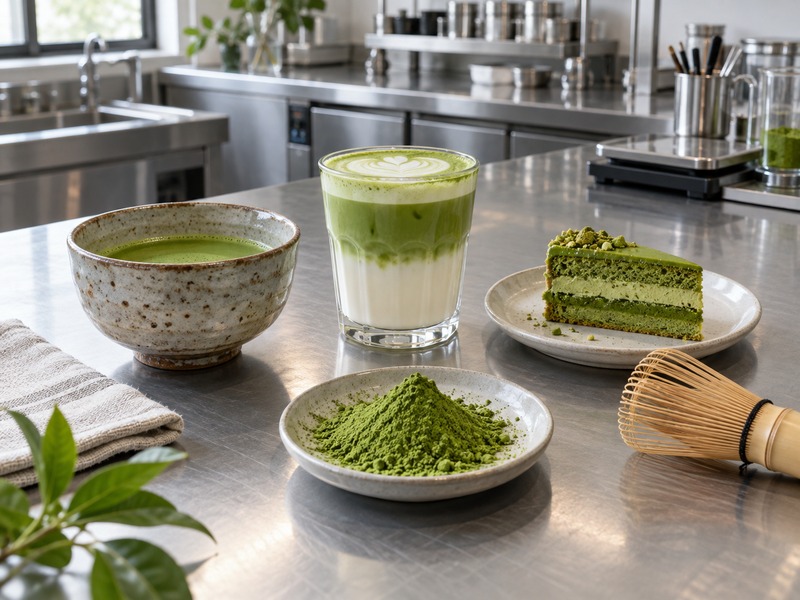
Why do people like matcha? There is no single customer motive a brand can safely assume. Some buyers enjoy the tea’s distinctive flavor; others respond to a familiar café format, a green visual cue, or the experience of preparing it. A product team should test which of those reasons matters in its own market before paying for a premium ingredient or building a campaign around a health promise. Use interviews, controlled tastings, and repeat-order data from the actual channel. A trend article can suggest hypotheses, but it cannot tell a manufacturer why its customers will buy again.
Contents: 1 · 2 · 3 · 4 · 5 · 6 · 7 · 8 · 9 · 10
1. Which customer job is matcha serving?
Ask what the product replaces
Matcha may be a plain tea, a sweet café latte, a dessert flavor, or an ingredient in a ready-to-drink beverage. The same person can value each for a different reason. A foodservice team should ask what occasion the product serves and what the customer would choose if matcha were unavailable. That comparison is more useful than asking whether someone ‘likes matcha’ in the abstract. Record the serving size, price, sweetness, preparation style, and channel alongside the answer.
Begin with behavior. Watch what people order, which options they customize, and whether they return. A customer who buys a sweet iced latte may not want an unsweetened tea bowl. A bakery shopper who chooses a green pastry may be seeking novelty rather than a strong tea flavor. Interview questions should stay open and avoid suggesting the brand’s preferred reason.
| Product occasion | Possible customer job | What to check |
|---|---|---|
| Morning café drink | Familiar routine with tea flavor | Repeat orders |
| Dessert | New flavor and appearance | Finished-item acceptance |
| Plain tea | Direct tea experience | Sensory preference |
These are hypotheses for a local test, not claims about every market.
2. How does taste shape repeat purchase?
Separate the tea from the formula
Matcha can bring vegetal, savory, bitter, and sweet impressions depending on the powder and preparation. Milk, sugar, fruit, and fat can change what customers notice. A product developer should test tea intensity in the finished item, not approve a powder only after tasting it in water. The first sale may come from curiosity; a repeat sale depends on a cup or food item that people want again at its actual price.
Use a blind comparison. Prepare two or three versions at matched sweetness and serving temperature. Ask tasters to rate tea presence, bitterness, aftertaste, mouthfeel, and liking of the full drink separately. Then run a preference test with the real menu name and price. The two stages reveal whether a sensory difference survives normal purchase context. Avoid reporting a panel preference as a market fact if the group is small or unrepresentative.
| Trial | Controlled variable | Useful output |
|---|---|---|
| Blind cup | Same milk and sugar | Powder or dose effect |
| Named menu cup | Real description and price | Purchase interest |
| Repeat trial | Same recipe on another day | Consistency of preference |
A strong matcha profile can be valuable to one audience and too assertive for another. Choose the formulation for the defined segment.
3. What does the green appearance communicate?
Make the visual promise edible
The green color helps a customer identify matcha quickly, but a bright photograph can set an expectation the served product cannot meet. Milk, baking heat, and storage may alter appearance. Compare the dry powder, fresh product, stirred drink, and item at the end of its normal sales window under consistent light. Ask whether the color supports the intended flavor story. A brilliant green latte with barely any tea taste can disappoint just as much as a dull item that was advertised as vivid.
Check the handoff. A café should photograph the drink as staff actually serve it, after lid placement and a short carry. A bakery should show the cut crumb or filling that customers see. A packaged beverage needs a stability program before a color claim is used. Use an approved finished-product image for training, not a powder swatch alone.
| Format | Visual risk | Test point |
|---|---|---|
| Latte | Layering disappears | After stirring |
| Bakery item | Color dulls in bake | Cut product at sale |
| Bottled drink | Separation or drift | Validated life study |
Color can attract a first look. Sensory fit and repeatability decide whether it supports a lasting product.
4. Which formats make matcha easy to try?
Reduce friction in the actual channel
A familiar latte format can make matcha approachable to café customers, while a small pastry portion can offer a low-commitment taste. Retail tins, single-serve sticks, and ready-to-drink bottles solve different convenience problems. A brand should select a format based on how the target customer shops, prepares, and consumes, not on a broad assumption that matcha belongs in every category.
Measure the work. A café concept may need extra whisking, cleaning, or staff explanation. A dry mix may need a clear preparation method and consistent flow. A bottled product needs qualified processing and shelf-life work. Map the operational burden against the value customers report. A concept that looks attractive in a tasting room can fail when queues or packaging limits become real.
| Format | Trial question | Operational check |
|---|---|---|
| Made-to-order latte | Is the flavor worth the price? | Build time and variation |
| Bakery dessert | Does tea survive processing? | Slice or unit yield |
| Dry blend | Is preparation convenient? | Reconstitution and pack use |
A small channel-specific pilot gives better evidence than expanding one successful recipe across unrelated formats.
5. How should brands test price and positioning?
Match the offer to the product experience
A premium claim needs support from ingredients, sensory quality, service, provenance, or packaging that customers can perceive and the business can document. A lower-priced entry product can work if it makes the flavor accessible without promising an experience it cannot deliver. Test more than one price point only after the formula and portion are fixed. Otherwise the team cannot tell whether a lower willingness to buy came from price, taste, or an unclear description.
Keep comparisons fair. Calculate ingredient cost from the dose that reaches the agreed tea target. Add packaging, labor, waste, freight, and relevant testing. Compare proposed selling prices with a realistic margin target and a small customer test. Do not infer national demand from a few enthusiastic comments on a sample day.
| Positioning route | Proof needed | Cost question |
|---|---|---|
| Origin-led | Traceable claim | Does origin add value here? |
| Flavor-led | Repeatable sensory result | What dose achieves it? |
| Convenience-led | Easy use and stable pack | What is service cost? |
The most persuasive story is the one the finished product can keep delivering.
6. What can a menu pilot reveal?
Observe more than first-day sales
A pilot can compare matcha with adjacent choices in the same store or channel. Track trial orders, repeat orders where privacy-respecting measurement is available, refunds, preparation time, and common customer questions. Record the price, promotion, weather, and store context so the team does not mistake one busy weekend for durable preference. A small pilot will not produce a universal market forecast, but it can expose operational and sensory issues early.
Read comments literally. ‘Too grassy’, ‘not enough tea’, ‘too sweet’, and ‘hard to order’ suggest different fixes. Do not lump them into a vague ‘customer education’ problem. Keep the tested formula, lot, and build method fixed while collecting feedback; if a supplier changes midway, mark the data separately. Ask staff what they had to explain and where the recipe slowed service.
| Pilot measure | Signal | Possible next action |
|---|---|---|
| Trial rate | Curiosity | Improve placement or description |
| Repeat rate | Ongoing fit | Confirm consistency |
| Waste | Operational mismatch | Change pack or preparation |
| Complaint theme | Specific defect | Test targeted correction |
A decision should compare the pilot with an agreed threshold and a comparable menu item, not a headline about matcha’s popularity.
7. Which claims create unnecessary risk?
Keep the message close to the evidence
Consumers may associate matcha with wellness, but a brand should not turn that association into a medical or performance promise without suitable evidence and market approval. Focus on ingredient identity, taste, preparation, and verified provenance. If the product is a sweetened latte or dessert, its description should match the full formula rather than letting tea language imply that the finished item has special health properties.
Review every surface. A menu board, staff script, influencer brief, product page, and package can each create a claim. Regulatory staff should review the exact wording for the destination market. Procurement should supply documents that support ingredient and origin statements, while R&D confirms the displayed product resembles the approved sample.
A truthful description can still be appealing: the tea’s flavor, the drink’s texture, and the way it fits a customer’s routine are concrete. Avoid invented customer statistics, unsupported caffeine comparisons, and claims that one processing style guarantees a benefit. If a team wants to use a quantified claim, it needs a named, applicable source and a clear scope.
8. How do supply and consistency affect appeal?
The second cup must resemble the first
A customer cannot build a preference for a product that tastes different each visit. Matcha lot changes, dose variation, milk choice, mixing time, and open-pack handling can all alter the served cup. Set a recipe and ingredient specification that operators can follow. Qualify a replacement lot before a shortage forces a silent substitution. For packaged goods, define the process and shelf-life checks separately with qualified technical staff.
Protect the open pack. Fine powder can be exposed to moisture, light, and odors after opening. Choose a pack size that fits actual usage and write a line-side handling procedure. Train staff to recognize clumps, damaged seals, and unexpected aroma. A visual reference helps, but a receiving record and lot code are needed for traceability.
| Consistency driver | Control | Customer effect |
|---|---|---|
| Powder lot | Approved specification | Stable tea note |
| Dose | Measured recipe | Predictable intensity |
| Mixing | Standard method | Fewer clumps |
| Storage | Open-pack rule | Stable appearance |
Consistency is a commercial feature: it lets the brand learn from customer behavior rather than from unexplained recipe drift.
9. What evidence separates curiosity from demand?
Look for repeatable behavior
Search interest, social posts, and one-off tastings can show that people notice matcha. They do not prove that a particular brand’s product will sell at a viable margin. More useful evidence includes repeat orders, unit sales after a promotion ends, steady wholesale reorders, and customer feedback linked to a specific formula. The quality of a measure depends on the channel and the size of the test; a small local sample should be reported as local.
Set a baseline. Compare matcha with a similar beverage or dessert at the same store, price range, and promotion level where possible. Record what changed: placement, recipe, staff training, or ingredient lot. If everything changes at once, the pilot may still be useful for launch rehearsal, but it cannot isolate the reason for demand.
| Evidence | What it can show | Limitation |
|---|---|---|
| Search query | Interest in a topic | No proof of purchase |
| First order | Trial | May be novelty |
| Repeat order | Continuing preference | Needs enough observation |
| Reorder by operator | Channel fit | Can reflect promotion |
The question ‘why do people like matcha’ is best answered for a defined product and audience, with observations from that market.
10. How should a buyer act on the findings?
Decide what to test next
Turn the pilot into a short decision record: target customer, product format, approved formula, lot, sensory target, price, preparation method, complaints, and commercial result. Keep measured facts separate from hypotheses. If the tea flavor is liked but preparation is slow, test a process change. If the drink sells only under heavy discount, review value and margin before expanding. If repeat behavior is promising, qualify supply and train additional sites with the same standard.
Choose one next step. A practical next trial might compare two traceable matcha lots at the same finished-drink target in a small group of stores, while leaving the rest of the recipe fixed. Set a date and owner for the decision. That work will tell the brand more than a general popularity claim.
For process background, consult the Japanese agriculture ministry’s matcha overview. Use current local customer evidence before making sales forecasts or health claims.
Reference: Why Matcha Is So Popular in 2026 | Benefits & Trends. This article provided topic context; no popularity statistics or benefit claims were borrowed.
FAQ
Q1: Why do people like matcha in cafés?
Reasons vary. Test tea flavor, format, appearance, service, and price with the café’s own customers.
Q2: Does a green color prove customers will buy again?
No. Compare repeat behavior and sensory feedback after the product is served normally.
Q3: Can search volume forecast menu sales?
No. It shows topic interest, not demand for a specific recipe at a specific price.
Q4: Should a brand lead with wellness claims?
Use only claims backed by appropriate evidence and approved for the sales market.
Q5: What is the best first B2B test?
Pilot one fixed formula with traceable matcha lots and measure repeat orders, defects, service time, and unit cost.