
What is matcha tea? It is a drink made by whisking finely milled green tea powder into water. A buyer planning a café menu or packaged product needs a more useful answer than that definition alone. Color, flavor, mixing behavior and price can differ sharply between powders sold under the same name. This guide explains how matcha reaches the cup and how to judge a sample in the product you intend to sell.
Contents: Definition · Production · Flavor · Grades · Preparation · Applications · Quality · Sourcing · Storage · Next step
1. What Is Matcha Tea, and What Does the Name Describe?
Powder in the cup
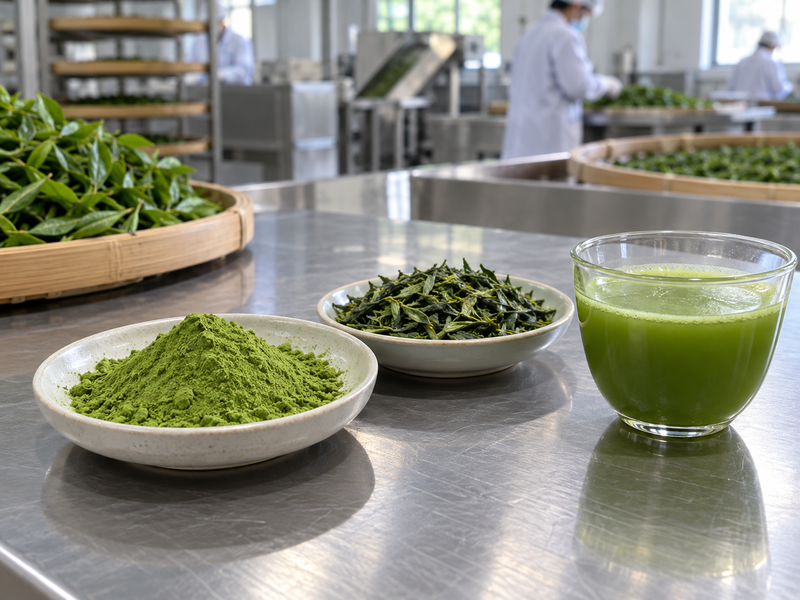
Matcha is made from tea leaves that are processed and ground into a fine powder. You suspend that powder in water or another liquid and drink the leaf particles with the liquid. A standard brewed green tea works differently: leaves steep, then a strainer or bag removes them. That difference affects mouthfeel, serving method and formulation. A matcha latte, for example, needs powder that disperses well enough to give the drink an even appearance after mixing.
A useful definition for purchasing
The word “matcha” alone does not tell a buyer how a particular lot will taste in milk or whether its color will hold in a cookie. Nor does a grade name provide a universal technical specification. Ask for a product description that names the intended use, ingredient composition and relevant quality parameters. A pure matcha powder should be distinguished from a sweetened latte mix or a flavored blend. Matcha Village offers these as separate product categories, so the first purchasing decision should be whether you need a single ingredient or a ready-to-use formulation.
| Product format | What goes into the application | Typical buying question |
|---|---|---|
| Pure matcha powder | Ground tea leaves | Which sensory profile fits our recipe? |
| Matcha latte powder | A formulated drink powder | What is the full ingredient list and serving cost? |
| Matcha blend | Tea powder with other ingredients | How will the blend behave in our process? |
2. How Does Matcha Tea Move From Leaf to Powder?
Before and after harvest
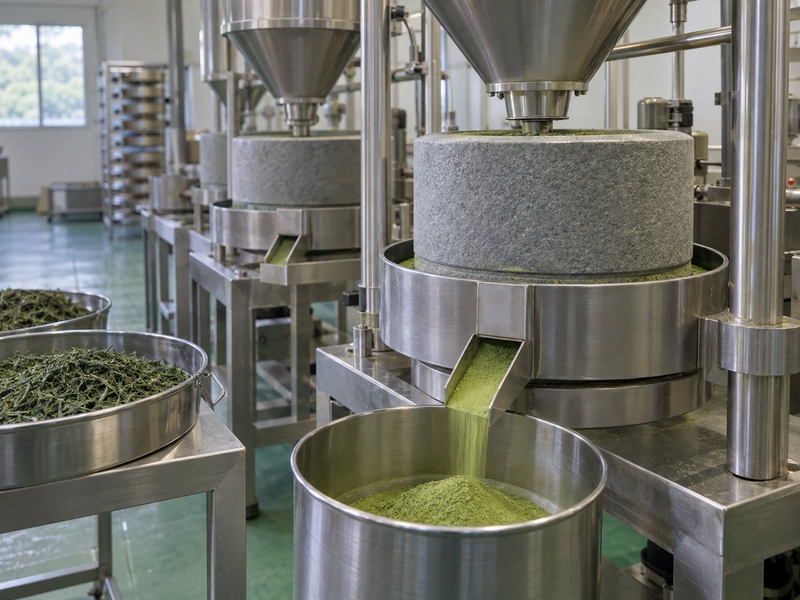
Matcha production begins with tea cultivation and leaf selection. Tea plants are commonly shaded before harvest to influence leaf chemistry and sensory character. Matcha Village’s company material describes approximately 15–20 days of preharvest shading in its growing program. That is a process description, not a promise that every SKU has one fixed shade period. Harvest timing and leaf selection also affect price and profile. Buyers should therefore ask which material was used for the sample they approved.
Processing and milling
After harvest, leaves are steamed, dried and prepared for milling. Stems and veins are typically removed from material intended for fine matcha. For a traditional example, Japan’s agriculture ministry describes Uji matcha production as grinding tencha after stems and veins are removed. Milling reduces that prepared leaf into powder; particle size and heat management influence texture and aroma. A supplier may offer different powders for direct drinking, dairy drinks or baked food because those uses place different demands on color and flavor. When a sample wins approval, record its lot and product code. Otherwise, a later bulk order can be technically “matcha” while delivering a different result in the cup.
| Stage | What a buyer can ask | Why the answer helps |
|---|---|---|
| Cultivation | Origin and shading practice | Sets context for flavor and color |
| Leaf selection | Harvest and material specification | Helps explain lot differences |
| Milling | Fineness or application target | Predicts texture and mixing needs |
| Packing | Pack size and barrier materials | Affects handling after delivery |
3. What Does Matcha Tea Taste Like?
Flavor depends on context
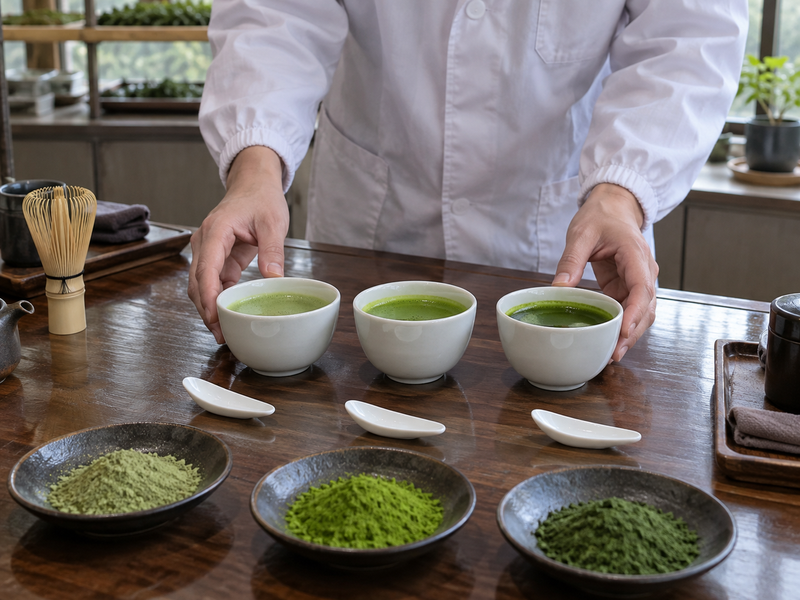
Matcha can taste grassy, marine, savory, nutty, sweet or bitter. No single note appears at the same intensity in every lot. Temperature and concentration change perception as well. A powder that tastes gentle in water may disappear in a large milk drink; a more assertive powder may work there while seeming harsh when served plain. Buyers should taste at the recipe concentration they intend to use. Comparing dry powder alone misses the interaction with milk, sweetener and serving temperature.
Run a controlled tasting
Make each sample with the same powder weight, liquid volume, water temperature and mixing method. Taste the drink fresh and again after the normal service delay. For iced products, check whether sediment gathers quickly and whether the color remains appealing after dilution. Write down concrete observations such as “bitter finish after ten minutes” or “green visible through oat milk.” These notes are more useful than a broad “premium” label. If you serve both straight matcha and lattes, test both formats before deciding whether one SKU can cover the menu.
| Attribute | Plain-water sample | Milk or food sample |
|---|---|---|
| Aroma | Tea and savory notes | Whether aroma remains detectable |
| Bitterness | Finish and intensity | Whether sugar masks or exposes it |
| Color | Hue in a clear cup | Visibility against other ingredients |
| Texture | Grittiness or clumps | Dispersion in the finished recipe |
4. Which Matcha Grade Fits Each Commercial Use?
Grade names need a recipe test
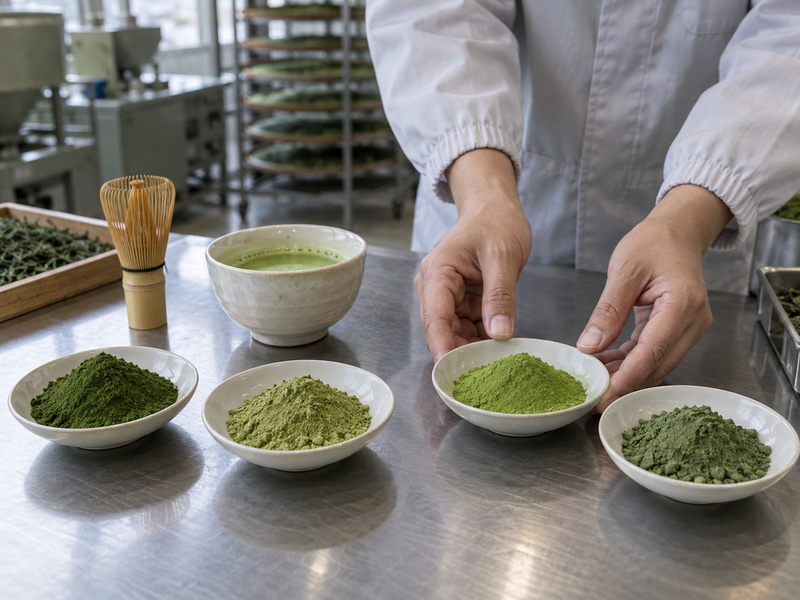
“Ceremonial,” “premium” and “culinary” are common trade descriptions, but they are not a shared global grading standard. One supplier’s premium powder may overlap another supplier’s culinary option. Begin with the finished product. A tea bar serving matcha with water may prioritize a soft finish and vivid appearance. A bakery may care more about flavor after baking and cost per batch. A beverage manufacturer may need repeatable color, powder handling and a specification it can approve across lots.
Buy for the use, not the label
Request samples across a sensible price range, then test them blind if possible. Calculate powder cost per finished serving instead of comparing kilogram prices alone. A stronger powder may allow a lower dose; a cheaper powder may need more material to reach the target flavor. Matcha Village lists culinary, premium, ceremonial and other product ranges, but the right choice still depends on your formula and market. Its pure matcha range is a starting point for a sample brief, not a substitute for application testing.
| Application | Practical priority | Sample test |
|---|---|---|
| Straight matcha | Smooth finish and clean aroma | Whisk in water |
| Café latte | Flavor and color through milk | Standard hot and iced recipes |
| Bakery | Taste and color after processing | Bake a pilot batch |
| Retail tin | Consumer preparation tolerance | Test common household methods |
5. How Is Matcha Tea Prepared for Service?
A repeatable base recipe
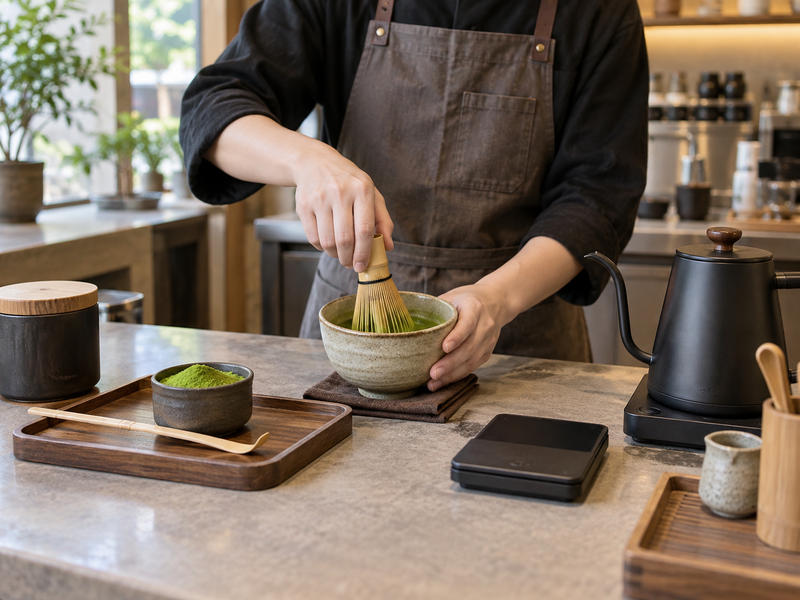
Sift a measured portion of matcha into a dry bowl or cup. Add a small amount of warm water and whisk until the powder disperses. Add the remaining water or milk, then serve promptly. Water should be warm rather than boiling if the aim is a gentler cup. The exact powder and water weights are recipe decisions, so a commercial team should document a standard for each SKU. Staff should be able to reproduce the same cup during a quiet morning and a crowded afternoon.
Prepare for the real station
Test with the tools available at the service counter. A bamboo whisk, electric frother and blender do not create identical texture. Iced service adds another complication: matcha can clump if dry powder lands directly in cold liquid. A small warm-water slurry often makes mixing easier before ice or milk enters the cup. If a chain operates many stores, time the method and check whether each location can measure accurately. Preparation consistency is part of the product experience, not an afterthought delegated to baristas.
| Step | Control point | Common symptom if missed |
|---|---|---|
| Measure | Same powder dose | Uneven taste and cost |
| Sift | Break dry lumps | Visible specks |
| Pre-mix | Small liquid volume | Clumps in cold drinks |
| Finish | Fixed final volume | Inconsistent strength |
6. Where Can Matcha Tea Work Beyond a Plain Cup?
Drink and food routes
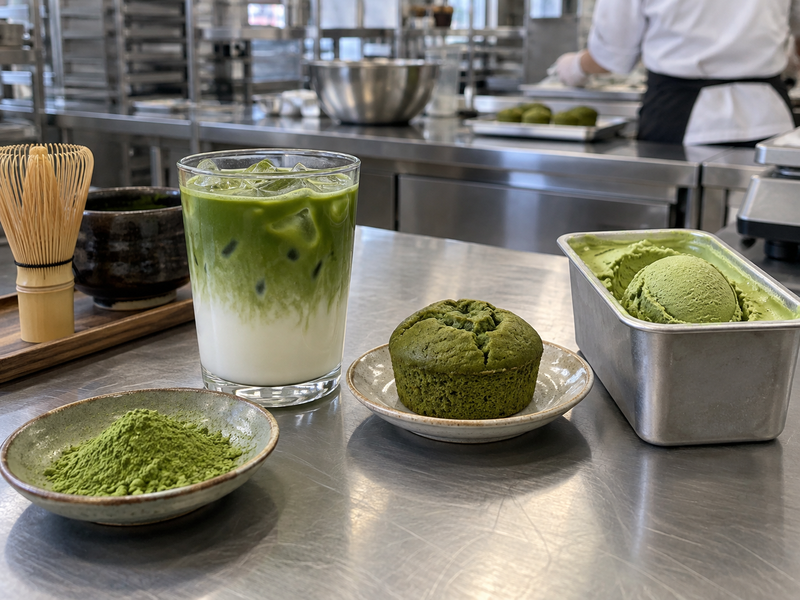
Matcha works in hot and iced lattes, bottled beverages, smoothies, chocolate, bakery items, desserts and ice cream. Each route changes what “good matcha” means. A latte powder may simplify a café workflow if its sweetness and ingredient list fit the menu. A food manufacturer may prefer pure powder so its formulation team controls sugar, fat and flavor. Matcha Village also supplies hojicha and genmaicha powders, which can sit alongside matcha in a wider tea portfolio without being labeled as matcha.
Match the format to the business model
For a café trial, choose a powder that staff can prepare reliably and price by cup. An industrial recipe needs a pilot under actual heat, mixing and storage conditions. Retail buyers should check whether the package size and instructions suit home users. A distributor may need several application grades with clear use cases rather than one claim of “best quality.” The matcha latte powder range may suit buyers seeking a formulated drink base, while pure powder gives more control over the recipe.
7. How Should a Buyer Check Matcha Quality?
Inspect a sample and its records
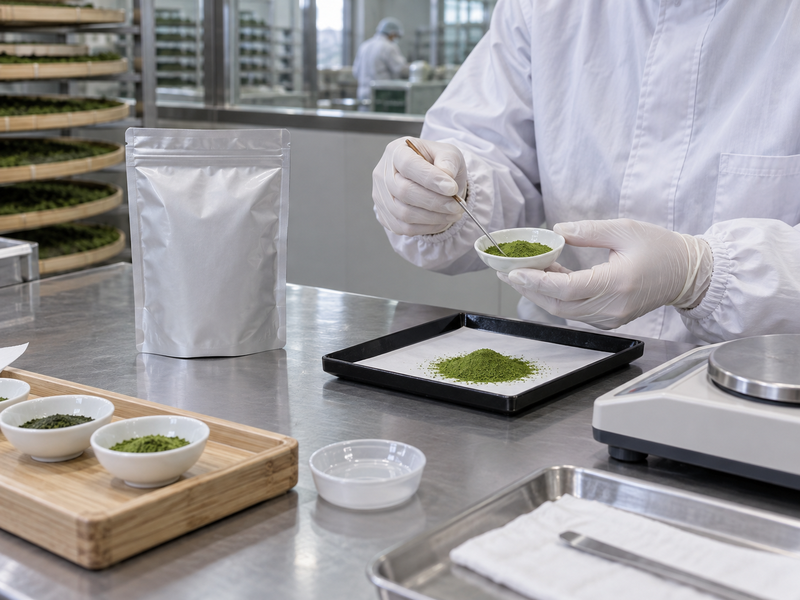
Begin with sensory checks: aroma after opening, color in a standard liquid, flavor at the intended dose and mouthfeel. Then review the supplier’s product specification for the exact SKU. Ask what each specification measures and how the supplier handles changes between lots. A certificate or test report is useful only when it applies to the product, lot and destination market in question. Request the underlying document instead of treating a website badge as proof.
Compare across time
One attractive sample does not establish repeatability. Keep a sealed reference sample from the approved lot and compare future deliveries under the same preparation conditions. Record the receiving date, lot code and any difference that affects your finished product. A bakery might notice color after baking; a drink chain might notice bitterness in milk. Matcha Village’s company material describes batch management and traceability as part of its supply chain. Buyers can ask how those records connect raw materials, milling and packed lots for the SKU under discussion.
| Check | What to request or test | Record for approval |
|---|---|---|
| Sensory | Standard recipe sample | Flavor and color reference |
| Specification | SKU-specific document | Agreed parameters and limits |
| Traceability | Lot coding explanation | Receiving and retained lot IDs |
| Market needs | Relevant current documents | Product, lot and market scope |
8. What Should a Buyer Ask a Matcha Supplier?
Send a usable brief
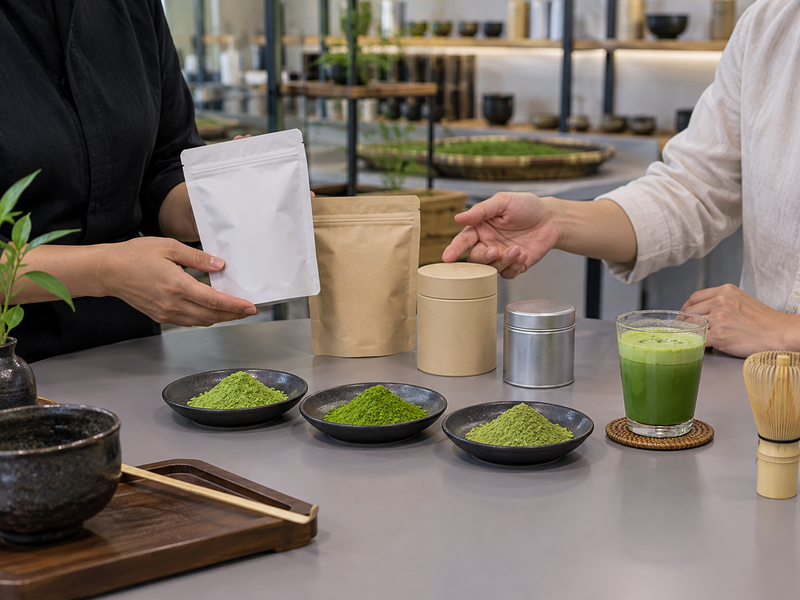
A supplier can recommend a closer fit when it knows where the powder will go. Describe the application, target market, serving size, expected order pattern, flavor preference, color requirement, pack format and budget range. For a latte, include milk type and sweetness target. For baking, include processing temperature and the point at which matcha enters the formula. Ask for two or three justified sample options, then compare them against one written scorecard.
Check commercial fit
Discuss minimum order quantities, lead times, packaging choices and forecast changes before the product goes on sale. Ask whether a private-label project requires separate artwork, formulation approval or a different production schedule. Matcha Village describes bulk ingredient supply, OEM work and private-label packaging in its company material. These options have different development steps; a loose powder order should not be assumed to include retail packing. The bulk wholesale matcha page provides a useful route for opening a sourcing conversation.
| Buying brief field | Example of useful detail | Decision supported |
|---|---|---|
| Application | 12 oz oat-milk iced latte | Sample selection |
| Target profile | Visible green, mild finish | Sensory comparison |
| Forecast | Trial then monthly replenishment | Capacity planning |
| Pack format | Foodservice bag or retail tin | Quote and lead time |
9. How Should Matcha Tea Be Stored After Delivery?
Protect the powder
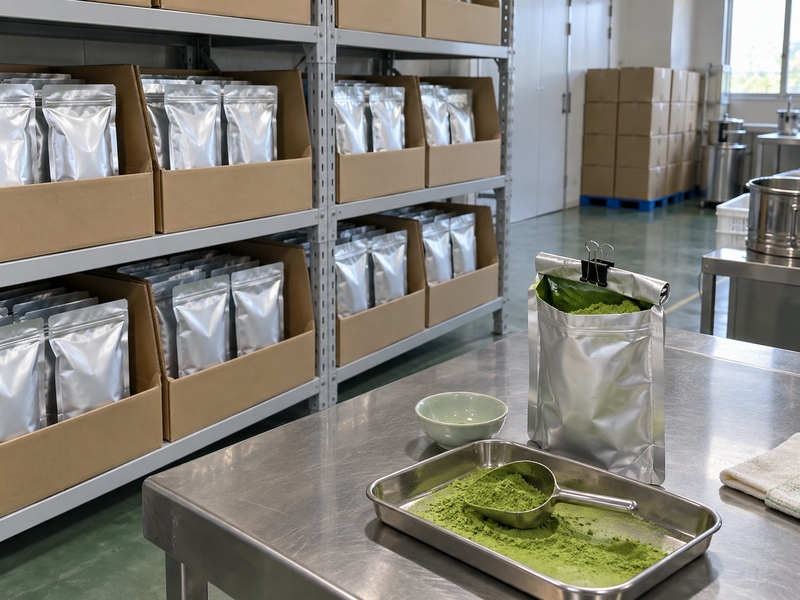
Light, heat, moisture and air can change matcha’s aroma and appearance. Keep unopened packs under the storage conditions printed on the product documentation. After opening, close the package tightly, avoid wet scoops and use a dated first-in, first-out system. Staff should transfer only what they need for near-term service. Repeatedly opening a large bag at a humid counter can undermine the quality that looked excellent during sample approval.
Fit the pack to consumption
Storage is also a purchasing decision. A large pack may lower packaging cost yet leave slow-moving powder exposed for too long after opening. Small retail units may help protect a consumer product but bring more packaging and handling. Match average weekly use against pack size and realistic delivery frequency. Ask the supplier for shelf-life and storage instructions tied to the specific SKU, then validate performance in your own warehouse and shop conditions. If a product uses matcha in a blend, review the finished blend’s instructions instead of assuming pure powder guidance applies without change.
10. How Can a Business Choose Its First Matcha SKU?
Start with one clear application
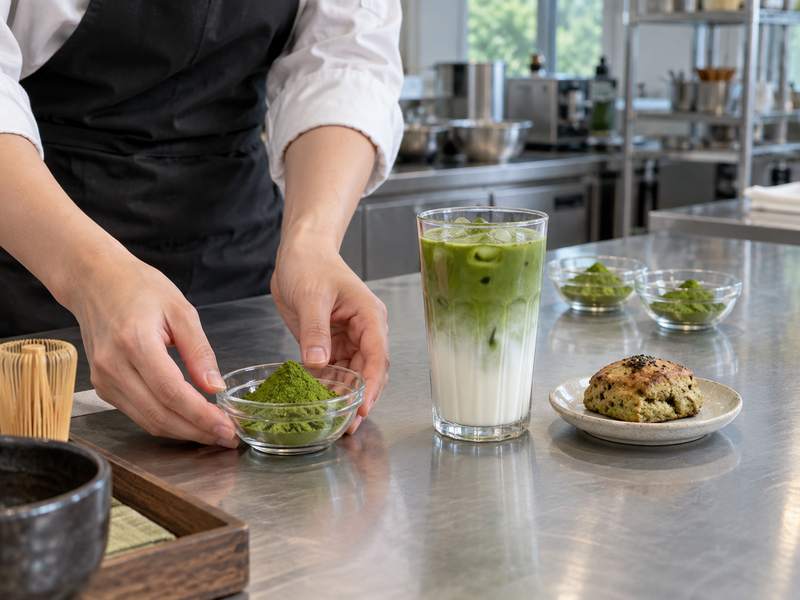
Pick the product you plan to launch first, then write down its success criteria. A café might target one hot latte and one iced latte at a defined serving cost. A bakery could target one cookie recipe and a green color after its normal bake. A distributor might select a plain-drinking grade and a foodservice grade with distinct customer use cases. Compare a small sample set in that application and keep the evaluation sheet; changing several ingredients at once makes the result hard to interpret.
Turn the preferred sample into a supply decision
Once a sample works, confirm product code, specification, pack, order quantity, lead time and any required market documents. Retain a reference sample and run a small commercial trial before forecasting larger volume. If your company wants more than a single ingredient, ask about formulation or private-label scope separately. Share your brief with Matcha Village or another qualified supplier and request application-matched samples. A clear brief gives both sides a practical basis for the next conversation.
Frequently asked questions
Q1: Is matcha the same as powdered green tea? Not every powdered green tea is sold or produced to the same matcha specification. Ask how the leaves were grown, processed and milled, and check the product description.
Q2: Does all matcha contain only tea? Pure matcha does. Latte powders and blends may contain sweeteners or other ingredients, so read the full ingredient list.
Q3: Is a higher grade always better for a latte? No universal grade scale governs the market. Test the powder in your actual milk recipe and compare flavor, color and serving cost.
Q4: Can I use the same matcha for drinks and baking? You can test one powder in both, but heat and recipe ingredients may change its performance. Approve each application separately.
Q5: What should accompany a bulk sample request? Include your application, target flavor and color, destination market, expected volume, pack needs and proposed trial recipe.