
Matcha and green tea come from tea plants, yet they reach customers in different forms. A beverage brand choosing a new ingredient has to think beyond the familiar question of which tastes “better.” The answer depends on whether the product needs visible powder, a clear infusion, a short service routine or a flavor that survives milk and heat. This matcha vs green tea comparison uses those practical decisions as its starting point.
Contents: Core difference · Production · Taste · Preparation · Nutrition · Formulation · Cost · Quality · Storage · Selection
1. What Is the Main Difference Between Matcha and Green Tea?
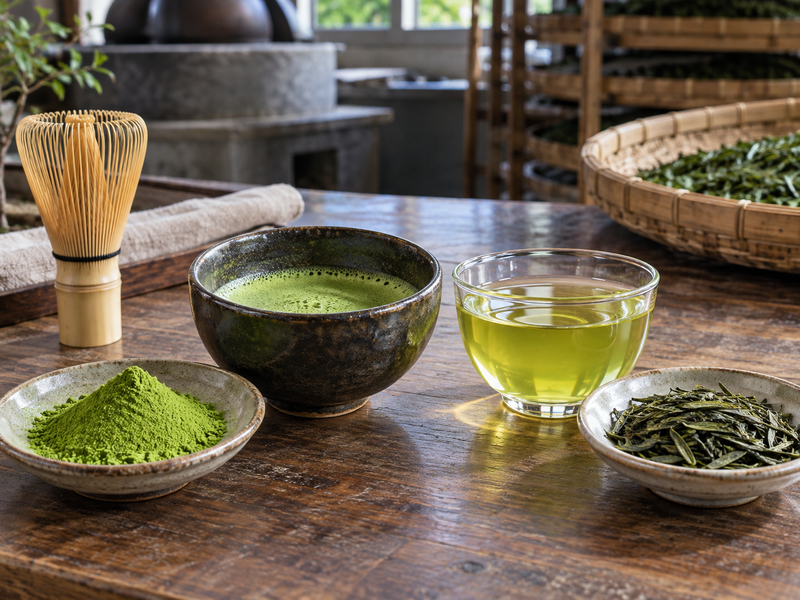
Powder and infusion
The central difference is how people consume the leaf. For a conventional green tea infusion, hot water extracts compounds from leaves, then the leaves are removed. With matcha, finely milled leaf stays suspended in the cup and is consumed with the liquid. That change produces a different texture and usually a different preparation routine. Powder can also color a latte or cake directly, while loose leaves need an extraction step before a manufacturer can add tea flavor to a formula.
Choose a format before a grade
The phrase “green tea” covers many leaf styles and origins, so matcha is not a fair stand-in for every brewed tea. A clear bottled tea, a retail tea bag and an iced café latte impose different requirements. An importer might stock both because they serve different customers rather than forcing one into every use. Matcha Village’s portfolio focuses on matcha powders and formulated tea powders; a buyer seeking its products should specify whether the brief calls for pure powder, a latte mix or another tea powder format.
| Buying question | Matcha powder | Brewed green tea |
|---|---|---|
| Is leaf material in the drink? | Yes, as suspended powder | Usually removed after brewing |
| Is the drink clear? | Generally opaque | Can be clear after filtration |
| Is there a brewing step? | Powder disperses into liquid | Leaves steep, then separate |
| Can it color food directly? | Yes, subject to recipe testing | Requires extract or infusion |
2. How Do the Production Methods Differ?
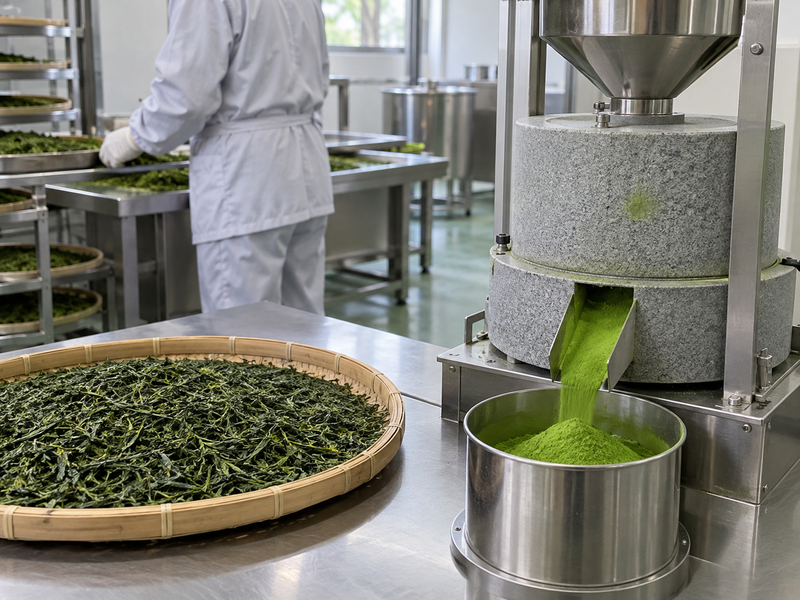
Matcha’s route
Matcha production typically includes preharvest shading, leaf processing, removal of coarse material and fine milling. Japan’s agriculture ministry describes Uji tea as one example of how tencha for matcha differs from rolled sencha leaves. Matcha Village’s company information describes approximately 15–20 days of shading in its tea gardens and different milling targets for applications. Those details help explain why a powder intended for plain drinking may differ from one sold for baking. Buyers should request the specification for the particular SKU because a broad description of the factory cannot replace a product-level record.
Green tea’s many routes
Green tea leaves may be steamed, pan-fired, rolled or shaped according to the style being made. They are sold as leaves, tea bags, extracts or ready-to-drink beverages. That range changes the comparison: a pan-fired leaf tea and a steamed leaf tea may taste quite different from each other. For a procurement exercise, define the exact format on both sides. Compare a pure matcha powder against a named leaf tea only if both could genuinely meet the same product brief. Otherwise, the exercise becomes a comparison of two different product concepts.
| Production choice | Likely effect on buyer evaluation | Evidence to request |
|---|---|---|
| Shading of matcha material | Changes sensory expectations | Product description |
| Leaf processing style | Shapes green tea aroma | Tea style and origin |
| Milling | Sets powder texture | Fineness or application guidance |
| Extract preparation | Changes concentration | Extract specification |
3. How Do Matcha and Green Tea Taste in a Finished Product?
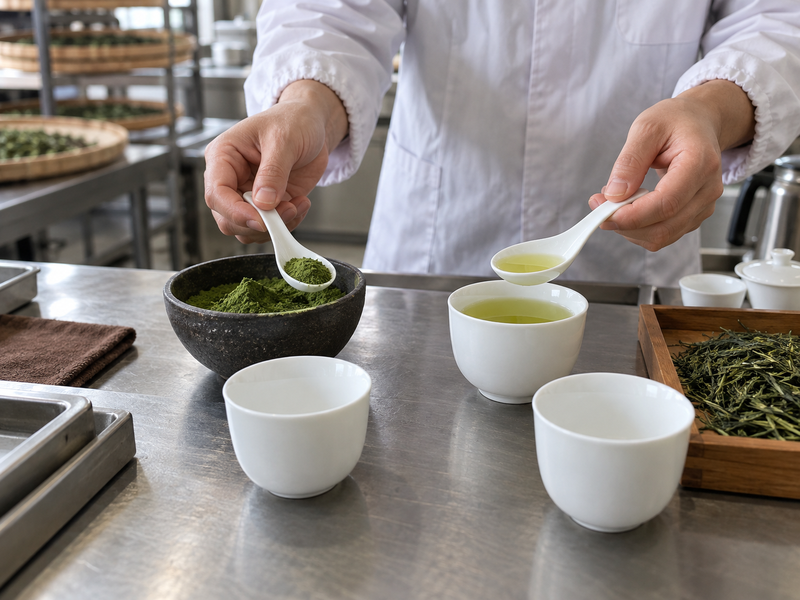
Taste them at intended strength
Matcha often presents a pronounced vegetal or savory character along with sweetness or bitterness depending on the lot. Brewed green tea can range from fresh and grassy to toasted or nutty. Water temperature, steep time and powder dose alter both drinks. A tasting panel should therefore use a fixed recipe and label samples only after the notes are recorded. Words such as “smooth” and “premium” need a specific reference: smooth in water can mean weak once dairy or sugar enters the product.
Finished recipes can reverse preferences
A green tea that wins a plain-cup tasting may become faint in a sweet drink. Matcha can retain a recognizable tea profile in milk, though a poorly matched powder can bring bitterness or sediment. In a cake, the oven and other ingredients alter both flavor and color. Run a small trial in the finished recipe and sample it at the point customers will consume it. If a chain serves drinks after a delivery period, taste after that delay too. Commercial sensory approval should describe the product as sold, not the supplier sample on its own.
| Application | Taste test for matcha | Taste test for green tea |
|---|---|---|
| Plain cup | Whisked powder at service dose | Brewed leaf at service time |
| Milk drink | Flavor after milk and sweetener | Strength of infusion in milk |
| Bakery | Flavor after baking | Flavor after infusion or extract use |
| Iced drink | Dilution and settling | Dilution and brew strength |
4. What Changes in Brewing and Service?
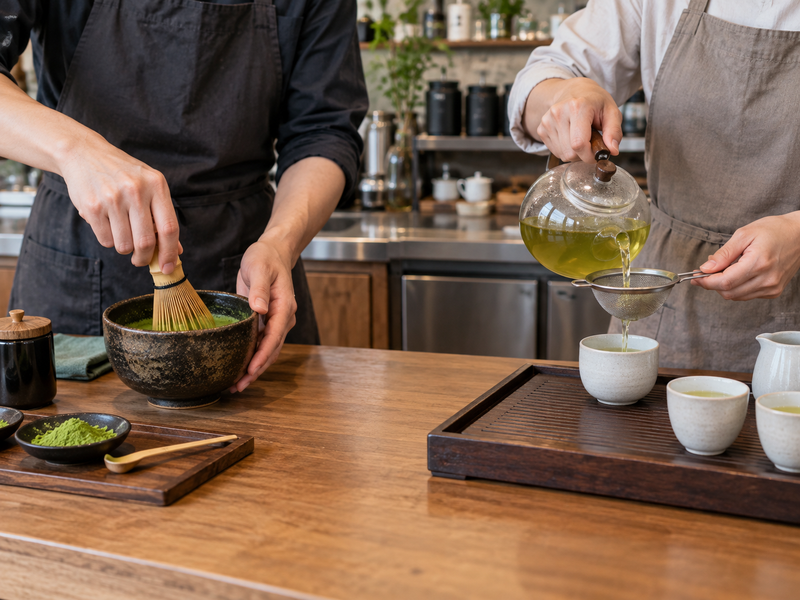
Different work at the counter
A matcha station needs a reliable powder dose, mixing step and clean equipment. Sifting and a small warm-water slurry can reduce clumps before milk or ice is added. A brewed tea station needs controlled leaf weight, water volume, temperature and steep time; staff then separate leaves from the drink. Neither workflow is automatically faster. A pre-batched infusion may save counter time but introduces holding and quality questions. A premixed matcha base can do the same and also needs its own handling procedure.
Measure the actual bottleneck
Time a recipe during normal service, including setup, cleanup and remake rate. A powder that mixes easily can be valuable at a busy café even if its per-kilogram price is higher. A brewed tea may fit an operation that already has batch brewing and filtration equipment. For a multi-store business, write the method so each store can reproduce it. Recipe cards should state weights and volumes, not “one scoop” unless the scoop has been checked against powder density. Consistency in service protects both taste and margin.
| Workflow step | Matcha | Brewed green tea |
|---|---|---|
| Measure | Powder weight | Leaf weight |
| Extract or disperse | Whisk or mix | Steep |
| Separate solids | Usually no | Usually yes |
| Check at service | Clumps and sediment | Strength and steep time |
5. Can Buyers Compare Caffeine and Nutrients Directly?
Serving design comes first
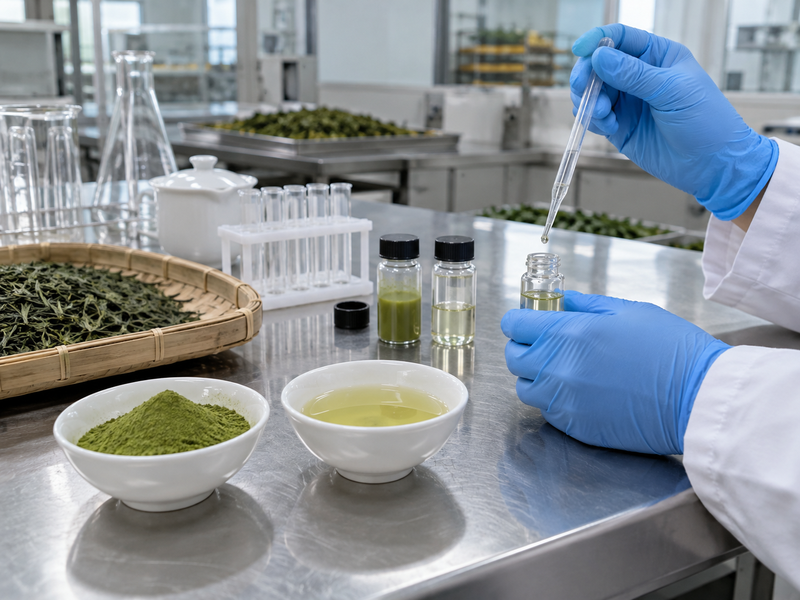
Matcha drinkers consume the suspended leaf powder while brewed tea drinkers generally consume an infusion. That does not justify one fixed caffeine number for either product. Dose, leaf material, brewing time, water temperature and serving size all affect the result. A large café matcha latte and a small cup of brewed green tea cannot be compared fairly without their actual recipes. The same caution applies to nutrient claims. Broad statements about antioxidants or health outcomes may mislead when a formula contains sugar or a small amount of tea.
Use product-specific evidence
If a brand intends to print a caffeine quantity or make a regulated claim, it should obtain suitable product and market documentation and check the finished recipe. Matcha Village’s company material lists testing support among its capabilities, but buyers should ask what can be provided for the exact SKU and destination market. Do not substitute a generic blog number for an approved specification. For many foodservice teams, the practical decision is simply to communicate that both products contain caffeine unless a verified product record supports a more precise statement.
| Claim or comparison | Better evidence | Common mistake |
|---|---|---|
| Caffeine per cup | Test or validated recipe data | Comparing different serving sizes |
| Ingredient statement | SKU formulation | Treating a latte mix as pure tea |
| Health claim | Applicable market review | Copying a general tea claim |
| Nutrition panel | Finished product data | Using powder data for a sweet drink |
6. Which One Works Better in Milk, Food and RTD Drinks?
Match the ingredient to the process
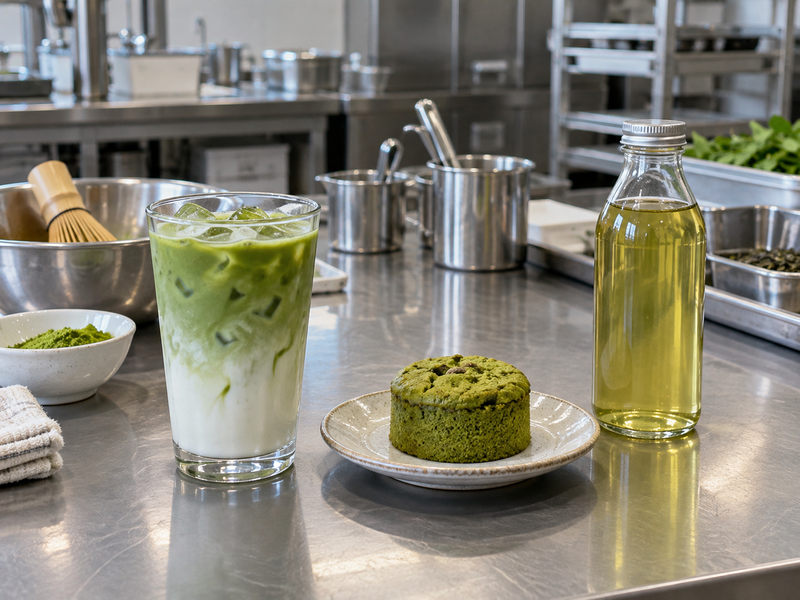
Matcha powder can deliver visible green color and tea flavor in a latte, frozen dessert or bakery product. It also brings particles that may settle or clump. A brewed green tea infusion can suit a clearer drink, though it may require a stronger brew to remain noticeable after dilution. Extracts offer another option, with their own concentration and labeling questions. For a ready-to-drink product, neither ingredient should be approved from a fresh glass alone. Pilot the actual mixing, heating, filling and storage sequence.
Keep formulation control explicit
Pure matcha gives developers control over sweetness and other ingredients. A formulated matcha latte powder can shorten café preparation if its ingredient profile and taste fit the concept. For food manufacturing, a culinary matcha may make sense where the powder’s color and flavor survive the process at an acceptable cost. Matcha Village lists application-specific matcha ranges, but any supplier recommendation should be checked in your own formula. Document dose, sensory result, stability and ingredient declaration before commercial approval.
| Product concept | Likely starting format | Main pilot concern |
|---|---|---|
| Café matcha latte | Pure matcha or latte powder | Mixing and flavor through milk |
| Clear bottled tea | Brewed tea or extract | Clarity and stability |
| Green cake | Pure matcha | Heat effect on color and taste |
| Ice cream | Pure matcha | Dispersion and finished flavor |
7. How Should a Business Compare Cost per Serving?
Build a comparable recipe
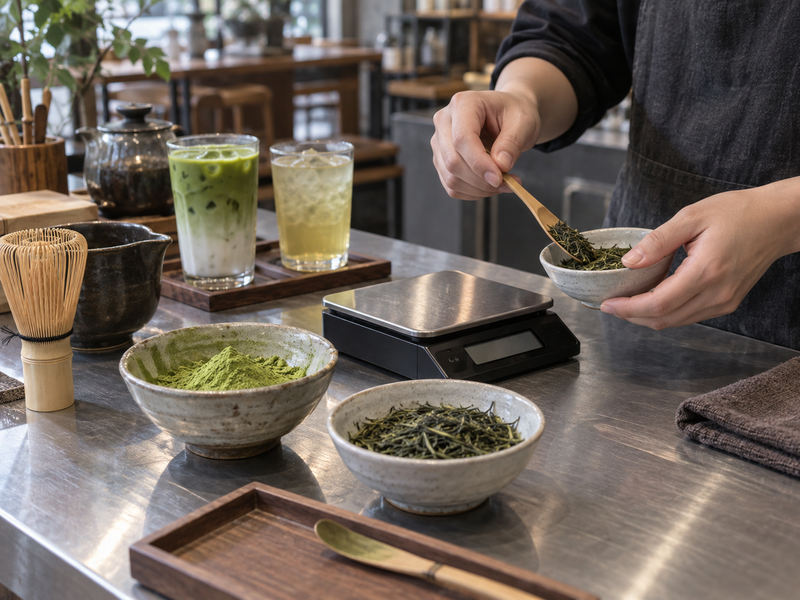
Kilogram price alone gives a poor comparison because the required dose and process differ. Work out ingredient cost per finished serving using the recipe that met the sensory target. Include tea loss from brewing or powder left in equipment. A latte mix may cost more per kilogram than pure matcha yet contain sugar and other ingredients that the recipe would otherwise purchase separately. Calculate the complete formula rather than placing two list prices side by side.
Include labor and waste
Measure preparation time at the counter and test whether a recipe remains consistent across staff. A complex brew may create more discarded tea if demand varies through the day. An oversized matcha pack can lose quality after repeated opening if sales are slow. Packaging format, freight and order frequency also affect landed cost. The commercial choice is the option that meets your product target at a sustainable finished-unit cost. For buyers considering larger volumes, the bulk wholesale matcha page is a route to discuss pack and order options.
| Cost item | Matcha example | Green tea example |
|---|---|---|
| Ingredient | Powder dose per cup | Leaf dose per brew |
| Yield | Powder lost in mixing | Brew loss and discarded leaves |
| Labor | Mixing and cleanup | Brewing and filtration |
| Inventory | Open-pack use rate | Brewed-tea holding time |
8. Which Quality Checks Belong in a Buying Brief?
Check the product you will receive
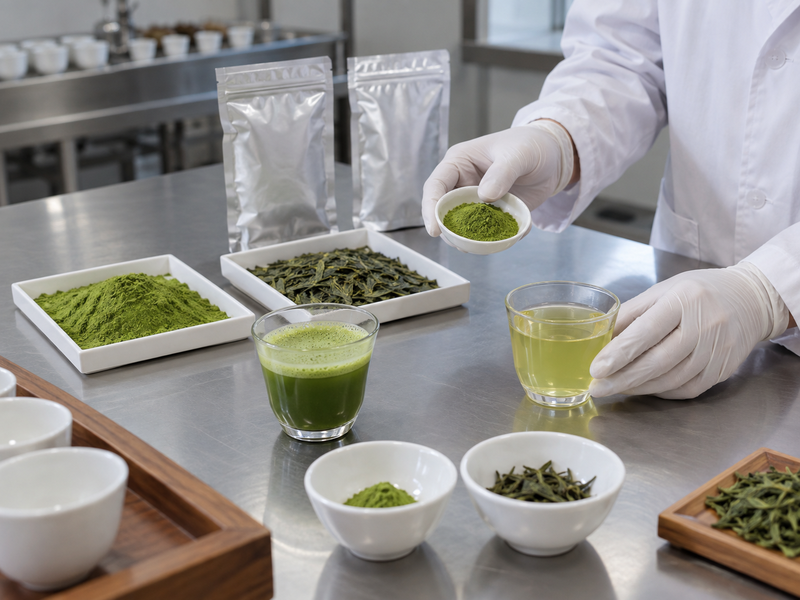
For matcha, review color, aroma, flavor, texture and mixing behavior in a standard recipe. For leaf green tea, review leaf appearance, infusion color, aroma and the brew window. Ask each supplier for a product specification, lot identification method and relevant documentation for the intended market. A buyer should also know what happens when a lot differs from an approved reference. Good samples are useful; a repeatable approval process is what lets a team buy again with confidence.
Write clear acceptance notes
“Bright green” is too vague to resolve a later disagreement. Keep a reference sample and describe the preparation conditions that produced an acceptable result. Note whether a bitter finish is tolerable in a sweet drink but unacceptable in plain service. Record product code and lot code together, especially if a supplier sells several grades. Matcha Village describes traceability and batch management in its company material. Ask how its records apply to the candidate SKU and what information can accompany repeat orders. The same discipline belongs in a leaf-tea purchase.
9. How Do Storage and Shelf-Life Needs Differ?
Powder and leaves both need protection
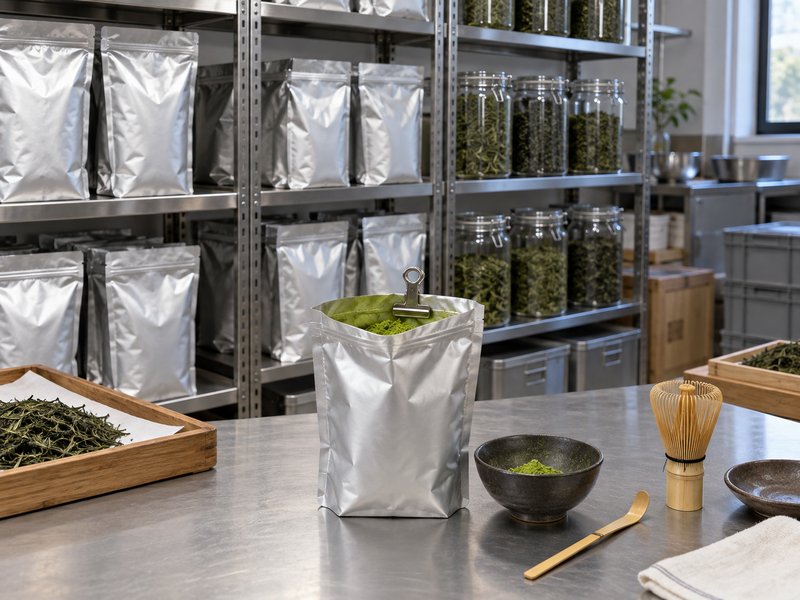
Air, heat, light and moisture can affect tea aroma and appearance. Fine matcha powder has a large exposed surface, so packaging and open-pack handling deserve close attention. Whole or cut green tea leaves also change with poor storage, though their handling differs. Follow the conditions on the product’s documentation. Once a pack is opened, seal it carefully, avoid wet tools and record the opening date. A busy café and a slow-moving retail shop may need different pack sizes for the same product.
Test realistic turnover
Ask how long a pack typically stays open in your business. The lowest packaging cost may create avoidable waste if turnover is slow. For brewed green tea, also define how long a prepared batch can be held under your own food safety and quality procedures. Matcha bases or premixed drinks require similar review. Shelf-life printed for an unopened ingredient cannot automatically be applied to a prepared beverage. Product developers should evaluate the finished item under its intended packaging and storage conditions, then use those results for operational instructions.
10. How Should a Buyer Decide Between Matcha and Green Tea?
Choose against a written product brief
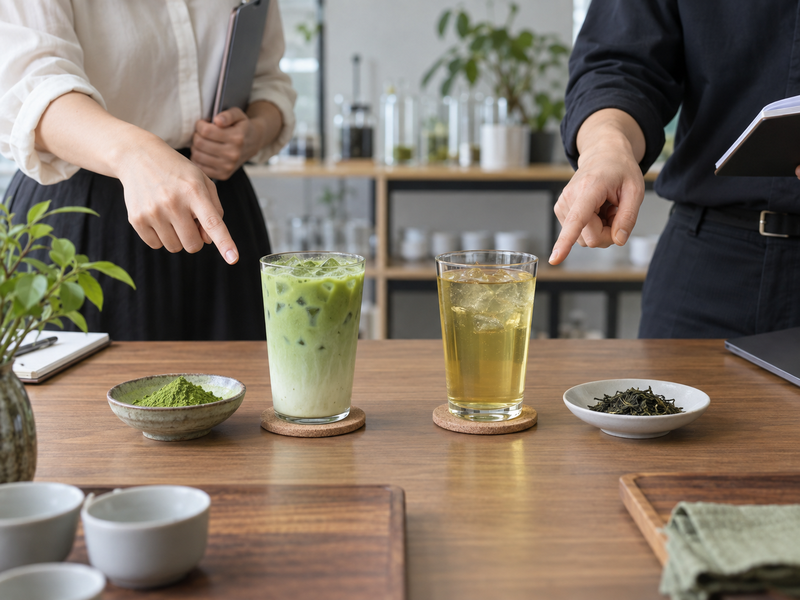
State the intended application, target taste, appearance, ingredient declaration, process, price point and sales channel. If a clear cold tea is the goal, a filtered infusion may be a natural starting point. If the product needs an opaque green latte or direct tea flavor in baking, test matcha powder. A retail brand may carry both: leaf tea for brewing customers and pure matcha for whisking or cooking. Keep the names and instructions distinct so shoppers understand what they are buying.
Run a small, fair trial
Sample at least two suitable options in the finished recipe, compare them with a simple scorecard and calculate cost per acceptable serving. Ask suppliers for SKU-specific specifications and pack choices before committing to a launch. Matcha Village can discuss pure matcha, blends and private-label formats with commercial buyers; send a brief through its company page if those options fit your product. A controlled pilot will give your team a clearer answer than a debate about which tea category is generally superior.
Frequently asked questions
Q1: Is matcha a type of green tea? Yes. Matcha is green tea prepared as a fine powder that remains in the drink rather than being removed after steeping.
Q2: Is matcha always stronger than brewed green tea? Strength depends on the powder or leaf dose, brewing method and serving size. Compare finished recipes under the same use conditions.
Q3: Can green tea leaves replace matcha in a cake? Brewed leaves do not provide the same direct color or powder functionality. An infusion or extract may require recipe changes.
Q4: Does matcha latte powder equal pure matcha? Usually not. Check the full ingredient list because a latte mix can contain sweeteners and other components.
Q5: Which option should a café sample first? Start with its planned menu item. Test matcha in the target latte or straight drink and brewed tea in the intended tea service.