
Learning how to make matcha tea starts with a small amount of powder, warm water and thorough mixing. For a café or product team, the bigger challenge is getting the same taste from every shift and every lot. Too much powder can make a cup harsh; a rushed cold mix leaves lumps. The method below gives home drinkers a clear starting recipe and gives commercial teams a way to document and test their own standard.
Contents: Ingredients · Dose · Temperature · Sifting · Whisking · Iced · Lattes · Service · Troubleshooting · Sourcing
1. What Do You Need to Make Matcha Tea?
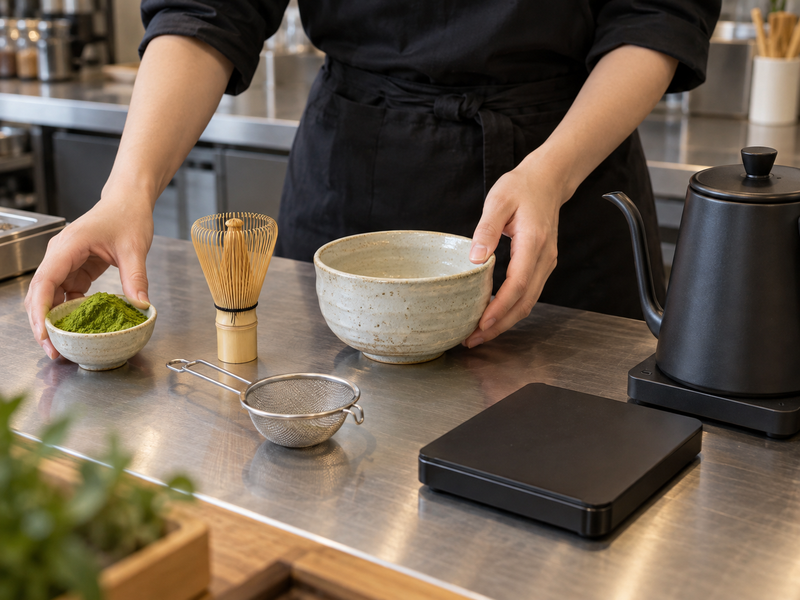
The short ingredient list
For a plain cup, use pure matcha powder and water. A small scale helps you repeat the dose, while a sieve breaks dry lumps. A bowl and bamboo whisk are traditional, but a clean electric frother can work for practical service. Japan’s agriculture ministry shows the traditional whisking method; cafés can test their own equipment for speed and a smooth cup. Choose a cup or vessel with enough room for rapid mixing. You can add milk and sweetener later if you want a latte, though those ingredients change the flavor test. Begin by learning the plain version so you know what the powder contributes on its own.
Set up the station
Keep the powder sealed until use and make sure the scoop, sieve and bowl are dry. Moisture entering a storage pack can produce clumps that a whisk cannot fully fix. For a café, place a scale, sieve and whisk where staff can work without crossing a wet sink area. Check that the chosen tool can be cleaned between drinks. If the menu offers both sweetened and unsweetened options, avoid leaving sweetener residue in the whisk or frother. A simple, tidy station usually improves speed more than adding elaborate equipment.
| Item | Purpose | Practical substitute |
|---|---|---|
| Pure matcha | Tea flavor and color | None for a plain matcha cup |
| Gram scale | Repeatable dose | Pre-portioned sachet |
| Fine sieve | Break dry lumps | Careful dry stirring |
| Whisk and bowl | Disperse powder | Electric frother and tall cup |
2. How Much Matcha and Water Should You Use?
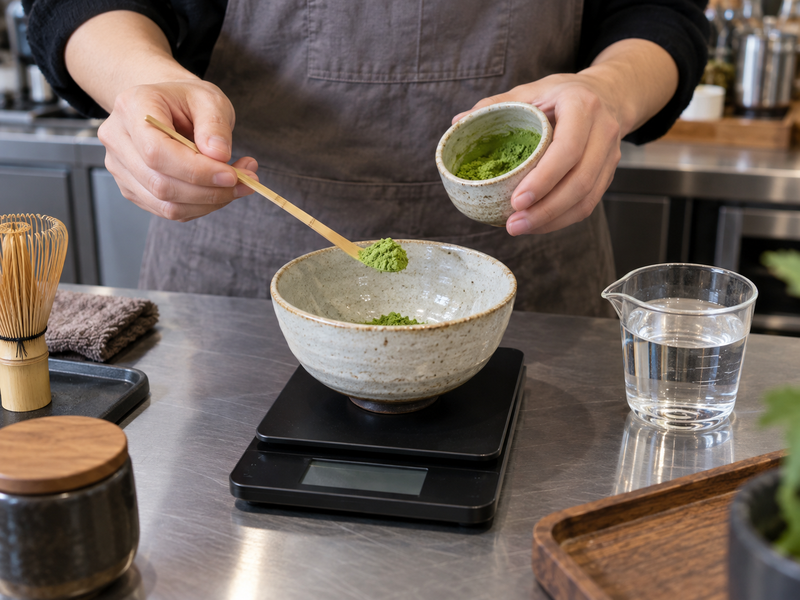
A starting recipe
Start with about 2 grams of matcha and 60–80 milliliters of warm water for a small, concentrated cup. This is a starting point, not a rule for every powder or customer. If you want a longer drink, add more water after the powder has been dispersed. A kitchen scale is more reliable than a spoon because powder density and scoop shape vary. Taste the result before adding sweetener. If the cup feels weak, adjust one variable at a time rather than changing powder, water and temperature together.
Scale for the menu
A 12-ounce latte might use a different powder dose than a small plain cup because milk softens tea flavor. Run trials at two or three doses and record the finished beverage volume. Calculate cost per cup from the selected dose, including any waste from preparation. A chain should specify its recipe in grams and milliliters, then verify that each station can measure those quantities. If a supplier sends a new lot, prepare it at the approved dose before changing the recipe. The aim is a defined sensory target, not an abstract “strong” cup.
| Recipe trial | Matcha | Initial water | What to evaluate |
|---|---|---|---|
| Mild plain cup | 1.5 g | 70 ml | Aroma and gentle finish |
| Standard starting cup | 2 g | 70 ml | Balance and texture |
| More concentrated cup | 2.5 g | 70 ml | Bitterness and body |
| Latte trial | Set by menu test | Enough for a slurry | Flavor through milk |
3. What Water Temperature Works for Matcha?
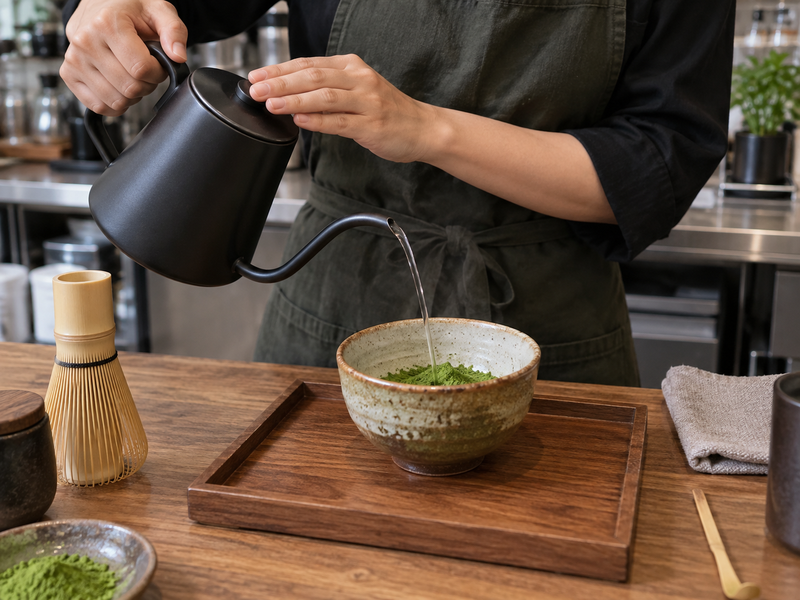
Warm water gives control
Water around 70–80°C is a useful starting range for many matcha powders. Boiling water can accentuate a harsh finish in some products and is less comfortable for rapid service. Cold water can work with suitable mixing equipment, but dry powder often resists immediate dispersion. You do not need to treat a single temperature as universal. Test the same powder at two temperatures using the same dose and volume, then choose the cup your customers will actually prefer.
Record the method, not only the number
A temperature instruction matters only if staff can follow it. A café can use a hot-water dispenser with a verified setting or mix hot and cool water to reach its target. Measure the water at the point it touches the powder if you need precise comparison; a kettle setting and the actual mixing temperature may differ. For milk drinks, the initial slurry needs enough warmth to wet the powder, while final temperature depends on the drink. If your team changes equipment, retest the cup before assuming an old recipe will behave identically.
| Water condition | Likely preparation effect | Trial response |
|---|---|---|
| Cool | Harder initial wetting | Mix a slurry thoroughly |
| Warm | Easier dispersion | Use as starting condition |
| Near boiling | Can sharpen bitterness | Taste before adopting |
| Inconsistent | Cup-to-cup variation | Check station setting |
4. Should You Sift Matcha Before Whisking?
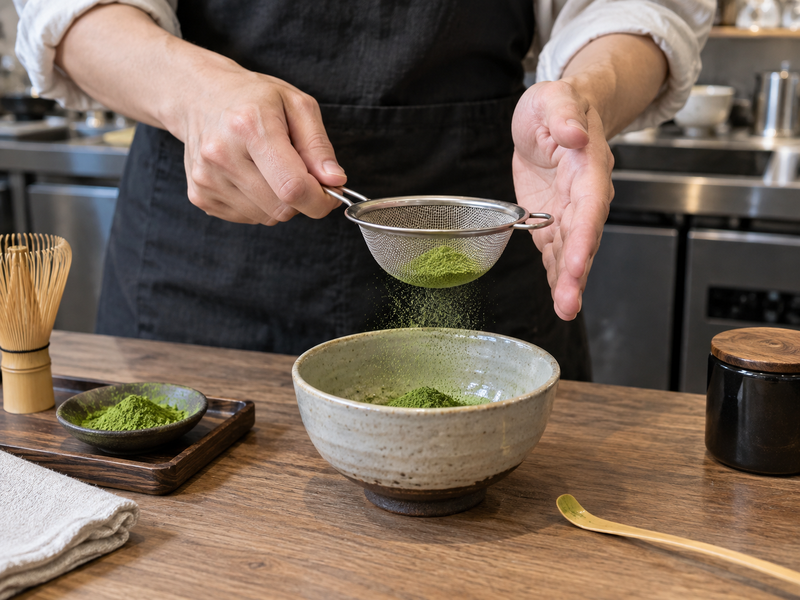
Sifting solves a visible problem
Fine matcha powder can form small dry clumps in storage or during scooping. Passing the measured portion through a clean, dry fine sieve separates those clusters before water is added. This step is helpful when making a plain cup, where every speck is visible, and when a café wants a smooth latte without slowing service with repeated whisking. Sifting does not rescue stale powder or a poorly matched recipe. It addresses dry lumps; aroma and taste still depend on the powder and storage conditions.
Choose the workflow that holds up
Some powders disperse well without a separate sieve, particularly with strong mixing equipment. Test the station method rather than following a ritual automatically. Make one cup with sifting and one without, using equal doses and mixing times. Check the drink immediately and after a few minutes. If the difference is negligible, the extra step may not earn its place during service. If dry flecks remain, sifting is a small investment. Keep the sieve dry between uses and clean it often enough that old powder does not enter a fresh cup.
5. How Do You Whisk a Smooth Cup of Matcha Tea?
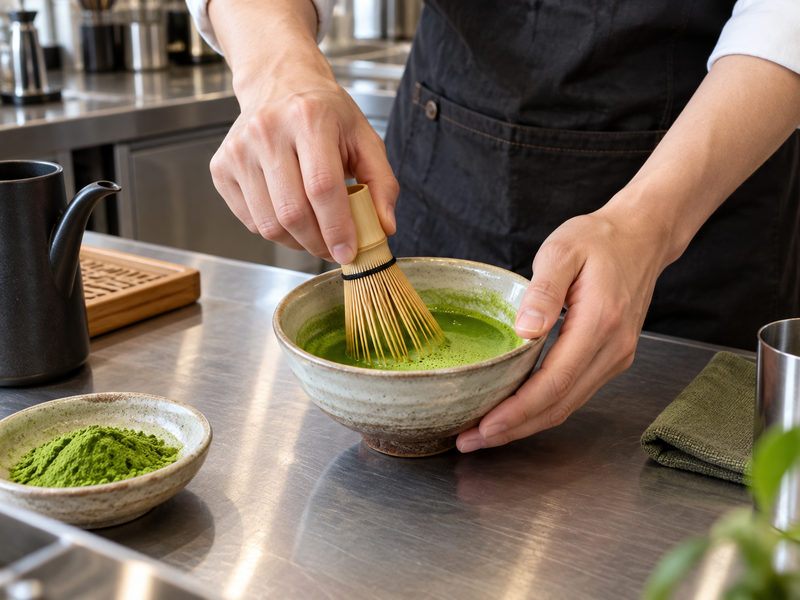
Wet the powder before filling the cup
Place sifted matcha in a bowl. Add a little warm water, then whisk rapidly until no dry pockets remain. Add the rest of the measured water and continue whisking with quick back-and-forth strokes. Aim for an even suspension and a texture your customers enjoy. A light foam can appear with a bamboo whisk, though foam alone does not prove quality. Drink the cup soon after mixing because suspended particles can settle over time. If you use a frother, choose a vessel deep enough to prevent splashing.
Make the method measurable
For a team, a recipe card should name powder weight, initial water volume, total water volume, temperature range and tool. It should also show the expected appearance in the serving cup. Ask several staff members to make the recipe; if results differ, inspect the steps before blaming the powder. A rushed first addition of water is a common cause of dry lumps. One controlled mixing stage can save more remakes than a long set of vague instructions. If the drink is intended for takeaway, check its appearance after the likely pickup delay.
| Step | Action | Quality cue |
|---|---|---|
| Dose | Weigh powder | Same amount each cup |
| Wet | Add a little warm water | No dry pockets |
| Whisk | Move rapidly through slurry | Even color |
| Finish | Add remaining water | Desired body and foam |
6. How Do You Make Iced Matcha Tea Without Clumps?
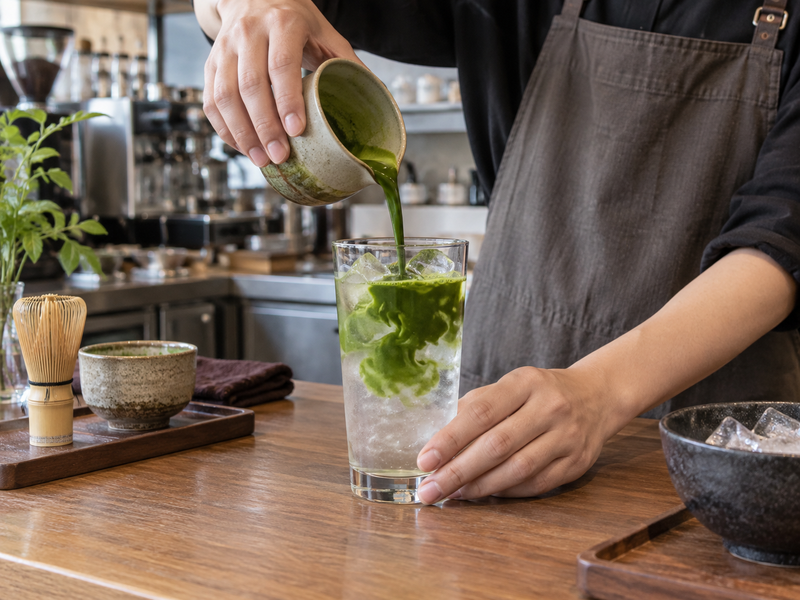
Build a warm slurry first
For an iced drink, mix the powder with a small portion of warm water before adding cold water or ice. This creates a smoother base than dropping dry matcha onto ice. Whisk or froth until the slurry is even, then add the rest of the liquid and pour over ice. Weigh the ice if drink strength matters because melting changes the concentration. Serve soon after assembly, or test how the beverage looks over the normal holding period for takeaway service.
Adjust for dilution
An iced cup can taste weaker than its hot counterpart because it contains more total liquid and ice. Write down powder, slurry water, cold water and ice separately. If the drink is too light, test a slightly higher powder dose before adding sweetener. If it has sediment, compare two powders at the same dose and mixing method; some particle behavior is inherent to suspended tea powder. Shaking can help with a single serving, but a sealed shaker needs a cleaning routine for commercial use. For bottled or ready-to-drink products, conduct formulation and stability trials under the actual process.
| Component | Why measure it | Common error |
|---|---|---|
| Matcha powder | Controls flavor and cost | Scooping by eye |
| Warm slurry water | Helps dispersion | Too little for mixing |
| Cold liquid | Sets final strength | Ignoring added volume |
| Ice | Changes dilution | Uncontrolled scoop size |
7. How Do You Turn the Base Into a Matcha Latte?
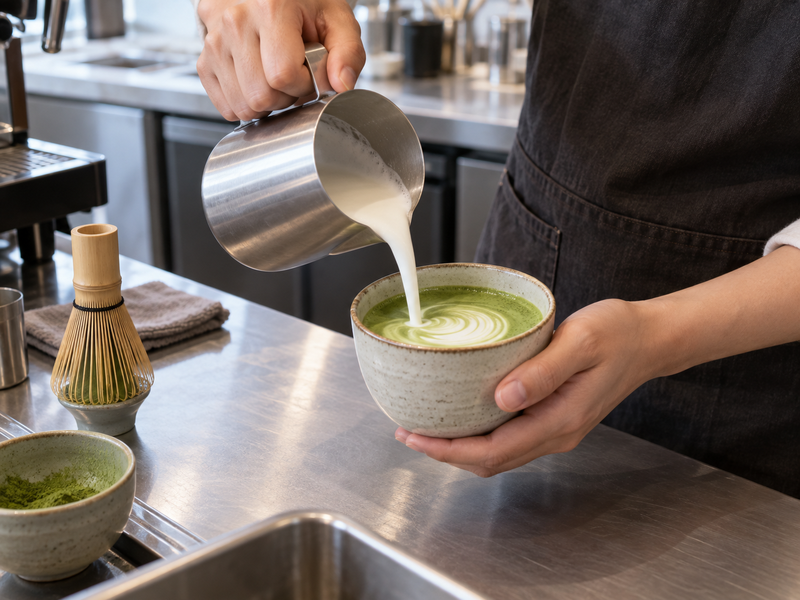
Add milk after dispersion
Prepare a smooth matcha slurry, then combine it with warmed or chilled milk. Dairy and plant milks bring different sweetness, fat and flavors, so evaluate each menu option separately. Sweetener can be added to the base if the recipe calls for it, but record the amount. A latte that tastes balanced with dairy may lose matcha character in a sweet oat drink. Taste at the final serving volume and temperature rather than judging the concentrated base alone.
Pure powder or formulated mix
Pure matcha powder lets a café control milk and sweetener. A matcha latte powder may combine ingredients for a faster set recipe, though the buyer must review its full ingredient list and cost per finished cup. Matcha Village offers both categories. Request samples for the exact milk and service style you use, then compare staff time, flavor, color and labeling needs. If a chain wants a custom blend, write a target recipe before asking a supplier to formulate one; “make it creamy” leaves too much room for interpretation.
| Choice | Advantage to test | Question before approval |
|---|---|---|
| Pure matcha | Recipe control | Can staff mix it consistently? |
| Latte powder | Simplified dosing | What are all ingredients? |
| Custom blend | Fit to menu target | What development and minimum order apply? |
8. How Can a Café Make Matcha Consistently?
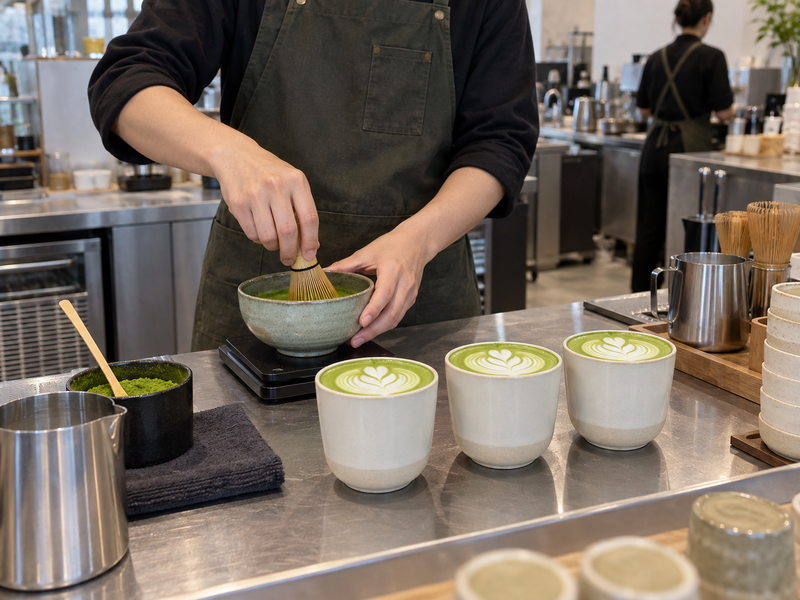
Write a service standard
List the powder SKU, gram dose, water amount, water temperature, mixing tool, milk amount, cup size and ice amount for every menu item. Take a reference photo under ordinary service lighting so staff know the expected appearance. Train against an actual cup rather than a list of adjectives. Check the method during busy periods, when shortcuts tend to appear. If the cup tastes different after a new delivery, compare its lot code and a retained reference sample before changing the recipe.
Design for replenishment
Estimate weekly powder use from sales and dose per cup. Choose a pack size that turns over while the opened powder still performs well. Record opening dates and seal packs between shifts. For several stores, specify which documents and product codes purchasing may accept as substitutes. Matcha Village’s bulk wholesale matcha information provides a place to discuss foodservice pack formats and recurring orders. A second grade may be useful for bakery or sweet drinks, but each new SKU adds inventory and training work. Add it only when a menu test shows a clear reason.
9. Why Does Matcha Taste Bitter or Settle?
Diagnose one cause at a time
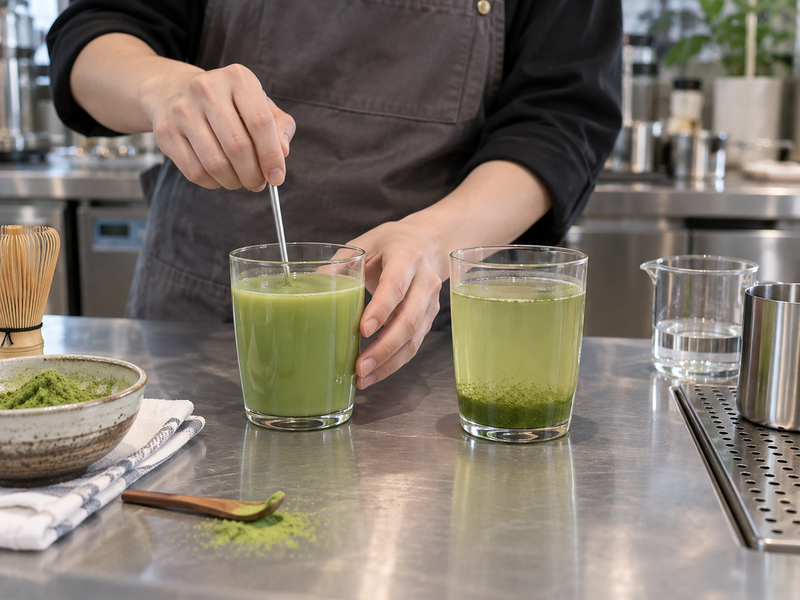
Bitterness can come from the powder, dose, water temperature or other recipe ingredients. Make a control cup at a measured dose with warm water, then change a single variable. If reducing powder improves taste but leaves a latte weak, test a different powder profile. If a cup becomes harsh only with very hot water, adjust temperature. Sweetener can mask bitterness but may not produce the clean finish you want. Keep written notes rather than relying on memory across tastings.
Understand suspension
Matcha particles do not dissolve like sugar. They disperse and can settle in a cup left standing. Thorough mixing and timely service help, but a little settling does not automatically mean the product is defective. Large clumps are a different problem: check dry storage, sifting and the first wetting step. For a packaged beverage, settling may be unacceptable to consumers and needs a formulation trial, packaging review and suitable stability testing. Do not assume a café recipe can move into a bottle without further development.
| Symptom | Possible cause | Next controlled test |
|---|---|---|
| Harsh finish | Dose or temperature | Change one variable |
| Dry flecks | Incomplete wetting | Sift and make slurry |
| Rapid settling | Suspension behavior | Compare mixing and powders |
| Weak latte | Milk masks tea | Test dose or grade |
10. How Do You Choose a Powder for Repeat Orders?
Approve it in the target cup
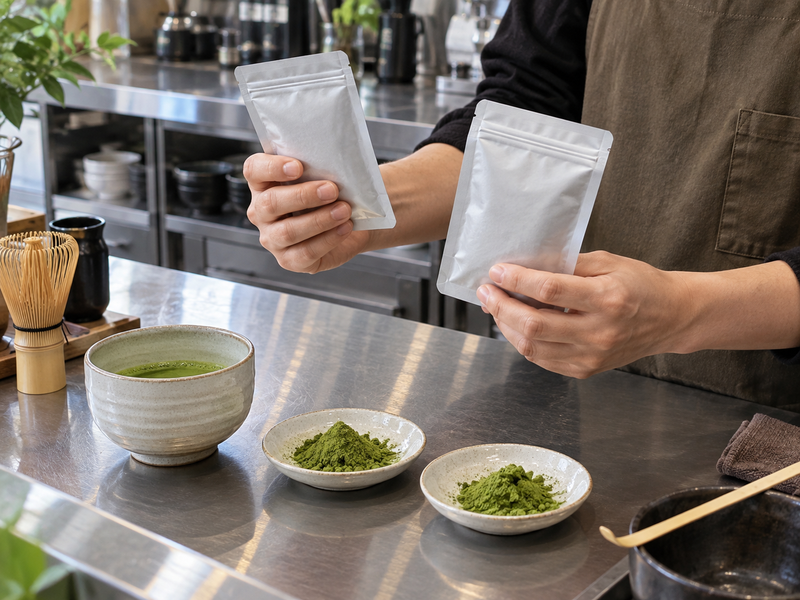
Ask suppliers for samples suited to plain tea, lattes or both. Prepare each sample with the same equipment and recipe, then score aroma, bitterness, color, texture and performance after a service delay. A grade name cannot replace that test because grade labels vary between suppliers. Once a candidate wins, confirm its product code, specification and pack format. Keep a sealed reference sample so your team can compare later lots against what it approved.
Connect the cup to the purchase order
Tell the supplier your intended market, estimated volume, packaging needs and any required product documents. Matcha Village describes bulk supply, application selection and private-label options; those routes involve different briefs and lead times. Ask about the exact SKU and current documents rather than assuming a company-level claim covers every product. If the recipe is ready, send it to Matcha Village or another qualified supplier and request application-matched samples. Test the next lot with the same method before expanding service across locations.
Frequently asked questions
Q1: Can I make matcha without a bamboo whisk? Yes. An electric frother can disperse powder; use a suitable cup and clean the tool between drinks.
Q2: Why does matcha clump in cold milk? Dry powder can resist wetting in cold liquid. Mix it into a small warm-water slurry before adding milk.
Q3: Should matcha water boil? Warm water around 70–80°C is a useful starting point. Compare temperatures with your powder and recipe.
Q4: How long should a prepared cup sit? Serve it soon after mixing. If takeaway service creates a delay, test appearance and taste over that period.
Q5: Is matcha latte powder prepared the same way as pure matcha? Follow the product’s own instructions. A formulated mix may contain other ingredients and call for a different dose.