
Does matcha tea have caffeine? Yes. A product team still needs more than that answer before it can choose a powder, set a serving size, or write a label. Matcha uses powdered tea leaf, and caffeine varies with the material and the amount used. This guide gives beverage brands, cafés, and food manufacturers a practical way to compare samples and request evidence from suppliers. Matcha Village supplies matcha and related tea powders for those applications, with product selection based on the intended use.
Contents: source · comparison · variation · decaf · labels · formulation · audience · testing · processing · brief
1. Where does matcha’s caffeine come from?
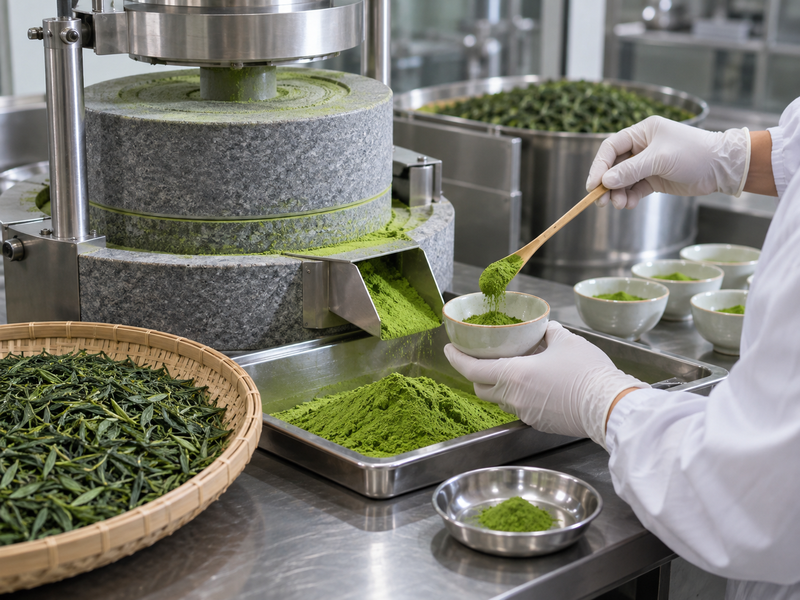
Powdered leaf changes the serving calculation
Matcha comes from tea leaves that are processed and ground into a fine powder. Tea plants naturally contain caffeine, so a standard matcha powder contains it as well. A drink made with matcha suspends the powder in liquid; a brewed tea drink leaves most tea solids behind after steeping. That distinction explains why a simple comparison of “one cup” with “one cup” can mislead a product developer. The quantity of tea material in each cup may differ substantially.
Start with the powder weight. A café may use one scoop while a ready-to-drink brand uses a carefully weighed dose. Even if both advertise a matcha latte, their caffeine per serving need not match. The same principle applies to cookies, ice cream, and sachets. You need the weight of actual matcha powder in the finished serving before discussing caffeine exposure or making a claim. A blend adds another layer: the weight of a premix is not necessarily the weight of matcha within it. Ask for that distinction in the formulation brief.
2. How does matcha compare with brewed tea and coffee?
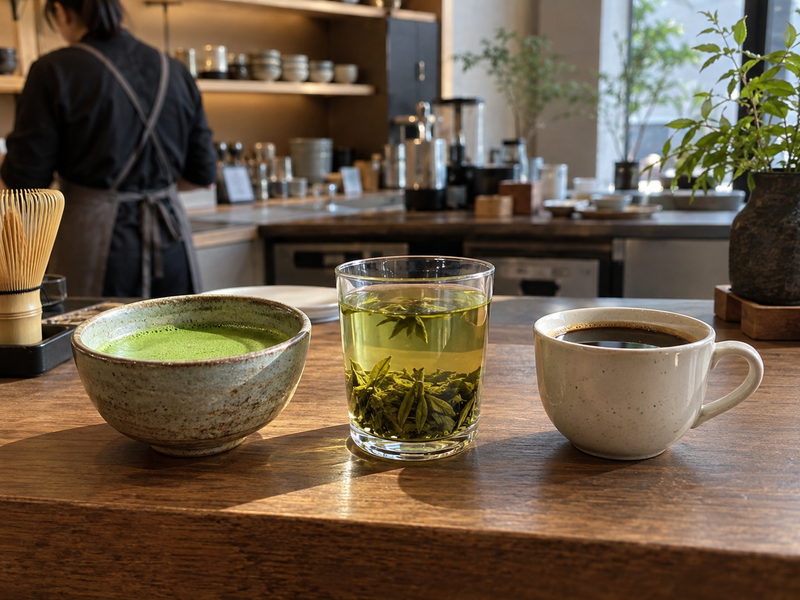
Compare defined servings, not drink names
Matcha, brewed tea, and coffee all contain naturally occurring caffeine unless a particular product has been processed and verified otherwise. Their amounts depend on raw material, preparation, and serving size. The FDA’s caffeine guidance also counts caffeine naturally present in tea when considering total intake. Brew time and leaf weight matter for infused tea. Roast, bean choice, grind, and extraction matter for coffee. Matcha depends especially on powder dose because the leaf powder stays in the drink. An iced latte with a small matcha dose and a large milk volume can taste mild while still containing caffeine.
Here is a useful comparison rule: put every product on the same basis before drawing a conclusion. Request caffeine per finished serving and, where useful, per unit of powder. Compare a bottle with a bottle, or normalize two powders to an equal weight. Do not lift a figure from a general article and present it as a result for your own stock keeping unit. If a buyer needs a numerical comparison for a package, that figure should come from the relevant supplier documentation or testing of the final recipe.
| Product format | What changes the comparison | Useful basis |
|---|---|---|
| Pure matcha powder | Powder weight and lot | Caffeine per weighed dose |
| Brewed tea | Leaf weight, time, water, extraction | Caffeine per prepared serving |
| Coffee | Bean and brewing method | Caffeine per prepared serving |
| Matcha latte premix | Matcha fraction and serving weight | Caffeine per finished serving |
3. Why can two matcha powders test differently?
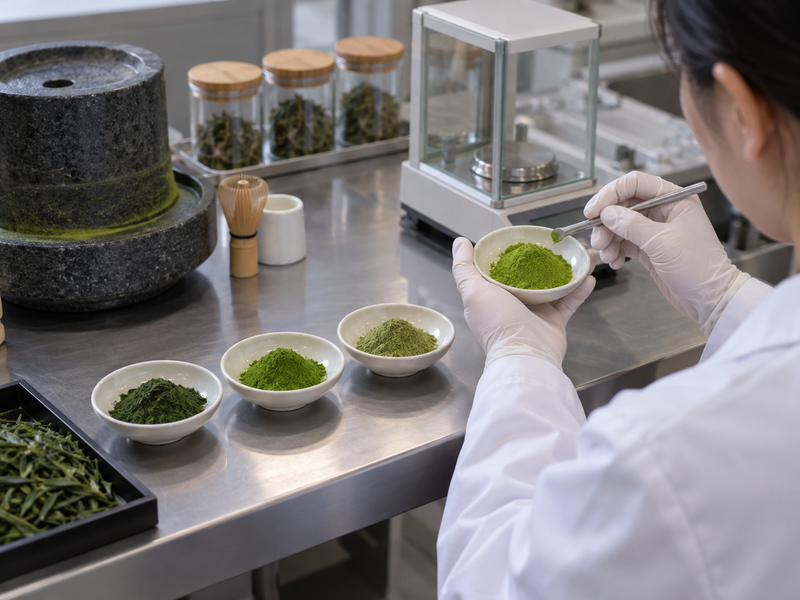
Agricultural and production variables
Tea variety, growing conditions, harvest timing, leaf selection, and processing can all contribute to differences among matcha powders. A label such as “premium” describes a commercial position; it does not by itself tell you the caffeine result. Shading affects tea-leaf composition and flavor, but a buyer should not turn a general cultivation practice into a precise caffeine claim. Matcha Village describes shaded cultivation and offers several matcha grades. For a caffeine-sensitive product brief, the relevant question remains what a specified material and lot actually contain.
The practical consequence is sampling discipline. Compare samples at equal powder weights, prepared with the same water and other ingredients. Keep the sample code attached to every tasting note and laboratory document. If a brand changes from one grade to another for color or cost, it should revisit its caffeine assumptions as well. A new crop, a different source, or a reformulated blend can change what reaches a customer. Use a range or specification agreed with the supplier where appropriate, then confirm how that range supports the intended label.
| Variable | Possible business consequence | Buyer action |
|---|---|---|
| Leaf and harvest selection | Different material profile | Identify exact product code |
| Powder dose | Different caffeine per serving | Weigh powder in recipe |
| Blend composition | Premix weight can hide tea amount | Ask for matcha fraction |
| Lot change | Report may not match current stock | Link report to lot code |
4. Can matcha be caffeine-free?
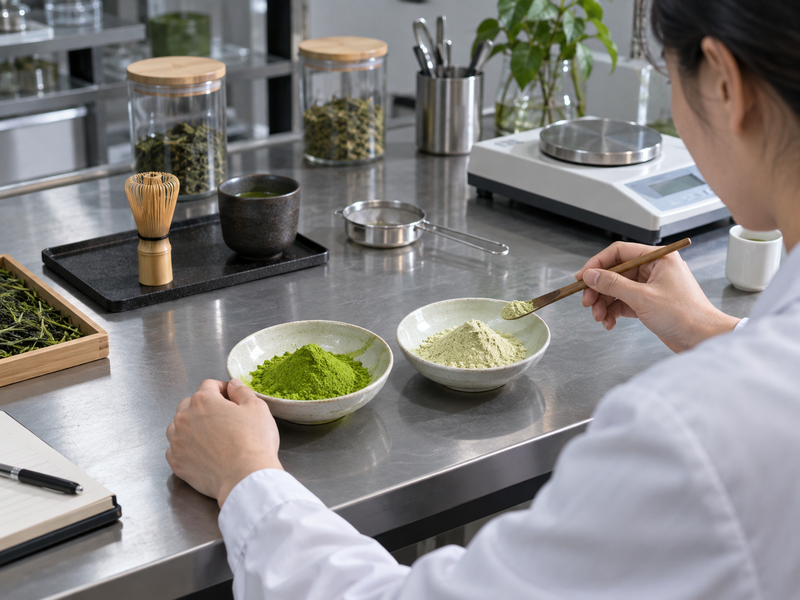
Treat “decaf” as a verified product specification
Ordinary matcha contains caffeine. A seller may offer a decaffeinated tea powder, but “decaf,” “caffeine-free,” and “low caffeine” are different claims. Their legal definitions and permitted wording vary by market. Product teams should check the processing description, ingredient identity, measured residual caffeine, and the rules in each destination market before using any of those terms. A conventional matcha powder should never become a “caffeine-free” product through a marketing rewrite.
Check the named ingredient. Some green drink powders use herbs, vegetable powders, or flavorings and resemble matcha visually without being pure matcha. That may be a legitimate product, but its ingredient list and positioning need to describe what is actually inside. If reduced caffeine is a product requirement, state the target market and proposed serving early in supplier discussions. Ask whether a suitable material exists and request evidence for the finished specification. If none exists, change the concept or wording rather than assume dilution with milk makes a caffeine-free claim accurate.
5. How should a brand handle caffeine on a label?
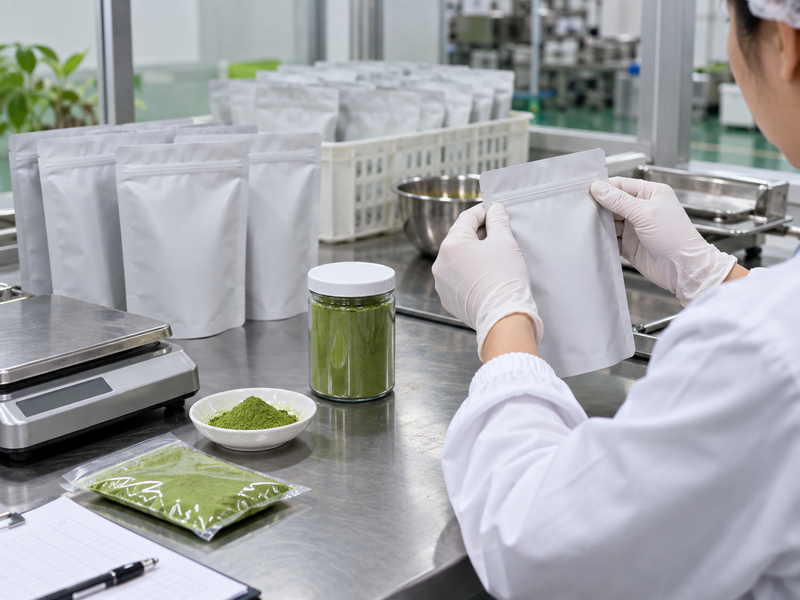
Separate ingredient information from claims
Label rules depend on product category and sales territory. A retail tub of pure matcha, a café menu, a beverage premix, and a bottled drink may face different requirements. The amount of caffeine in raw powder is only one input. The formula, recommended serving, preparation instructions, and final filled volume also matter. A legal or regulatory reviewer should assess the exact product in every target market before packaging goes to print.
Build the claim from documents. Start with a current product specification and a caffeine result tied to the relevant material. Record the tested unit clearly, such as powder weight or prepared serving. Then calculate the intended recipe, account for any other caffeine-bearing ingredients, and decide whether final-product testing is needed. Avoid implying that every batch has one immutable value when your evidence supports a range. For imported products, translate both the units and the claim carefully; a conversion error can survive every visual proofing round unless someone checks the underlying calculation.
| Label question | Document to check | Common mistake |
|---|---|---|
| What is the serving? | Recipe and directions | Using scoop size without weighing |
| Which material was tested? | Specification and lot record | Quoting another grade’s result |
| Are other sources present? | Full ingredient list | Ignoring tea extracts or coffee |
| Is wording permitted? | Local labeling review | Reusing another market’s pack |
6. How do recipe choices change caffeine per serving?
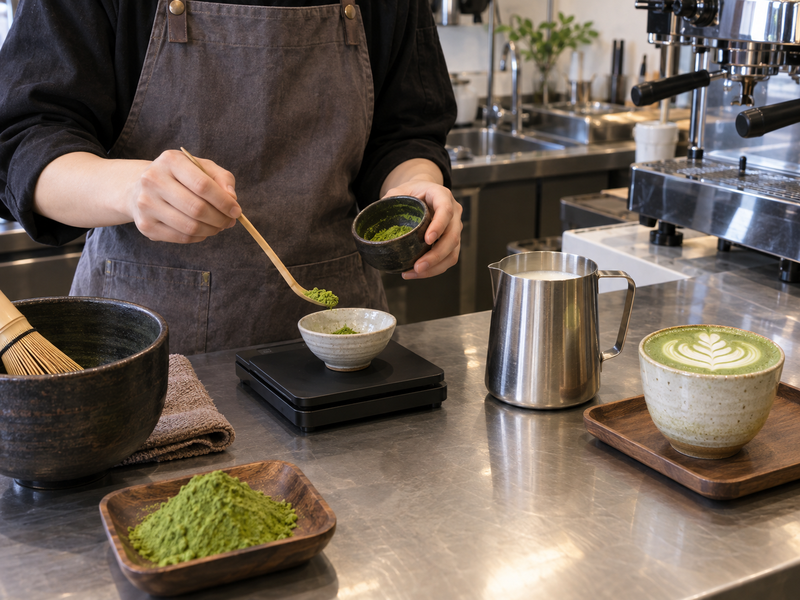
Dose and portion size do the work
Water, milk, and ice change concentration and flavor perception, but they do not erase the caffeine already present in a dose of matcha. A larger cup can taste weaker if it contains more milk, yet carry the same amount of matcha as a smaller cup. An extra scoop changes the amount. A double portion changes it again. If a café menu allows customers to add matcha, its ingredient calculation should reflect the option. For packaged products, calculate against the quantity a customer will reasonably consume, including multipack or concentrate directions where relevant.
Run a recipe sheet, not a guess. List powder weight, actual matcha fraction when using a premix, all other caffeine sources, yield, and portion size. The sheet should travel with the sensory test because a delicious prototype can quietly acquire a larger powder dose during refinement. Formulators can then compare flavor, color, cost, and caffeine implications together. Matcha Village offers pure matcha, latte powder, and blends; those formats require separate ingredient and dose calculations. Never substitute the premix weight for pure matcha weight when estimating caffeine.
7. Which matcha format fits each sales channel?
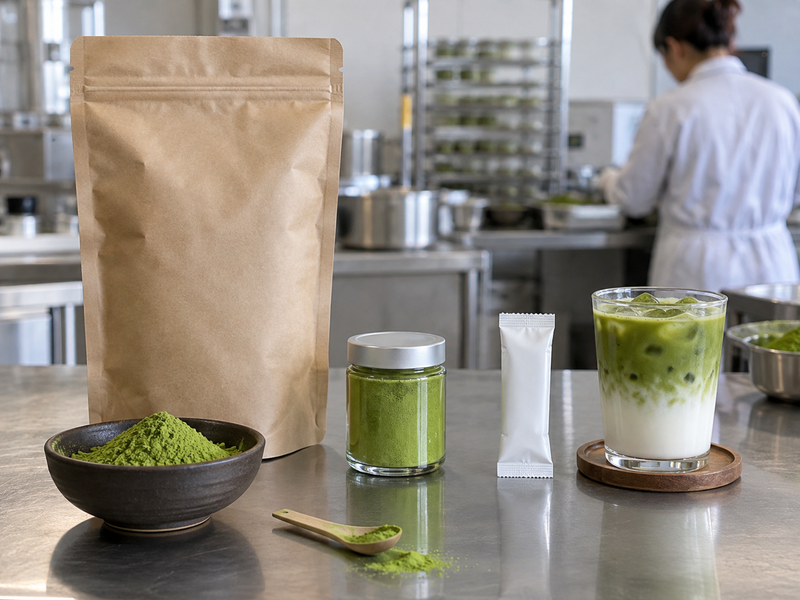
Match the evidence to how the product is served
A café can weigh pure powder for a custom drink. A chain may prefer a controlled premix to keep preparation consistent across stores. A manufacturer may need powder that holds color and flavor within a dairy or plant-based base. A retailer selling pure matcha needs directions clear enough for a consumer to understand the intended serving. Each channel poses a different caffeine documentation question. The right choice depends on the application as well as taste, color, cost, and supply.
Consider the operator’s job. Baristas need a reproducible scoop or weighed dose. Factory teams need a formula and lot-linked paperwork. Retail teams need packaging language that matches the preparation instructions. In each case, ask the supplier for the exact product code and relevant caffeine information, then assess the prepared product. Matcha Village’s pure matcha, bulk wholesale matcha, and matcha latte powder lines provide different starting points for that conversation.
| Channel | Likely format | Caffeine control point |
|---|---|---|
| Independent café | Pure powder | Staff dose and drink size |
| Chain beverage menu | Powder or premix | Standard recipe across sites |
| Food manufacturer | Ingredient powder | Formula and finished portion |
| Retail brand | Consumer pack | Recommended serving and claim |
8. What evidence should buyers request from a supplier?
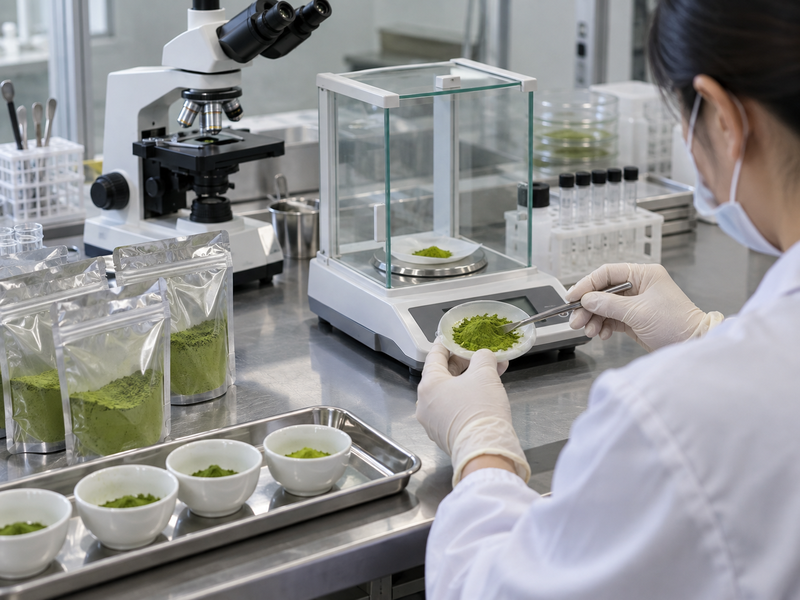
Put sample, lot, and method on one trail
Ask for a product specification that names the exact powder or blend under consideration. If caffeine content affects your label or positioning, request a caffeine report with clear units, sample identity, test date, and laboratory method. Check whether the report covers a sample, a specific production lot, or a broader product specification. Those are not interchangeable. A certificate of analysis should correspond to the goods delivered when your purchase terms require lot-level evidence.
Make documents usable downstream. Your quality team should be able to connect a sample pouch, purchase order, delivered lot, and finished recipe without reconstructing the history from email attachments. Ask how changes in source material, grade, or blend formulation are communicated. If you need a caffeine range, put the acceptance criteria in the purchasing specification and agree how out-of-range lots are handled. Matcha Village describes batch management and traceability across its supply chain; buyers should request the documents needed for their particular market and product rather than assume any general company statement replaces a lot-specific result.
| Evidence item | Why it matters | Check before approval |
|---|---|---|
| Product specification | Defines material being bought | Code, grade, composition |
| Caffeine report | Supports quantitative work | Units, sample, date, method |
| Lot-linked document | Connects result with shipment | Matching lot identifier |
| Change notice process | Protects recipe assumptions | What triggers notification |
9. Do heat and storage remove caffeine?
Keep caffeine separate from sensory stability
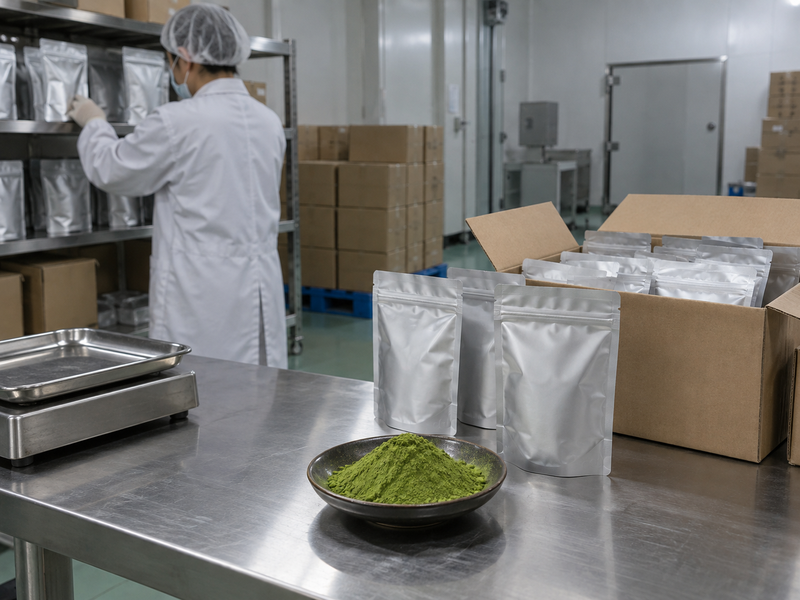
Hot water, steaming milk, baking, and frozen storage can alter a matcha product’s flavor, texture, color, or appearance. They are not reliable methods for turning a caffeinated matcha ingredient into a caffeine-free one. Processing may also change the finished serving through losses, dilution, or portioning, so a final product’s measured result can differ from a quick ingredient calculation. A claim should rest on appropriate evidence for that particular product, not on an assumption that heat “burns off” caffeine.
Focus storage checks on the product you sell. Protect powder from moisture, light, oxygen, and strong odors according to supplier guidance. Then test your application for color, flavor, dispersion, and shelf life. If a beverage recipe changes during scale-up, recalculate its matcha dose and review its label. A sensory stability test and a caffeine test answer different questions. Both may be useful, but neither replaces the other. Bottled drinks and bakery products put the ingredient through more steps than a freshly whisked cup.
10. How should you brief a supplier about caffeine?
Give a measurable target and a real application
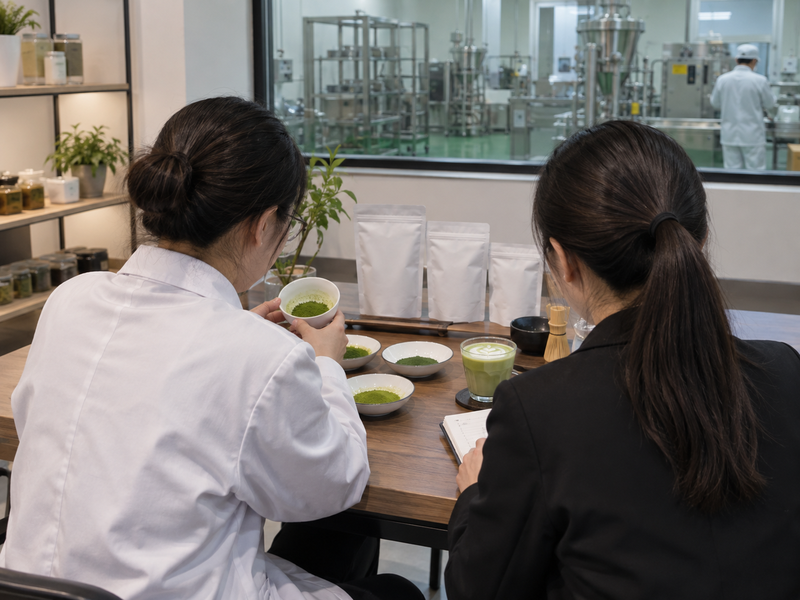
Tell the supplier whether you are developing a retail powder, café latte, bottled drink, dessert, or blend. Share the planned serving size, estimated matcha dose, target market, desired flavor and color, and any caffeine-related wording under review. If you have a numerical specification, state the unit and whether it applies to raw ingredient or finished product. Ask for samples with exact codes and enough documentation to compare like with like. That makes the first trial more useful than a broad request for “high-quality matcha.”
Close the loop after tasting. Keep a record of your chosen dose and sample code, request current commercial specifications, and involve your regulatory team before labels or menus are finalized. Matcha Village can discuss grade selection and formats for beverages, bakery, dairy, and other applications through its wholesale matcha channel. A solid brief lets the supplier respond to your actual formulation constraints and gives your team a traceable basis for approval.
| Brief field | Example of useful detail |
|---|---|
| Application | Iced café latte or shelf-stable drink |
| Serving | Finished pack or menu portion |
| Material | Pure matcha or named premix |
| Market | Country where product will be sold |
| Evidence | Specification and relevant caffeine result |
For procurement, the answer remains straightforward: matcha contains caffeine, and the amount in your product depends on the exact powder and dose. Select the format against a real recipe, request documentation linked to that material, and have the final claim checked for your market. To start a specification discussion, share your application and target serving with Matcha Village.
FAQ
Q1: Does matcha tea have caffeine naturally? Yes. Matcha is powdered tea leaf, and tea leaf naturally contains caffeine.
Q2: Is a matcha latte caffeine-free if it contains mostly milk? No. Milk changes concentration and flavor, while the matcha dose still contributes caffeine.
Q3: Can grade names predict caffeine content? No. Ask for a result or specification tied to the exact material.
Q4: Should a brand use a general online caffeine figure on its label? Use evidence for its own ingredient and recipe, then check local rules.
Q5: What should a buyer send with a caffeine inquiry? Share the application, powder dose, finished serving, target market, and proposed claim.