
Vietnam matcha production offers buyers another origin to investigate, but the label can cover very different leaf and processing routes. Buyers need a clear definition of the offered powder before comparing it with an approved Japanese or Chinese SKU. STiR’s report on Vietnamese producers describes market activity and individual company examples. Those examples do not verify a new supplier’s batch, capacity or export paperwork. Our matcha supply chain guide helps document the handoffs behind a new origin.
Contents
- 1. What does a Vietnam matcha offer actually describe?
- 2. How can leaf origin and cultivar be established?
- 3. What evidence supports shading claims?
- 4. Which processing steps should a buyer map?
- 5. How should Vietnamese matcha samples be tested?
- 6. How can claims about Japanese equipment be assessed?
- 7. Which food-safety records are needed?
- 8. How should commercial availability be checked?
- 9. What should the import and label review cover?
- 10. When is a Vietnam-origin powder ready to approve?
1. What does a Vietnam matcha offer actually describe?
Define the product before judging it
Ask whether the offer is pure milled tea, a matcha-style green tea powder or a formulated drink mix. Those products serve different uses and demand different ingredient declarations. Request the product code, ingredient list, origin statement and a process outline. If a seller uses “Japanese style” to describe equipment or method, ask where the leaves were grown and where the powder was made. Style language should not turn into a false origin claim.
Put the definition in the inquiry. State whether your business needs tea for whisked service, an ingredient for milk drinks or powder for food manufacturing. Specify whether added sweetener or carrier is permitted. A supplier can then recommend the right sample instead of sending its most attractive catalogue item. Record exactly which entity will sell the material and which plant will make it. The definition becomes the reference point for sample trials, quality review and later packaging copy.

2. How can leaf origin and cultivar be established?
Trace material into the process
Vietnam grows tea for several processing styles. A leaf suitable for one style should not be assumed suitable for matcha powder. Ask the supplier for growing region, cultivar if known, harvest season and incoming leaf acceptance criteria. If farms are grouped, ask how the processor identifies each group and whether it blends leaves before steaming. Where the supplier cannot share farm names, request a practical explanation of its internal traceability.
Match the claim with records. A finished pack marked as Vietnamese origin should be supported by material and processing documents. Clarify whether any imported tea enters the blend and how the company separates it. For buyers comparing origins, the goal is not to rank cultivars from a brochure. It is to know what material produced the sample and whether the same material route will be available for a repeat order. A change of cultivar or district may affect taste enough to trigger a new application trial.
| Claim | Supporting record | Open question |
|---|---|---|
| Vietnamese leaf | Grower or intake lot | Was any leaf imported? |
| Named cultivar | Farm and harvest record | Does it cover this lot? |
| Single origin | Blend and packing record | Were other lots included? |
3. What evidence supports shading claims?
Ask about actual field practice
Shading can influence leaf chemistry and sensory character, but there is no useful universal taste guarantee from a shade duration alone. Request the supplier’s cultivation summary for the offered crop: when shade was applied, whether coverage varied and which harvest was processed. If it buys leaf from several growers, ask whether the same method applies to all incoming material. A generic photograph of shaded rows cannot answer that question.
Taste the consequence, not the number. Compare the sample with your approved powder at the same dose and preparation conditions. Note green color, aroma, bitterness and the finish after milk or heat if that is your application. Keep a retained sample and written score sheet. A supplier may use appropriate shaded leaves yet offer a powder that misses your flavor target. Conversely, a powder might perform well in a sweet drink without needing a prestige cultivation story. Let the intended product decide which attribute matters.
4. Which processing steps should a buyer map?
Follow the tea from harvest to pack
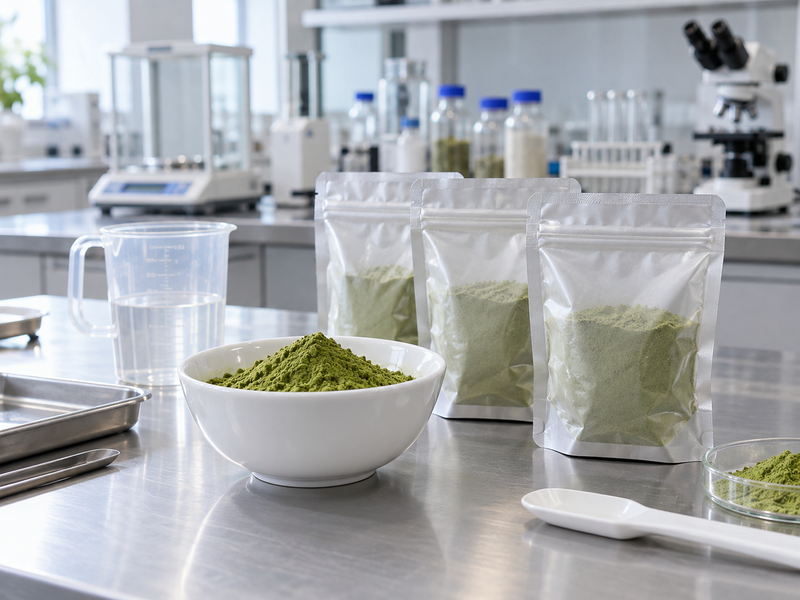
Ask where fresh leaf is steamed, dried, sorted, milled and packed. Confirm whether leaf is rolled during drying or processed as tencha-style material. Yamamasa Koyamaen’s account of matcha processing shows why steaming, drying without rolling, sorting and grinding need distinct checks. A supplier may use another equipment layout, but it should explain its actual process and product definition.
Look for controlled handoffs. Request lot identifiers at leaf intake, processed leaf release and finished powder packing. Ask what happens when leaves wait before steaming or when powder waits before sealing. A flow diagram is useful only if a person can show related batch records. Find out which stage uses a subcontractor and who decides whether a batch passes. These questions make production claims auditable without demanding proprietary settings. They also reveal where color, foreign-material and mix-up risks could enter the chain.
| Step | Buyer checks | Product risk |
|---|---|---|
| Leaf intake | Identity and condition | Mixed or damaged material |
| Drying and sorting | Lot record and rejection | Off-flavor or excess stems |
| Milling and packing | Site and batch link | Texture or identification gap |
5. How should Vietnamese matcha samples be tested?
Use a test that reflects the sale
Run a coded comparison with your current powder and at least one alternative. Weigh equal amounts and hold water temperature, mixing time and vessel constant. If you sell lattes, repeat the trial in your normal milk and sweetener. For baked or processed food, test after actual heat treatment and compare finished color and flavor. Record observations before revealing sample identities to the panel.
Connect samples with purchasable lots. Ask how much of the sampled material exists and whether a production batch will use the same leaf and mill route. A supplier’s show sample can be excellent yet irrelevant to commercial supply. Photograph the prepared samples under one light source and retain sealed powder for a later check. Reject vague “premium” scores unless the team can describe what passed or failed. The result should state an application, dose, test date and decision, not a general verdict on Vietnamese tea.
6. How can claims about Japanese equipment be assessed?
Separate machine origin from powder quality
Some Vietnamese producers describe imported mills or Japanese production know-how. Equipment origin may explain a process choice, but it cannot prove leaf quality or finished consistency. Ask which machine actually made the offered lot, what step it performs and how operators monitor its output. A stone mill, for example, says little about powder freshness, foreign-material controls or suitability for your recipe without a product trial.
Request measurable outcomes. If the seller promises fine texture, agree on a particle-size method or a preparation test that matters in service. For a dry blend, test mixing and segregation. For a drink, watch dispersion and sediment after holding. Ask how the plant cleans equipment between products and links mill output with packed lots. Avoid repeating “Japanese machinery” on marketing material as if it means Japanese origin. Keep the claim precise: the material has a Vietnamese origin, while a stated piece of equipment may come from elsewhere.
| Equipment statement | What it can show | What remains to check |
|---|---|---|
| Imported mill | Machine provenance | Finished texture |
| Automated line | Potential process repeatability | Batch controls |
| Stone grinding | Milling method | Lot performance |
7. Which food-safety records are needed?
Build a destination-specific file
Request the current product specification, ingredient declaration, lot-linked test record and relevant certificates. Your quality team should choose analytes and acceptance limits for the importing market and intended food. Ask for method, units, laboratory identity and sample reference on a report. Do not assume a certificate displayed online covers the specific plant, product or date of your proposed shipment.
Check scope rather than logos. Review certificate holder, location, product category and expiry. If the supplier offers organic powder, verify the current product and chain documentation against your destination’s rules before putting that claim on a pack. If testing for residues, metals or microbes is required, specify it in the order and confirm whether it applies to every lot or a defined program. Matcha Village’s company information describes testing and document support for customer requirements; it is a possible comparison source, subject to the same checks. A consistent standard protects the buyer from approving one origin with weaker evidence than another.

8. How should commercial availability be checked?
Probe the supply route with a real forecast
Send monthly volume bands, pack format, destination and intended launch date. Ask what quantity is available from the sampled lot, what will be produced later and which commitments require a reservation. Confirm whether the supplier can pack your required unit without repacking elsewhere. A news article about a producer’s output cannot establish current stock for your particular powder.
Ask for the second lot plan. The initial order may be easy to fill while the next harvest or milling run has different material. Request a proposed notice period for changes in source, cultivar, processor, mill or packer. State whether your team needs a new sample before release. Clarify Incoterm, shipping documents and the party responsible for export coordination. If an offer contains a lead time, ask when the clock starts: sample approval, payment, packaging approval or confirmed raw material. These details turn a promising origin into a supply plan.
| Supply question | Evidence | Decision |
|---|---|---|
| What is available now? | Lot and released quantity | Trial or launch volume |
| What follows it? | Next material plan | Repeat purchase |
| Who ships it? | Seller and export documents | Contract route |
9. What should the import and label review cover?
Review the exact destination
The importing entity should confirm current customs classification, ingredient and label rules with qualified local advisers. Requirements can differ by market and product format. Check whether the offer is pure tea powder or a formulated mix; that distinction may affect label text and product documentation. Make sure the origin claim accurately reflects leaf source and processing route. Do not use a regional production story to imply certification or legal approval.
Approve copy against the supplier file. Marketing may want “Vietnam-grown,” “Vietnam-made” or “Japanese-style” wording. Each phrase communicates something different. Ask quality and regulatory reviewers to mark which wording the records support. Verify any organic, allergen or dietary claim separately and keep approved wording with the SKU record. A correct invoice will not fix a misleading retail label after packs are printed. For foodservice, give customers a plain product identity and ingredient statement so their own menus and specifications remain accurate.

10. When is a Vietnam-origin powder ready to approve?
Close technical and commercial gates
An approval file should link product definition, origin statement, process route, sensory result, quality documents and commercial offer. If one item is provisional, name the condition and person who will close it. The sample should match a purchasable product code, and the first order should identify which lot or agreed successor it covers. Avoid approving “Vietnam matcha” as a category; approve one supplier, one specification and one use.
Keep future changes visible. Specify when a new leaf source, processing site, recipe, pack or label statement requires review. Record a retained sample and the method your team used to evaluate it. Procurement should hold the forecast and price basis while quality holds release rules. A buyer may accept an unfamiliar sensory profile because it fits a specific product. That is a sound commercial choice when the product description remains accurate and the repeat-order plan is credible.
| Gate | Approval evidence | Owner |
|---|---|---|
| Product identity | Ingredient and process description | Quality |
| Application | Coded sample trial | Development |
| Repeat supply | Lot and change-notice plan | Procurement |
FAQ
Q1. Does Vietnamese origin mean the powder uses a Japanese cultivar? No. Ask for cultivar and leaf-source details for the offered lot.
Q2. Does a Japanese mill make the tea Japanese? No. Machine origin and tea origin are different claims.
Q3. Can a latte trial approve powder for straight tea? No. Taste and texture should be checked in each intended use.
Q4. What if the supplier will not name individual farms? Request a controlled internal trace and a clear origin declaration.
Q5. Which document should arrive with the sample? Ask for its product code, specification, ingredient statement and a lot link.
Send a narrow brief before requesting a quote: product format, target application, volume range and destination. Then test a traceable sample with documents for that exact item. Vietnam matcha production becomes a serious sourcing option when its lot and repeat supply survive those checks.