
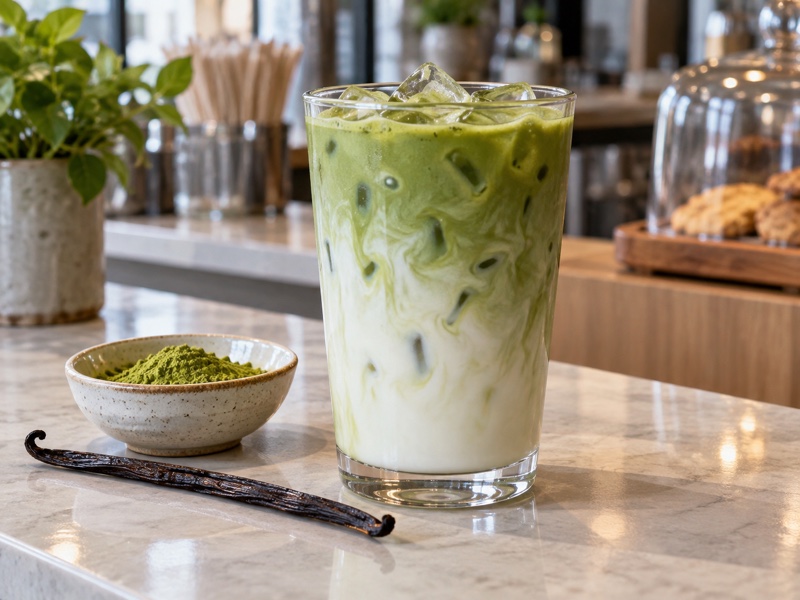
Vanilla matcha is familiar enough to sell easily and easy enough to make badly. A heavy vanilla syrup can make the tea disappear; an under-dosed powder leaves green milk with a sweet finish. The iced vanilla matcha latte in search results illustrates the basic café format. A business developing its own version should choose the actual vanilla ingredient, milk, tea dose, and sweetness together. A recipe card that says “one pump” without naming the syrup or measuring the pump is not a reliable specification.
1. What should a vanilla matcha taste like?
The customer should recognize vanilla first or tea first according to the menu description, but both should be present in a complete sip. Decide whether the drink is hot, iced, milk-based, or a lighter tea. Each will need its own formula. Set serving size, matcha dose, vanilla level, sweetener, milk, ice, and handoff window. Taste through the intended lid or straw; a layer can give a very different first sip from a fully stirred cup.
Write a sensory target in ordinary words: clear tea aroma, soft vanilla, moderate sweetness, no dusty powder, and no syrup pocket at the bottom. Test the drink immediately and after a normal queue. A vanilla syrup can taste stronger as ice melts and tea dilutes. If the drink only tastes balanced for the first minute, the build needs work. Keep the menu photo consistent with the served cup, including its normal color and foam.
| Version | Main expectation | Test |
|---|---|---|
| Iced latte | Smooth tea and vanilla | After ice melt |
| Hot latte | Aroma without harshness | At drinking temperature |
| Less-sweet version | Tea stays pleasant | No arbitrary syrup removal |
2. Which vanilla ingredient should the café use?
Vanilla syrup, extract, paste, and infused milk provide different flavor and sweetness. Syrup is fast but adds sugar. Extract can be intense and may contain alcohol or other carriers that matter for a particular claim. Paste can show seeds but is harder to disperse. Infusion takes time and may vary by batch. Read each label and test the option the operation can actually source. A “vanilla” name alone does not indicate concentration or sugar content.
Compare two options in the same matcha latte at measured doses. Keep milk, tea, and ice fixed. Taste whether the vanilla supports or overwhelms the tea, and note prep time and cost. A dark syrup may alter the green appearance. If a syrup changes brand, recalibrate the pump or portion and re-taste the drink. Use grams or milliliters on the build card; staff can then check a pump’s actual output rather than trusting a nominal setting.
3. How much matcha is needed?
Weigh powder per cup. A scoop can vary with packing, and that variation is obvious in a sweet milk drink. Make a low, middle, and high tea ladder in one vanilla-milk base. Sift the approved powder if it clumps and whisk with a measured volume of water before adding milk. Taste immediately and after the normal queue. The ideal dose gives a distinct tea note without a bitter finish as the ice melts.
If the highest dose is needed to be noticeable, consider lowering vanilla or sugar before selecting a stronger powder. The drink may be cheaper and clearer when the competing flavor is restrained. If a supplier proposes a replacement powder, test a lot-linked sample in the final vanilla formula. Dry powder color and a plain tea tasting will not predict its flavor beneath milk and syrup.
| Tea trial | Fixed base | Main question |
|---|---|---|
| Light | Same vanilla, milk, ice | Is tea recognizable? |
| Middle | Same build | Best balance? |
| Strong | Same hold | Is the finish harsh? |
4. Which milk makes the pairing work?
Dairy, oat, soy, and almond milks differ in sweetness, body, and flavor. Test the default milk and the most popular alternative. A sweetened oat drink combined with vanilla syrup can make the final cup much sweeter than the recipe developer intended. A thin milk can let tea bitterness stand out. Keep the matcha and vanilla fixed while comparing milks so the cause of a change is visible. Document the SKU, not just the broad milk type.
For hot service, test steaming or heating separately from iced service. Heat changes aroma and foam, and a latte that tastes balanced cold may feel overly sweet warm. For iced service, weigh the ice and check dilution. An alternative milk may need a defined variant recipe rather than a straight swap. Ingredient and allergen information should follow the actual product and bar handling; a plant milk does not by itself make the entire station dairy-free.
5. How should matcha and vanilla be combined?
Make a smooth tea slurry first. Add vanilla to the milk or to a measured liquid component so it disperses, then combine by a tested sequence. Pouring syrup into the bottom of a finished iced cup can create a sweet last sip. A layered drink may look attractive but needs a stirred tasting. A fully mixed drink can be more reliable for delivery. Choose the build that staff can repeat under queue pressure and that customers can enjoy without decoding the layers.
Time the process. If staff must make a tea slurry, steam milk, measure syrup, and create a delicate gradient, the drink may be slower than its selling price supports. A pre-measured syrup pump can help if output is checked. Pre-batching matcha may save time but introduces settling and holding questions. Test the first and last cups from any batch and follow the operation’s safe-holding plan.
| Build step | Record | Failure to catch |
|---|---|---|
| Tea slurry | Powder and water grams | Green clumps |
| Vanilla | Ingredient and dose | Syrup pocket |
| Milk and ice | SKU and weights | Unplanned sweetness |
| Handoff | Minutes after build | Dilution and settling |
6. Does a layered presentation help?
Layering can show green tea against pale milk, but it may separate sweetness and flavor. Test the proposed pour order in a clear cup, fit the lid, carry it, and inspect it after the normal wait. Taste without stirring and after stirring. If the first sip is almost pure vanilla milk and the last is strong tea, the menu should instruct mixing or the bar should serve it mixed. Appearance should support the drink, not make it harder to enjoy.
For delivery, a carefully drawn gradient usually changes in transit. A stable mixed version may be more honest and satisfying. Do not increase syrup only to produce a denser base for the photograph. The extra sugar changes nutrition and flavor. If the menu promises a vanilla matcha latte, customers should taste both elements after normal handling, regardless of whether the green layer remains sharp.
| Presentation | Benefit | Test before choosing |
|---|---|---|
| Layered | Clear green contrast | First and last sip |
| Fully mixed | Even flavor | Color after normal wait |
| Separate tea pour | Later mixing | Extra service time |
Run the presentation test with the same vanilla and matcha dose. If staff add syrup for a sharper visual boundary, the experiment no longer compares presentation alone. Time each method from order to handoff and have a customer unfamiliar with the recipe drink it without coaching. Their behavior often tells the team whether a stirring instruction is needed. Record the version that tastes best after the real queue, not the one that photographs most easily.
7. How should sweetness be controlled?
Calculate sugar from the vanilla ingredient and milk before adding separate sweetener. Compare a standard and less-sweet version at fixed tea dose. A drink with no extra syrup may still contain sugar from a sweetened milk. Use the actual pump output or weighed syrup in recipe trials. Check whether sweetness drifts between the first and last cup of a syrup bottle or batch. Sticky pumps and inconsistent staff pressure can change portion size.
Avoid vague nutrition or “sugar-free” claims unless the complete formula supports them. If a customer asks for unsweetened, staff should know whether vanilla extract or another non-syrup option has been tested. Do not simply remove syrup and call the result a vanilla drink if the remaining vanilla is barely perceptible. A defined variant protects both customer expectation and product quality.
8. What should be said about ingredients and caffeine?
Describe the drink plainly: matcha, vanilla ingredient, default milk, and sweetened or unsweetened status. Matcha contains caffeine. A precise number needs data for the actual powder and serving, not a generic online estimate. If the café offers alternative milks, state which are available and check the complete allergen information. Vanilla extracts or syrups can contain carriers or ingredients that matter for some dietary requirements.
Avoid implying that vanilla changes matcha’s health effects. The drink is a flavored tea beverage, and its nutrition follows the full recipe. For retail packaging, the final label needs a separate review of ingredients, nutrition, allergens, and applicable destination-market rules. A café card can at least give staff accurate answers about sweetness, milk, and caffeine.
| Customer question | Check | Staff answer basis |
|---|---|---|
| Is it sweetened? | Syrup and milk labels | Actual build |
| Does it contain dairy? | Default and alternatives | Ingredient and handling card |
| Is there caffeine? | Matcha dose | Accurate qualitative answer |
9. What does one cup cost?
Cost matcha grams, vanilla ingredient, milk, ice, cup, lid, labor, and remakes. A premium vanilla paste may add cost and prep time; a syrup may be cheaper per serving but add more sugar than the target allows. Count powder left in a slurry vessel and milk waste from steaming. Compare cost at the approved dose, not at the first test amount. A cheaper matcha may need more grams to survive the vanilla and milk.
Build time matters for a simple-sounding menu item. Measure several orders during a simulated rush. If the method is slow, improve staging or tools before weakening the tea. For multiple locations, specify syrup SKU and pump output, milk SKU, matcha lot or performance range, and service cup. When any changes, run a short side-by-side tasting and update cost. Silent ingredient substitutions can change the balance customers return for.
10. When is vanilla matcha ready for the menu?
Give another barista a build card with ingredient weights, slurry method, ice, pour order, and a short sensory target. Ask them to make several cups at normal pace. Taste fresh and held cups, stirred and as served. Record build time, sweetness, tea recognition, and whether the last sip is balanced. Test the most common alternative milk as a separate variant. If the result requires the developer to stand beside the barista, the card needs work.
For tea sourcing, compare a lot-linked sample from Matcha Village’s wholesale selection in the final vanilla formula. Choose by finished-cup flavor, dispersion, and cost. Approve the drink when the tea remains present, the vanilla dose is reproducible, ingredient information is accurate, and the bar can make it during a real queue.
FAQs
Can vanilla extract replace vanilla syrup? It can, but sweetness and concentration change. Reformulate and taste the complete drink.
Why does the bottom of the cup taste very sweet? Syrup may be pooling. Measure it and test a different mixing or pour order.
Can the drink be made without added sugar? A tested variant may be possible. Check the milk and vanilla ingredients before calling it unsweetened.
Is vanilla matcha caffeine-free? No. Matcha contains caffeine.
Should more matcha be added for a greener color? Taste first. More powder may create bitterness without correcting milk, ice, or lighting effects.