
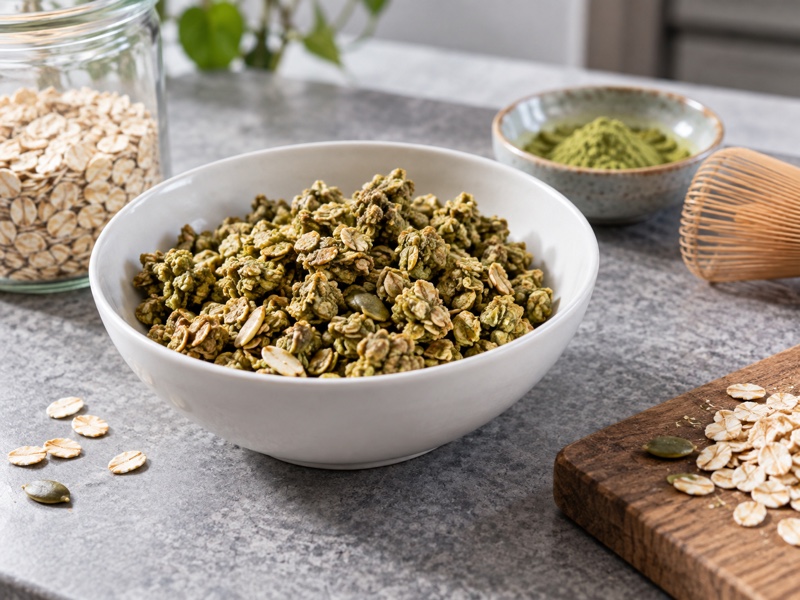
Matcha granola has to survive more than a recipe photograph. The oats must bake into clusters, stay crisp after packing, and still taste of tea rather than only sugar or toasted nuts. The matcha granola recipe in search results offers a home example. For a commercial product, powder dose, binder, oven profile, cooling, package barrier, and shelf-life work belong in the same trial. Green at the mixing bowl is not the finish line; the customer eats the product after it has spent time in a bag.
1. What should finished matcha granola be?
Set a target for cluster size, crunch, tea flavor, sweetness, and appearance. Decide whether the product is eaten as a cereal, a yogurt topping, or a snack from the bag. A topping can use smaller clusters; a snack may need larger pieces that survive transport. Taste it dry and with its intended companion, because yogurt or milk can mute the tea. Define a serving weight and acceptable amount of loose crumbs in the pack.
The green may be subtle after baking. Do not chase a vivid color by underbaking a moist granola that will soften in a bag. A natural, slightly toasted appearance can be acceptable if the tea is clear and the clusters are crisp. Write the sensory target before adding fruit or chocolate. Add-ins should improve the eating experience rather than hide a weak matcha base.
| Product use | Texture target | Test |
|---|---|---|
| Breakfast cereal | Crisp, spoonable pieces | With milk |
| Yogurt topping | Clusters that hold briefly | After contact with yogurt |
| Snack pack | Larger intact clusters | After handling and shipping |
2. Which oats, nuts, and seeds belong in the base?
Choose oats by flake size and supplier consistency. Large flakes can make visible clusters; fine oat material may fill gaps and change density. Nuts and seeds add texture and flavor but can dominate matcha, affect roasting, and introduce allergens. Test a simple base first. Record each ingredient by weight, including any coconut or puffed grain. An ingredient list that grows without a sensory purpose complicates purchasing and labeling.
Inspect the actual commercial lots. Broken nuts and different oat flake sizes can alter cluster formation and bake loss. If the business plans an allergen-controlled or gluten-free product, sourcing, facility controls, and labeling need appropriate verification. A recipe using oats alone does not establish a gluten-free claim. Keep a retained sample of the approved dry blend and compare incoming lots before large production runs.
3. How much matcha should be added?
Run low, middle, and high doses in the same oat-and-binder base. Weigh powder per batch and per saleable serving. Sift and disperse it in the method chosen for the recipe; dry matcha can collect in bitter pockets. Taste after baking and cooling, then after the planned packaged hold. Tea that smells strong in the mixing bowl may become faint beneath toasted oats and sweetener. The highest dose can taste harsh when eaten dry.
Compare candidate powder lots in the finished granola. The oven can change color and aroma, so a straight tea tasting is only a starting point. If a powder needs a high dose to show through, calculate its cost and impact on mixture moisture. A lighter dose with a quieter nut blend may produce a better product. Keep the matcha dose tied to an approved lot or performance range on the production card.
| Tea trial | Same base | Evaluate after packing |
|---|---|---|
| Low | Oats, binder, oven | Tea noticeable? |
| Mid | Same batch size | Best balance? |
| High | Same process | Bitter dry bite? |
4. What binder makes clusters without too much sugar?
Syrup, honey, sugar, oil, and other binders affect cluster strength and sweetness. Choose based on the intended product and label, then measure rather than pouring until the oats look coated. Too little binder leaves loose crumbs; too much creates sticky, overly sweet pieces that soften in the pack. A honey-based product cannot be called vegan. A low-sugar positioning needs the full formulation and appropriate review, not just a reduced syrup spoonful.
Make a binder ladder at fixed tea dose and oven profile. Weigh cooled intact clusters and loose fines. Taste for sweetness and tea identity. A stronger binder may improve cluster size but mask matcha. A small change in oil may improve crispness yet shorten shelf quality if the fat oxidizes. Do not change three binder ingredients at once; controlled trials reveal which adjustment actually helps.
5. How should the oven profile be set?
Granola bakes across a tray, so layer thickness and stirring determine evenness. Spread a weighed batch to a defined depth on the actual tray. Record oven setting, position, mixing or turning schedule, and finished weight loss. Matcha may dull under heat while oats need enough drying for crunch. A short hot bake can brown the edges before the center dries; a long low bake may change tea aroma. Test the full commercial load, not only a half tray.
Assess clusters after complete cooling because warm granola can feel soft before it becomes crisp. Check tray edges and center separately. If the color is uneven, adjust layer depth or turning rather than adding powder to the entire batch. A controlled cooling step prevents steam from entering the package. Document a finished-product moisture or water-activity target if the business has the equipment and quality program to use one; sensory crunch alone is not a shelf-life validation.
| Bake check | Record | Problem to catch |
|---|---|---|
| Tray depth | Weight and area | Wet center |
| Heat and turning | Time, position | Dark edges |
| Cooling | Time and temperature | Condensation |
6. When should add-ins be mixed in?
Dried fruit, chocolate, freeze-dried berries, and some nuts can behave badly in the oven. Decide whether each is baked with the base or added after cooling. Fruit may harden or burn; chocolate needs a cool product or it will smear; crisp inclusions can absorb moisture after packing. Test the actual sequence and hold. A colorful add-in should not be used solely to compensate for a matcha granola that tastes like ordinary oats.
Weigh the inclusion per saleable pack and inspect distribution. If raisins or berries settle in a mixing bin, the first bag may have a different ingredient ratio from the last. This is both a quality and labeling issue. Compare the first, middle, and last filled packs. If a product has nuts, dairy-containing chocolate, or other allergens, the declaration and manufacturing controls must match the finished formula.
7. How should clusters be cooled and packed?
Let the granola cool under a documented method before breaking or bagging. Warm packing traps moisture and can soften clusters. Break the sheet to a target size, then measure the amount of fines. A very large cluster may look attractive but crumble in shipping. Test normal handling with the proposed bag or tub. Packaging barrier, seal, headspace, and display conditions affect how long crunch and tea aroma remain acceptable.
Use the actual retail pack in a shelf-quality trial. Store samples under expected conditions and check at planned intervals for crunch, aroma, color, oiliness, and package integrity. A home recipe’s storage statement is not evidence for a commercial shelf life. If the product travels through a distributor or warm warehouse, include those conditions in validation. Quality and food-safety teams should set the release and shelf-life process together.
| Pack test | Observe | Why |
|---|---|---|
| Immediately after seal | Condensation, cluster size | Cooling adequacy |
| Handling simulation | Fines and breakage | Pack protection |
| Planned shelf interval | Crunch and tea aroma | Saleable life |
8. What should the label say?
Name oats, matcha, sweetener, oil, nuts, seeds, fruit, and all other actual ingredients. Any “organic,” “gluten-free,” “vegan,” or nutrition claim requires review of the complete formula, sourcing, process, and destination-market rules. The presence of matcha does not support a general promise about energy or health. If a caffeine statement is desired, it should use a defensible basis for the powder dose and finished serving.
Show a realistic serving size. A small portion calculated for nutrition may not match how customers eat granola from a bag. Product imagery should reflect the actual cluster and inclusion distribution. If the recipe changes to a different sweetener or nut, review the label and allergen card before production. Keep a lot record so the business can trace both tea and other key ingredients through packed batches.
9. What is the true cost per saleable bag?
Cost the full batch: oats, matcha, binder, inclusions, bag, label, labor, oven use, breakage, sampling, and unsold stock. Divide by bags that pass the size and quality standard. Fines may be usable in a separate product if safely and honestly specified, but should not be silently counted as intact clusters. Calculate matcha cost at the approved dose and compare it with the larger drivers: nuts, packaging, and rejected product.
Test price sensitivity against pack size. A premium tea ingredient can be visible in a small snack bag but disappear in a large bag crowded with sweet inclusions. A cheaper powder may require a higher dose and still lose aroma in the pack. Compare alternatives in the same finished product and shelf test. Landed ingredient price is only one line in a viable wholesale or retail decision.
| Cost item | Measure | Often missed |
|---|---|---|
| Matcha | Grams per accepted bag | Trial dose differs |
| Base and inclusions | Actual batch use | Ingredient settling |
| Yield | Intact clusters and fines | Breakage in packing |
| Pack and shelf | Bag, labor, waste | Failed seals or staling |
10. When is the granola ready to launch?
Run a full-size pilot with the actual tray load, mixing equipment, cooling area, and pack. Check several tray positions and the first, middle, and last bags. Taste the granola dry and in its intended use after the planned storage interval. Record cluster size, fines, tea flavor, color, pack seal, label, and unit cost. Have another operator follow the production card. If results differ, identify the unmeasured step.
Keep one sealed control pack from the approved pilot and open it alongside a later production lot at the same age. A side-by-side comparison makes drift in tea aroma and cluster texture easier to notice than a memory of the first bake. If the later bag has more fines, examine the cooling, breaking, and packing steps before assuming the ingredient has changed. If the tea note is weaker, compare the powder lot and the baking record. That is a practical release check for a product whose quality develops over time.
For powder approval, compare a lot-linked sample from Matcha Village’s wholesale range in the final bake and pack against the retained control. Approve the product when the tea survives the process and the package preserves the texture for the validated sale window. A green mixing bowl is not enough; the accepted bag is the product.
FAQs
Why did the granola lose its green color? Baking, surrounding ingredients, light, and storage can all affect appearance. Test the final product before raising the tea dose.
Can matcha be sprinkled on after baking? It can be tested, but dry powder may taste bitter and distribute unevenly. Validate flavor and adhesion in the packed product.
Why are there no clusters? Binder amount, mixing, tray depth, and cooling can all matter. Change one at a time.
Is matcha granola automatically gluten-free? No. Oat sourcing, other ingredients, and cross-contact controls must support that claim.
How long can commercial granola be sold? Set the shelf life through the business’s actual product, packaging, quality, and safety validation.