
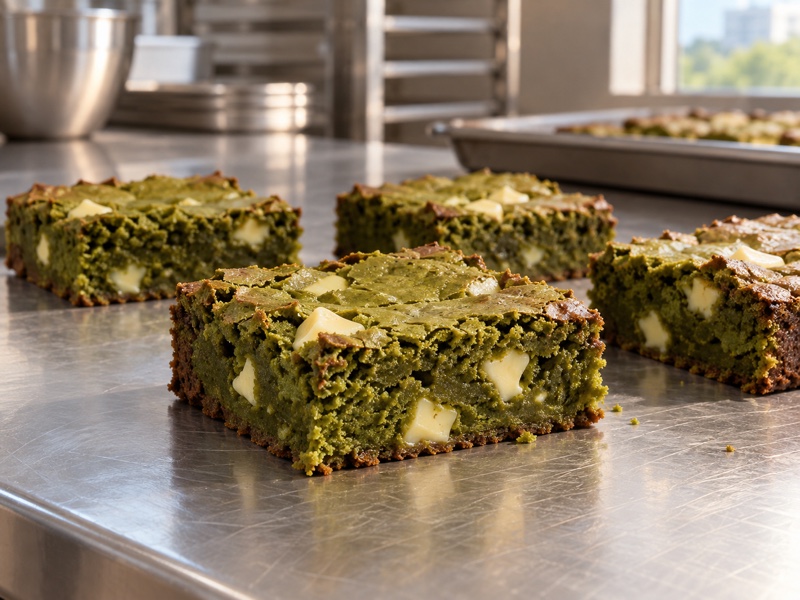
Matcha brownies have a naming problem before they have a recipe problem: customers expect the dense bite of a brownie, but green tea changes the familiar chocolate profile. The brown-butter matcha brownies in search results offer one home-baking direction. A bakery needs to decide how much tea, fat, sugar, and white chocolate the final square can carry while remaining dense, cuttable, and pleasant on the next day. The product should taste like matcha, not only show a green center beneath a sweet crust.
1. What kind of brownie is the bakery making?
Set a texture target: dense and fudgy, or slightly more cake-like. Both can be good, but they require different bake endpoints and have different cut yields. Define the serving weight, pan size, thickness, and whether the piece is served warm, at room temperature, or chilled. The customer should recognize tea after sweetness and fat. A raw-looking center is not a substitute for a fudgy texture. Cut the thickest part after full cooling and judge the bite, not just the glossy top.
Decide what “brownie” communicates on this menu. A white-chocolate matcha square may be more accurate than a chocolate brownie with a green tint. If dark chocolate is included, it can dominate the tea. Taste the plain base before adding swirls or chips. The product brief should state acceptable sweetness, green appearance, and sale window. A square that tastes good warm but becomes greasy or dry in a wrapper needs more work.
| Target | Check | Failure |
|---|---|---|
| Dense center | Cut after cooling | Raw streak or dry crumb |
| Tea flavor | Plain square | Sugar hides matcha |
| Clean portion | Weigh cut pieces | Crumbling and edge loss |
| Sale window | Taste in pack | Greasy or stale bite |
2. Which fat and chocolate should be tested?
Butter, browned butter, oil, and white chocolate each change texture and flavor. Brown butter adds a toasted note that can pair with matcha but may conceal a delicate powder. White chocolate adds sweetness, fat, and milk solids; its composition varies across brands. Choose the actual ingredient the bakery can buy consistently, then hold it fixed while testing tea dose. A recipe that works with one white chocolate can change when its sugar or cocoa-butter content changes.
Do not change butter browning and matcha dose together. First establish a base that makes a good square without tea. Then add powder in measured steps. Check whether fat separates during cooling or under package heat. A very rich formula can feel appealing in one small tasting but heavy as a full retail portion. Taste an entire proposed serving, not only a bite passed around the test kitchen.
3. How much matcha belongs in the batter?
Weigh matcha by the pan and divide by saleable squares. Sift it with other dry ingredients or disperse it according to the recipe so no bitter green pockets remain. Run low, middle, and high doses in an otherwise identical formula. Compare fully cooled squares and the version held through the planned sale period. The powder may seem stronger in raw batter than after baking. Choose the dose that still reads as tea without a harsh finish.
When adding powder, watch the dry-to-wet balance. More tea can thicken the batter and change the center. Adjust a measured small portion of another dry ingredient in controlled trials rather than piling tea on top of a finished formula. If a powder swap is proposed, test it at the approved dose in the full bake. A supplier’s dry color is not enough to predict the brownie after heat and fat.
| Dose test | Fixed variables | Record |
|---|---|---|
| Low | Pan, fat, bake | Tea recognition |
| Medium | Same formula | Flavor and center |
| High | Same process | Bitterness and cost |
4. What mixing method keeps the center even?
Matcha can clump, and dense brownie batter makes those clumps hard to remove later. Blend or sift the powder into the appropriate dry fraction before combining it with wet ingredients. Use a consistent egg and sugar mixing endpoint; too much aeration can make the square cakier than intended. Scrape bowl and pan carefully. Tea powder left on the bowl wall changes the dose in the final batch and may streak the last pan.
Record ingredient temperature and mixing order. Melted fat that is too hot can affect eggs or chocolate; a cold chocolate mixture can set unevenly. If the bakery scales the formula, mixer geometry changes the amount of air introduced. Compare the first and last pan from a batch. A written time and visual cue will help another baker reproduce the result better than the instruction “mix until combined.”
5. What bake endpoint gives a fudgy but finished square?
Use the pan material, batter depth, oven load, and actual equipment in development. A timer copied from a home pan may not transfer to a commercial tray. Test the center and edge after cooling. A skewer can be informative, but a few moist crumbs versus fluid batter must be interpreted consistently. Record oven setting, position, bake time, finished weight, and how the center cuts after the full cool. Do not shorten the bake solely to keep the top bright green.
The exposed surface may brown even when the inside remains green. If the top gets too dark before the center is finished, examine pan depth, oven heat, sugar, and recipe balance. A parchment cover or different pan may help, but each change must be tested for safe, even baking. Cut squares from the center and edge and taste both. A formula that gives a perfect center and dry outer third has a poor saleable yield.
| Bake observation | Possible cause | Next controlled test |
|---|---|---|
| Dark top, wet center | Heat or pan depth | Load and temperature |
| Dry edge | Long bake or thin pan | Pan and endpoint |
| Gummy center | Underbake or formula | Cut after full cooling |
6. How should the slab be cooled and cut?
Cooling is part of the recipe. A warm slab can smear and break, while a fully set one can be portioned cleanly. Set a minimum cooling point under the bakery’s process, then compare cut yield. Use a consistent knife and cleaning method. Measure the intended square grid before cutting and weigh first, center, and edge pieces. Trimming creates cost and can make a “twelve piece” pan yield fewer saleable portions.
Chilling can firm a fudgy center, but it changes eating texture and may dull aroma. If the brownie is sold chilled, taste it chilled. If served at room temperature, test the transition out of the refrigerator. Do not rely on a photograph of a clean cold cut to represent a soft room-temperature product. Include the cut and release procedure on the production card so staff do not sell a square before its structure has set.
7. What happens to color and flavor after packing?
Matcha’s appearance can change with heat, light, oxygen, and the surrounding recipe. Compare a fresh cut face with a square held in the actual wrapper at the planned sale time. Take photographs under consistent light. A darkening crust may be acceptable, but a stale aroma or sticky surface is not. The pack can also trap moisture, making the top tacky. Test cooling and pack timing before blaming the powder.
Set a sale window through the bakery’s quality and food-safety procedures. A home recipe’s storage claim is not a commercial shelf-life study. If the product includes cream cheese, fresh fruit, or another perishable swirl, it may need different holding controls. For wholesale, assess transport, display light, and the retailer’s handling. A brownie that survives the bakery counter may not survive a brightly lit retail shelf.
| Hold point | Sensory check | Pack check |
|---|---|---|
| After cooling | Tea, density, sweetness | Dry exterior |
| Normal case hold | Aroma and bite | Surface tackiness |
| End of approved life | Staling and color | Condensation or oil |
8. Which additions belong in the final product?
White-chocolate chips, nuts, cream cheese, and fruit can add contrast but also hide matcha or complicate storage. Test one addition at a time, with a weighed amount. A large white-chocolate swirl may make the product taste like candy rather than tea. Nuts introduce allergens and can change cut yield. A wet filling can create underbaked-looking patches even when the base is finished. Inspect the full square, not only a carefully selected center piece.
Keep garnishes honest. A dusting of matcha on a moist top can darken and taste bitter. If a finishing powder is used, test it through the sale window. A simpler square with a clear tea note can be stronger than one piled with ingredients. Any advertised topping must appear consistently in the served portion and in ingredient, allergen, and cost records.
9. What is the cost per saleable square?
Cost matcha, fat, chocolate, sugar, flour, egg, additions, wrapper, labor, and rejected or trimmed pieces. Divide by saleable squares, not the theoretical grid. A high powder price may be tolerable in a small portion; a cheap powder needing a heavy dose may dry the batter and raise cost. Record actual grams per pan and accepted pieces over several runs. Include the extra labor of browning butter or preparing a swirl.
Compare unit cost with the intended selling price and shelf waste. If a batch holds only a short time, produce fewer pans more often. Do not lengthen the sale window to rescue the margin without validating quality and safety. If a supplier proposes a replacement powder, bake it at the same dose, then update the formula and cost only after sensory approval. The finished square is the economic unit.
| Cost line | Basis | Typical miss |
|---|---|---|
| Matcha | Grams per saleable square | Trimmed edges |
| Fat and chocolate | Actual pan weight | Brand composition change |
| Production | Labor and rejects | Broken cuts |
| Pack and hold | Wrapper and unsold units | Short sale window |
10. When is the brownie ready for sale?
Run a full-pan pilot using the normal oven and staff. Cut all planned pieces, weigh them, taste center and edge pieces, and inspect them after the intended hold. Ask another baker to follow the written mix, bake, cool, and cut card. If the result differs, identify which instruction requires a measurable cue. Confirm the ingredient and allergen information for the approved formula, not an earlier test batch.
For matcha procurement, compare a lot-linked sample from Matcha Village’s wholesale selection in the exact brownie base. Judge the baked and held square. Approve the product when tea flavor, dense texture, portion yield, pack performance, and cost agree. The retained control square and powder sample make future lot decisions easier.
FAQs
Do matcha brownies need dark chocolate? No. Many formulas use a blondie-like base so the tea remains visible and recognizable. Test the product customers expect from the name.
Why is the surface brown? Baking browns the exposed batter. Check the center and flavor before reducing bake time for color alone.
Why is the center gummy? It may be underbaked or the formula may contain too much moisture or fat. Evaluate after full cooling.
Can matcha brownies be sold the next day? Only after the bakery validates its own quality and safe-holding window in the actual pack.
Is more matcha always better? No. A higher dose can make the square bitter and more expensive without improving the full bite.