
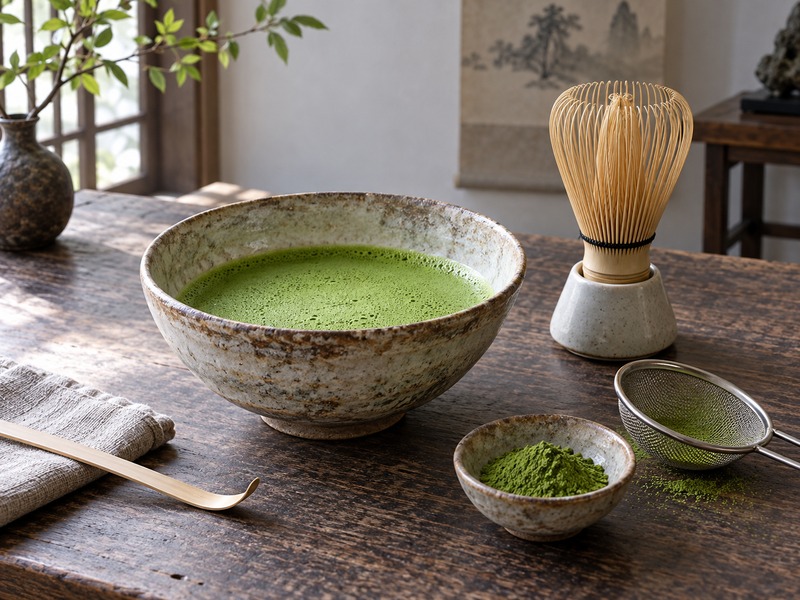
Usucha matcha is the thin, whisked style many people picture when they think of a bowl of Japanese matcha. It is simple in ingredients and unforgiving in execution. Water, powder, a bowl, and a whisk leave nowhere for stale tea or careless measuring to hide. A café can serve usucha well without turning every order into a ceremony, but it needs an honest description and a repeatable method. These ten questions cover what the style is, how to make it, and how to choose tea that tastes good without milk or syrup.
1. What does usucha mean on a menu?
Say “thin matcha” clearly
Usucha is commonly described as thin matcha: powdered tea whisked with enough water to make a fluid drink, often with a surface of fine foam. It differs from koicha, a thicker preparation with more tea relative to water and a different mixing motion. Neither is a separate plant variety. The name describes the preparation style. On an English menu, “thin whisked matcha” can help guests understand what will arrive, particularly if they are used to large sweet lattes.
The ranked Ippodo usucha guide gives a concrete example: 2 grams of matcha, 60 milliliters of water at 80°C, and a brief whisk. That ratio is a useful starting point, not a rule every tea supplier must follow. A café should taste its own powder at that ratio and adjust within a documented range. The guest should receive a small bowl of tea, not a mug of diluted green water or an unannounced sweet drink.
| Style | Texture | Typical service expectation |
|---|---|---|
| Usucha | Fluid, whisked | Small bowl, often foamy |
| Koicha | Thick, smooth | Concentrated paste-like tea |
| Matcha latte | Tea plus milk | Larger creamy beverage |
| Iced matcha | Tea plus cold water or ice | Chilled, lighter drink |
2. Why does the tea quality show so clearly?
Taste without milk or sugar
In a plain bowl, the powder supplies nearly all the flavor and color. A harsh, stale, or poorly stored tea cannot be disguised by dairy. Assess aroma before mixing, then taste the first and last sip. Look for a clean tea impression, appropriate umami, manageable bitterness, and a finish that invites another sip. Color can help with presentation, but it is not a complete quality score; lighting and bowl glaze can change how green a tea appears.
Ask for current-lot samples and prepare each at the same ratio, water source, and temperature. A supplier’s grade label may not predict your preferred bowl. Record the tea’s origin, lot, pack format, price, and sensory notes. A tea that is lovely in a latte may be too rough for straight usucha, while an expensive delicate powder may be unnecessary for a dessert topping. Select for the use in which the customer will actually taste it.
3. How much powder and water should you use?
Weigh a baseline before adjusting
Start from a published ratio such as Ippodo’s 2 grams to 60 milliliters and taste it with the chosen matcha. Weigh powder during development; a heaping spoon changes with particle size and the person holding it. Measure water as well. If the bowl tastes too light, change one variable at a time. Adding powder increases concentration and cost; reducing water can change both mouthfeel and serving size. A café should know which change produced a better cup.
Make three coded trials: baseline, slightly lighter, and slightly stronger. Serve them at similar drinking temperatures. Ask tasters to score tea flavor, bitterness, mouthfeel, and overall preference. Repeat the winning condition with a second staff member. If the ratio only works when one expert whisks it, the recipe may need a simpler process. A small fluid serving can feel satisfying when the tea is balanced; making it larger does not automatically improve value.
| Trial | Tea | Water | Purpose |
|---|---|---|---|
| A | Baseline | Baseline | Reference cup |
| B | Same | Slightly more | Test lighter body |
| C | Slightly more | Same | Test stronger flavor |
| D | Selected | Selected | Staff repeatability |
4. Why sift the matcha?
Remove dry clumps before whisking
Fine matcha powder can form compact lumps during storage. A bamboo whisk may break many of them, but a few can survive and reach the guest as bitter dry pockets. Sifting the measured tea into a dry bowl is a small preparation step that improves the chance of an even cup. Use a clean fine sieve, and avoid leaving a large mound of powder on the rim. The goal is not theatrical equipment; it is a smoother drink.
Test the same powder sifted and unsifted under normal service conditions. If the difference is substantial, keep the step in the recipe card and place the sieve where staff can use it quickly. Clean and dry it between uses according to the café’s procedure. Moisture caught in a sieve can cause new clumps and waste. If a tea repeatedly forms hard lumps despite careful storage, check the pack and storage conditions rather than asking staff to work harder at every order.
5. What water temperature makes a good bowl?
Choose by taste and service control
Ippodo’s usucha recipe uses water at 80°C, or 176°F. Other tea sellers recommend broader ranges. Prepare the same powder at several temperatures below boiling, then taste at comparable serving temperatures. The water temperature at the moment it meets the powder matters more than a kettle display that may not reflect cooling in a pitcher. A thick cold bowl can also pull heat from a small serving. Record the vessel condition when comparing trials.
Avoid claiming that a particular number makes matcha universally “healthiest” or that water crossing a threshold instantly destroys it. Temperature changes sensory qualities, but the preferred setting depends on the tea and the service. A temperature-controlled kettle or a checked thermometer is useful if the café wants consistent cups. If staff must cool boiled water, test the actual time and vessel instead of writing a generic wait time on the card.
| Variable | Keep consistent | Check |
|---|---|---|
| Water source | Same water | Off-flavors |
| Pour temperature | Measured at bowl | Flavor and foam |
| Bowl condition | Dry and comparable | Heat loss |
| Drinking temperature | Similar at tasting | Fair comparison |
6. How should the whisk move?
Build fine foam without scraping the bowl
Usucha is commonly whisked briskly back and forth rather than stirred in slow circles. Ippodo describes a quick “M” motion for its recipe. Keep the whisk tips just above the bowl bottom so they move through the tea without grinding against ceramic. Start by dispersing the powder, then increase speed to create a finer surface. A high mound of large bubbles is not necessarily better than a smooth, even foam and a well-mixed cup.
Train with a measured dose and a short timed practice. Compare two staff-made bowls for clumps, foam texture, and last-sip sediment. If the whisk is frayed, too large for the bowl, or stored wet, the result may worsen even when technique is sound. Rinse and dry the whisk appropriately and use a stand if available. Equipment care is part of consistency. A small electric frother can be operationally useful, but the café should describe the actual method rather than imply a bamboo-whisk service it does not provide.
7. Does foam prove the matcha is good?
Treat it as one observation
Foam depends on powder, ratio, water temperature, bowl shape, whisk, and operator. A low-foam cup can still taste good, and a photogenic foam can sit on a bitter tea. Examine bubble size and how quickly the surface collapses, but always taste the cup. Check for dry powder underneath the foam. Customers see the surface first, so presentation matters; it should not become a substitute for flavor.
If foam varies across staff, standardize the powder and water weights before changing the tea supplier. Then review the whisking technique and bowl. A deeper narrow bowl may be harder to use than a wider one. Run a quick training test with the same batch of tea. In the recipe card, specify an acceptable appearance rather than a rigid foam height. The best practical standard is a smooth, pleasant cup that can be repeated during a normal shift.
8. How should a café explain and price usucha?
Set an expectation for a small, unsweetened serving
Many customers know matcha only as a sweet iced latte. A small straight bowl may surprise them if the menu gives no context. State the serving size, that it is unsweetened, and that it is prepared by whisking tea with water. A short flavor note can help: vegetal, umami, gentle bitterness, or another description based on the actual tea. Avoid exaggerated claims about ceremonial status or origin unless the supplier documentation supports them.
Price from the real tea dose, waste, staff time, cup or bowl service, and desired margin. A 2-gram portion from a premium powder can cost more than a latte’s tea component, but the customer is buying a distinct experience. Offer a small sweet alongside it if that fits the café concept, while keeping the tea itself unsweetened. A thoughtful explanation often does more for satisfaction than making the portion larger without enough tea.
| Cost element | Measure | Why |
|---|---|---|
| Tea | Grams per bowl | Main ingredient cost |
| Water | Volume | Sets concentration |
| Labor | Real service time | Affects throughput |
| Waste | Sieve and spill loss | Changes true yield |
9. What should a supplier sample review include?
Compare teas as plain usucha
Request current-lot samples, origin and processing information available from the supplier, pack size, storage guidance, and lead time. Make coded bowls using the same baseline recipe. Assess aroma when opening, color in the same lighting, whisking behavior, flavor, and finish. Do not compare one tea from a newly opened tin with another that has sat open for weeks. Store samples similarly and record opening dates.
The Matcha Village site can be a starting point for sample requests, but the purchase decision should follow the bowl test. Ask for a second lot or a larger pilot quantity before promising year-round menu consistency. If the tea changes, run the usucha tasting again rather than assuming the latte tasting is enough. Straight tea reveals differences more clearly and gives a supplier a useful, specific quality conversation.
10. What belongs in a repeatable service card?
Specify the full cup, not only the tea
Write powder grams, water volume and temperature, bowl type, whether the bowl is warmed, sifting tool, whisk motion, expected mixing time, and acceptable appearance. Note the tea lot and storage method. Include a photo of the serving and a sentence staff can use when presenting it. The card should help a new barista prepare an honest small bowl without needing an extended lesson during a rush.
Test the card with someone who did not help develop it. Compare their bowl with the reference for taste, clumps, and foam, then revise unclear steps. Retest when equipment or powder changes. Usucha is simple enough that every variable is visible, which is why clear preparation standards pay off. A café does not need to imitate a formal tea ceremony to treat the drink with care; it needs to measure, taste, and describe what it serves.
| Service step | Standard to record | Failure to watch |
|---|---|---|
| Sift | Tea weight and tool | Lumps |
| Pour | Water amount and temperature | Weak or harsh cup |
| Whisk | Motion and time | Uneven texture |
| Serve | Bowl and description | Wrong guest expectation |
FAQ
What is the difference between usucha and koicha?
Usucha is a thinner, fluid whisked matcha. Koicha uses a more concentrated tea-to-water ratio and is mixed into a thick, smooth preparation.
Is usucha matcha sweetened?
Traditionally the plain tea is not sweetened. A café should state clearly if it adds sugar, milk, or another ingredient.
How much matcha should I use for usucha?
Ippodo’s published starting recipe uses 2 grams with 60 milliliters of water. Taste and adjust for the specific powder and serving style.
Do I need a bamboo whisk?
A bamboo whisk is well suited to the classic bowl. A café can test another tool, but it should judge the resulting texture and describe the service honestly.
Why does my usucha have clumps?
Powder can compact in storage or be added too quickly. Sift the measured tea, add a controlled amount of water, and whisk with a suitable bowl and tool.