
Does matcha stain clothes? It can leave a visible green mark, especially on a light apron or shirt, but many fresh spills can be treated successfully. The correct first move depends on whether the spill is dry powder, plain tea, or a latte with milk and syrup. Fabric and care instructions matter too. A café cannot promise that every garment will recover, yet it can give staff a sensible response that avoids grinding powder into cloth or drying a mark before checking it. These ten questions make that response clear.
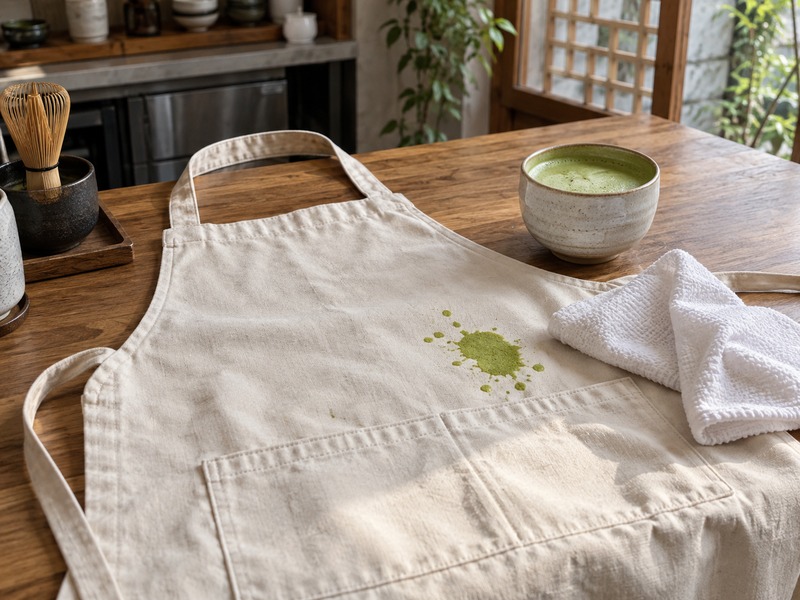
1. What actually landed on the fabric?
Separate powder, tea, and latte
Dry matcha powder sits on fabric differently from a liquid spill. If the material is still dry, gently lift or shake away loose powder before adding water. Wetting a pile of powder can make a larger paste that spreads into the weave. Plain matcha tea is already a liquid; absorb the excess promptly with a clean cloth. A latte adds milk, fats, and possibly syrup, so its mark may need treatment for more than the tea pigment alone.
The ranked matcha stain article distinguishes these spill types. Its general advice is useful, but a cleaning result depends on the particular garment and product. Before applying anything, look for the fabric care label and note whether the textile can be washed, needs professional cleaning, or has limits on bleach or heat. The FTC explains the role of clothing care labels; follow the garment’s instructions over a generic internet tip.
| Spill | First action | Avoid |
|---|---|---|
| Dry powder | Lift loose particles | Wet rubbing |
| Plain tea | Blot excess liquid | Scrubbing into fibers |
| Latte | Blot and identify ingredients | Ignoring milk or fat |
| Sweet drink | Blot and pretreat appropriately | Heat before checking |
2. How fast should the spill be treated?
Respond promptly without panic
Fresh marks often have a better chance of removal because the liquid has had less time to spread and dry. Keep a clean absorbent cloth at the beverage station and blot from the outside of a wet mark toward the center. This limits spreading. If the affected item is a staff apron, change into a clean spare when possible; a visible wet apron is uncomfortable and may continue transferring color to counters or other clothing.
Speed does not justify an aggressive cleaner on an unknown fabric. Take a few seconds to read the label and identify whether the item is washable. For a customer’s garment, do not promise a cleaning outcome or apply chemicals without their agreement. Offer a clean cloth and plain water if appropriate, then let the garment owner decide whether to seek professional care. A café’s helpful response should reduce harm and embarrassment, not turn a small spill into an unauthorized laundry experiment.
3. Should dry matcha powder be rinsed immediately?
Remove what can be removed dry
With a dry powder spill, gently shake the garment or use a soft dry brush to lift loose particles. Work away from clean fabric. Do not grind the powder into the weave with a hard brush, and avoid blowing it into the air near food. Once the loose powder is gone, inspect the remaining mark. If the care label permits washing, a cool-water rinse from the back of the fabric can help move the remaining color out rather than driving it deeper.
Try this sequence on a staff apron in a controlled setting before writing a cleaning card. Apron fabrics and dyes vary. A brushed cotton surface may hold powder differently from a tightly woven polyester blend. Photograph the mark before and after the dry lift so staff can see what success looks like. If a white uniform repeatedly collects green powder, a lidded scoop, lower fill height, or a better transfer method may prevent more work than any stain remover.
4. What should happen with a wet matcha spill?
Blot, rinse, then pretreat
Blot excess liquid with a clean towel; do not rub rapidly. If the care label allows washing, flush the mark with cool water from the reverse side. Apply a small amount of suitable laundry detergent or a prewash product according to its instructions, and test discreetly if the fabric is colored or delicate. The American Cleaning Institute’s stain guide emphasizes checking the care label and using appropriate pretreatment. Rinse and inspect before the garment goes into a hot dryer.
For a latte, the fabric may also contain milk fat or sweet syrup. A detergent suited to the garment is more appropriate than assuming water alone will remove every component. Do not combine multiple cleaning chemicals casually. Some mixtures can damage fabric or create unsafe fumes. Follow product labels and the workplace’s laundry procedure. A simple, repeatable process with the right detergent usually serves a café better than an improvised collection of vinegar, lemon, bleach, and baking soda.
| Step | Purpose | Check |
|---|---|---|
| Blot | Remove excess drink | Is the mark spreading? |
| Rinse from back | Push liquid outward | Does label permit water? |
| Pretreat | Address remaining stain | Is product fabric-safe? |
| Wash | Clean the garment | Use label instructions |
| Air check | Inspect before heat | Is any green still visible? |
5. Why check the label before using heat or bleach?
Protect the garment as well as the color
Some fabrics shrink, lose dye, or require professional care. A strong bleach may remove green tea color while damaging the shirt or turning a colored apron pale. Heat can make a remaining mark harder to remove or make it less visible while wet and obvious once dry. Until the stain is gone, choose an inspection step before machine drying. This is a cautious workflow, not a claim that every matcha pigment behaves identically on every fiber.
The FTC care-label rule exists so garment sellers provide regular care instructions. Staff should know where to find those instructions on uniforms. If a label says dry clean only, do not run the item through a sink because a blog says cold water works. If the item is expensive, delicate, or colorfastness is uncertain, a professional cleaner may be the safer choice. Record a simple escalation route for uniforms the café owns.
6. Can an old or dried stain be removed?
Set realistic expectations and repeat safely
A dried stain may need more than one treatment. First check the care label, then use a suitable prewash product according to its directions. Allow the recommended contact time, wash using the allowed cycle, and inspect while the garment is still air-dried. If color remains, repeat only if the fabric and product instructions permit. Avoid escalating to stronger chemicals without knowing whether the textile can tolerate them. An older spill with milk or syrup may also leave a shadow that looks different from a plain matcha mark.
No credible process can guarantee removal from every garment. The final outcome depends on fiber, dye, prior laundering, time since the spill, and what else was in the drink. A café should not tell customers that a mark is “definitely removable.” It can share the spill details and offer a clean cloth. For its own uniforms, keeping a small number of spares is often more efficient than forcing a stained apron back into service while staff debate a treatment.
7. Which fabrics need extra caution?
Treat delicate and colored items separately
Cotton and many synthetic uniform blends may tolerate normal laundering, subject to their labels. Silk, wool, and specialty finishes can react badly to water, friction, or stain products. Dark fabric may hide green color but still hold milk or syrup residue. A colorfastness test in an inconspicuous place can be useful when the label and product instructions allow it. If uncertain, stop and ask a professional cleaner rather than turning an expensive item into a test sample.
The workplace should separate its owned uniforms by fabric and care procedure. A one-page card can show which aprons go through normal laundry and which need special handling. This prevents an enthusiastic new employee from applying the same method to a cotton apron and a silk customer’s scarf. The question “does matcha stain clothes” has no fabric-independent answer. Green color is visible; the safe removal method belongs to the textile as much as to the beverage.
| Fabric situation | Safe first question | Typical next step |
|---|---|---|
| Washable uniform | What does label permit? | Follow laundry procedure |
| Colored garment | Is treatment color-safe? | Spot test if permitted |
| Delicate fiber | Is water allowed? | Consider professional care |
| Unknown item | Who owns it? | Avoid unauthorized treatment |
8. How should a café handle a customer’s spill?
Give useful help without taking over
Offer napkins or a clean absorbent cloth, explain what was in the drink, and ask whether the customer needs water. Do not rub their clothing or apply a cleaner without clear permission. If a drink was served with milk, syrup, or a topping, tell them those ingredients because they matter to a cleaner. If the incident resulted from a service error, follow the business’s normal customer-care procedure. Keep the conversation calm and factual; an overconfident promise about removal can make a frustrating moment worse.
For staff, record repeated spill patterns. Are lids failing, bottles overfilled, or matcha powder dispensed from a high shelf? The most valuable response may be a process change. A lower pour height, fitted lid, or premeasured packet can reduce clothing marks and product loss. Cleaning advice helps after an accident, while better station design prevents accidents during the busiest hour.
9. How can uniforms and stations be designed for less staining?
Reduce exposure before buying more cleaner
Choose apron fabric and color with actual service conditions in mind, then confirm it can be laundered reliably. Dark green may hide a mark, but visible cleanliness still matters. Keep powder bins sealed and use scoops sized for the dose. Wipe cup rims and bottle necks before handoff. Train staff to close shaker lids and to move matcha powder at a low height over the work surface. Small controls reduce both stains and airborne dust.
Audit the cost of lost product and laundry time. A cheap container that spills matcha daily can be more expensive than a better dispensing tool. The Matcha Village site can support a supplier discussion about powder format or packaging, but the best prevention comes from watching the actual workflow. Ask staff where spills happen, then test a change and see whether the number of incidents falls. A cleaning guide belongs beside prevention, not in place of it.
| Station issue | Possible change | Measure |
|---|---|---|
| Loose powder dust | Lower transfer height | Spill frequency |
| Overfilled shaker | Fill mark or smaller batch | Lid leaks |
| Dripping bottle | Clean tip after use | Apron marks |
| Unstable cup | Better tray or handoff | Customer spills |
10. What should the quick response card say?
Keep the instructions short and conditional
Put four steps on the staff card: identify the spill, lift or blot excess, check the garment care label, and use an appropriate treatment before heat drying. Add a note to seek professional help for delicate or unfamiliar fabrics and to avoid applying chemicals to customer clothing without permission. Name the approved laundry product for company uniforms and where clean spare aprons are stored. A clear card helps staff act without inventing a new chemistry experiment each time.
Review the card with the person who launders the uniforms. Test it on a retired apron using dry powder, plain tea, and a latte so the procedure matches real spills. Keep photos and update the method if a product or uniform fabric changes. The practical answer to “does matcha stain clothes” is that it can, but the response can be simple, quick, and careful. The goal is a clean garment and a calmer service shift, not a promise of perfect removal.
| Card step | Staff action | Stop condition |
|---|---|---|
| Identify | Powder, tea, or latte | Unknown ingredients |
| Remove excess | Lift dry or blot wet | Fabric begins to spread color |
| Check care | Read garment label | Water or product not permitted |
| Inspect | Air check before heat | Visible residue remains |
FAQ
Does dry matcha powder stain more than a latte?
Dry powder can often be lifted before it becomes wet. A latte may add milk and syrup that require a different cleaning approach. Both can leave marks if handled poorly.
Should I use hot water on a matcha stain?
Check the garment label and the cleaning product instructions. A cool rinse is a cautious first step for many washable fabrics, and it is wise to inspect a mark before heat drying.
Can I bleach a white shirt with a matcha mark?
Only if the care label and bleach product permit it. Bleach can damage some fabrics or finishes; use an appropriate treatment rather than assuming white fabric is bleach-safe.
What if the stain is on silk or wool?
Avoid aggressive rubbing or untested chemicals. Read the care label and consider a professional cleaner, especially for a valuable or delicate item.
How can a café prevent matcha marks on aprons?
Use stable containers, lower powder transfer height, fitted shaker lids, and a clean handoff area. Track where spills happen and change the station that causes them.