
Matcha butter mochi earns attention because it looks like cake but eats like a chewy rice-flour dessert. That contrast can become a bakery signature, or a source of confused expectations if the center is gummy, the top burns, and the tea tastes faint. A commercial version needs a tested formula, pan, portion, and handling plan. A home recipe is a useful starting point, but a bakery has to repeat the result across shifts and batches. These ten questions cover the decisions that matter before a green tray goes into the display case.
1. What texture should the customer expect?
Describe the chew before selling it
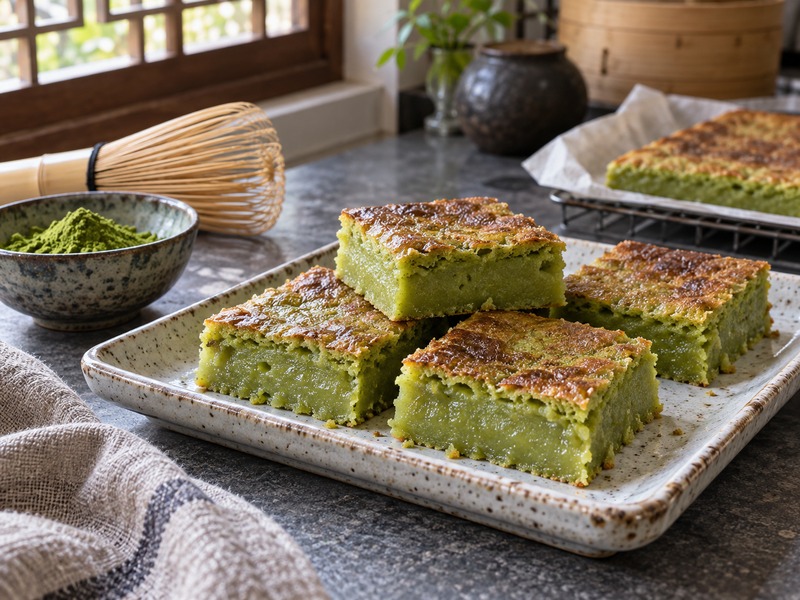
Butter mochi is not a conventional wheat-flour cake. Its sweet rice flour creates a dense, elastic chew, while butter, coconut milk, eggs, and sugar can give a rich baked surface. Decide whether the target is soft and custardy, firmer and sliceable, or a little crisp at the edge. Taste the center and corner separately. If staff call it “matcha cake,” some guests may expect a fluffy sponge and judge a properly chewy square as underbaked. Menu language should explain the experience honestly.
The ranked Just One Cookbook matcha butter mochi recipe uses mochiko, coconut milk, eggs, butter, sugar, and matcha. Its method is a helpful culinary reference. A bakery should still establish its own formula and acceptance criteria. Decide what a good cut face looks like, how much resistance the bite should have, and whether the green tea should lead or follow the coconut. Those sensory notes let a second baker reproduce the intended result.
| Texture target | What to inspect | Common failure |
|---|---|---|
| Chewy center | Elastic bite | Wet, raw-looking pocket |
| Browned top | Even color | Bitter dark corners |
| Clean slice | Cut face holds | Smearing on knife |
| Tea flavor | Noticeable after bite | Sugar and coconut dominate |
2. Why does sweet rice flour matter?
Confirm the exact flour in purchasing
Sweet rice flour, also called glutinous rice flour or mochiko in many recipes, provides the distinctive chew. The word “glutinous” describes the sticky texture of the rice; it does not by itself mean wheat gluten. Still, a gluten-free claim for a finished product requires checking every ingredient and cross-contact controls, not simply reading the flour name. Ordinary rice flour or wheat flour will change the structure. Do not approve a substitute on price alone.
Ask the supplier for the product specification, pack size, lot identification, and allergen information. Run a side-by-side bake if the flour brand changes, keeping all other ingredients fixed. Compare batter thickness, rise, chew after cooling, and the cut edge the next day. Small differences in particle size or moisture can matter to a dense baked item. The bakery should document the approved flour and the result it produces rather than relying on a generic bag description.
3. Which matcha works in a rich batter?
Taste the baked square, not the dry powder
Butter, coconut milk, and sugar soften tea flavor. A powder that tastes bright when whisked into water may disappear after baking, while a stronger tea may remain clear in the finished square. Test several current-lot matcha samples at an equal dose. Evaluate batter color, baked interior color, aroma, and bitterness. Then adjust the dose of the preferred powder within a reasonable range. The best value is the tea that performs at the serving level, not simply the cheapest kilogram or brightest dry powder.
Sift the matcha so it disperses into the fat or dry ingredients evenly. The Just One Cookbook method blends tea into gently warmed butter. A bakery can trial that method against a dry sift with flour. Keep the sequence that avoids green flecks and delivers flavor throughout the pan. If the top browns deeply, a green interior may still taste right; judge it by a cut sample instead of expecting a vivid exterior.
| Tea trial | Hold constant | Evaluate |
|---|---|---|
| Powder A | Same grams | Flavor and interior color |
| Powder B | Same grams | Flavor and cost |
| Dose adjustment | Same base formula | Bitterness and visibility |
| New lot | Same approved process | Consistency |
4. How should the batter be mixed?
Prevent pockets of flour and tea
A thick batter can hide dry flour at the bottom of the bowl and tea clumps along the sides. Weigh ingredients, sift the powder, and mix in a sequence that gives a uniform batter without unnecessary aeration. Scrape the mixer bowl and paddle, then inspect a small sample. If the pan is filled before the final scrape, the last portion may carry most of the unmixed powder. A simple visual check before depositing can prevent an entire batch of uneven squares.
Record mixing time and speed for each batch size. Scaling a home whisk method to a large planetary mixer changes shear and heat. A butter mixture that is too hot can affect the eggs and tea flavor, while cold ingredients can make butter seize into small lumps. Use a measured ingredient temperature range after testing. The aim is a smooth, pourable batter that bakes predictably. More mixing is not automatically better; trial and documentation beat a vague instruction to “beat until combined.”
5. What pan and portion size should be used?
Control depth before setting a bake time
A deeper pan changes the center bake and may darken the edges before the middle sets. Decide pan material, internal dimensions, batter weight, and intended number of cuts. A glass pan, dark metal pan, and light metal pan can give different browning. Test the actual equipment in the bakery. Photograph the top and cut face at the chosen bake, then hold samples for the normal sale period to see whether the texture changes.
Portion control matters commercially. A tray that looks like sixteen large squares in development may be cut into twenty-four saleable portions to hit price, changing how much matcha flavor and chew each customer experiences. Weigh a representative piece and calculate cost per unit from the real yield, including edge trimming. If the product is boxed, fit the portion to the packaging without squeezing the top or creating a sticky mess.
| Production variable | Fix in the trial | Why |
|---|---|---|
| Pan dimensions | Exact internal size | Sets batter depth |
| Batter weight | Grams per pan | Controls bake consistency |
| Oven setting | Measured setting | Controls browning |
| Cut pattern | Pieces per pan | Controls price and yield |
6. How do you know it is baked enough?
Use more than top color
A browned top can hide a wet center, and a pale top does not automatically mean the center is underbaked. Set an oven time range from several trials, then inspect a center sample after appropriate cooling. Because mochi has a deliberately chewy texture, a normal cake toothpick rule may be misleading. Agree on a visual and tactile endpoint specific to this formula. Record the oven, pan position, and batch size so the endpoint can be repeated.
If corners burn before the center sets, change pan depth, oven conditions, or position rather than simply covering the issue with a glaze. Rotate pans only if the oven trial shows it helps without disrupting the bake. A commercial oven may behave differently from a home oven. Test several trays at normal production load; one perfect tray baked alone is not a production standard. The finished piece should have a pleasant chew, a stable cut surface, and no raw batter pocket.
7. When should the tray be cut and packed?
Let texture settle before portioning
Hot butter mochi can smear on the knife and tear during removal. Allow the tray to cool according to the tested procedure before cutting. Try a clean sharp knife and a consistent cut pattern. Wipe between cuts as needed, and weigh a few pieces from the center and edge. Packaging while warm may trap condensation, which affects the surface and can complicate storage. A cooled piece usually gives a more reliable view of the intended chew.
Test the product at purchase time, not only just after baking. A bakery customer may eat it later the same day or the next day. Check how the top, interior, and aroma change in the chosen wrap or box. If refrigeration changes the texture, document the serving suggestion and handling rules. Do not assign a universal shelf life based on another recipe. Ingredient composition, water activity, packaging, and distribution determine the validated plan for the actual product.
8. Which allergens and claims need checking?
Review every component and shared line
The common formula contains eggs and butter, bringing egg and milk allergens; coconut milk introduces another ingredient that should be described clearly. The FDA lists major food allergens and labeling obligations. A packaged item needs a reviewed label for its market, while a bakery counter needs accurate ingredient information and handling practices. Do not infer “dairy-free” from coconut milk if butter remains in the recipe. Do not infer “gluten-free” from rice flour if other ingredients or shared equipment create concerns.
If a plant-based or egg-free version is developed, treat it as a new formula, not a simple label edit. Eggs and butter help structure, browning, and flavor. Substitutions can alter the center set and shelf life. Run full bake, sensory, allergen, and stability checks again. Keep recipe versions separate in purchasing and production records, and make the menu description match the actual batch served.
| Claim or detail | Verify | Common mistake |
|---|---|---|
| Contains milk | Butter and other components | Overlooking butter |
| Contains egg | Formula and toppings | Assuming bake removes allergen |
| Gluten-free | Full supply and process | Checking flour alone |
| Plant-based | Every ingredient | Leaving butter or eggs |
9. How should a bakery price the square?
Include yield and handling loss
Calculate the cost of matcha, rice flour, coconut milk, butter, eggs, sugar, packaging, labor, and expected trim. Matcha can be a visible cost driver, but a cheaper tea that needs a higher dose may not save money. Run a current-lot sample in the actual batter. The Matcha Village site is one source for requesting tea specifications; compare offers using finished-piece flavor and landed cost.
Measure saleable yield from several trays, not just the ideal cut diagram. Broken corners, uneven pieces, and sticky packaging affect the real cost. If the square is sold with a topping or drink pairing, calculate that combination too. A premium price should have a clear reason: recognizable matcha, good texture, reliable size, and appealing presentation. Green color alone does not justify an expensive item when the tea is barely detectable.
10. What belongs in the production specification?
Make the next tray as good as the trial
Write ingredient weights, approved suppliers, mix sequence, ingredient temperatures, pan size, batter weight, oven setting, bake endpoint, cooling procedure, cut pattern, packaging, storage, and allergen notes. Add photographs of an acceptable top and cut face. Train a baker who did not develop the recipe and compare that tray with the reference. A standard is only useful if another person can execute it without guessing.
Retest after changing the matcha, rice flour, pan, or oven. Keep lot numbers for ingredients and finished batches. If customer feedback says the piece is too sweet or not chewy enough, change one variable at a time and document the result. This keeps a distinctive product from drifting into a generic green cake. The goal is a square whose texture and tea flavor are familiar to repeat customers, even when a different baker makes it.
| Specification item | Evidence | Review trigger |
|---|---|---|
| Formula | Gram weights | Ingredient change |
| Bake | Oven and pan trial | Equipment change |
| Texture | Cut-face reference | Customer complaints |
| Label | Ingredient review | Supplier change |
FAQ
Is butter mochi the same as regular mochi?
No. Butter mochi is a baked dessert made with sweet rice flour and rich ingredients. It has a chewy interior but differs from traditional pounded mochi.
Can matcha butter mochi be made with ordinary rice flour?
Substituting ordinary rice flour changes the texture. Use the specified sweet rice flour unless a replacement has been tested as a new formula.
Why is my matcha butter mochi brown on top?
Baking browns the top while the interior may remain green. Judge the finished flavor and cut face; if corners burn, review pan depth and oven conditions.
Does matcha butter mochi contain gluten?
Sweet rice flour itself is different from wheat flour, but a finished gluten-free claim depends on every ingredient and the production environment. Verify rather than assume.
How long can a bakery sell it?
There is no universal shelf life. Establish a product-specific storage and shelf-life plan based on the exact formula, packaging, and distribution conditions.