
A tiramisu matcha latte looks easy to sell: green matcha, a pale cream cap, and a dusting of cocoa. The work starts after the photograph. A café has to keep the tea recognizable under the topping, hold the cream safely, make the drink quickly, and explain whether coffee is actually in the cup. “Tiramisu” can mean mascarpone-style cream, coffee flavor, cocoa, or all three; guests will not know which version you chose unless the menu says.
This guide treats the drink as a café recipe, separate from a plated matcha tiramisu dessert. It uses the bulk matcha already on your bar and tests the topping as its own component. Jade Leaf Matcha’s Tiramisu Matcha Latte is one recipe reference. The questions below focus on repeatable service, ingredient records, and whether a rich special earns its place on the menu.
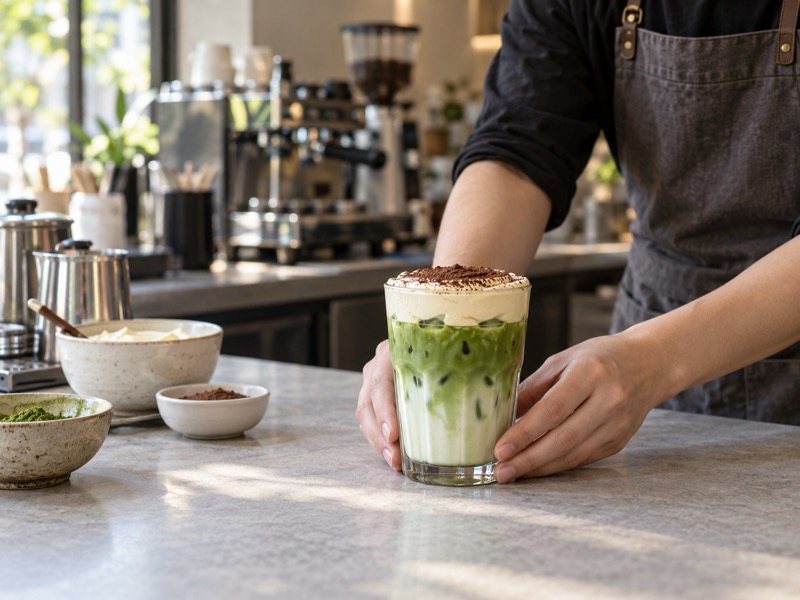
1. What does “tiramisu” mean in your matcha latte?
Define the dessert cue you want to borrow. A cream top with cocoa can suggest tiramisu without reproducing the entire dessert. Mascarpone can make the topping rich and tangy. Espresso or coffee syrup can add another layer, but then the drink contains coffee as well as matcha. Choose one clear recipe and name its defining ingredients on the menu.
Do not assume every customer expects coffee. Traditional tiramisu usually has a coffee element, while many modern “tiramisu matcha” drinks use only a creamy cap and cocoa. If you omit coffee, say “matcha latte with tiramisu-style cream and cocoa.” If you include it, say “matcha, milk, espresso, and cream.” That wording helps staff answer caffeine and ingredient questions honestly.
The drink should taste like a latte, not a spoonable dessert in a cup. Ask tasters to drink the full serving through a straw and from the rim. A thick cap can deliver only cream in the first few sips, then plain matcha below. The right texture lets a little cream mix into the latte without collapsing into an oily layer.
| Menu version | Main ingredients | What the guest should know |
|---|---|---|
| Cream and cocoa | Matcha latte, dairy cream, cocoa | No coffee unless added |
| Mascarpone style | Matcha latte, mascarpone blend, cocoa | Contains dairy; rich texture |
| Coffee-meets-matcha | Matcha, espresso, milk, cream | Contains both tea and coffee |
2. Which matcha base can carry a rich topping?
Start with your standard matcha latte before changing powder. Record matcha weight, water, milk, sweetener, ice, and cup size. Taste it without a topping; the base should be clean and complete. A weak latte becomes even harder to identify under mascarpone and cocoa. If your house matcha is gentle, test a modestly stronger dose in the finished cup rather than adding more powder by eye.
Whisk the matcha into a smooth slurry with measured water. Lumps are especially unpleasant under a soft cream cap because the topping makes the drink seem polished while the bottom holds dry powder. Build two cups with the same topping and different matcha doses, then taste blind. The best one is the cup customers finish, not necessarily the darkest green photograph.
Keep the latte base slightly less sweet than a dessert-style drink on its own if the cream is sweetened. Add up the syrup in the milk and the sugar in the cap. Some cafés put vanilla syrup in both, which can bury the tea without anyone noticing where the extra sweetness came from.
3. What belongs in the cream cap?
Choose an ingredient list that your café can prepare consistently. A dairy cream or mascarpone-style blend can create the dessert cue; a ready-made cold foam base may be easier to dose and hold. Test the chosen base on the full matcha latte. A thick spoonful on its own does not tell you how it will mix, melt, or taste after ten minutes on ice.
Set a target texture: it should sit on the drink at handoff, yet allow a straw or sip to draw some cream into the matcha. Too stiff and the guest gets two separate products; too thin and it disappears before the cup reaches the table. Measure cream portion by weight or a consistent ladle. Check that a topping prepared at the start of the shift behaves like one made later.
Avoid raw-egg shortcuts in a beverage topping. If you want egg as an ingredient, develop a process that meets the food-safety requirements for your operation and obtain appropriate advice. A cream-based version without raw egg is easier for many cafés to explain and control. Keep the topping recipe and supplier labels with your menu records.
| Topping format | Benefit | Trial question |
|---|---|---|
| Whipped dairy cream | Simple dessert texture | Does it hold without feeling heavy? |
| Mascarpone blend | Clear tiramisu cue | Does it mix enough with the latte? |
| Purchased cold foam base | Repeatable preparation | Is flavor too sweet or artificial? |
| Plant-based cream | Different dairy option | Does the ingredient list suit the claim? |
4. Should a tiramisu matcha latte include coffee?
Make that a menu decision, not a barista decision. Espresso adds roast and another caffeine source. Coffee syrup can add a dessert impression while changing sweetness. Cocoa provides a darker aroma without making the drink a coffee latte. Test two versions only if your customers would plausibly order both; too many variants complicate service and ingredient questions.
If you include espresso, keep its dose fixed and check whether it overpowers matcha. A café may already sell a dirty matcha latte; a tiramisu topping on that drink is a separate special, not the same recipe as the no-coffee version. Avoid vague caffeine statements. Matcha and coffee amounts vary by recipe, so a precise total needs your actual ingredient and serving data.
Menu clarity matters more than a clever name here. “Tiramisu Matcha Latte with Espresso” sets a different expectation from “Tiramisu Cream Matcha Latte.” A customer who avoids coffee should not have to ask after the drink has been made.
5. How should you build the iced cup?
Make the matcha slurry first, then build the milk and ice in the serving glass. Pour matcha in a consistent sequence, add a measured cream cap, and finish with a light cocoa dusting if the recipe calls for it. Decide whether the drink should be layered or gently mixed at handoff. Layering is attractive, but a straw can bypass either the matcha or the cream.
Use the cup and lid you actually sell. A tall lid needs room above the cream; a flat lid may press the topping into the drink. Test transport over a short walk and after ten minutes. Watch for a cream ring on the lid, cocoa dust that stains packaging, and milk leaking from an overfilled cup. A serving that looks perfect without a lid may fail on takeaway orders.
Check the last sip. Matcha sediment, concentrated syrup, and melted cream can collect at the bottom. Adjust the mixing and portioning before adding another garnish. A plain, even cup is better than an elaborate one that customers cannot drink comfortably.
| Build step | Control | Failure to watch |
|---|---|---|
| Matcha slurry | Weighed powder and water | Dry green flecks |
| Milk and ice | Fixed cup fill | Over-dilution |
| Cream cap | Measured weight and texture | Cap too stiff or too thin |
| Cocoa finish | Light repeatable dusting | Bitter first sip or messy lid |
6. Can you offer a hot tiramisu matcha latte?
A hot version is possible only if the topping behaves well on warm liquid. Some cold foam and mascarpone blends melt quickly or separate. Test a small cup at normal service temperature and after five minutes. If the cap collapses and leaves oily flecks, keep the approved special iced. A café does not need to offer every seasonal drink at every temperature.
Prepare matcha separately from steamed milk. Do not put cream blend, matcha, or cocoa into the steam wand. Use the equipment according to its instructions and clean milk-contact parts after use. A hot latte may need less sweetener because the aroma of cocoa and cream is more prominent than in an iced cup.
If the hot version passes, give it a separate recipe card and photo. Cup size, milk volume, topping amount, and cocoa finish may differ from the iced build. Staff should not simply remove the ice and pour hot milk into the same instructions.
7. How do you handle allergens and cold holding?
Mascarpone, dairy cream, milk, and some purchased foam bases contain milk. The FDA food allergy guide identifies milk as a major allergen. A plant-milk latte with a dairy cream cap is still a dairy-containing drink. Tell staff and guests what the topping contains. Check cocoa, syrups, and any garnish for additional ingredients.
Keep a written procedure for preparing, labeling, holding, and discarding the cream component. Follow local food-service rules and the ingredient manufacturer’s instructions. Do not leave a bowl of cream on the bar through a rush because it is convenient. Use a small working portion and replenish it from properly stored stock according to your procedure.
Train staff to use clean utensils and to avoid cross-contact when a guest asks about allergens. Do not promise an allergen-free drink unless your ingredients and process support that claim. Record any supplier substitution before it reaches the bar so menu information stays current.
8. What can staff prepare ahead of service?
Pre-portion dry matcha if your workflow supports it, keeping powder covered and dry. Prepare the cream component in a measured small batch under the written holding plan. Set cocoa in a clean dispenser with a known dose. Make the matcha latte to order rather than holding a finished milk-and-matcha mix for the shift.
Label each cream batch with recipe version and preparation time. Check texture at opening, mid-shift, and before closing; a topping can change as it sits. If a batch is too stiff, do not let each barista thin it by eye. Define a tested adjustment or remake the batch. A consistent topping helps you judge whether the menu item itself works.
Time the full service sequence, including fetching the topping, dusting cocoa, fitting the lid, and washing tools. A drink that takes only seconds to pour can still slow the bar if the topping lives in a refrigerator across the room.
| Component | Prepare ahead? | Control to document |
|---|---|---|
| Dry matcha | Possible in covered portions | Weight and moisture protection |
| Cream cap | Small controlled batch | Recipe, holding, discard |
| Cocoa | Clean dispenser | Portion and allergen label |
| Finished latte | Make to order | Texture and handoff time |
9. How should you price it and train the team?
Cost the drink from measured matcha, milk, cream ingredients, cocoa, syrup, ice, cup, and lid. Include topping waste at closing and the labor needed to prepare it. A dessert-style price needs to cover the extra component; use your own margin target and local market rather than borrowing a social-media price.
Give staff a one-page iced recipe and a separate hot card only if the hot version passes. Specify cream weight, cocoa dose, cup size, lid, and whether espresso is included. Have several staff make the same order. Taste their cups blind and time the entire sequence. If one cup is much sweeter, check the cream or syrup measure before changing the matcha.
Practice the menu explanation. Staff should be able to say whether the drink has coffee, dairy, cocoa, and a cream topping. A clear answer at the register prevents remakes and gives the guest a better chance of ordering the drink they actually want.
10. What proves the menu trial worked?
Run the special through ordinary weekdays and a busy weekend. Count orders, repeat purchases where possible, remakes, topping waste, average preparation time, and comments about sweetness and texture. Ask customers whether they would buy the drink again at the posted price. A launch-day photo can create interest, but repeat orders pay for the prep.
Compare its margin and service time with the standard matcha latte and any existing dessert drink. If the special brings new guests or higher-value orders without harming the queue, keep it. If the cream cap is regularly left behind, test a lighter portion before removing the drink. If the drink mainly replaces your standard matcha at a lower margin, change the price or recipe deliberately.
Save the winning version with supplier details, ingredient labels, a finished-cup photo, and the measured recipe. When you change matcha or cream brands, retest the full cup. The product customers return for is the drink your next shift makes, not the first cup the owner developed.
| Trial signal | What it suggests | Action |
|---|---|---|
| Strong first orders, few repeats | Expectation and taste differ | Review description and sweetness |
| High cream waste | Batch too large | Prepare smaller amounts |
| Slow handoff | Topping station is awkward | Rearrange bar or simplify finish |
| Repeat orders at target margin | Drink may fit the menu | Keep recipe and audit supply |
Frequently Asked Questions
Q1: Does a tiramisu matcha latte have coffee?
Some versions do and some do not. Decide your recipe and state it on the menu. If you include espresso, train staff to answer coffee and caffeine questions accurately.
Q2: Does the cream topping need raw egg?
No. A café can make a tiramisu-style cream cap without raw egg. Use a written recipe and follow the food-safety rules that apply to your ingredients and operation.
Q3: Can I make it with oat milk?
Yes, but a mascarpone or dairy-cream topping still contains milk. Check the full ingredient list and describe the drink accurately before calling any version dairy-free.
Q4: Why does the topping separate on a hot drink?
Warm liquid can change some cream blends quickly. Test the chosen topping at normal service temperature. If it fails, offer the approved iced version instead.
Q5: How do I keep the matcha flavor clear?
Start with a good standard latte, keep the cap portion measured, and reduce duplicate sweeteners. Taste the entire cup, including the last sip, before launching it.