
A cardamom matcha latte can be warm and aromatic without tasting like a generic chai. The problem is dose. Cardamom has a strong, distinct aroma; too much can bury the matcha, while a weak syrup adds sweetness without enough spice to explain the menu name. A café also has to decide whether it wants visible ground spice in the cup or a smooth drink with cardamom infused into a separate component.
This guide is for coffee shops testing a new matcha drink with the bulk powder they already purchase. It covers ingredient selection, syrup or infusion, hot and iced builds, training, cost, and a menu trial. A home recipe such as Cardamom Matcha Latte (Iced or Hot) shows the flavor pairing. The service recipe needs measured portions and a clean handoff.
1. What should a cardamom matcha latte taste like?
Set the flavor target before testing: matcha first, cardamom in the aroma and finish, sweetness low enough that both can be identified. Cardamom can suggest citrus and warm spice without adding a full chai blend. That is the advantage of this drink. If you add cinnamon, clove, and ginger too, the result may become a matcha chai latte, which is a different menu promise.
Taste the cup at the temperature customers receive it and after several minutes. A spice aroma may be vivid when the cup is hot but faint once the milk cools. An iced cup can seem mild at first, then become strong when syrup collects at the bottom. Stir and taste the last sip. The barista’s first sample spoonful is not enough to judge a full-size drink.
Describe the finished drink plainly on the menu: “Matcha latte with a light green-cardamom note.” If your version is sweeter or uses vanilla, say so. Customers who dislike floral spice should be able to make an informed choice. Keep the standard matcha latte available so the special adds an option rather than forcing a replacement.
| Flavor version | Cardamom role | Useful menu description |
|---|---|---|
| Tea-forward | Light aromatic finish | Matcha latte with cardamom |
| Sweet spiced | Clear note with syrup | Sweet cardamom matcha latte |
| Chai-like | Part of a larger spice mix | Matcha chai, with ingredients named |
2. Which form of cardamom is easiest for café service?
Whole green pods, ground cardamom, and beverage syrup do different jobs. Whole pods are useful for a controlled infusion but require a steep, strain, and cleaning step. Ground cardamom is quick to measure but can leave visible particles and a sandy finish. A purchased syrup is easy to dose, yet its sweetness and flavor may dominate the tea. Test each in the complete latte, not just in water.
Use food-grade ingredients from a supplier that can provide a consistent product and full ingredient information. With pods, compare aroma between deliveries and record the number or weight used in the syrup. With ground spice, check its grind and storage; powder held open beside steam can lose aroma and cake. With syrup, check sugar content, bottle size, storage instructions, and whether one pump is a reliable measured portion.
A whole pod placed on a saucer can explain the flavor visually, but it should not be left loose in a takeaway cup. The guest is buying a drink, not a spice sachet. Choose a garnish only if it is safe, consistent, and quick to add.
| Ingredient | Good reason to use it | Main service check |
|---|---|---|
| Whole green pods | Controlled fresh infusion | Steep, strain, and batch records |
| Ground spice | Simple small trial | Grit and uneven dosing |
| Purchased syrup | Fast measured pour | Sweetness and ingredient label |
| House syrup | Custom aroma and sweetness | Preparation and holding procedure |
3. How can you prepare a cardamom base?
For a house base, weigh pods and the liquid before starting. Lightly crack the pods if that is part of your tested method, then follow a written steeping procedure. Strain the spice and taste the liquid before adding it to matcha. A pleasant aroma is useful; a harsh, bitter concentrate is not. If you prepare a sweet syrup, record sugar and water weights as well as the cardamom dose.
Begin with a small batch that can be used during one trial shift. Label its preparation time, recipe version, and discard point under your café’s food-service rules. Do not assign a shelf life just because the syrup appears clear. If you use a purchased syrup, keep its instructions and ingredient label available. Either way, staff should know whether the base is sweetened before adding another sweetener.
Compare two extraction strengths in the same matcha latte. More concentrated is not automatically more efficient: a powerful base may be difficult to dose with a standard pump. Choose a concentration that allows a visible, repeatable measure and keeps sweetness manageable.
4. How do you balance cardamom with matcha?
Start with your standard matcha latte, including its usual powder weight and cup size. Change only the cardamom component in the first trial. Prepare three samples: no cardamom, a low measured dose, and a moderate measured dose. Taste blind if possible. Ask which sample still tastes clearly of matcha and which would be pleasant to finish.
Do not keep increasing matcha to fight an overpowering syrup. That raises cost and can add bitterness without fixing the spice dose. First reduce the cardamom base or choose a less sweet format. A useful trial range for matcha may be the 2–3 g per cup many cafés test, but the final amount depends on your powder, milk, and serving size. Weigh it, then document the recipe.
Check the finished cup after five minutes. Ground spice can sink while matcha settles; both issues can make the final sip unpleasant. A strained infusion may give a cleaner texture and more predictable flavor. If customers ask for a stronger matcha version, offer a defined upgrade with its own measured dose rather than letting each barista improvise.
| Sample | Only change | Question for tasters |
|---|---|---|
| A | No cardamom | Is the base matcha latte good? |
| B | Low cardamom dose | Can you identify both flavors? |
| C | Moderate cardamom dose | Does spice linger too long? |
5. Which milk and sweetener suit the recipe?
Test your most ordered dairy and plant milks. Oat milk can make a cardamom drink seem naturally sweet and dessert-like. Some almond drinks bring a nutty note that competes with the spice. The best default is the one your customers already trust and that lets the matcha remain clear. Keep a separate card for an approved alternative if its sweetener dose changes.
If the cardamom base includes sugar, reduce the latte’s usual syrup before judging the new drink. Honey or vanilla can be appealing, but each adds another flavor. Use them deliberately and name them where guests would care. A honey-sweetened drink is not suitable for a vegan menu description, even when made with plant milk.
Keep sweetness measurable. A barista should be able to reproduce the drink using a scale, marked bottle, or calibrated pump. Test the chosen measure ten times; a pump that varies widely between presses can make tasting feedback look inconsistent when the real problem is dosing.
6. How should a hot cardamom matcha latte be made?
Whisk matcha with measured water to make a smooth slurry. Add the cardamom base to the serving cup or combine it with the slurry, depending on your tested sequence. Steam the milk using your normal equipment procedure and pour. Do not put spice powder, syrup, or matcha into the steam wand. Clean milk-contact parts according to the machine instructions.
Use a lighter cardamom dose as the first hot trial. Warmth releases aroma, so the iced amount can feel excessive in a hot cup. Taste as soon as the drink reaches normal handoff temperature and again as it cools. If spice dominates only at the start, consider changing the base concentration; if it grows stronger at the bottom, improve mixing or filtration.
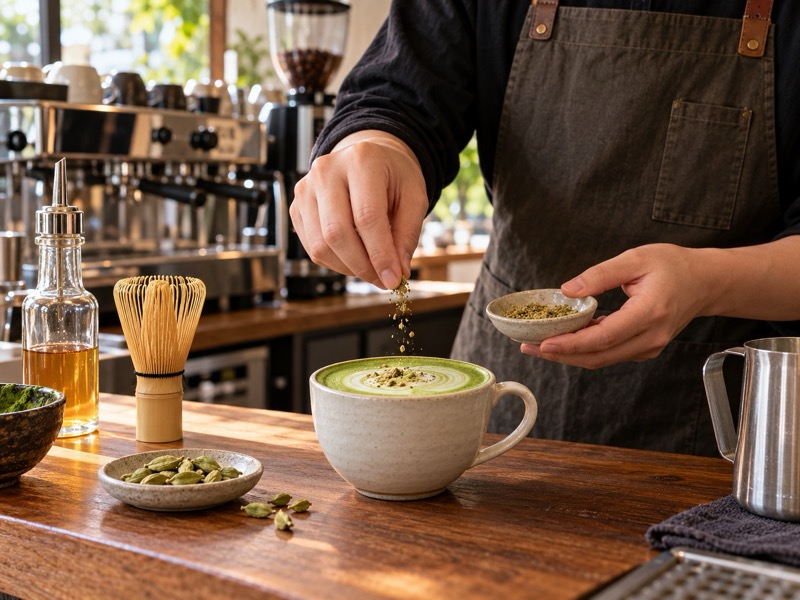
A dusting of ground cardamom may look attractive, but it can deliver an intense first breath and leave particles. Use it only after a full-cup taste test. A plain green latte with a balanced aroma often serves guests better than a heavily decorated one.
7. What changes in an iced cardamom matcha latte?
An iced drink needs an intentionally mixed milk-and-cardamom base. If syrup sits at the bottom, the guest may taste milk first and concentrated spice last. Blend the measured base into milk, add a consistent amount of ice, then pour a freshly whisked matcha slurry. Decide whether the cup will be layered for appearance or stirred before handoff for flavor.
Test with the actual cup, lid, and straw. A 16-ounce cup with more ice may dilute differently from a 12-ounce sample glass. Taste immediately and after ten minutes. Note whether cardamom becomes invisible or whether the last sip is too sweet. Either result can be fixed with a measured change, but do not adjust three ingredients at once.
If you want a cold foam version, cost and test it as a separate drink. Foam changes preparation time, sweetness, and the point where the guest meets the spice. A good iced cardamom matcha latte does not need foam to justify its menu place.
8. What can you prepare before service?
Pre-portion dry matcha for a shift if that fits your process, keeping it covered and away from steam. Prepare a small cardamom base under a written recipe and holding procedure. Keep milk cold as required. Avoid batching the entire matcha-and-milk drink before the trial proves that color, texture, and flavor remain acceptable throughout the proposed hold.
Label house-prepared components with the recipe version and preparation time. Give staff a discard rule and a backup plan if the base runs out. An emergency batch made by eye will make it impossible to judge whether customers like the approved recipe. The FDA Food Code offers general food-service principles; use the rules that apply to your café and your preparation method.
At closing, record how much syrup or infusion remains. If most of the batch is discarded, reduce batch size before changing menu price. A seasonal drink with low volume can still work when prep is small and disciplined.
| Component | Prep approach | Quality check |
|---|---|---|
| Matcha powder | Covered measured portions | No moisture or stale aroma |
| Cardamom base | Small labeled batch | Consistent strength and hold |
| Milk | Normal refrigerated service | Correct product and temperature |
| Finished drink | Make to order | Clear tea flavor and texture |
9. How do you price the drink and train staff?
Cost matcha, cardamom, sweetener, milk, cup, lid, and any garnish from measured portions. Include time for preparing and straining a house syrup. Compare the cost and margin with your standard matcha latte. A spice special can command a menu premium only if guests understand and enjoy the distinct drink; the extra preparation does not automatically justify it.
Give staff separate hot and iced recipe cards. Include powder weight, cardamom dose, milk volume, cup, ice level, and sequence. Have three people make the drink independently, then taste the cups together. If cardamom strength varies, check the pump, base batch, and mixing order before blaming the matcha.
Teach one plain menu explanation: “It is our matcha latte with a light green-cardamom aroma.” Staff should know whether the base contains sugar and whether any toppings or milks add allergens. They should not describe the drink as a chai latte unless it contains the broader spice blend your menu promises.
10. How do you judge the menu trial?
Run the special through weekdays and at least one busy weekend. Count orders, repeat orders, remakes, comments about spice intensity, preparation time, and cardamom base discarded. Ask customers whether they can still taste matcha and whether they would order the drink again at the listed price. A beautiful cup bought once is weaker evidence than a modest-looking drink customers reorder.
Compare the special with your regular matcha latte. If it attracts new buyers without slowing service or harming quality, keep it. If it mainly replaces standard orders at a lower margin, adjust recipe or price. If reviews say “too perfumed,” lower the spice dose and test again before discarding the idea.
Keep the final recipe, supplier, batch method, and menu description together. When a cardamom or matcha lot changes, taste the drink again. A café recipe should survive a shift change without the owner standing beside the bar.
| Trial result | Likely question | Next action |
|---|---|---|
| Good sales, few repeats | Is spice too strong? | Test a lower dose |
| Many remakes | Is the base hard to dose? | Calibrate measure and retrain |
| High syrup waste | Are batches too large? | Reduce prep volume |
| Repeat orders, stable service | Can supply stay consistent? | Keep and monitor ingredients |
Frequently Asked Questions
Q1: Is cardamom matcha latte the same as matcha chai?
No. A cardamom latte can use that single spice as a light aroma. Chai usually describes a broader spice blend. Name the drink according to the ingredients you actually use.
Q2: Should I use whole pods or ground cardamom?
Whole pods suit a strained infusion; ground spice is fast but can leave particles. Test both in the full latte and choose the format your staff can repeat.
Q3: Does cardamom need a sweet syrup?
No. A measured infusion can add aroma without the same sweetness. If you use syrup, include its sugar in the recipe calculation and adjust other sweeteners.
Q4: Why is the last sip too spicy?
Ground spice or syrup may be settling. Check filtration, mixing order, and dose. Taste the drink through a straw and from the cup rim during development.
Q5: Can the café make hot and iced versions from one recipe?
Use one ingredient base if it works, but test separate cardamom doses and assembly steps. Heat changes aroma, while ice changes dilution.