
Sweet matcha powder can describe two different purchases. One is pure matcha whose flavor seems naturally gentle or sweet; the other is a formulated blend with sugar or another sweetener. A café or retail brand that confuses them can order the wrong ingredient, price the drink badly and print inaccurate packaging. This guide separates those product types and gives buyers a practical way to test sweetness, tea flavor, mixing behavior and supplier documents. The right choice depends on what the finished drink must taste like and how staff or customers will prepare it.
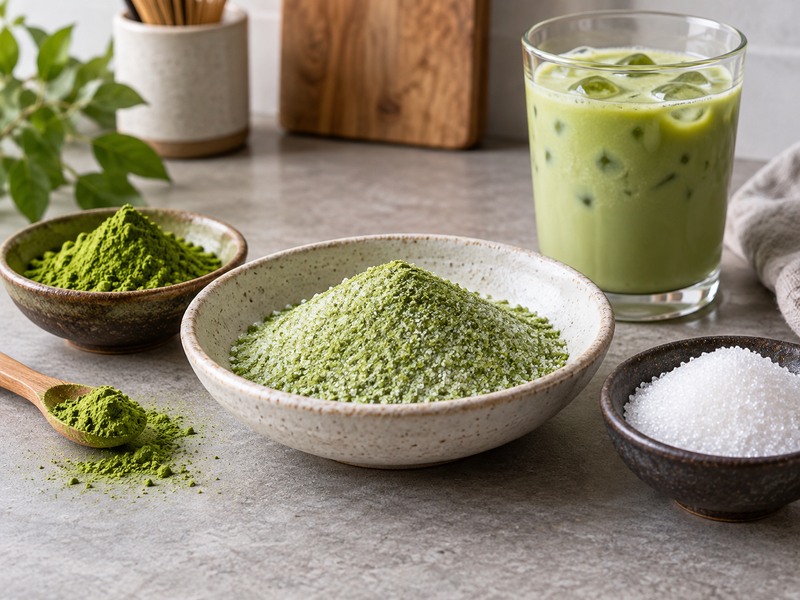
1. What does “sweet matcha powder” mean on a purchase order?
Pure matcha is powdered tea. Its flavor can include perceived sweetness alongside savory or bitter notes, but it does not become a sweetened mix merely because a seller calls it mild. A premix may combine matcha with sugar, milk powder, flavorings, stabilizers or other ingredients. The latter can simplify service while limiting control over formula and nutrition. State which product you need before requesting prices. Ask for a complete ingredient statement and tea percentage where relevant. Without that information, quotations for “sweet matcha” may cover products with very different costs and customer promises.
Which use case should drive the choice?
A tea brand selling a plain bowl should evaluate pure powder. A chain seeking a fast, consistent latte may find a matcha latte powder useful. A manufacturer building a beverage may prefer separate ingredients for tighter nutrition and flavor control. Make the decision from the final application, not a seller’s grade language. If the menu needs an unsweetened option, a sweetened premix may force a second inventory item. If convenience is the main need, pure matcha plus separate syrup may add labor and training.
| Product type | Ingredient control | Main buying question |
|---|---|---|
| Pure matcha | Buyer adds any sweetener | Is the tea balanced in the target drink? |
| Sweetened blend | Sweetness is built in | Does the fixed formula fit menu and label? |
| Flavored blend | Sweetness and flavor are built in | Can tea still be recognized? |
2. How can pure matcha taste sweet without added sugar?
Tea flavor is a mix of aromatic, savory, bitter and perceived sweet notes. Cultivation, processing, storage and preparation all influence the cup. “Naturally sweet” is a sensory description, not a declaration that the powder contains sugar or has a particular nutrition profile. Buyers should taste pure samples at the same dose and water conditions, then test them in the intended milk or food application. A gentle tea may disappear in a sweet latte. Conversely, a powder that seems assertive in water may balance well in a milk drink. The application should decide which sensory profile is valuable.
What should a blind tasting record?
Code samples and fix powder weight, water source, temperature, vessel and serving time. Record aroma, perceived sweetness, bitterness, body, particle feel and finish. Repeat on another day and with a second lot if volume matters. Do not tell tasters which sample is “ceremonial” or more expensive until after scoring. Then add the candidate to the finished beverage at a fixed recipe. A pure matcha that wins in water may not be the best commercial choice if customers mainly order it with oat milk and syrup.
3. Which sweeteners appear in matcha blends?
Common formulation options include sucrose and other caloric or noncaloric sweeteners, sometimes with milk or plant components. Their taste, labeling and processing behavior differ. A sweetener can add bulk, help dispersion or leave an aftertaste that becomes obvious in a large cup. Ask suppliers for the complete ingredient list and sweetener amount or nutritional information needed for the target market. Do not treat “no added sugar” as an informal synonym for unsweetened; the wording has regulatory meaning. Assess the ingredient system as a whole, including flavors and carriers.
How should sweetness be compared fairly?
Prepare each blend at its recommended dose, then compare at a common tea-intensity target if possible. A blend that seems sweeter may simply contain less matcha per serving. Taste it in water and in the intended milk. Ask tasters to finish more than one sip; delayed aftertaste or cloying sweetness may appear later. Include an unsweetened pure-matcha control with separately added sweetener so the team can see what the premix actually improves. If a supplier changes a sweetener, rerun the full drink test and label review.
| Attribute | Pure matcha | Sweetened blend |
|---|---|---|
| Sweetness control | Adjust at the bar or factory | Fixed by blend formula |
| Tea dose | Directly measured | Depends on matcha fraction |
| Ingredient statement | Single ingredient | Multiple ingredients possible |
| Service speed | Extra mixing may be needed | Often faster if well formulated |
4. How much matcha should a blend contain?
There is no universal percentage that makes a blend suitable for every application. A small cup served with water may need a different ratio from a large iced latte. Ask for the actual matcha content and recommended serving dose, then calculate matcha grams per finished drink. Taste at the customer’s preparation method, not only at the supplier’s showcase recipe. A blend can look green because of color ingredients or packaging cues while giving little tea flavor. The buyer should set a sensory target and an ingredient transparency requirement before negotiating price.
What should a formulation trial compare?
Compare tea intensity, sweetness, color, solubility or suspension, mouthfeel and finish at the same finished volume. If milk powder is included, check how the blend works with dairy milk, plant bases and water; the same formula may not suit all three. Record exact preparation instructions so a retail customer can repeat the approved sample. Ask the supplier whether matcha content or flavor carriers can change between lots. A commercial sample is useful only when its formula is the one quoted and later manufactured.
5. How does dispersion affect customer experience?
Matcha is a suspension of fine tea particles. A sweetened powder may include components that help it wet and mix, but a product can still clump or leave sediment. Test with the actual tools customers or staff will use: spoon, shaker, whisk or automatic dispenser. Water temperature and powder-addition order matter. An easy-to-mix sample in a laboratory blender may fail when a café employee stirs it in a cold cup. Set an acceptable appearance and mouthfeel at handoff and after a normal drinking interval.
What should the mixing test include?
Use measured doses and the intended liquid volume. Have several ordinary users prepare the drink from the draft instructions without coaching. Count visible lumps, powder stuck to the vessel and residue at the bottom. Taste from top and bottom. Then test the same procedure with a second production lot. If the mix only works after an extra step, decide whether that step is acceptable for the target customer. A premix sold for convenience should earn that claim during routine preparation.
| Mixing condition | Why test it | Acceptable outcome to define |
|---|---|---|
| Cold milk | Common café use | No dry clumps |
| Warm water | Retail instructions | Smooth preparation |
| Shaker | Fast service | No lid residue |
| Hold period | Customer drinking time | Manageable sediment |
6. What does sweetness do to recipe economics?
Compare products on cost per finished serving. A sweetened blend may cost less per kilogram than pure tea because it contains other ingredients, yet the dose required for tea flavor may be large. A pure powder may cost more per kilogram while needing only a few grams plus inexpensive separately controlled sweetener. Include labor, training, waste and equipment. If a chain uses the blend in several drink sizes, calculate each size. A fixed sweetness ratio can make a large cup too sweet when staff add more powder to increase tea intensity.
Which quote details belong side by side?
Normalize matcha grams per serving, total powder dose, sugar content, pack yield, shelf life after opening, minimum order and freight. Ask whether the supplier’s stated serving size matches the café’s cup. A kilogram price without a formula and preparation method tells procurement little. Run a sensitivity check on matcha price and sweetener cost. If the formula needs extra syrup despite being sold as sweet, include that in the comparison. A cheaper offer may be less useful if it limits unsweetened menu choices or creates more remakes from clumping.
| Cost comparison | Pure tea plus sweetener | Premix |
|---|---|---|
| Tea grams per cup | Directly set by recipe | Calculate from blend content |
| Bar work | Two ingredients | Often one measured dose |
| Menu flexibility | Sweetness can change | Sweetness is fixed |
7. How should labels and claims be reviewed?
Pure matcha and a sweetened blend need different ingredient statements and nutrition information. A product with milk powder requires allergen review; a plant-based claim needs every component checked. Sugar-related claims must meet rules in the destination market. The FDA food labeling guide provides a U.S. starting point, but a qualified reviewer should approve the exact final pack. Avoid presenting a sweetened mix as plain matcha. Matcha may contain caffeine, yet a numeric amount should be tied to the actual formula and a defensible method.
What should marketing be allowed to say?
Describe the product precisely: “sweetened matcha latte mix” where that is the formula, or “pure matcha with a smooth taste” for a single-ingredient powder if sensory testing supports it. Do not imply that a pleasant taste proves a superior origin or special health effect. Tie artwork and claims to a formula version. If procurement switches sweetener or milk ingredient, regulatory and quality teams need to review copy before stock ships. Clear naming helps customers understand why one powder can be whisked plain while another is designed for a sweet latte.
| Proposed wording | Evidence needed | Common concern |
|---|---|---|
| Pure matcha | Single-ingredient specification | Hidden blend ingredients |
| Sweetened mix | Ingredient and nutrition data | Unclear sugar amount |
| Dairy-free | Formula and handling review | Milk-derived carriers |
| Organic | Product-specific certification | Ingredient scope mismatch |
8. What supplier documents should buyers request?
Ask for a specification, ingredient and allergen statement, nutritional data, lot-specific certificate of analysis where relevant, shelf-life basis, pack details and change-control policy. For pure matcha, request sourcing and processing information that supports origin or grade statements. For a blend, ask who manufactures the mix and whether all proposed commercial ingredients appear in the sample. The documentation should match the destination market and product form. A certificate for a tea farm does not automatically cover a finished sweetened blend packed at another site.
How should a buyer check consistency?
Retain an approved sample and compare two production lots in the same drink. Watch sweetness, tea intensity, color and dispersion. Ask the supplier how it handles a change in sugar source, flavor, milk component or matcha lot. Put notification and approval duties in the purchase terms. A chain can audit a simple reference cup when new stock arrives; a manufacturer may need incoming tests matched to its process. Both need lot records so complaints can be traced back to an ingredient shipment rather than guessed from a menu photo.
9. When is a custom blend worth developing?
A custom blend makes sense when a standard powder misses a defined need: specific sweetness, milk-free formulation, faster cold mixing, target color or private-label pack. Write the desired serving method and finished taste before asking for prototypes. Keep the number of variables manageable. If a supplier offers three samples with different sweeteners and matcha levels, test them systematically. A custom formula adds minimum-order and change-control obligations. It is worth doing when those costs are outweighed by a more consistent cup or a differentiated retail product.
What should the development brief contain?
State the target market, cup size, preparation liquid, sweetness level, ingredient exclusions, tea flavor, pack, forecast and label requirements. Ask for commercial-line samples and a clear formula ownership agreement. Taste each prototype hot and cold if both uses matter. Run a small user test with the printed instructions. A matcha blends discussion should begin with that brief rather than an open request for a “premium sweet powder.” Specific requirements lead to comparable prototypes and quotations.
10. How should a brand decide which powder to buy?
Set gates for finished flavor, tea content transparency, preparation ease, label accuracy, cost and supply. Test with ordinary staff or customers and at least two lots. A pure matcha may win for a flexible café program even if it takes an extra mixing step. A premix may win for a high-volume chain where speed and repeatability carry more weight. Either choice can be sound if the product description matches the formula. Do not approve on sweetness alone; the customer is buying matcha flavor as well as convenience.
What is the next procurement step?
Send the chosen supplier a written product and sensory specification with the approved serving method. Confirm pack size, lead time, lot documents and substitution policy. Keep a retained cup reference and review the next shipment against it. If the blend’s matcha content or sweetness changes, treat it as a product change rather than a routine purchasing detail. That discipline protects the taste that won the trial and the label customers see on the shelf.
Frequently asked questions
Q1: Is naturally sweet matcha the same as a sweetened mix? No. Pure matcha contains tea only; a sweetened mix has added ingredients.
Q2: Does a higher matcha percentage always taste better? No. Flavor depends on tea quality, dose and the other ingredients in the finished drink.
Q3: Can a sweetened blend make an unsweetened latte? Usually not. Use pure matcha or a separately approved unsweetened formula.
Q4: Why does a sweet matcha mix clump? Wetting behavior, powder condition and preparation method all matter. Test the exact drink and tool.
Q5: What should a buyer compare besides kilogram price? Compare tea grams per serving, sweetness, pack yield, labor, documents, waste and finished-cup cost.