
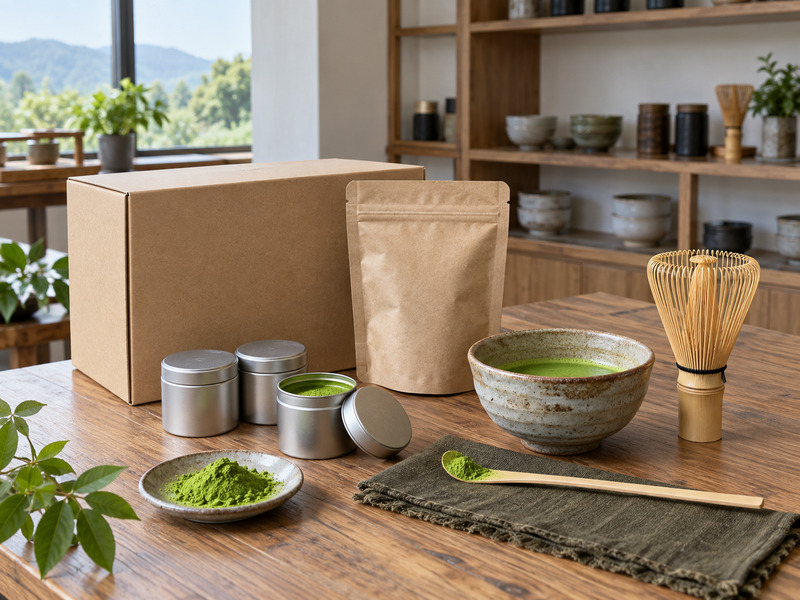
Matcha gifts often sell on presentation, then disappoint when a fragile bowl breaks or the recipient cannot make a good first drink. A buyer should treat a gift set as a complete product: tea, tools, instructions, protective packaging and a path to reorder. This guide helps retail brands, hospitality groups and corporate buyers develop giftable matcha kits that travel well and match the promised experience. It covers assortment choices, supplier briefs, quality checks and cost. A useful gift lets someone open the box, prepare the tea and know what to buy next.
1. What makes matcha gifts useful rather than decorative?
The recipient needs enough compatible parts to make the intended drink. A beautiful bowl without a practical measuring method may frustrate a beginner. A whisk in a narrow cup may not move freely. Powder in a large nonresealable sachet may lose freshness after one serving. Define the intended experience first: plain whisked matcha, an easy latte or a tasting set. Select every component to support it. Then check the unboxing flow with a person unfamiliar with matcha. Watch where they hesitate instead of explaining the kit while they open it.
Who is receiving the gift?
A specialist tea customer may value a single-origin powder and detailed origin notes. A corporate recipient may prefer a simple, durable kit with clear instructions. A café customer may want a refill pack and the same flavor they already buy. Those audiences differ in tolerance for preparation time and price. A buyer should also decide whether the kit is sold in a store, shipped individually or distributed in bulk at an event. Shipping route affects packaging and breakage more than a polished product photograph suggests.
| Recipient | Likely need | Product design response |
|---|---|---|
| New matcha drinker | Easy first cup | Clear dose and simple tools |
| Tea enthusiast | Ingredient detail | Lot and origin information |
| Corporate recipient | Reliable shipping | Durable pack and straightforward instructions |
2. Which kit formats fit different price points?
A small starter box might include matcha, a sifter and instructions; a fuller set adds a bowl and whisk. A latte-oriented set may use a suitable blend and a measured scoop. A tasting kit can contain smaller sealed portions of two or three powders with a comparison card. Do not add accessories simply to justify a higher price. Each item raises sourcing, packing and damage risk. Calculate whether the recipient will use it. A well-chosen powder and a sound whisk can deliver more value than several inexpensive pieces that duplicate each other.
How should assortment be tested?
Ask a small group to open the prototype with no coaching. Note what they understand, what they discard and what they would reorder. Have them make the drink using only included tools and printed instructions. If the recipe calls for a scale that is absent, revise either kit or instruction. Test gift sizes against shipping carton dimensions and shelf space. For seasonal retail, plan the last reorder date and leftover inventory risk before selecting a complicated assortment. A simpler kit may be easier to restock after the holiday period.
3. What matcha belongs in a gift set?
Select tea for the promised preparation. A plain-water set needs a powder that tastes good without milk or syrup. A latte kit can use a different profile if it stays clear in milk. Ask for pure matcha powder samples and taste them exactly as the card instructs. Record color, aroma, bitterness, texture and finish. A grade term alone does not tell a gift recipient what to do. State the pack size and expected number of servings based on the actual recipe, not an arbitrary scoop count.
How should gift buyers handle freshness?
Choose a pack that protects powder from light, air and moisture and that recipients can close after opening. Small sealed sachets may suit a tasting kit; a tin or pouch may suit repeated use. Test the unopened and opened pack under the planned storage conditions. Do not place loose powder inside a decorative container with no food-contact evaluation. If a set travels internationally, check whether the tea and labels meet the destination market’s requirements. Keep lot codes visible enough for traceability without making the gift look like a warehouse sample.
| Tea decision | Buyer question | Check |
|---|---|---|
| Intended drink | Plain bowl or latte? | Taste in that application |
| Pack size | How many real servings? | Calculate from recipe dose |
| Barrier | Will powder stay protected? | Pack and storage trial |
| Refill | Can recipient buy the same tea? | SKU and supply plan |
4. Which accessories are worth including?
A whisk, bowl, scoop and sifter can support traditional-style preparation, but they must work together. A scoop alone is not a precise measure because packing density varies. A small printed weight guide helps customers reproduce the cup, even if no scale is included. A bowl needs room for whisk motion and a stable base. Bamboo whisks need protection in shipping and simple care instructions. If the kit targets a latte made with an electric frother, that tool needs a different test from a bamboo whisk. Buy accessories for the actual recipe, not for a generic gift aesthetic.
How can a buyer test tool quality?
Order physical samples and make repeated drinks. Check whisk tines, bowl rim, glaze, handle comfort and cleaning. Drop and vibration tests should reflect the packed route, especially for ceramic. If a scoop or sifter is included, make sure it fits the pack and is easy to remove without spilling powder. Ask the supplier for materials, dimensions, food-contact documentation where relevant and replacement policy. The matcha accessories range can inform kit planning, but the finished set still needs a full compatibility test.
5. How should instructions be written for recipients?
Instructions should show exact powder and water amounts, approximate water temperature, mixing method and storage after opening. Avoid vague directions such as “use one scoop” unless the scoop has been tested with the included powder and a range is acceptable. A quick-start side can cover one dependable recipe; a second panel can explain adjustments for a stronger or milder cup. Photos or diagrams should match the tools inside the box. If a kit includes a latte blend rather than pure matcha, instructions must say so because the ingredient and preparation differ.
What should a first-use test reveal?
Give the sealed prototype to someone new to matcha and watch them prepare it. Note whether they can identify the right sachet, open it cleanly, measure powder, mix without clumps and care for the whisk. Do not rescue the trial with spoken advice. Revise the text at the exact point of confusion. Translate professionally for each market and check that measurements and ingredient names are locally familiar. A scannable video can help, but the box should still contain enough instructions for someone who does not use a phone while making tea.
| Instruction element | Recipient question answered | Common failure |
|---|---|---|
| Dose | How much powder? | Scoop without weight guidance |
| Liquid | How much and how warm? | Vague “hot water” wording |
| Mixing | How do I avoid clumps? | Unclear sequence |
| Storage | What happens after opening? | No reseal or date guidance |
6. What packaging survives gift distribution?
A retail shelf box, a parcel shipment and a corporate bulk delivery experience different handling. Test the actual filled pack in its intended outer carton. Inspect ceramic, whisk, seals, corners and printing after transit. A premium-looking sleeve does not protect a bowl from compression. If individual orders ship across borders, consider weight and breakage in landed cost. Make unpacking easy: tightly nested parts can look neat but damage fragile tools when pulled apart. Packaging should protect food from contamination and keep required labels legible.
How should a packaging trial be documented?
Record pack dimensions, materials, assembly time, damage rate and which component fails. Photograph packed and unpacked samples. Compare multiple positions in a shipping carton. Test whether a recipient can close the matcha pack after opening. If a gift includes a ceramic bowl, decide how replacement requests will be handled and budget for them. A small protective insert may be more valuable than another decorative layer. Approve the pack only after the same production components used in the saleable kit pass the trial.
| Distribution route | Pack test emphasis | Buyer action |
|---|---|---|
| Retail shelf | Display and scuffing | Check visible faces |
| Parcel delivery | Impact and compression | Test outer carton |
| Bulk event delivery | Missing parts and assembly | Audit sampled boxes |
7. What labeling and claims need review?
Food labels must reflect the actual matcha or blend, including ingredients, allergens, net content and market-specific information. If a kit combines food and accessories, check which disclosures belong on the outer pack and on inner food packs. Organic, origin and health claims need product-specific support. A “ceremonial” description is not a universal legal grade; use it carefully and back any specific provenance claim with documents. If the kit contains sweetened latte powder, do not describe it as pure matcha. Regulatory review should happen before thousands of gift boxes are printed.
How can gift copy stay honest?
Describe what the recipient will make and what is included. “Matcha latte gift set with sweetened blend and whisk” is clearer than language suggesting a formal ceremony that the kit cannot teach. Do not promise health effects or imply that all matcha comes from one country if sourcing differs. Include storage and best-before information in an accessible location. If artwork shows a bowl or drink not achievable with included items, test and revise the presentation. Customers judge a gift by the experience inside the box, not only by its cover.
8. How should corporate orders be specified?
Corporate buyers need lead time, branded artwork approval, delivery addresses, pack durability, replacement stock and invoicing terms. They may also need choices for dietary restrictions or a nonfood alternative for recipients who cannot use caffeine. Set personalization options early; late changes to inserts or sleeves can delay production. Ask whether the supplier can provide samples in the exact final configuration, including printed elements. A corporate gift is often opened after a long distribution chain, so handling and storage information must survive beyond the buyer’s warehouse.
What should the order brief include?
State recipient count, destinations, delivery deadline, budget range, permitted branding, tea preference, accessory list and required documentation. Ask for a proof of every printed surface. Confirm who assembles sets and who inspects them. Allow a sensible quantity of replacement parts without treating them as a substitute for pack testing. If the buyer wants a custom matcha blend, build formula and label review into the schedule. Product development cannot be compressed to the same timeline as adding a logo to an existing box.
| Corporate order field | Why it belongs in the brief |
|---|---|
| Destination and deadline | Determines route and production plan |
| Recipient quantity | Sets materials and assembly capacity |
| Branding scope | Drives artwork proofs and lead time |
| Replacement process | Handles damaged or missing components |
9. How should gift sets be priced and stocked?
Cost the assembled saleable kit: tea, tools, inner protection, outer pack, inserts, labor, shipping, damage and returns. A low-priced bowl can become expensive if breakage is high. Estimate demand by channel and season. If the tea has a shorter shelf life than the accessory stock, plan assembly and replenishment around the food component. Avoid producing more seasonal packaging than sales can support. A refill SKU can extend customer value after the gift is opened, but only if the same powder remains available and easy to identify.
Which numbers should a pilot collect?
Track assembly time, defects, transit damage, customer questions, return reasons and refill purchases. Test the selling price with an actual pack, not a rendering. If a gift is sold through a retailer, include its margin and any display or fulfillment fees. A large kit may look impressive but sit on a shelf because the price exceeds the buyer’s gifting budget. Redesign the component mix before cutting powder quality blindly. The best cost reduction may be a simpler box or fewer unused accessories.
10. When is a matcha gift ready to sell?
Approve it when a new user can make the intended drink, the parts arrive intact, food and accessory documentation is complete, and the economics work at a realistic volume. Retain a final sample and a component list with supplier SKUs. Run a small distribution pilot before a seasonal order. If the recipient needs special equipment that is not included, disclose it plainly or change the kit. A gift set should remove friction from trying matcha, not send the recipient shopping for missing pieces.
What should buyers do before placing the main order?
Sign off on a production sample, printed proof, pack test, label and landed-cost model. Confirm tea lot availability and a reserve of replacement components. Specify change notification for any accessory or powder substitution. Then give the supplier a clear inspection standard for assembled boxes. A well-made matcha gift can lead to a refill relationship; the route begins with a sound first cup and a product the buyer can reorder.
Frequently asked questions
Q1: Does a beginner gift set need a bamboo whisk? It depends on the intended recipe. Include a tool that genuinely works with the provided powder and vessel.
Q2: Is a scoop enough for accurate dosing? A scoop helps, but its powder weight varies. Give a weight guide or tested range.
Q3: Can a gift kit use sweetened latte powder? Yes, if the ingredient statement and instructions clearly identify it as a blend.
Q4: What should be tested before shipping ceramic kits? Test the filled pack on the actual route for breakage, missing parts and ease of unboxing.
Q5: How can brands encourage refills? Make the tea SKU and serving method clear, then keep a matching refill available.