
Matcha candy can be a small gift, an impulse purchase or a way for a tea brand to introduce its flavor. Yet candy processes expose the powder to sugar, heat, moisture and packaging conditions that change the result. A brand needs to define the confectionery format before buying tea. This guide covers hard candy, soft sweets and coated pieces from a product-development and procurement view. It gives teams a practical route from flavor target through pilot production, label review and repeatable supply without treating a home recipe as a factory specification.
1. What counts as matcha candy for a product brief?
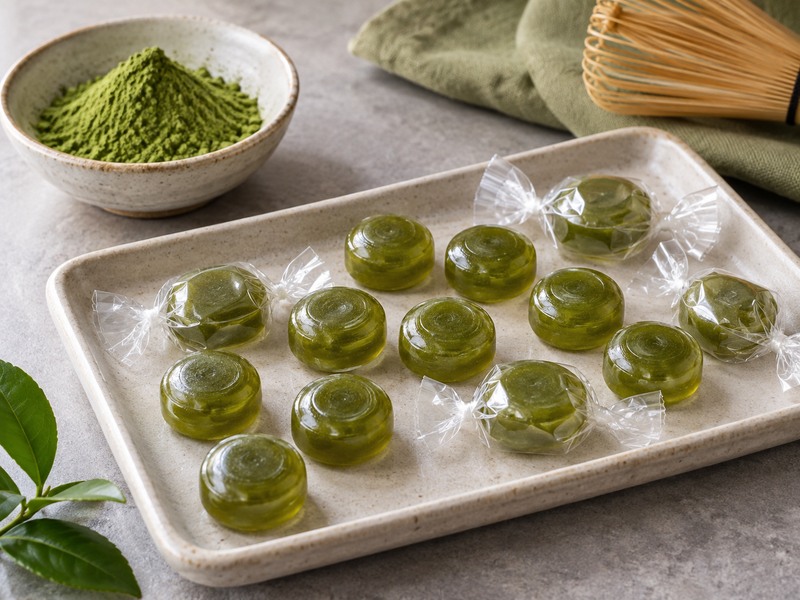
The category includes hard boiled sweets, soft chews, gummies, chocolate-coated centers and tea-flavored tablets. The word candy does not tell a manufacturer how matcha should be added or what texture customers expect. Define the format, target market, portion size and desired tea intensity first. A hard sweet may release matcha gradually as it dissolves; a chew delivers more immediate flavor and may show powder particles. A chocolate coating adds fat and cocoa notes that can mask tea. The brief should state whether matcha is the leading flavor or one note in a wider confectionery concept.
Which buyer use case should lead?
A tea retailer may want a giftable item that matches its premium powder. A supermarket brand may prioritize a stable, accessible sweet in a small bag. A hospitality buyer might need individually wrapped pieces with dependable shelf life. Each has a different packaging and cost structure. Test the concept with the expected buying occasion in mind. A confection that tastes good during a technical panel might be too bitter for an impulse buyer or too sweet for a specialist tea audience. The intended customer should decide that balance, not a generic “premium” label.
| Format | Main product question | Typical commercial constraint |
|---|---|---|
| Hard sweet | Does matcha survive the process and dissolve pleasantly? | Heat and appearance |
| Soft chew | Is tea flavor balanced through the whole bite? | Texture and moisture |
| Coated piece | Can customers taste tea through coating? | Fat, coating yield and pack stability |
2. Which matcha properties matter in confectionery?
Matcha contributes color, aroma, bitterness and fine particles. Those properties behave differently in a sugar matrix from a plain bowl of tea. A highly delicate powder may lose its advantage after processing, while a cheaper powder can become harsh at the dose needed for a noticeable flavor. Screen pure matcha powder in water to reject stale or coarse candidates, then test each in the intended candy process. Ask for particle information and lot-specific quality documents. The best purchase is the powder that delivers the target candy consistently at a workable cost per piece.
How should buyers compare tea samples?
Make controlled pilot batches that hold sugar formula, processing conditions, piece weight and packaging constant. Code the tea samples and taste at production, after conditioning and later in the planned shelf-life study. Record tea identity, bitterness, color, grittiness and aftertaste. A small spoonful of uncooked mixture cannot predict a hard sweet. If a matcha sample needs a high dose to be recognized, include its effect on texture and cost. Request another production lot before approving a long-term contract; a single attractive laboratory sample does not establish supply consistency.
3. How does the candy process change matcha?
Heat, mixing time, water activity and ingredient order can alter flavor and appearance. A hard-candy process differs from a low-temperature coated center, so there is no universal moment to add matcha. The confectioner should design trials within its equipment and food safety system. Matcha can form clumps if introduced poorly; excess agitation may affect the desired candy texture. Document the addition point, dispersion method and mass balance during a pilot. Keep a sample of the powder and finished pieces so the team can diagnose whether a later difference came from tea or processing.
What should a pilot operator record?
Record ingredient lots, batch size, process settings, addition sequence, piece weight, yield and rejects. Note powder residue in tanks and transfer lines because it changes actual matcha per piece. Check how quickly the mixture changes color during a normal production run. A pilot should use equipment close enough to commercial production to reveal handling problems. If the factory later scales from a bench pot to a continuous line, repeat the sensory and quality checks; a successful kitchen batch has not validated a factory process.
| Process variable | What to record | Why it matters |
|---|---|---|
| Matcha addition | Stage and dispersion method | Clumps and flavor distribution |
| Heat exposure | Relevant process profile | Color and aroma changes |
| Yield | Saleable pieces and losses | Unit cost |
| Batch uniformity | Pieces from start and end | Consistent dose and appearance |
4. How can flavor be balanced without hiding the tea?
Sugar softens bitterness but can reduce recognizable matcha character. Vanilla, milk powder or chocolate may make the candy approachable while shifting it away from a tea-led product. Develop a short series of matcha doses and sweetness levels rather than adding many flavorings at once. Ask tasters to eat a complete piece and describe the finish. A candy that starts pleasantly sweet and ends with rough tea may struggle with repeat purchase. Conversely, a candy marketed to tea enthusiasts may need a clearer matcha finish than a broad retail sweet.
Which sensory questions should the panel answer?
Ask whether the candy tastes like matcha without being shown the name, when the tea note appears, whether bitterness grows and whether the texture feels sandy. Compare a fresh sample with one stored under planned conditions. Use target customers in addition to staff who already understand matcha. Include a plain control sweet to separate process flavors from tea flavors. If a formula only works with a very sweet coating, calculate the cost and nutrition impact of that coating before approving the idea. A more suitable tea powder may solve the problem with fewer ingredients.
5. What packaging protects matcha candy?
Packaging must suit the candy format and its distribution route. A hard sweet may need individual wrapping to prevent pieces sticking or absorbing moisture. A soft chew may need a barrier that preserves texture. A coated piece can be sensitive to heat during shipping. Matcha adds another reason to limit avoidable light and air exposure, particularly when green color is part of the promise. Do not choose a transparent pouch solely because the new product looks bright on day one. Trial the actual pack through handling and the intended storage period.
What should a packaging trial measure?
Inspect seal integrity, piece sticking, color, aroma, texture, broken pieces and label readability. Include realistic transport conditions and shelf storage. Compare units from several positions in a case. If individually wrapped pieces are placed inside an outer bag, count both packaging costs and the time needed to fill them. An attractive gift pack can fail if opening it exposes all candy to moisture quickly. Write a practical storage statement based on the tested pack and market, then test how the product behaves after opening if consumers are likely to eat it over several days.
| Packaging choice | Benefit | Test before approval |
|---|---|---|
| Individual wraps | Portion hygiene and separation | Seal and wrapping yield |
| Opaque pouch | Limits light exposure | Barrier and reseal behavior |
| Gift box | Shelf appeal | Transit damage and cost |
| Bulk foodservice bag | Lower unit packaging | Opened-pack handling |
6. Which quality and safety checks belong in the plan?
The finished confection needs a product-specific food safety plan. Review ingredient specifications, contaminants, microbiology where appropriate, process controls, foreign-material prevention and packaging integrity. Matcha should arrive with documents relevant to the destination market and the buyer’s own specification. A certificate of analysis is useful, but it is not a substitute for the manufacturer’s process validation. If milk powder, soy lecithin, nuts or sesame enter the formula, allergen controls and labels change. Ask quality staff to review the complete bill of materials before artwork begins.
How should a change be controlled?
Set a rule for any switch in matcha lot, origin, sweetener, coating, flavor or packaging. A supplier may see a change as minor while customers notice a different color or finish. Quality should compare the new material against an approved sensory reference and decide whether finished-product tests need repeating. Keep batch and ingredient lot records so a complaint can be traced. If a co-manufacturer uses the same line for allergen-containing candies, request its cross-contact controls. The contract should say who approves substitutions and who holds the final product specification.
7. What must a matcha candy label communicate?
The label should accurately identify the confection, list ingredients in the required order and declare allergens under the destination market’s rules. “Matcha candy” should contain actual matcha, not merely green color and tea flavoring. If the brand wants to state a matcha percentage or organic claim, verify the complete formula and certification route. Nutrition and serving information need review from the finished product, not from loose tea alone. The FDA’s ingredient and allergen guidance helps U.S. teams identify relevant issues, while local requirements govern each market.
How can copy avoid overpromising?
Describe taste, texture and ingredient form plainly. A candy containing matcha does not inherit every claim made about a bowl of tea. Avoid claims about focus, metabolism or other health effects without appropriate substantiation. If the candy includes caffeine from matcha, do not invent a fixed amount; calculate or test the actual formula before publishing a number. A product that is mainly sugar should not be presented as a substitute for unsweetened tea. Precise language helps consumers choose the right item and gives retailers confidence that the pack matches its contents.
| Label topic | Source of evidence | Review owner |
|---|---|---|
| Matcha ingredient claim | Bill of materials and batch record | Product and quality |
| Allergen declaration | Every input and line controls | Regulatory |
| Nutrition | Finished formula or testing | Regulatory |
| Storage life | Packaged-product study | Quality |
8. How should a brand calculate cost per piece?
Cost every saleable piece with its packaging and process losses. Matcha, sugar, flavors, wrappers, outer pack, labor, process loss, quality tests and freight all contribute. A higher tea dose may require formula changes to preserve texture. A small decorative box can cost more than the confection inside, which may be acceptable for gifting but not for everyday impulse sales. Ask the manufacturer for expected yield and verify it in the pilot. Compare quotations using the same piece weight, matcha content, pack and quality scope; otherwise apparently cheap offers may describe different products.
Which losses are easy to miss?
Look for powder left in mixers, start-up rejects, broken candy, wrapper defects and finished goods that fail color or texture checks. Track labor for hand packing. If the candy has a short viable selling season, include unsold stock risk. A product launch should not depend on an unrealistic forecast to reach its target cost. Run scenarios at modest and strong sales volumes. If the economics fail, test pack size or candy format before quietly reducing matcha below the flavor customers approved.
9. What should an OEM manufacturer be asked to prove?
Send a brief with candy format, target market, flavor profile, approximate matcha intensity, piece size, pack, forecast and required certifications or tests. Ask whether the manufacturer has produced the specific confectionery format at scale. A bulk matcha supplier can help source the tea input, while the confectioner must demonstrate the finished product’s process and shelf life. Request pilot pieces made with proposed commercial ingredients, not a special hand-made sample. Clarify who owns the formula and which changes require written approval.
What should be in the approval package?
Keep the final ingredient specification, matcha documentation, finished-product specification, packaging drawing, label, pilot records, sensory reference and shelf-life evidence together. Confirm minimum order quantity and lead time before printing packs. Ask for a second lot of tea if supply volume matters. Taste pieces from the start and end of a pilot run to check distribution. The buyer should understand how the factory will handle a color drift or complaint, including traceability and retained samples. Those answers matter as much as a polished sample box.
| Supplier question | Evidence to request |
|---|---|
| Can it scale this format? | Pilot yield and process record |
| Can it keep matcha consistent? | Lot controls and sample comparison |
| Can it support claims? | Ingredient and certification documents |
| Can it protect product in transit? | Pack and shipping trials |
10. When is matcha candy ready to launch?
Approve the product after target customers recognize the tea flavor, the factory reproduces it across a pilot run, the pack protects it and the label reflects the final formula. Price it using measured yield and realistic demand. A good kitchen sample is useful evidence of concept, but it is not a purchase specification. If color fades or texture changes before the proposed shelf life ends, revise the process or pack and repeat the test. A limited launch can help gauge demand only after safety, labeling and quality gates are met.
What is the next procurement step?
Lock a reference sample and send a written specification to the selected manufacturer. Order a controlled commercial trial, retain samples and review them through the planned life. Confirm matcha lead time, pack stock and substitution rules before making sales commitments. For a tea brand, the best candy may be one that extends the tea experience without pretending to be a bowl of matcha. Let the finished piece and repeatable production record make that case.
Frequently asked questions
Q1: Can any matcha be used in candy? It can be trialed, but selection should follow flavor, color, process behavior, documents and cost in the finished format.
Q2: Does more matcha always improve flavor? No. Excess powder can increase bitterness or grittiness and may affect process performance.
Q3: Is green color proof that candy contains matcha? No. Check the ingredient statement and production records.
Q4: Can a home recipe be sent straight to a factory? It is a concept brief. The factory needs process trials, safety controls, packaging and shelf-life work.
Q5: What should buyers request from an OEM? Ask for commercial pilot samples, specifications, quality documents, yield, pack testing and change-control terms.