
Strawberry matcha boba combines fruit, tea, milk or another base, ice, and a chewy topping. Each component can taste good separately while the complete cup becomes too sweet, watery, or slow to make. Tapioca pearls also have a service window that must be managed independently from the drink. A tea shop chain needs a measured build, a clear menu description, and a plan for real queue and delivery conditions. This guide covers the decisions that make the cup consistent across outlets.
1. What should the drink contain and promise?
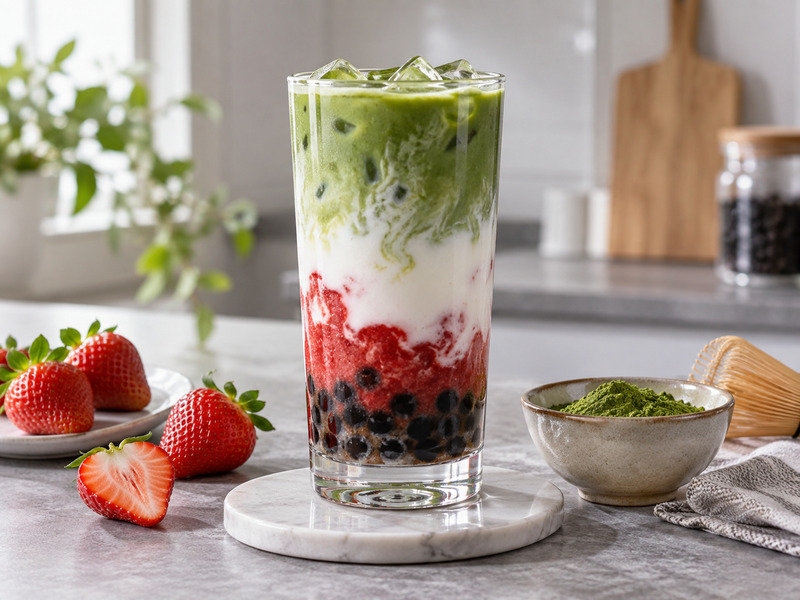
“Strawberry matcha boba” can mean a matcha latte with strawberry puree and tapioca pearls, or a water-based matcha drink with fruit and a different boba topping. Some menus use popping pearls instead of tapioca. The customer should not have to guess. Decide the milk base, fruit format, pearl type, sweetness, and whether a visible layer is part of the offer. The recipe should produce a balanced drink after a customer stirs it, not only a three-color photograph at the counter.
Describe the actual cup
Write a one-sentence menu description naming matcha, strawberry component, liquid base, and topping. Specify cup volume, ice mass, pearl portion, and expected sweetness. If fresh fruit pieces are shown, they must be in the standard build. A store that sometimes substitutes syrup needs an approved alternate description and recipe. Test the first sip through the straw and the last sip after most pearls are gone. If the fruit sits at the bottom and the straw draws only syrup initially, the finished experience may be sweeter than the tasting panel expects from a stirred sample.
2. Which strawberry format fits the operation?
Fresh berries bring recognizable fruit and variable ripeness, prep labor, and waste. Puree can give a more uniform base if the product and handling are controlled. A syrup or flavored concentrate can be quick and bright but may bring sweetness without fruit texture. A powder may suit a premix route yet change appearance and ingredient claims. Compare formats in the complete drink at a matched fruit intensity, not at the same spoonful or bottle volume.
Record yield and opened-pack behavior
Weigh fruit before and after trimming, or count accepted servings from a supplied pack. Check how the first and last pours differ if pulp settles. Measure the mass dispensed by pump or spoon. A fruit component that needs vigorous shaking must have that step in the station procedure. Pilot a busy and a quiet store because opened-pack waste may vary sharply. Ask the supplier for ingredients, pack conditions, lot identity, and any claims the brand plans to make about fruit content. A strawberry picture on a menu is not proof that a syrup contains the amount of fruit customers may assume.
| Fruit format | Service benefit | Control point |
|---|---|---|
| Fresh berries | Visible fruit | Ripeness and trim loss |
| Puree | Measured fruit layer | Pulp settling and cold handling |
| Syrup | Fast dosing | Sweetness and label wording |
3. How should boba type and portion be selected?
Tapioca pearls and popping pearls have different ingredients, texture, and handling. A shop should decide which one matches the drink and name it accurately. Tapioca pearls can become too firm or too soft outside their approved preparation and holding window. Popping pearls bring their own syrup and can change sweetness or allergen review. Portion size affects cup space, straw choice, cost, and the ratio of tea to topping. More pearls do not automatically make a better drink.
Test pearls in the final cup
Set a target drained weight, preparation method, hold procedure, and maximum service window based on supplier instructions and the shop’s food safety plan. Use the actual straw and lid; customers must be able to draw the pearls without spills or blockage. Taste the cup when pearls are newly prepared and near the end of their approved hold. Check whether strawberry syrup around the pearls changes the drink’s sweetness. If delivery is offered, carry a finished cup through the likely trip and assess texture on arrival. A pearl that meets its own specification can still be wrong for a long-delivery menu.
4. Which matcha stays clear beside strawberry?
Fruit acidity and sweetness change how matcha tastes. A delicate tea may disappear behind a strong strawberry layer; a rough powder may become more astringent in a tart drink. Pure matcha powder candidates should be tasted in the exact cup with the selected fruit format, milk or water base, ice, and pearl portion. Matcha should also disperse well enough that the straw does not draw clumps late in the drink.
Control the tasting variables
Blind-code powder samples and hold tea weight, fruit dose, base, ice, and mixing order constant. Score aroma, tea presence after stirring, bitterness, visual green, and the last sip. Run a low-sweetness version if customers can order one. The powder that wins under heavy syrup may not survive reduced sweetness. For a milk-based version, trial the approved plant-milk option separately; fruit and milk alternatives can change color and flavor. Buy against the finished-cup result and a lot-specific specification, not a grade name on a sample pouch.
| Matcha check | Trial method | Reject sign |
|---|---|---|
| Tea visibility | Fixed fruit and base | Strawberry erases tea |
| Texture | First and final sip | Clumps or grit |
| Color | Handoff and stirred cup | Unappealing blend |
5. How should layers and mixing be designed?
A layered cup may show strawberry red, milk white, and matcha green at handoff. The layers can merge in transit and may taste unbalanced until stirred. A mixed drink may look less dramatic but remain more reliable through pickup. Decide which customer experience matters most. If the drink is layered, specify the order, temperature, viscosity, and pour technique used with the actual cup. Layering is a process step that staff must reproduce, not a decoration applied for one photo.
Test both appearance and drinking sequence
Build a reference cup and photograph it at handoff. Then stir a second cup to a normal drinking state. A tasting panel should approve both. Note whether pearls remain reachable through the straw and whether fruit collects below them. If the matcha layer sits above ice, ice size and placement can change the visual boundary. A tall clear cup may display the colors yet require more liquid than the flavor can support. If a delivery version is offered, consider a deliberately mixed build with its own recipe card and image. Avoid instructing staff to “pour carefully” without a measurable method.
6. What happens during pickup and delivery?
Ice melts, fruit pulp moves, matcha settles, and pearls continue to change texture. The drink’s service window should be tested in the cup that customers receive. A counter order may be consumed immediately; a delivery order may spend time waiting, moving, and sitting at a desk. Those conditions can turn a balanced trial into a diluted drink with a sweet bottom. The shop needs to know when the product stops meeting its promise.
Use a timed movement test
Prepare identical cups with the standard lid. Leave one on a counter and carry another on the planned route. At set times, photograph layers, check leaks, taste top and bottom, and evaluate pearl texture. Record whether a short stir restores balance. A customer-facing stir instruction can be useful when mild settling is expected, but it cannot solve a wrong pearl hold or a layer of undispersed matcha. If the drink fails a long route, limit its delivery availability or develop a separate build. Do not quietly use extra syrup to cover dilution; that changes sweetness and nutrition.
| Time point | Main observation | Decision |
|---|---|---|
| Handoff | Layer and portion | Meets menu photo |
| Pickup delay | Ice and settlement | Stir instruction or recipe change |
| Delivery arrival | Pearl bite and balance | Channel suitability |
7. What food safety and allergen controls are needed?
Fruit preparations, dairy or plant milks, prepared pearls, and any cream topping each have handling requirements. A food safety professional should set preparation, holding, refrigeration, cleaning, and discard rules for the actual formula and local jurisdiction. Pearls prepared in store need a clearly marked batch time; fruit puree needs a defined opened-pack procedure. Do not carry a leftover topping into the next day because it still looks good. A busy bar should make the safe action easy to follow.
Check the whole drink for allergens
Milk, soy, tree nuts, and other allergens can enter through bases, syrups, popping pearls, or toppings. The FDA food allergen guidance is a reference for U.S. packaged-food review; store teams need locally appropriate procedures and information as well. A plant-based milk substitution does not remove milk from a dairy cream cap. Build an ingredient matrix for each approved variation and train staff on shared blenders or shakers. Recheck when a pearl or strawberry supplier changes its formula. Accurate menu language is as much a part of safety as the ingredient file.
8. Can the shop make the drink quickly at peak times?
A cup with multiple layers and pearls can occupy several station positions. The development team should time the complete build: portion pearls, add fruit, ice, milk, mix matcha, pour, lid, and clean. If matcha must be whisked per order, place the tool where staff can reach and rinse it without crossing a queue. If tea concentrate is prepped, define its hold and mixing plan. The intended service time is a design constraint, not a training problem to solve after advertising begins.
Observe several ordinary operators
Have baristas who did not create the recipe make a run of consecutive orders. Weigh component portions and note wrong-layer remakes, spills, and blocked straws. Compare results between a quiet trial and a normal rush. A pump can make fruit dosing faster but may struggle with pulp; a scoop can handle pulp but vary by operator. Test the chosen hardware before committing to a package size. A simpler build that delivers the same flavor may be preferable to a highly staged cup that staff cannot reproduce. Training should include clear reject examples and a safe response when a pearl batch passes its approved hold.
| Station task | Possible bottleneck | Pilot measure |
|---|---|---|
| Pearl portioning | Variable scoop | Drained grams per cup |
| Fruit dosing | Pulp blocks pump | Time and mass |
| Matcha mixing | Clumps under rush | Remakes and final sip |
9. How should the chain calculate cup margin?
The true cup cost includes matcha, fruit, pearls, milk or water base, sweetener, ice, cup, lid, straw, labor, and discarded prepped ingredients. A small pearl over-portion across many orders can change margin. Fresh fruit trimming and puree left in a pouch matter too. Cost the accepted drink after remakes rather than the ideal formula alone. Then test whether the proposed menu price suits the actual cup size and repeat-purchase response.
Include quiet-store waste
A flagship may use its pearl batch and fruit pack quickly; a slow outlet may discard much of both under its safety plan. Model both stores. Track customer requests for less sugar, fewer pearls, or a different milk because they can change ingredients and preparation time. A limited pilot can show whether the menu photo creates a one-time purchase or a drink guests reorder. When supplier price changes, update cost per accepted cup without altering the approved matcha and fruit balance by guesswork. A smaller portion may be better than a larger diluted cup if it meets customer expectation and margin.
10. What should be in the launch and sourcing file?
The file should contain fruit and pearl specifications, matcha lot sample, complete ingredient matrix, measured recipe, layer or mixed-build photos, pearl hold rules, cup and straw, timed service trial, delivery result, and cost model. Bulk matcha supply can be considered after the chain knows the needed flavor and dose. Ask every supplier how a change in ingredient or pack will be communicated. Retain a representative sample and a finished-cup description for comparison.
Reapprove changes that alter the customer cup
A new strawberry base can shift sweetness; a pearl supplier change can alter texture; a matcha lot can alter color; a new cup can change ice dilution. Assign a targeted retest to each change before wide rollout. Give store teams a recipe card with weights and a visual reference from a normal build. Give marketing a menu description that matches that build. During the first weeks, review remakes and complaints by cause rather than changing all ingredients at once. The launch is sound when the cup customers receive has the flavor, texture, and appearance that the business approved.
| Launch record | Why it matters | Recheck trigger |
|---|---|---|
| Ingredient lots | Flavor and traceability | Supplier change |
| Pearl and cup procedure | Texture and service | Tool or hold change |
| Menu and allergen file | Accurate expectation | Formula change |
FAQ
Q1: Does strawberry matcha boba always contain milk?
No. The liquid base varies. The menu should name the actual ingredients and any topping clearly.
Q2: Are all boba pearls tapioca?
No. Shops also use other toppings such as popping pearls. Name the specific topping and test its handling and texture.
Q3: Why does the drink become too sweet at the bottom?
Fruit syrup or puree may collect there. Test the full drinking sequence and set a mixing or layer procedure.
Q4: Can the drink travel well for delivery?
Possibly. Validate ice dilution, pearl texture, leaks, and flavor at the expected arrival time using the final cup.
Q5: What should a chain measure in its pilot?
Track component weights, preparation time, remakes, pearl and fruit waste, customer feedback, and repeat purchase.