
Strawberry gives a hojicha latte color, fragrance, and acidity. It can also make the tea disappear or cause an unattractive milk separation. A café needs to test the drink after mixing, not just as three photogenic layers. This guide shows how to choose a fruit form, balance it with roasted tea, and write a recipe staff can make consistently through a busy shift.
Contents: flavor goal · fruit form · tea · acidity · recipe · layers · holding · label · cost · launch
1. What should the drink taste like after stirring?
Define the whole-cup experience
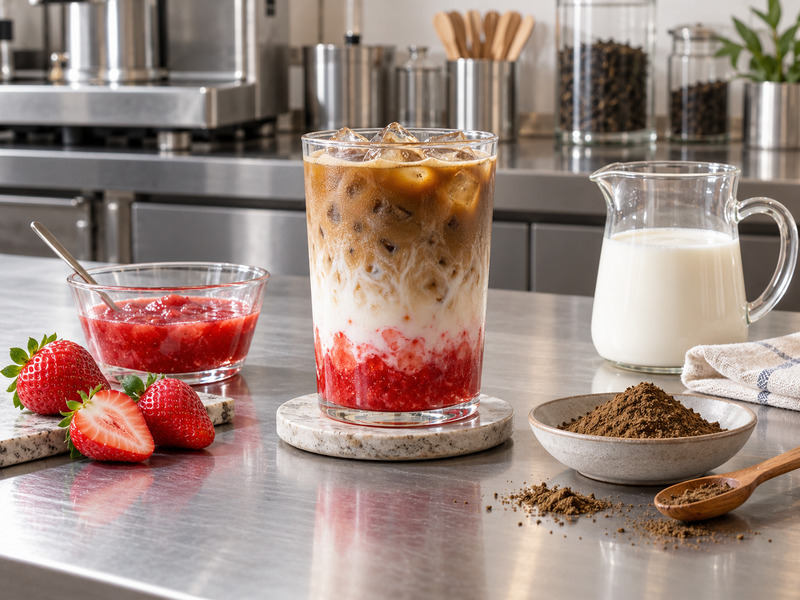
A strawberry bottom layer, white milk center, and brown tea top can look appealing. Once a customer shakes or stirs the cup, the flavors need to make sense together. Set a target: fresh berry first with a toasted finish, or tea-led with a restrained fruit lift. Taste beyond the photograph. Prepare a control hojicha latte and add measured fruit in several increments. Ask blind tasters whether they can identify strawberry and roasted tea without seeing the cup. If only sugar and milk remain, reduce sweet fruit syrup or strengthen the tea in a separate test. Watch the aftertaste; strong acid can make a dark roast seem sharper. The standard cup should still be pleasant after ten minutes and some ice melt. A product whose appeal depends entirely on an unmixed color gradient may generate trial orders but few repeat purchases.
| Target | Tea role | Fruit role |
|---|---|---|
| Tea-led | Main roasted flavor | Fresh accent |
| Berry-led | Toasted finish | Main aroma |
| Dessert-like | Rich base | Sweet topping |
2. Should the café use fresh strawberries, puree, or syrup?
Match the ingredient to repeatability
Fresh berries can add attractive aroma and visible pieces, but ripeness, preparation, and seasonal price vary. A pasteurized puree may offer consistent dosing while still requiring storage and handling controls. Syrup is fast yet can deliver more sugar than fruit character. Read the specification. Some “strawberry puree” products contain added sugar, acid, color, or flavor. Compare candidates at the same finished drink volume, then record how much is needed for a recognizable berry note. Test for pulp settling and straw blockage. If visible fruit is included, decide whether guests are meant to eat it and whether the takeaway lid accommodates it. A retailer considering a packaged version needs more than a café sensory test; ingredient stability and process validation become separate work. For café service, choose a fruit form that ordinary staff can portion reliably and store under an approved procedure.
3. Which hojicha survives fruit and milk?
Keep roast clear without turning smoky
Strawberry acidity can sharpen perceived bitterness. A very dark hojicha may feel smoky beside bright fruit, while a lighter roast may disappear in milk. Trial at least two tea profiles with the chosen berry ingredient. Pure tea powder can offer body and color but needs a slurry to prevent brown clumps. A filtered concentrate can make a cleaner cup but may require a stronger brew. Hold the fruit constant. Otherwise a sweeter sample may make one tea seem better for the wrong reason. Taste the tea in milk before adding strawberry, then taste the full cup. Record the approved tea mass or concentrate yield, not a vague scoop. If the shop already sells an iced hojicha latte, compare this version with that base so the fruit drink has a clear difference. A supplier sample should be judged in the final recipe rather than from the dry aroma alone.
| Tea trial | Possible advantage | Watch item |
|---|---|---|
| Medium roast powder | Clear toasted note | Sediment |
| Dark roast powder | Strong color | Bitter fruit contrast |
| Leaf concentrate | Clean mouthfeel | Weakness in milk |
4. Why can the milk look split?
Control acid contact and temperature
Fruit acids can destabilize some milk systems, and appearance depends on the fruit formulation, milk, ratio, and process. A cup that looks smooth at handoff may show flakes or streaks after sitting. Test the exact milk and fruit brands, both cold and at the intended serving temperature. Inspect the clear glass. If a candidate splits, change one variable at a time: lower the fruit dose, change the milk, alter mixing order, or test a different fruit ingredient. Do not assume a plant drink solves the issue; plant proteins can behave differently too. If the drink is layered, the milk may meet concentrated fruit at the bottom, which is a harsher local condition than a fully mixed recipe. Taste and inspect the stirred version, because the customer may combine everything. A cream topping introduces another stability test. The solution should be a repeatable recipe, not a barista's last-minute judgment about whether a cup “looks okay.”
5. What recipe should a pilot start with?
Weigh the fruit as carefully as the tea
Build from an approved iced hojicha latte, then create a small fruit-dose ladder. For a development cup, one might start with 4 g pure tea powder dispersed in 40 g warm water, around 160–180 mL chilled milk, a measured ice mass, and several weighed strawberry-puree doses. These are test points only; the fruit's sugar and acidity determine the final amount. Keep the cup size fixed. If a higher fruit dose displaces milk, adjust the remaining liquid deliberately and record it. Make an unsweetened or lightly sweetened control so the panel can separate fruit flavor from sugar. Taste immediately, after stirring, and after a normal carry time. If a layered version is intended, write the pour order and temperature of each component. A recipe card must name the exact puree or syrup product and serving amount; “one scoop of strawberry” invites variation.
| Pilot input | Measure | What to judge |
|---|---|---|
| Tea | Grams or concentrate yield | Roast clarity |
| Fruit | Grams, not spoonfuls | Berry identity and acid |
| Milk | Exact brand and volume | Stability and body |
| Ice | Grams | Final dilution |
6. Are layers worth the extra work?
Compare visual value with speed and flavor
A layered drink can give a customer a clear view of its ingredients, but it may require slow pouring, extra tools, and more remakes. Run a normal service test with two operators. Photograph cups at handoff and after a five-minute carry, then stir and taste them. Count the seconds. If staff need to spoon fruit into every glass and pour milk over a barrier to keep the gradient, the price should cover that work. A simpler mixed drink may taste the same or better. Layering can also concentrate sweetness at the bottom and leave the first sip tasting like plain tea. Straw placement affects the order in which guests encounter ingredients. Decide whether the shop will recommend stirring and whether the menu photo makes that expectation clear. If delivery is a channel, test the sealed cup after travel; the layer likely will not arrive in its studio form.
7. How should fruit preparation and holding be controlled?
Use a documented process for a perishable component
Fresh cut fruit, puree, and opened syrup have different storage needs. Follow supplier instructions and the operation's food-safety plan for receiving, preparation, cold holding, dating, and discard. The FDA Food Code gives retail guidance for foods that need time or temperature control, but a specific recipe needs a local procedure. Trace each batch. Label a prepared fruit base with product, lot, preparation time, and discard point. Taste it at the start and end of the planned service window; fruit aroma and color can shift even when the ingredient remains within a safe handling procedure. Keep a dedicated utensil or a defined cleaning step if shared equipment could introduce milk or other allergens. If fresh berries are used as garnish, inspect them for quality and train staff on portion size. A beautiful garnish that varies wildly by shift undermines both cost and the menu photograph.
8. What should the menu and label say?
Describe the ingredient actually used
If the drink uses real fruit puree, say so accurately. If it uses a flavored syrup with little fruit, “strawberry-flavored” may be the more honest description, subject to local labeling rules. Name the standard milk and disclose relevant allergens. Avoid a blanket “low calorie” claim based on unsweetened tea when the served cup contains milk and sweetened fruit. Check the finished formula. The same drink can vary substantially in sugar and energy depending on puree and milk brands. If a precise nutrient value is needed, calculate it from approved ingredients and serving masses and have the result reviewed for the market. A photo should show the normal fruit portion and cup, not extra berries added for styling. If the shop makes an oat-milk substitution, the description and nutritional information may need a separate version. The customer's expectation should match the drink made by an ordinary barista.
| Menu phrase | Check before using |
|---|---|
| “With strawberry puree” | Actual puree ingredient |
| “Dairy-free” | All components and shared equipment |
| “No added sugar” | Fruit ingredient, tea, milk, toppings |
| Exact calories | Final serving calculation |
9. What should the cup cost?
Include fruit loss and seasonal variation
Cost tea, fruit, milk, ice, packaging, labor, and expected waste. Fresh berries can have trim loss and seasonal price changes; puree may leave residue in containers; a syrup pump may over-serve. Count sellable drinks. Use the grams actually dispensed during the pilot rather than an ideal recipe that staff cannot reproduce. Compare fruit forms at equal flavor quality, not only cost per kilogram. A cheaper syrup may need a large dose and turn the drink into a generic sweet latte, weakening the reason for a premium price. Layering adds preparation time and potential remakes, so include it if the menu relies on a visible gradient. If the drink is seasonal, plan how to change supplier lots or pause sales when fruit quality moves outside the approved range. A clear stop rule protects the product more than a vague promise to “use fresh fruit.”
10. When is this latte ready for the menu?
Approve the stirred cup and the workflow
Run a limited pilot using the actual fruit and milk supply, standard staff, and the proposed takeaway cup. Track flavor comments, separation, service time, and remake reasons. Ask for the last sip. It should still carry both berry and roasted tea without a layer of syrup or tea sludge at the bottom. Save a gram-based recipe and reference photograph with a version date. Recheck the drink when the fruit puree, tea roast, or milk brand changes. For B2B sourcing, tell Matcha Village that the tea will meet a specific berry format and milk; request a powder whose roast remains clear in that combination. Do not approve a tea based on a plain hot cup and assume it will work under acidic fruit. A strawberry hojicha latte deserves a menu place when its flavor remains sound after the pretty layers disappear.
A fruit drink should be signed off with the fruit ingredient near both the start and end of its approved service period. Check acidity, color, and separation in the same milk and tea base. If the later cup looks curdled or tastes flat, shorten the fruit base's quality window before launch. That decision may raise waste cost, so update the pricing sheet at the same time.
| Final check | Pass evidence | If it fails |
|---|---|---|
| Fruit base | Stable through window | Shorten batch |
| Milk appearance | No visible splitting | Revise process |
| Stirred flavor | Berry and tea clear | Rebalance recipe |
Final recommendation
Build the drink around recognizable fruit and tea, then test acid stability, dilution, and preparation speed. The cup customers stir and carry matters more than the cup photographed at the counter.
FAQ
Q1: Can strawberry syrup replace puree?
Yes, but it changes sweetness and fruit character. Compare at equal finished-cup flavor and describe the ingredient accurately.
Q2: Why does the milk sometimes separate?
Fruit acidity, milk formulation, ratio, and mixing order can all contribute. Test the exact ingredients and process.
Q3: Should the strawberry and tea stay layered?
Layers may be attractive at handoff. The stirred drink still needs to taste balanced.
Q4: Can the drink be made hot?
Possibly, but heat changes fruit aroma and can increase stability problems. Develop a hot version separately.
Q5: What belongs on the recipe card?
Exact tea, fruit, milk, ice, cup, weights, pour order, and the approved ingredient brands.
Sources: Japan MAFF, Uji tea categories; FDA, Food Code 2022; FDA, food allergens.