
Hojicha roll cake needs a sponge flexible enough to roll and a filling that lets the roasted tea remain visible in flavor. A dark crumb alone does not make a successful product. Tea powder can dry the sponge or leave bitter pockets; cream can overwhelm a gentle roast. This guide develops a saleable roll with tests for mixing, rolling, filling, slicing, holding, and real bakery yield.
Contents: product goal · tea placement · sponge · baking · rolling · filling · portioning · storage · cost · launch
1. What should a hojicha roll cake taste and feel like?
Define the slice before the formula
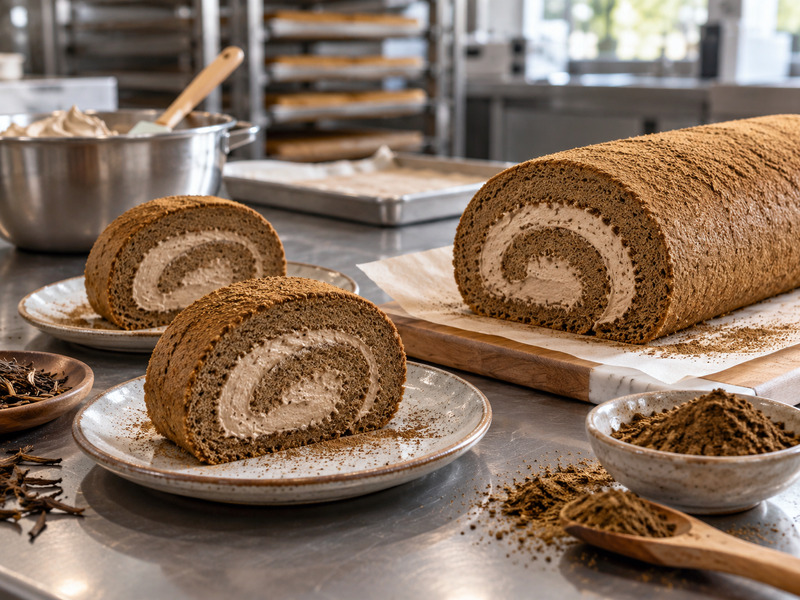
A good slice has an even spiral, a soft sponge that does not crack or feel gummy, and a roasted-tea note that remains clear beside the filling. Decide whether hojicha leads in the sponge, the cream, or both. Taste the components separately. A strongly flavored cream can make a bland sponge seem acceptable when assembled; a good tea sponge can be buried under overly sweet filling. The slice should be pleasant at the temperature at which it is sold, not only when freshly rolled. Compare it with an unflavored control sponge so the team can see what the powder changes. If the product is sold by the slice, visual consistency matters: the first and last pieces should show a reasonable spiral and similar filling mass. A beautiful whole roll can still yield a tray of ragged, uneven portions. Write the target in sensory and operational language, not simply “premium hojicha flavor.”
| Attribute | Pass condition | Failure |
|---|---|---|
| Sponge | Soft, flexible, even crumb | Cracks or dry edge |
| Tea | Identifiable roast | Color only |
| Filling | Stable, restrained sweetness | Cream masks tea |
| Slice | Clean spiral | Smear or collapse |
2. Should hojicha go in the sponge, filling, or both?
Compare placement before increasing dose
Tea powder in the sponge colors the whole roll and gives a clear product identity, but baking can mute aroma. Tea in the filling remains unbaked and may taste more vivid, yet it can turn cream grainy or bitter if poorly dispersed. A two-part approach can work if neither component becomes too strong. Run three small trials. Make tea-sponge/plain-cream, plain-sponge/tea-cream, and a restrained tea-in-both version with similar overall sweetness. Taste blind and note where the roast appears in each bite. Keep the same filling ratio so the comparison is meaningful. If a recipe uses a pure hojicha powder, it offers control; a sweetened latte mix changes sugar and dairy content and requires a new formula. Describe the final placement accurately. A roll with a plain sponge and hojicha cream can still be appealing, but the photograph and product name should not imply a tea sponge if there is none.
3. How can tea powder affect the sponge?
Protect aeration and moisture
A sponge relies on an airy batter and controlled moisture. Adding powder can change dry solids, color, and the way batter folds. Start from a bakery sponge formula that already rolls well, then replace a small measured fraction of flour with tea powder rather than adding an arbitrary spoonful. Watch the batter volume. Sift tea with dry ingredients to avoid concentrated dark pockets, and fold gently enough to preserve air. Record batter weight per sheet pan and spread thickness. A high tea dose can produce a dry, fragile sheet even if the flavor improves. Compare the crumb on baking day and after chilling with filling. If a supplier changes grind or roast, the same gram weight may behave differently. A fine powder may distribute well but dust during mixing; a coarse one may leave specks. Select the tea by finished sponge texture and flavor, not its dry pouch aroma.
| Trial change | Keep fixed | Observe |
|---|---|---|
| Tea dose | Pan and batter mass | Flavor and cracking |
| Powder grind | Dose and mixing | Specks and texture |
| Flour replacement | Total dry mass | Sponge flexibility |
4. What baking endpoint avoids a dry sheet?
Use the bakery's validated method
Roll cake sheets bake quickly, so a small time difference can change flexibility. Tea darkens the surface and makes color less reliable as a sole indicator. Use the bakery's tested sponge endpoint, then verify it with the hojicha variation. Check the corners. Thin edges can dry and crack while the middle remains soft. Record oven setting, pan size, batter mass, bake time, and cooling method. Test more than one oven position before scaling. A sheet that rolls warm may fail after the production team cools it on a rack for longer, so align the trial with the real workflow. Avoid forcing an exact oven temperature from a blog recipe onto a different pan or oven. If the tea sponge seems tough, review mixing and bake before adding more liquid. A commercial formula should survive normal production variation within a defined range, not only one carefully watched demonstration bake.
5. When should the sponge be rolled?
Standardize the handling window
Rolling too late can produce cracks; handling a very hot sheet carelessly can damage its surface or melt filling. The bakery should define a cooling and pre-roll method for its specific sponge. Time the step. Record how long the sheet rests after baking, whether parchment is removed before or after a preliminary roll, and when filling begins. Train staff to roll with even pressure so the center does not compress into a dense core. If a sheet cracks at one edge, note whether that edge was thinner, drier, or handled differently. Do not hide frequent cracks under heavy powdered sugar; that turns a process problem into waste and an inconsistent product. A simple photographic standard of a good unfilled roll can help new bakers. During a pilot, count how many sheets roll cleanly across several batches, not just whether one exceptional sheet worked.
6. Which filling keeps the tea visible?
Balance sweetness, stability, and mouthfeel
Whipped cream is familiar, but its fat and sugar can bury a gentle tea note. A lightly sweetened cream may let the sponge lead, while a tea-flavored cream can strengthen aroma if the powder is dispersed smoothly. Taste after chilling. Filling texture changes in the refrigerator, and the sponge can absorb moisture from it. Define filling mass per sheet and target thickness, then check the spiral after several hours. A very thick layer may squeeze out when cut; a thin layer can make the cake feel dry. If mascarpone, cream cheese, or plant-based topping is used, the product gains different flavor and allergen questions. Choose a formula that slices and holds under the intended service conditions. Do not assume a visually stable cream has passed food-safety review; the bakery's own handling and cold-holding procedures govern the product.
| Filling option | Flavor effect | Check |
|---|---|---|
| Plain light cream | Lets sponge lead | Sweetness and stability |
| Hojicha cream | Strong tea aroma | Grit and bitterness |
| Cream cheese blend | Tang and structure | Tea contrast |
| Plant topping | Different channel | Ingredients and hold |
7. How should the roll be sliced and sold?
Design for the unit the customer buys
Set a target slice thickness and weight, then count how many clean portions a roll actually yields. The ends may be too small or irregular for the display case; plan their use or count them as waste. Cut a cold trial. Test the knife, cleaning interval, and filling firmness that staff will use. A slice should show a recognizable spiral without cream dragging through the crumb. Packaging must support the slice without squeezing it. If a whole roll is sold, its presentation and price differ from a café portion. Photograph the normal slice, not the perfect center piece only. Check how much tea flavor a customer gets from an edge slice with less filling. A product that is delicious in one thick sample but inconsistent across the roll needs a process correction. Portion control also affects nutrition, allergen communication, and per-slice cost.
8. How should storage and shelf life be evaluated?
Test the assembled cake in its real pack
The sponge and filling change together after assembly. Moisture can migrate into the crumb; cream can lose structure; roasted-tea aroma can fade. Define the intended refrigerated display, packaged takeaway, or frozen channel, then test the complete roll and individual slices under that condition. Taste at the end. A cake that is excellent after two hours may feel soggy the next day. Follow the bakery's food-safety procedure for cream fillings, dating, cold holding, and discard; do not borrow a generic shelf life from a dry sponge recipe. Check condensation and smearing in the actual package. If frozen distribution is planned, thaw exactly as a customer or store would and inspect the spiral. Keep lot and production-date records for the tea and dairy ingredients. A shelf-life statement should reflect a validated product, not one attractive trial photograph.
9. What is the true cost per slice?
Include clean yield and labor
Cost the tea powder, eggs, flour, sugar, fat, cream, packaging, energy, and labor. Then divide by the number of sellable slices, not the number a diagram suggests will fit along the roll. Count the broken pieces. Cracked sheets, uneven ends, and smeared slices can materially change margin. Compare tea placement options at equal perceived flavor: a powder in cream may use a different amount than powder in sponge. A more expensive tea can be economical if it achieves clear flavor at a lower dose, but only the finished slice can prove that. Include cold storage and display waste if sales are uneven. If whole rolls and slices are both offered, allocate costs to each channel separately. A tempting ingredient cost percentage cannot compensate for a process that regularly yields fewer attractive portions than expected.
| Cost line | Measure | Common omission |
|---|---|---|
| Sponge | Batch inputs | Failed sheets |
| Filling | Grams per roll | Bowl residue |
| Packaging | Per slice or whole roll | Protective insert |
| Yield | Sellable portions | Ends and smears |
10. When is the roll ready for a bakery launch?
Require repeated, ordinary production
Have more than one baker make the roll from a gram-based formula on separate days. Record sheet flexibility, filling weight, clean slice count, and flavor at the end of the proposed display period. Use the shop's normal tools. A prototype made with a specialist mixer and a careful chef is not a production method unless those resources are available every shift. Review exact ingredients and allergens; milk, egg, and wheat commonly appear, with possible additions from toppings. If the tea powder changes lot, compare the new sponge or cream with the retained reference. For sourcing, ask Matcha Village for a pure hojicha powder sample suitable for bakery testing and current specification records, then bake it in the actual formula. The supplier cannot validate your oven, cream, or shelf life. Launch when the average slice, not the showpiece, meets the standard.
For the final approval, give the display team a whole roll and ask them to slice and pack it without the developer's help. Count clean pieces, inspect the spiral at the start and end, and taste a packed slice after the intended holding period. That exercise reveals whether the recipe is a saleable bakery product rather than a carefully arranged test-kitchen dessert.
| Final check | Pass evidence | If it fails |
|---|---|---|
| Clean yield | Target pieces per roll | Revise process |
| Spiral | Consistent slices | Adjust filling |
| Held flavor | Tea clear after storage | Change placement |
Final recommendation
Place tea where it can be tasted, keep the sponge flexible, and cost the clean slices that leave the bakery. A hojicha roll cake earns its name through flavor and repeatable production.
FAQ
Q1: Can hojicha powder replace flour in the sponge?
A small measured replacement can be tested. Large changes may dry or weaken the sheet.
Q2: Is tea in the cream enough?
It can be, if the menu and photograph describe the actual product accurately and the tea flavor is clear.
Q3: Why does the sponge crack?
Overbaking, thin edges, formula balance, and rolling timing are possible causes. Record the specific failure.
Q4: Can the roll be frozen?
Possibly. Test the complete assembled roll through the planned freeze and thaw process.
Q5: What is the best commercial yield metric?
Count clean, standard-weight slices per roll after normal cutting and packaging.
Sources: Japan MAFF, Uji tea categories; FDA, food allergens; FDA, Food Code 2022.