
Hojicha boba combines a roasted-tea drink with chewy pearls. Most recipe photographs show the attractive cup at handoff; a shop must also manage pearl texture, tea strength, sugar, ice, and a line of orders. This guide develops a repeatable drink for a tea shop, with separate controls for the beverage and the topping. The exact pearl holding rule belongs to the shop's validated food-safety procedure.
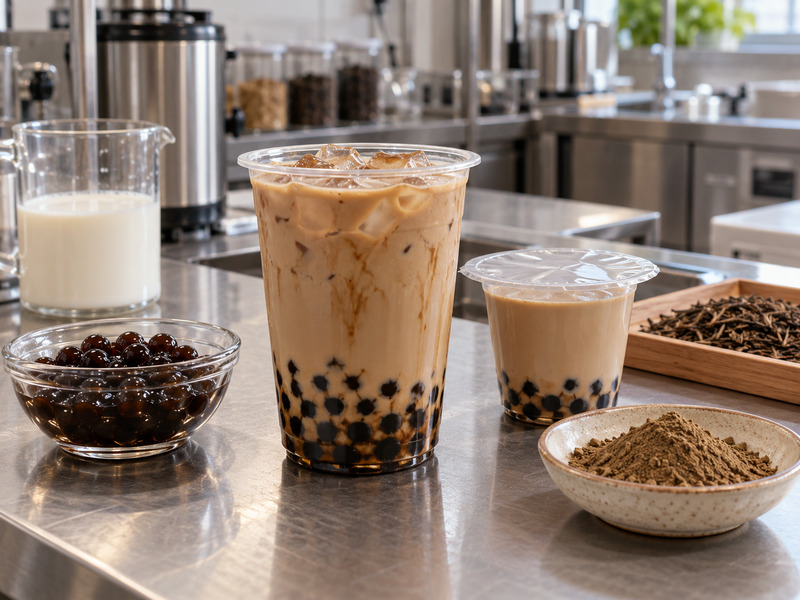
Contents: drink identity · tea base · pearls · sweetness · milk · recipe · holding · service · cost · launch
1. What makes hojicha boba distinct from milk tea?
Let roasted tea remain the lead flavor
Pearls add chew and often sweetness, but they are not the drink's only identity. A hojicha boba should taste recognizably of roasted tea even after milk, syrup, ice, and pearls enter the cup. Taste without toppings. Start by approving the tea base on its own. Then add pearls at the intended serving weight and see whether they improve the cup. If the beverage becomes merely sweet milk with brown pearls, the tea is too weak or the balance is wrong. Decide whether the shop offers a milk tea, a clear brewed tea with pearls, or both. Those formats serve different customers and need different recipes. The menu should say whether milk is present and what kind of tea is used. Avoid calling the drink coffee because it is brown; hojicha is roasted green tea. A clear product description reduces mistaken orders and helps staff explain the novelty in a single sentence.
| Format | Tea base | Main development risk |
|---|---|---|
| Milk hojicha boba | Concentrate or powder | Tea lost in milk |
| Clear tea boba | Brewed hojicha | Ice dilution |
| Dessert boba | Tea plus cream or foam | Excessive sweetness |
2. Should the tea come from leaves or powder?
Choose according to texture and throughput
Brewed loose leaf can give a clean liquor that suits a clear iced drink. A stronger concentrate may be needed for milk. Pure hojicha powder can deliver a more forceful roasted profile but may settle among the pearls, making the last sips gritty. Test the real cup. Prepare each candidate in the shop's standard cup with a wide straw, lid, and ice. Check whether powder clings to pearls or the cup wall. A brew concentrate needs a specified leaf mass, water volume, steep time, filtered yield, cooling method, and hold rule. Powder needs a measured slurry and mixing method. A sweetened instant mix may save time but fixes sugar and ingredient claims. Compare cost at the dose that actually makes tea detectable. One ingredient may support several menu drinks, but the boba format has enough dilution and sweetness that it deserves its own taste trial.
3. Which pearls fit roasted tea?
Evaluate chew, flavor, and appearance
Traditional tapioca pearls can be plain or cooked in a sweet syrup. Popping pearls introduce a different burst and can add fruit flavors that compete with hojicha. Mini pearls alter the ratio of topping to liquid. Test after a normal wait. Pearl texture changes with preparation and holding, so a fresh spoonful at the stove may not represent what a customer receives half an hour later. Specify pearl type, cooked yield, portion weight, syrup composition, and the intended service window. Compare the standard black pearl with one alternative using the same tea base. A very sweet pearl syrup can turn a balanced drink into a dessert; adjust the beverage's own syrup only after measuring what the pearls contribute. Check whether the pearl color makes the cup visually distinct or simply muddy. Do not assume “boba” means every guest wants the largest possible topping portion; a clear tea flavor still needs room in the cup.
| Pearl choice | Possible fit | Watch item |
|---|---|---|
| Standard tapioca | Familiar chew | Syrup sweetness |
| Mini tapioca | Even distribution | More straw flow |
| Popping pearl | Fruity variation | Flavor clashes with roast |
4. Where should sweetness be controlled?
Count every sweet component
The tea base, milk, syrup, pearls, and cream cap can each add sugar. Begin with an unsweetened tea base and a measured pearl portion. Taste that combination before adding syrup. Do the addition. Record grams of sweetener in the tea and in the pearl holding syrup rather than describing the drink as “30% sweet” without a defined reference. Customers may ask for less sweetness; a shop can reduce tea syrup, but it cannot remove sugar already absorbed by prepared pearls. Staff should be trained to explain that limitation. If a premix is used, its built-in sugar further narrows customization. A strong roast does not require an automatic high syrup dose; tasting may show that a smaller amount keeps the tea clearer. For nutrition information, calculate the complete served cup with the normal pearl portion, not the tea alone. A sugar claim should be reviewed against the actual recipe and market rules.
5. Which milk works in a hojicha boba?
Test flavor and allergen implications
Dairy can soften hojicha's toasted edges. Oat drink may reinforce cereal notes, while soy and almond alternatives bring other flavors and label considerations. Use exact approved brands and compare with the same tea and pearl dose. Watch the bottom half. As ice melts and pearls release syrup, the drink can change from tea-led to very sweet milk. Taste at the start and near the end. If multiple milks are allowed, each should have a documented recipe; one may need a different tea dose. Review the final ingredient list and cross-contact procedures. Milk, soy, and tree nuts are among FDA major allergen categories in the United States, depending on the chosen ingredients. Do not call an oat version allergen-free simply because it lacks dairy. The standard cup shown on the menu should match the milk used in normal service.
6. What should the pilot recipe specify?
Build from measured components
A starting milk version might trial a 4 g pure-hojicha slurry in 40 g warm water, a measured milk portion, a weighed ice charge, and 50 g cooked pearls. These numbers are development inputs, not an industry standard. The final formula depends on the chosen tea, pearls, cup, and sweetness target. Keep total fill consistent. Pearls occupy space; if one trial has more topping, it may contain less tea and milk. Write down final liquid volume and cup headspace. Prepare several versions with different tea strengths while holding pearls and milk constant. Then adjust syrup separately. Taste through the wide straw as a customer would, since each sip includes a variable number of pearls. A recipe card should specify whether pearls enter before ice, whether the tea is shaken, and how the cup is sealed. In a chain, a portioning scoop needs periodic weight checks.
| Component | Measure | Why it matters |
|---|---|---|
| Tea | Grams or concentrate yield | Flavor |
| Pearls | Cooked grams | Chew and cup fill |
| Pearl syrup | Grams carried with serving | Sweetness |
| Milk and ice | Volume and mass | Dilution |
7. How should prepared pearls be held?
Use a validated time and temperature procedure
Pearl preparation is a food operation, not only a texture choice. Follow the manufacturer's instructions and the shop's food-safety plan for cooking, cooling if applicable, holding, dating, and discard. The FDA Food Code provides retail guidance for foods requiring time or temperature control; a specific pearl system should be reviewed by qualified staff for the jurisdiction. Do not invent a universal window. Pearls from different suppliers, sizes, and syrups may behave differently. In the pilot, assess texture at preparation and at the planned end of service. If the pearls harden or become mushy before that point, shorten the quality window even if a safety process permits longer holding. Label each batch with preparation and discard times. Train staff to discard material that passes a clock limit rather than mixing old pearls with new. A chewy topping is central to the product, so hold quality matters as much as tea flavor.
8. Can the shop serve it quickly and consistently?
Simulate a mixed queue
Put pearls, tea base, milk, ice, and sealing equipment where staff will use them. Run a series of orders that includes plain tea, milk tea, and hojicha boba, not ten identical cups. Count the motions. If staff have to leave the station for every tea slurry or pearl refill, the product may slow unrelated orders. Time assembly and note spills, inconsistent pearl portions, and powder clumps. Test sealed cups for leaks and whether pearls travel through the supplied straw. A delivery version should be checked after the expected travel interval; ice melt and pearl texture may change. The menu photograph should show the normal pearl portion. Avoid solving a throughput problem by silently reducing the tea dose or topping amount. Adjust the process and recipe openly, then re-taste.
| Service check | Measure | Possible fix |
|---|---|---|
| Pearl portion | Grams per cup | Calibrated scoop |
| Tea mixing | Clumps and seconds | Pre-slurry or tool |
| Seal and straw | Leaks and flow | Cup or lid change |
| Delivery | Texture after carry | Channel-specific offer |
9. What is the cost per sellable cup?
Include cooked yield and discarded pearls
Pearls are purchased dry or prepared, but the portion is served cooked. Calculate the cost from purchase mass through cooked yield and waste. Add tea, milk, syrup, ice, cup, wide straw, sealing film or lid, labor, and remakes. Cost the end of shift. Unsold prepared pearls can materially change margin. A higher-volume shop may spread that waste across many cups; a small café should pilot modest batches. Compare price against the standard hojicha latte and other boba drinks. A premium may be justified if the roasted tea is clear and the pearls are well prepared. It is not justified by a photograph that shows more topping than the operational portion. If the product cannibalizes an existing milk tea, assess whether total margin improves. The cost sheet should use the tea dose that passed tasting, not an artificially low amount chosen to make the numbers attractive.
10. When is hojicha boba ready to sell?
Approve both beverage and pearl process
The tea should remain identifiable after ice dilution; the pearls should meet a texture standard through their approved service window. Staff should be able to follow a gram-based card and explain milk, caffeine, and sweetness accurately. Test a second day. One smooth pilot shift may hide variation in tea batches or pearl cooking. Keep reference cups and photographs, preparation records, and remake notes. Recheck when the tea lot, pearl supplier, or cup size changes. Matcha Village can provide hojicha ingredients for B2B trials; send your milk choice, sweetness target, cup size, and expected order volume to make sampling useful. The shop still owns pearl handling and finished-drink validation. A good hojicha boba should be more than a familiar topping attached to an unremarkable tea.
Review the pearl portion at opening, mid-shift, and near the approved discard time. Texture and syrup carry can shift even when staff use the same scoop. Pair each check with a freshly prepared tea base so the pearl change is visible. If quality fails before the planned service endpoint, shorten the quality window and recalculate waste rather than selling a declining cup.
| Final check | Pass evidence | If it fails |
|---|---|---|
| Pearl chew | Meets standard through window | Shorten batch |
| Tea strength | Clear after ice melt | Revise base |
| Cup fill | Consistent grams | Calibrate scoop |
Final recommendation
Develop tea and pearls as two controlled components, then taste them together after the customer would have carried the cup. That is the drink to price and name.
FAQ
Q1: Is hojicha boba usually made with milk?
Many versions use milk, but a clear roasted-tea version is possible. State the actual format on the menu.
Q2: Can powder replace brewed hojicha?
Yes, if the powder disperses well and does not leave an unpleasant gritty finish around the pearls.
Q3: Can a “less sweet” request remove all sugar?
Not if the prepared pearls or premix already contain sugar. Explain which component can be adjusted.
Q4: How long can pearls be held?
Use the supplier's instructions and a validated shop procedure. Check texture at the end of that window.
Q5: What is the main launch test?
Serve the full cup through its normal straw after a realistic wait, with tea and pearl quality both assessed.
Sources: Japan MAFF, Uji tea categories; FDA, Food Code 2022; FDA, food allergens.