
A stainless steel matcha sifter is a plausible choice for a busy café because its frame and screen may suit a repeatable cleaning routine. The words “stainless steel,” however, do not tell a buyer how well the mesh is attached, whether the frame traps powder or how much tea reaches the bowl. One with Tea’s sieve guide explains the tool’s basic purpose. Purchasing should test sample units with the real powder, then inspect them after the operation’s cleaning cycle.
Contents
- 1. What should a steel sifter improve?
- 2. Is the stated material documented?
- 3. How should mesh flow be compared?
- 4. Are rim and joints easy to inspect?
- 5. Does the handle fit the bar routine?
- 6. How does it perform after cleaning?
- 7. What happens with sweetened blends?
- 8. How should incoming quality be checked?
- 9. What is the total service cost?
- 10. Which design is ready for a rollout?
1. What should a steel sifter improve?
Define the station result
The tool should break up visible dry clumps and deliver the planned matcha dose into a bowl without excessive residue or delay. A shiny surface is not the performance target. Prepare several cups with and without the candidate sieve, keeping tea, water and mixing method fixed. Inspect the dry powder, finished drink and worktop. If the bar already uses a blending method that leaves no clumps, the sifter may be most useful only for hand-whisked bowls.
Time the process during consecutive orders. A sieve can improve cup texture yet cause enough spillage or cleaning work to slow service. Decide where it sits, who uses it and when it is cleaned. A consumer guide may describe smooth matcha, but a multi-site café needs a written test it can repeat when buying replacements. Set the acceptance criteria before comparing supplier samples.
2. Is the stated material documented?
Ask for the exact item specification
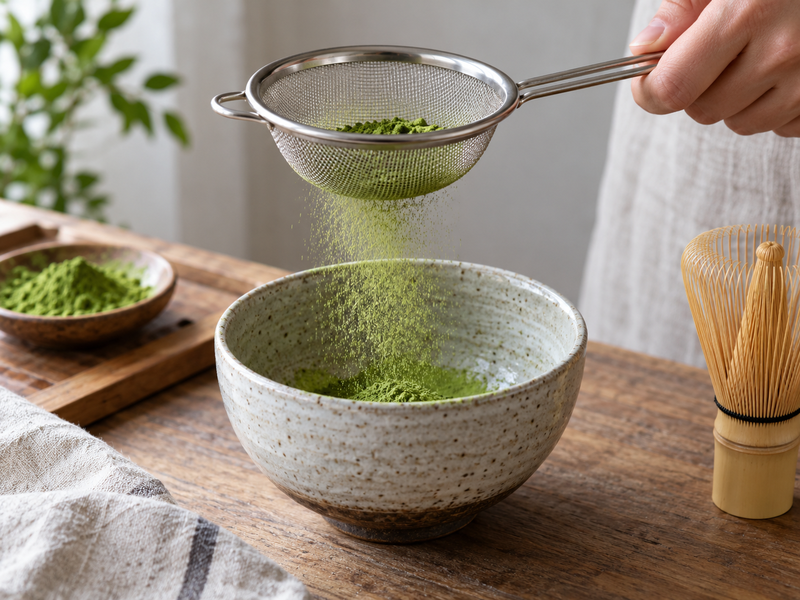
“Stainless steel” covers different alloys and constructions. Ask the supplier for the material description of mesh, frame and handle for the specific item code, plus food-contact documentation relevant to the sales market. Do not assume the frame and screen are the same grade or that a generic product-page claim applies to the delivered lot. Check whether coatings, solder or adhesives are present at joints.
Inspect physical samples for rough edges, discoloration and weak mesh attachment. These observations do not replace documentation, but they reveal questions to ask before ordering cartons. If the sifter will be sold in a retail set, describe materials accurately and avoid unsupported claims such as “rust-proof” or “dishwasher-safe.” A café’s cleaning method should be agreed with the supplier’s care instructions and the operation’s food-contact policy before purchase.
Include the exact item revision in the material request. Two sifters may share a catalog name while one has a different handle joint or screen supplier. Ask whether the material declaration covers the mesh and frame separately, and whether a changed component triggers notification. File a photograph of the approved sample beside the specification. When a replacement order arrives months later, purchasing can compare the delivered construction with something more reliable than the words “steel sieve” on the invoice.
| Part | Supplier detail to request | Sample check |
|---|---|---|
| Mesh | Material and construction | Tension and loose wires |
| Frame | Material and finish | Seam and corrosion marks |
| Handle | Material and attachment | Grip and movement |
| Coating, if any | Food-contact suitability | Visible wear |
3. How should mesh flow be compared?
Use the actual powder and dose
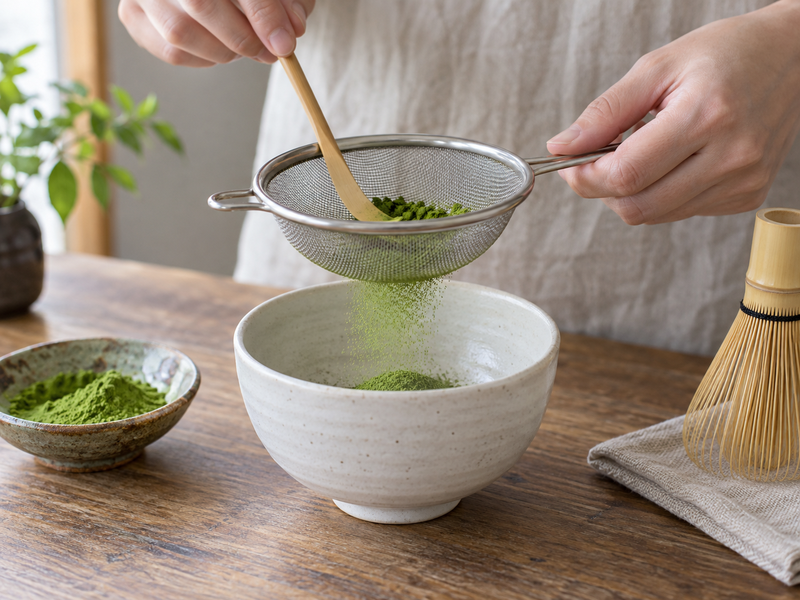
Request several mesh options if available, but do not choose from a mesh-count label alone. Put the same weighed matcha dose in each, use a consistent gentle motion and record the time until powder reaches the bowl. Weigh what is left on the screen. Inspect the powder for clumps and prepare a cup to check whether the sieve changes texture in a meaningful way.
Run the test again after several consecutive doses. Some screens flow quickly when clean and then blind with fine powder. Check whether a light tap clears the mesh or sends tea outside the bowl. Do not crush hard clumps through by force, which can damage the screen and misrepresent the result. The preferred design gives repeatable flow with manageable loss and can be returned to a clean condition under the bar’s procedure.
4. Are rim and joints easy to inspect?
Look where powder collects
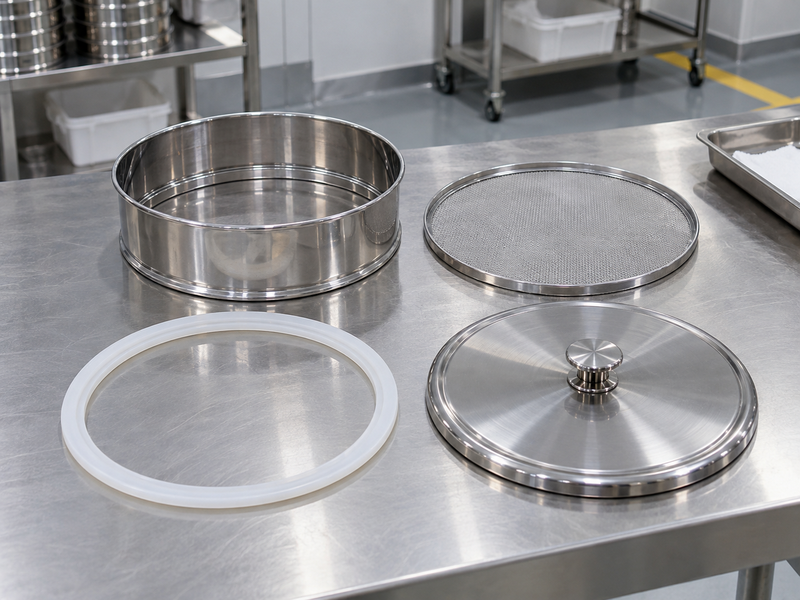
A rolled rim can be comfortable to hold while creating a hidden pocket at the mesh edge. A welded handle may be sturdy but have a crevice that traps powder or cleaning water. Inspect the sample before and after normal use with a light and a clean swab or other approved inspection method. The café’s quality team should decide whether the design can be cleaned and inspected to its standard.
Compare two frames with similar mesh but different joints. Powder delivery may be identical while cleaning time differs sharply. Look for bent wire ends, sharp points and a frame that flexes when tapped. A damaged sieve should have a clear removal rule. If a design requires staff to pry a sealed rim apart to clean it, it is unlikely to be a sensible shared-service tool. Document acceptable finish with photographs so purchasing can recognize a changed supplier version.
| Design feature | Benefit | Inspection concern |
|---|---|---|
| Rolled rim | Comfortable edge | Hidden powder pocket |
| Welded handle | Secure connection | Crevice at join |
| Removable screen | Easier access | Reassembly quality |
| One-piece frame | Fewer parts | Mesh still needs edge check |
5. Does the handle fit the bar routine?
Trial grip and bowl clearance
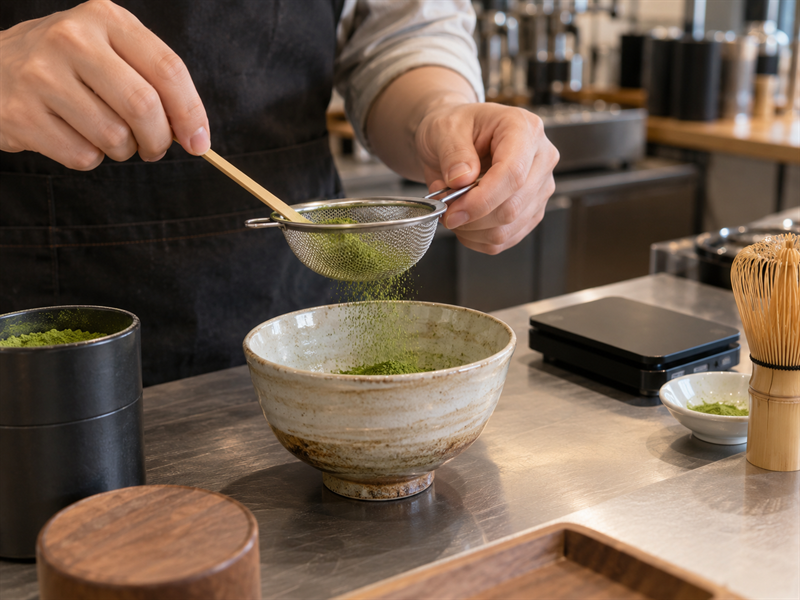
The handle should keep staff fingers away from the powder and clear the whisking bowl rim. Test left- and right-handed use, and check whether the sieve sits flat when placed on a clean tray. A long handle may be comfortable but collide with a crowded station; a short one may put fingers over the bowl. Measure the working space available before choosing a diameter and handle length.
Watch staff make a set of consecutive drinks. Do they hold the sieve over the bowl while scooping with the other hand? Does the frame wobble and scatter powder when tapped? Can they put it down without contaminating a cleaned work area? A design should fit the café’s actual vessel and preparation order. The more the operation must rearrange equipment to accommodate it, the less value a small improvement in sifting may provide.
6. How does it perform after cleaning?
Test the full cleaning cycle
Follow the operation’s approved procedure and the tool maker’s care instructions. Wash, rinse, dry and inspect a sample over multiple cycles. Check whether the mesh remains taut, the handle stays secure and moisture collects near joints. A sieve that passes one dry test but deforms after routine cleaning will not be dependable in foodservice. Document how staff know it is fully dry before the next matcha dose.
Do not call the item “sanitary” solely because it is steel. The result depends on design, cleaning access and the actual procedure. A damp screen can make matcha paste in the mesh and increase powder loss. If the café uses several powders, note whether a dedicated sieve is easier than cleaning between flavors. The FDA Food Code is a U.S. model reference for retail handling; local rules and the venue’s plan set the exact cleaning requirements.
| After-clean check | Pass condition | Failure cue |
|---|---|---|
| Mesh | Taut and open | Sagging or blocked |
| Joint | No trapped residue | Visible powder |
| Drying | No damp area | Powder cakes next use |
| Handle | Secure | Movement or crack |
7. What happens with sweetened blends?
Test the powder mix that the bar sells
Pure matcha and a sweetened latte blend may not flow through the same mesh. Larger sugar particles can remain on top, while a hygroscopic blend can cake faster on a damp screen. Test each product intended for the sifter separately and record what passes. If ingredients are removed by the mesh, the sifted powder no longer has the blend’s intended composition. A tool that works for pure matcha may be inappropriate for premixed products.
Shared use also raises cross-contact questions when blends contain milk or other allergens. Verify each ingredient list and the station’s cleaning plan. The FDA major food allergen guidance is a U.S. reference, while destination rules govern disclosure. A separate labeled sieve may be simpler for some stations. Matcha Village’s portfolio includes pure matcha and blends, but compatibility with any specific formulation should be tested with current product samples.
8. How should incoming quality be checked?
Inspect several units per pilot carton
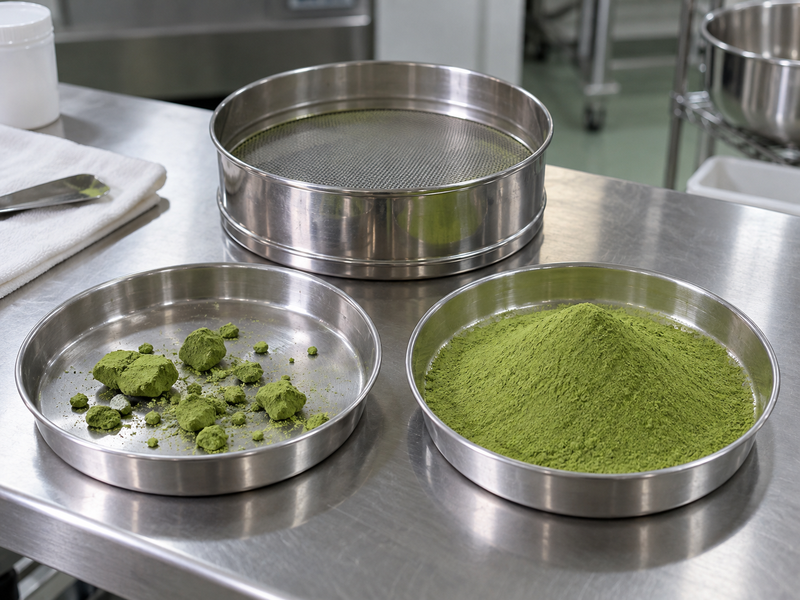
Create a simple acceptance sheet: mesh tension, rim roundness, handle security, dimensions, surface finish and protective packaging. Run matcha through units drawn from different cartons. A supplier sample may be excellent while shipping pressure bends some frames. Keep a retained approved unit and compare the delivered item against it. Photograph clear reject examples.
Ask purchasing to document the exact material and item code in the order. If the supplier revises mesh or frame construction, the café should repeat flow and cleaning trials. Count damage on arrival and time needed to inspect. A unit that arrives in a loose sleeve beside heavy ceramic items may need a better divider even if the manufacturing quality is good.
| Incoming check | Practical test | Reject example |
|---|---|---|
| Roundness | Rest on bowl | Rocking frame |
| Mesh | Visual and powder flow | Tear or loose wire |
| Handle | Gentle movement | Joint shifts |
| Pack | Open shipment | Dented rim |
9. What is the total service cost?
Add cleaning and replacement
Compare purchase price with powder loss, cleaning labor, expected replacement from the pilot and any change to drink speed. A more expensive unit may be cheaper to operate if it has a durable mesh and accessible rim. Avoid claiming savings from one demonstration; collect observations over enough normal shifts to see what actually changes. If the sieve is part of a retail kit, add protective packaging and the care card to the bill of materials.
Calculate how many stations and spare units are needed. A chain cannot wait for one damaged screen to be replaced before service resumes. Include a defined inspection and reorder point. The tool should be inexpensive enough to replace when damaged, but not so poorly finished that the café discards many on arrival. The buying question is usable cost, not the lowest unit quote.
Put the cost comparison in terms the operations team can verify. For each candidate, record the number of drinks made during a trial, sifter handling time, powder left on the screen, cleaning time and defects after washing. Use actual quotes for purchase and replacements. This also exposes differences between a tool that needs a second person to clean it and one staff can handle within the normal close. If the program includes several matcha products, calculate the number of dedicated tools needed for ingredient separation. A low single-unit price is less compelling when every site must carry multiple spares and a complex cleaning routine.
10. Which design is ready for a rollout?
Approve the item and procedure together
The final specification should name material documentation, mesh, frame dimensions, handle, cleaning method, pack and incoming inspection. Have two shifts use the same approved item with the chosen tea and bowl. Compare powder delivered, cup texture, sifting time and the condition of the cleaned tool. If one shift avoids using it, ask why before ordering for every site.
Keep the approved sample and training photo in the station guide. If the product is for a retail set, confirm that a beginner can use and clean it from the printed card. Order only after the item works with the operation’s ingredients, cleaning requirements and service pace. A well-specified steel sieve should make one step more reliable without introducing a hard-to-clean crevice or an unmeasured powder loss.
| Approval gate | Evidence | Owner |
|---|---|---|
| Material | Item-specific documents | Purchasing |
| Flow | Repeated-dose trial | Beverage team |
| Cleaning | Cycled sample | Operations |
| Delivery | Pilot cartons | Quality |
FAQ
Q1. Is stainless steel enough to guarantee a good sifter? No. Mesh attachment, frame design and cleaning access matter.
Q2. Does the finest screen always make smoother matcha? Compare cup texture with flow time and powder loss using the actual tea.
Q3. Can the same sieve handle a latte mix? Test the mix; the screen may separate ingredients or require different cleaning.
Q4. What should staff inspect after washing? Mesh tension, residue at joints, full drying and handle security.
Q5. What is the best buying proof? Several delivered units that sift consistently and survive the approved cleaning cycle.
Choose the steel sifter after it has passed both a powder-flow trial and a cleaning trial. Those two tests tell a café far more than a polished product photograph.