
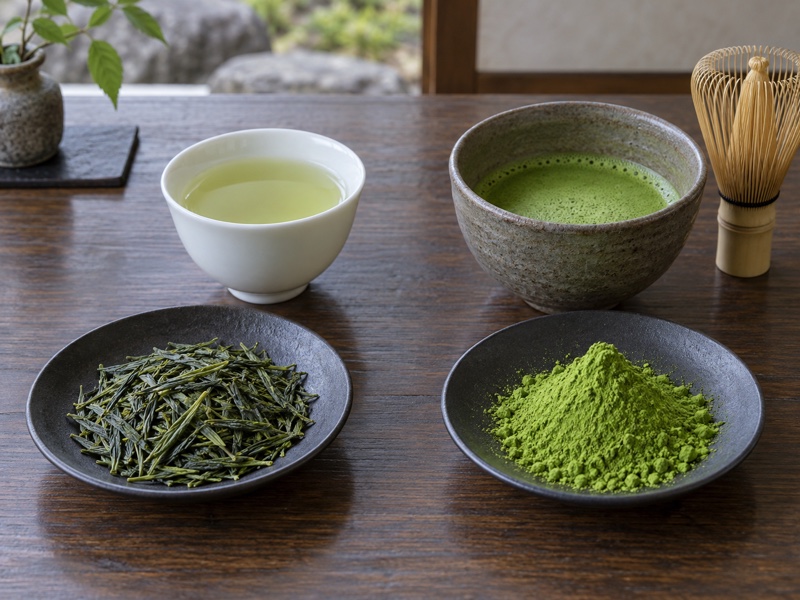
Searches for “sencha matcha” often come from buyers comparing two green teas, not asking for one blended product. Sencha is commonly sold as leaf tea for infusion; matcha is a fine tea powder prepared as a suspension. The sencha versus matcha comparison ranking in search results covers the basic distinction. A café or product team needs to go further: specify the exact ingredient, preparation method, flavor target, and label language before placing either on a menu or purchase order.
1. Is sencha matcha one product or two different teas?
Both can come from the tea plant, but the commercial products are not interchangeable. Sencha is typically processed and sold as leaves that are steeped and removed. Matcha is manufactured as a fine powder that remains in the prepared drink or food. Their cultivation and processing conventions also differ, although individual suppliers may offer variations. Ask for a product specification rather than relying on a broad category description. “Green tea” on a sales sheet is not enough to tell a formulation team what it is buying.
The key question for a buyer is what form enters the finished product. A sencha infusion contributes extracted compounds and water; matcha adds powder particles and their flavor, color, and texture. A very finely ground sencha leaf does not automatically have the same processing history or sensory profile as a product sold as matcha. Name the ingredient accurately on menus and labels. If a blend contains both, list both rather than using a compressed name that could confuse customers.
| Question | Sencha | Matcha |
|---|---|---|
| Typical sale form | Processed leaves | Fine powder |
| Common preparation | Steep and remove leaves | Disperse powder in liquid |
| Product behavior | Clearer infusion | Suspended particles |
2. How are the leaves handled before sale?
Processing choices shape the two products. Sencha leaf is commonly steamed, rolled, and dried for infusion. Matcha production uses leaf material prepared for milling into powder, with practices that often include shading before harvest and careful removal of unwanted leaf parts. The exact method and origin depend on the supplier. Buyers should avoid assuming every item labeled matcha has identical farming, harvest, or milling conditions. Request the relevant specification, origin statement, lot information, and sample.
Those details matter because a product-development team is not only buying a story. Leaf size and handling affect sencha’s extraction and appearance. Powder fineness and storage affect matcha’s dispersion and color. A sales claim about shade or origin should be supported by supplier documents if it will appear on packaging. When comparing quotes, ask whether they describe comparable grades, pack sizes, testing, and intended food uses.
3. What changes in the cup?
Sencha is brewed and the leaves are separated from the liquid. Its result can be delicate or assertive depending on dose, temperature, and steeping time. Matcha is whisked or otherwise dispersed, so the powder remains in the cup and can settle. That makes texture and mixing part of recipe design. A café cannot simply replace matcha powder with the same weight of sencha leaves in a latte; it would need to brew a concentrate and reformulate the liquid balance.
Make a side-by-side tasting at each ingredient’s intended preparation. Do not force both into one water temperature or one dose and call the result a fair comparison. Then test them in the actual menu application. A sencha infusion may lose identity under milk and syrup, while a matcha suspension may remain more visually distinct. A concentrated infusion can still work in a beverage, but it needs its own recipe card.
| Preparation variable | Sencha trial | Matcha trial |
|---|---|---|
| Dose | Leaf grams per water | Powder grams per serving |
| Process | Steep and strain | Disperse and mix |
| End check | Clarity and extraction | Sediment and mouthfeel |
4. How do their flavors differ?
Neither category has one fixed flavor. Sencha can show grassy, marine, sweet, or astringent notes depending on product and brew. Matcha can be vegetal, sweet, creamy, or bitter depending on material, dose, and preparation. Compare actual lots rather than repeating category slogans. A procurement tasting should record aroma, first taste, finish, astringency, and whether the ingredient stays recognizable in the target recipe.
Milk and sugar can hide subtle notes in both teas. A highly aromatic sencha that tastes excellent plain may be too soft for a sweet latte. A matcha that seems powerful in water can be harsh in a cake. Define the application before selecting a tea. The best ingredient for a straight drink need not be the best for a frozen dessert or bakery batter. Retain a control sample and repeat the same preparation when a new lot arrives.
5. Can sencha replace matcha in a recipe?
Not as a direct gram-for-gram swap. An infusion adds water and requires leaves to be strained; matcha adds solids and color. In a cake, replacing powder with brewed sencha can increase moisture while giving less green color. In a latte, it can make a clearer tea base but require a different milk and syrup balance. If a team wants a sencha version, develop it as a new product. State its own tea dose, brew yield, and taste target.
The reverse substitution also changes the drink. Matcha powder in a bottled product may settle and need a validated mixing or stabilizing process. A clear sencha beverage may not. Consider the vessel and customer expectation. A menu called sencha should taste of sencha and use that ingredient; a matcha menu should not substitute an unspecified green tea powder when supply is tight without reviewing the name and customer communication.
| Application | Sencha approach | Matcha approach |
|---|---|---|
| Plain hot drink | Brew and strain | Whisk or mix powder |
| Milk drink | Concentrated infusion | Measured suspension |
| Bakery | Infusion or leaf, reformulate | Powder in dry blend |
6. Which one has more caffeine?
A category-level answer can mislead. Caffeine in a serving depends on the actual ingredient, amount used, extraction, and final volume. Matcha powder stays in the drink; sencha leaves are removed after brewing. That distinction matters, but it does not give a universal numerical comparison between arbitrary café recipes. A large, strong sencha serving and a small matcha serving may not follow a simple headline rule. Use supplier data or appropriate testing and calculation before publishing a number.
For a menu, say that both are caffeinated teas. If the business wants a measured caffeine statement, define the served recipe and obtain a defensible basis for that exact product. Do not repeat an online average as if it described the café’s powder or leaves. If customers ask about a decaf option, neither standard tea should be presented as caffeine-free.
7. What should a buyer check on a supplier sheet?
Request ingredient identity, origin as claimed, processing description, intended use, pack format, lot traceability, storage guidance, and relevant quality documents. For matcha, test powder fineness, dispersion, and color in the actual product. For sencha, inspect leaf condition and brew consistency. Ask what changes are expected between lots and how substitutions will be communicated. A quote without a sample and specification is a poor basis for a menu launch.
Different markets may require different documentation and labeling. The purchasing team should review the supplier packet with quality and regulatory colleagues for the intended destination. Do not promise a country of origin, cultivation method, or grade on a finished label solely because it appears in a marketing description. Document the approved lot, retained sample, and acceptable sensory range.
| Document or sample | Why request it | Who uses it |
|---|---|---|
| Product specification | Identity and intended use | Product development |
| Lot and testing packet | Traceability and controls | Quality team |
| Retained tea sample | Sensory comparison | Purchasing and bar |
8. How should a café name the drinks?
Use the ingredient the recipe actually contains. “Sencha latte” suggests a drink based on sencha infusion; “matcha latte” suggests matcha powder. If both are in one cup, say so and explain the flavor briefly. Avoid using “sencha matcha” as though it were a standard single grade unless the supplier’s product is specifically named and accurately described. A customer reading a menu needs to know what they will taste, not decode tea-industry shorthand.
Keep preparation visible to staff. A sencha brew card should state leaf weight, water, temperature, steep, strain, and allowable hold. A matcha card should state powder weight, slurry method, milk, and remix or settling rule. If the same bar serves both, color-coded containers can help prevent mistakes, but labels must be clear and durable. Train staff to answer the simple distinction without making unsupported health claims.
9. How should cost be compared?
Compare cost per saleable serving, not price per kilogram. Sencha leaves are steeped at a defined dose and have a brew yield; matcha powder goes into the serving. Include waste from overbrewed sencha, powder left in a whisking vessel, labor, packaging, and the milk or sweetener needed to make the complete product work. A cheap ingredient that needs a high dose or produces inconsistent cups can cost more in practice.
Run the same sensory panel with an approved price target. A premium sencha may be right for a straight tea but disappear under milk, making its price hard to recover. A more expensive matcha may be viable in a small dose if it carries the flavor. Keep channel and recipe fixed while comparing suppliers. The cost line only makes sense next to an accepted flavor and service result.
| Cost question | Sencha | Matcha |
|---|---|---|
| Dose basis | Leaves per brewed yield | Powder per serving |
| Typical process loss | Discarded brewed tea | Residual powder/slurry |
| Service labor | Brew and strain | Sift and disperse |
10. Which tea should the business choose?
Choose by application. For a clear hot tea, sencha’s infusion format may fit. For a visibly green latte or a dry bakery formula, matcha powder may be more practical. A blended product can be developed if both flavors earn their place, but it needs a new recipe and accurate naming. Taste actual supplier lots in the final product, not only in water. Confirm that the product team can repeat the result with normal staff and equipment.
If matcha is the intended ingredient, a lot-linked sample from Matcha Village’s wholesale selection can be compared against the retained control. If sencha is under consideration, source its own suitable leaf sample and brew specification. Sign off on ingredient identity, taste, process, documents, and cost together. That is a more useful choice than declaring one tea universally superior.
FAQs
Is sencha a kind of matcha? No. They are distinct green tea products with different common processing and preparation forms.
Can ground sencha be sold as matcha? Do not assume so. Confirm the product’s identity and applicable labeling requirements with the supplier and quality team.
Is one always stronger in caffeine? No universal serving comparison is reliable without the actual dose and preparation.
Can sencha make a latte? Yes, as a brewed concentrate with its own recipe. It will not behave exactly like matcha powder.
Which is better for baking? Test the actual recipe. Matcha powder is often easier to incorporate without adding infusion water, but taste and color must be validated after baking.